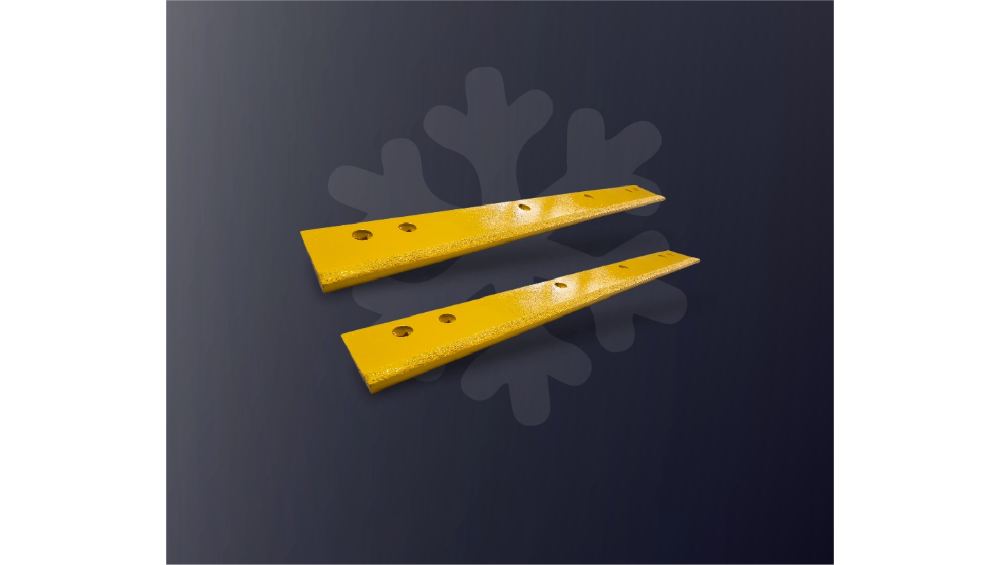
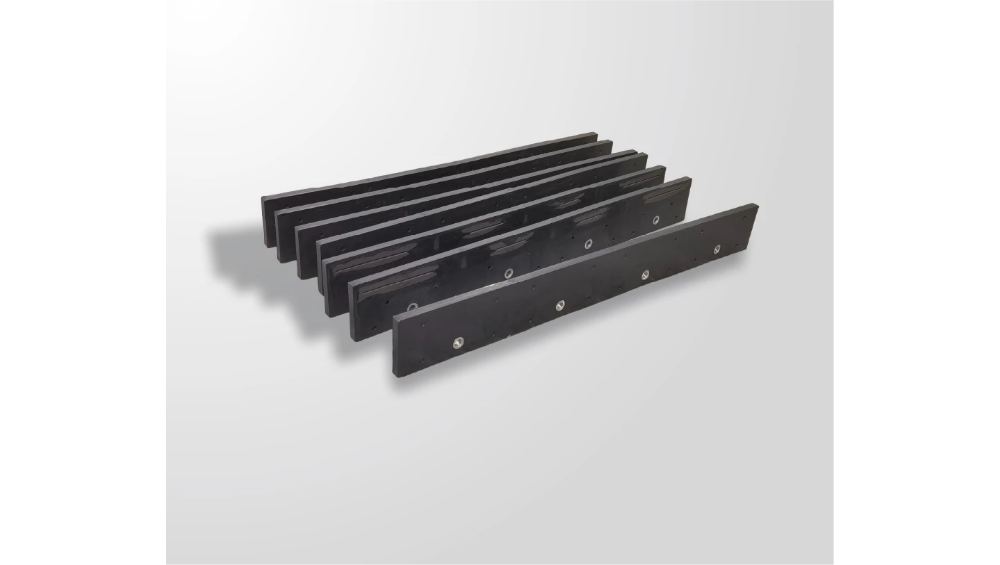
For North American state DOT and municipal RFPs, the hidden thresholds are usually around steel base strength, carbide hardness, blade geometry, and QA documentation rather than only price. Manufacturers and OEM-focused factories that pre‑engineer blades to meet Clear Roads–style standards, NYSDOT/MnDOT parameters, and municipal punch patterns can consistently pass technical screening and compete on lifecycle cost instead of lowest bid.
DOT-Grade Standard Carbide Cutting Edges
What are state DOTs really asking for in carbide blade specifications?
In practice, state DOT plow blade specs are a shorthand for risk control, service life, and interchangeability across mixed fleets, not just a parts shopping list. As a factory, I read them as a combined statement of: minimum wear life, acceptable failure modes, safety margins, and compatibility with existing plow hardware.
Typically, a DOT technical spec for carbide plow blades or carbide‑inserted edges will implicitly cover seven areas:
Blade type and configuration (front plow, underbody, wing, tow, one‑piece vs segmented, flexible vs rigid).
Steel base plate material (minimum yield strength, hardness range, thickness, and height).
Carbide insert grade and hardness (often expressed as HRA, with a narrow band that balances wear and toughness for winter maintenance).
Insert dimensions and geometry (trapezoid, bullnose, flat, chamfer, exposure length, and embed depth).
Bolt hole pattern and punch style (spacing, edge distance, countersunk or square, compatibility with legacy blades).
Assembly and bonding (brazing quality, weld procedures, rubber encapsulation, vulcanization quality for flexible systems).
Quality assurance and acceptance (visual inspection, hardness tests, dimensional checks, sampling frequency, and rejection criteria).
SENTHAI, as a carbide blade manufacturer and wholesale supplier, builds its engineering database around these elements so that when we read an NYSDOT or MnDOT RFP, we can immediately map each clause to a controllable process parameter on the production line.
The unofficial rule in DOT specs is simple: if your steel base is too soft, the blade bends and loses cut quality; if your carbide is too hard, it chips prematurely on frost‑heaved asphalt and manholes. The “hidden” threshold is the combination window where the base supports the insert without over‑stressing it.
From a manufacturer’s perspective, I treat steel strength and carbide HRA hardness as a coupled system:
Base plate: DOTs commonly expect a carbon or low‑alloy steel with yield strength high enough to resist plastic deformation under impact and torque from the plow frame. If they don’t quote a number, you reverse‑engineer it from their minimum thickness, fleet speed, and environment (urban vs rural, presence of raised castings, gravel shoulders, etc.).
Carbide hardness: Winter maintenance uses cemented carbide grades typically in the low‑ to mid‑HRA 80s range, tuned for abrasion by sand and salt with intermittent impacts. If you push hardness too high to “win” on lab abrasion results, field chips will spike, and a savvy DOT engineer will see that in historical performance data.
Interface: The braze or weld line between carbide insert and steel base must handle thermal shocks and bending without cracking. If a spec emphasizes “no visible braze voids” or calls out a specific brazing alloy, that’s a red flag that previous suppliers have failed here.
At SENTHAI, we tune our carbide grades differently for, say, a Clear Roads‑style high‑speed interstate spec versus a county gravel road spec, even if the written hardness window looks similar.
Which key specification parameters should manufacturers map when targeting NYSDOT, MnDOT, and other DOT RFPs?
When a new RFP hits my inbox, I don’t read it line‑by‑line; I map it into a parameter grid that we already use for production and QA. For NYSDOT, MnDOT, and peer agencies, the crucial parameters I track are:
Blade geometry: total length, segment length, height, bevel angle, and plow position.
Steel base: thickness, grade, minimum mechanical properties if given.
Carbide inserts: size, shape, hardness range, exposure, spacing along the blade.
Bolt pattern: hole diameter, spacing (often 3″, 6″, or 12″), edge distance, and punch type.
Finish and markings: paint or coating, part number stamping, and traceability tags.
QA language: any mention of “rejection if hardness out of range” or “third‑party lab testing” suggests they care more about consistency than cheapest cost.
For a B2B factory like SENTHAI, building a reusable “spec to drawing” template lets our engineering team turn an NYSDOT or MnDOT spec package into controlled drawings and router instructions within hours instead of days.
Why do Clear Roads “Standard Specifications” matter for winning multi‑state carbide blade RFPs?
Clear Roads standard specifications effectively act as a de‑facto benchmark for many DOTs that lack the resources to write their own detailed carbides‑insert blade standards. Once you design and qualify a blade that meets Clear Roads geometry, material, and QA clauses, you’re aligned with a broad multi‑state expectation without rewriting your tooling for each bid.
From the factory floor, I see three major advantages:
Design reuse: A Clear Roads‑aligned trapezoid or bullnose configuration can often be adjusted with only minor bolt pattern changes for different states.
Process stability: Your pressing, sintering, brazing, and welding parameters can remain fixed while you vary only a few dimensions, which keeps quality more consistent.
Storytelling in RFPs: When a buyer from a smaller DOT or county hears that a carbide blade has already been used under Clear Roads‑type standards, it reduces their perceived risk.
SENTHAI’s OEM and private‑label customers often use this alignment as part of their technical justification when they submit multi‑state bids.
How can manufacturers reverse‑engineer “silent” strength and HRA minimums from vague municipal RFPs?
Many county and city RFPs simply copy a neighbor’s document or write “equal or approved equivalent,” with minimal technical detail. As a manufacturer, you can still reverse‑engineer realistic thresholds by triangulating:
Fleet data: Blade mounting hole patterns, moldboard curvature, and plow weights tell you how much bending the blade will see.
Roadway environment: Frequent manholes and concrete joints suggest higher impact; pure rural gravel suggests more abrasion with fewer hard strikes.
Past failures: If the RFP mentions “previous blades chipping” or “excessive bending,” read that as a direct hint about the last supplier’s steel strength or carbide grade.
On the factory side, I usually propose a conservative combination: a steel base strength slightly above our standard highway blade grade and a carbide HRA at the lower end of our winter grade window, to maximize toughness and avoid the exact failures the RFP is implicitly complaining about.
What does an effective DOT RFP technical compliance matrix look like for carbide blades?
A compliance matrix is how you translate engineer language into buyer confidence. Done properly, it lets buyers quickly see that your factory understands and meets every clause, including the unwritten expectations.
Here is a simplified example of how a manufacturer, supplier, or OEM might structure an internal DOT spec comparison table (for illustration, not actual NYSDOT or MnDOT values):
In SENTHAI’s internal system, each row is linked to a controlled work instruction, so sales and engineering can both see exactly how a given blade variant satisfies each state’s written and unwritten expectations.
How can a manufacturer translate DOT specifications into controllable factory processes?
To consistently pass DOT inspections, every line of the specification must map to a measurable process parameter, not just a design drawing. In our plant, we translate specs into three layers:
Material codes
Steel plates: Each DOT spec is tied to specific steel coils with defined mechanical properties and mill certificates.
Carbide inserts: HRA window, grain size, and binder percentage are locked into internal grade codes.
Process parameters
Pressing and sintering: Press tonnage, green density, sintering temperature, and time are standardized per insert geometry and grade.
Brazing and welding: Preheat temperature, brazing leg length, and weld bead design are defined so that the steel‑carbide system sees predictable stresses.
Inspection and traceability
Dimensional checks (blade height, thickness, hole position) are tied to gauge tools on the line.
Hardness checks (both steel and carbide) follow a sampling plan that matches or exceeds typical DOT QA language.
Each blade batch is tagged with date, shift, and material codes for traceability during any DOT audit.
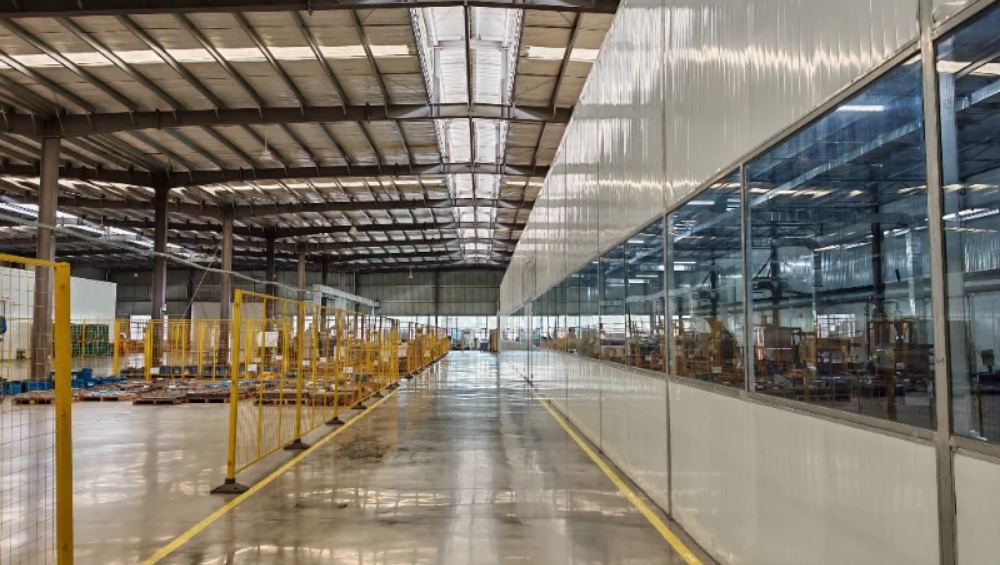
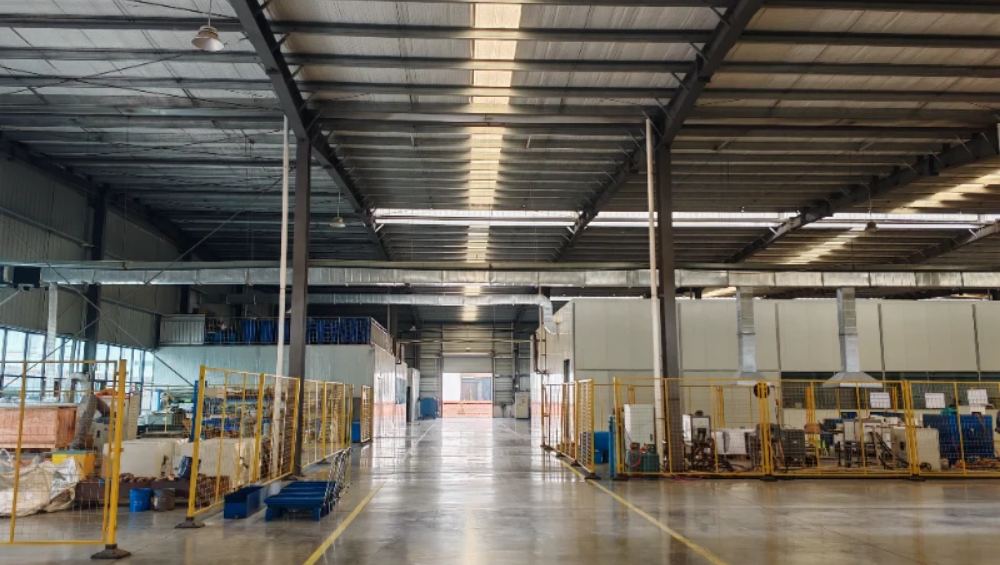
SENTHAI leverages its fully automated wet grinding, pressing, sintering, welding, and vulcanization lines in Rayong to keep these parameters consistent while still offering OEM customization for wholesalers and municipal suppliers.
Why should B2B factories focus on lifecycle cost, not unit price, in DOT and municipal RFP responses?
Most DOTs and counties know that the cheapest blade rarely delivers the lowest cost per lane‑mile. If your factory can quantify lifecycle cost, you gain an immediate advantage, especially when your carbide inserts and steel base are tuned to local conditions.
From the manufacturer side, I focus on:
Wear life vs downtime: A blade that lasts twice as long but costs 50% more often saves labor, truck availability, and traffic disruption costs.
Edge retention: Blades that hold a sharp carbide edge maintain friction better, retaining bare‑pavement performance and road user safety longer between blade changes.
Reduced blade change frequency: Each change exposes crews to traffic and weather; fewer changes mean lower risk and higher effective capacity during storms.
SENTHAI often supports OEM partners with field data templates so they can help DOTs calculate cost per kilometer or per season, translating our factory‑level material and hardness decisions into tangible operational savings.
Who inside a manufacturing organization should “own” DOT spec interpretation and bid strategy?
Winning DOT‑level carbide blade RFPs is not just a sales job. In our experience, the most successful programs are owned by a cross‑functional team where:
Sales and bid management gather RFP documents, clarify deadlines, and maintain relationships with DOT buyers and county engineers.
Engineering interprets technical specs, develops drawings, and defines material and process requirements.
QA/QC sets up inspection plans that mirror DOT acceptance criteria, ensuring that every delivered batch is audit‑ready.
Production and planning verify that capacity, tooling, and lead times align with the RFP contract quantities and seasonal demand.
In SENTHAI, we treat major state DOT and municipal blade contracts as “key accounts,” with a dedicated technical contact so that OEM customers and wholesalers always have direct access to factory‑level expertise.
Where do municipalities and counties differ most from state DOTs in carbide cutting edge RFPs?
Municipal and county RFPs for carbide cutting edges typically differ from state DOT specs in three ways that matter to manufacturers and OEM suppliers:
Detail level: Counties are more likely to reference “as used by [neighboring county/state DOT]” or copy fragments of specs, leaving gaps for interpretation. A good manufacturer fills these gaps with conservative, field‑proven choices.
Fleet diversity: Municipal fleets often include older, mixed‑brand plows with non‑standard moldboard curvature and bolt patterns. Flexible, segmented carbide systems or custom punch patterns are often needed.
Budget constraints: Municipal buyers may be highly price‑sensitive, but they are also sensitive to downtime, as one or two trucks out of service can significantly reduce coverage. Proposing a mid‑range carbide grade with robust steel backing often hits the sweet spot.
For municipal wholesalers and distributors working with SENTHAI, we often co‑develop a “municipal standard” blade that fits multiple plow models yet stays within realistic township budgets.
Does aligning with ISO9001 and ISO14001 strengthen a manufacturer’s bid position for state and municipal carbide blade RFPs?
Yes, but only if you translate the certifications into practical risk reduction and traceability in your RFP narrative. DOT and municipal buyers typically interpret ISO9001 and ISO14001 as signals that:
Your factory follows structured processes, reducing the risk of sudden quality variation across seasons.
Environmental practices, such as waste handling from grinding and brazing operations, are under control, aligning with broader public sector sustainability goals.
Non‑conforming product will be identified and contained before it reaches their yard.
However, a certificate alone is not enough. In our bids, I usually show:
How ISO procedures define inspection frequency for hardness and dimensions.
How non‑conforming blades are quarantined and reworked or scrapped.
How documentation ensures that any future complaint can be traced back to specific batches and process records.
SENTHAI’s ISO‑certified operations in Thailand allow global OEMs and wholesalers to assure DOTs that their private‑label carbide blades come from a controlled, audited production environment, not a job‑shop with ad‑hoc practices.
SENTHAI Expert Views
“When I read a DOT RFP for carbide blades, I ignore the price column at first and go straight to the technical clauses that hint at past failures—like ‘blades shall not chip under normal operating conditions’ or ‘no permanent deformation allowed.’ Those are history lessons from previous suppliers. If you design your carbide grade, base steel strength, and brazing process to solve those exact pain points, your bid becomes more than just a number—it becomes a technical risk‑reduction plan. That’s what a serious manufacturer and OEM partner must deliver.”
Are there practical examples of cross‑state spec alignment that manufacturers can use?
Yes. A practical approach is to build a “family” of carbide blades whose core elements are constant while only a few dimensions change by state. For instance:
Use a common carbide grade and steel base chemistry across NYSDOT‑like and MnDOT‑like specs.
Adjust blade height, thickness, and bolt pattern to match each state’s legacy plow hardware.
Standardize brazing and grinding parameters for both, simplifying QA.
An illustrative internal matrix might look like this:
SENTHAI uses this family approach so that OEM and wholesale partners can stock fewer SKUs while still meeting the detailed requirements of multiple state DOTs and municipalities.
What are the most actionable steps for manufacturers to formulate winning technical proposals?
From a factory and OEM‑supplier standpoint, several actionable steps consistently raise win rates in state DOT and municipal carbide blade RFPs:
Build a spec library
Archive NYSDOT, MnDOT, Clear Roads, and key county specs.
Normalize them into a single comparison format for quick mapping.
Create standard compliance templates
Develop pre‑formatted tables where each clause maps to a factory process parameter.
Keep drawings and inspection plans ready to attach.
Design robust “baseline” blade families
Choose one or two carbide grades and steel base systems that comfortably cover the harshest conditions you expect.
Verify them in field trials with willing counties or contractors.
Quantify lifecycle cost
Track wear life and blade change frequency with selected partners.
Convert that data into cost‑per‑lane‑mile narratives in your proposals.
Strengthen DFM collaboration with OEMs
Work directly with plow manufacturers to align moldboard curvature and bolt patterns for future‑proof blade designs.
Offer private‑label options that let OEMs deliver complete, spec‑compliant solutions.
SENTHAI’s long‑term partnerships across more than 80 global customers are built around this structured, data‑driven approach rather than one‑off bids.
FAQs Section
What HRA hardness is best for DOT carbide plow blades?
Most winter maintenance carbide inserts sit in a mid‑hardness band that balances abrasion resistance with impact toughness. Extreme hardness looks good in lab tests but tends to chip on real roads.
Can a manufacturer propose an alternate carbide grade if the RFP is vague?
Yes, but you should justify it with field data or at least a clear technical rationale, explaining how your grade improves toughness, wear life, or both in that region’s conditions.
Why do some DOTs insist on specific bolt patterns and blade heights?
They’re protecting legacy fleet investments. Matching existing punch patterns and heights allows them to mix suppliers without changing plows, inventories, or mounting hardware.
Is a flexible carbide blade system better for municipalities?
Often yes, especially where roads have uneven surfaces, manholes, or speed bumps. Flexible or segmented systems reduce shock loading and chipping, even if initial cost is slightly higher.
Who should a manufacturer talk to before submitting a bid?
Whenever possible, talk with the DOT or municipal maintenance engineer, not only procurement. They can clarify performance expectations, past failures, and preferred blade designs.