




Can Mechanical Ice Breaking Reduce De-Icer Use by 25–40%?
Winter maintenance programs face two pressures at once. One is service: crews must clear ice quickly enough to keep roads safe. The other is chemistry: every ton of road salt carries a purchase cost,…
Winter maintenance programs face two pressures at once. One is service: crews must clear ice quickly enough to keep roads safe. The other is chemistry: every ton of road salt carries a purchase cost, a corrosion cost for vehicles and bridges, and an environmental cost for streams and groundwater. Mechanical ice breaking promises to relieve both by removing part of the ice burden before chemicals are applied, so that less de-icer is needed to finish the job.
SENTHAI, a Thailand-based manufacturer of carbide snow plow blades and ice-breaking equipment, states on its packed ice carbide kit page that the kit allows for a significant reduction in salt application, often by up to 25–40%. That range is a manufacturer claim, not an independently verified result, and this article treats it that way: it explains the mechanism behind the claim, the limits of what the number can mean, and how a program can test the claim on its own routes before changing application rates.
Salt budgets and salt backlash
Salt is simultaneously the most effective and the most scrutinized tool in winter maintenance. It works because chloride lowers the freezing point of water, which is why agencies rely on it for anti-icing and de-icing. It is scrutinized because the same chlorides that keep roads drivable also corrode steel, migrate into soil and water, and grow the budget every time salt prices rise.
Public agencies are responding with salt-reduction goals, application-rate limits, and reporting requirements. Contractors feel the same pressure through municipal contracts that tie payment to service levels and chemical use. The question is no longer simply whether a road was cleared, but how much chemistry it took to clear it and whether less could have done the job.
Mechanical ice breaking fits into that question directly. It replaces chemical effort with mechanical work at the blade. SENTHAI describes its packed ice kit as a design that creates high-density fracture lines in the ice crust, breaking the bond between ice and pavement more efficiently so the resulting slush is easier for follow-up plows to clear.
How does mechanical breaking reduce chemical need?
The mechanism is about what chemicals have to melt, not about surface area in general. Mechanical fracturing can reduce the mass and thickness of bonded ice that chemicals must melt, while increasing exposed fracture surfaces and improving access to the ice–pavement interface. In practical terms:
- Fractured pieces are loose and can be plowed away without chemical help;
- Exposed pavement receives chemicals directly instead of through an intact ice layer;
- A thinner remaining ice film needs less chemical to reach bare pavement.
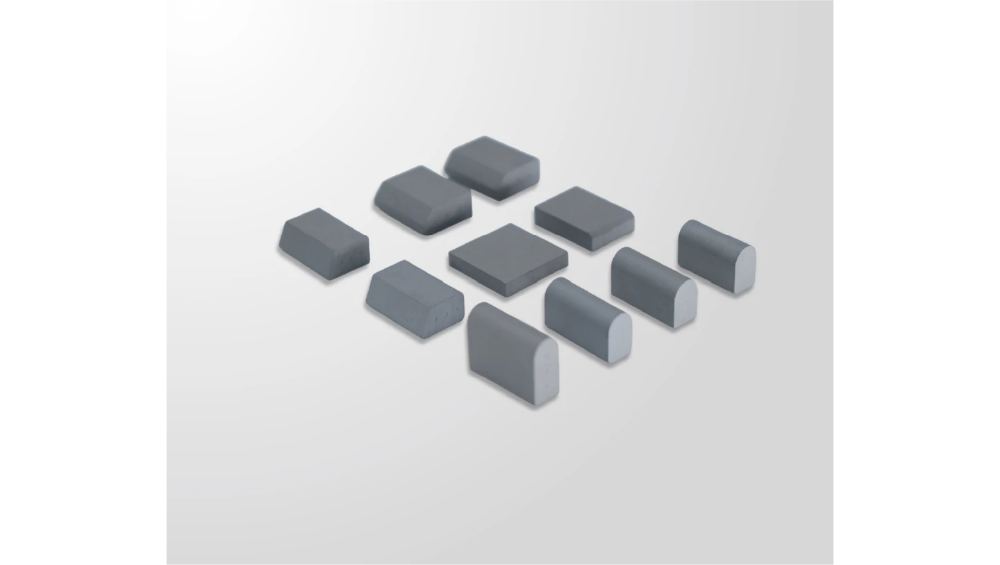
SENTHAI’s packed ice kit uses a dome-head geometry designed to fracture thick ice layers by focusing downward pressure on the ice’s crystalline structure rather than cutting into the road surface, and an isolated insert design that prevents lateral cracking under repeated high-speed impacts. For a maintenance manager, the operational meaning is that the kit is designed to break bonded ice into pieces, not just score the surface.
It is important to keep anti-icing and de-icing separate. FHWA’s guidance on anti-icing describes applying liquid or solid chemicals before or at the start of a storm to prevent the ice–pavement bond from forming. That preventive step can happen before any mechanical treatment. Mechanical breaking is for ice that has already bonded: for that case, fracturing before the final de-icing application may reduce the remaining chemical demand. The correct sequence depends on storm timing, temperature, and route policy, so a fixed “mechanical first, always” rule is not defensible.
The 25-40% reduction claim, explained
The 25–40% figure is worth taking seriously and worth testing. Three parts of the statement matter.
First, it is a stated range, not a guarantee. SENTHAI reports what the design enables, not what every program will achieve. Second, it is conditional: results depend on ice type, temperature, application practices, route design, and how crews use the tool before spreading chemicals. Third, it is a claim that should be verified before it appears in your budget or environmental report, because the same kit will perform differently on a residential loop than on an interstate corridor.
What the claim does not cover: it does not mean zero chemical use, it does not describe a specific tested fleet or agency, and it does not replace the agency’s own application-rate policy. Treat the range as a planning hypothesis, model what a 20% reduction would mean in your tons and chloride load, and design a trial to test it.
Combining tools for a salt strategy
Mechanical ice breaking is one layer of a modern ice-control program. It works best with the other standard tools.
| Tool | Role in the sequence |
|---|---|
| Anti-icing with brine | Treats pavement before or at storm start to prevent bonding |
| Plowing | Removes the bulk of the snow |
| Mechanical ice breaking | Fractures crust that has already bonded to the pavement |
| De-icing chemicals | Finish the remaining film and restore traction |
Each tool does less when the others are missing. The sequencing depends on the storm: preventive anti-icing may come first, mechanical breaking handles bonded ice mid-event, and a reduced chemical application finishes the job. Route planning supports the same logic: ice-prone corridors, shaded sections, bridges, and intersections get the mechanical pass where the bond forms fastest and chemicals are most heavily applied today.
How do you measure savings in your program?
The only credible salt-savings number is the one you measure yourself. Set up the measurement before the season.
Establish a baseline. Record the previous season’s chemical application by route: tons per route, applications per storm, and rate per lane-mile. If route-level data does not exist, start with fleet totals and refine next season.
Define the trial. Equip a set of comparable routes with the mechanical ice-breaking kit and keep a control set on the previous equipment and practices, with the same storm responses, application policy, and reporting.
Track the inputs. Record chemical tons applied, mechanical passes run, plow time, and blade wear on both sets. The salt comparison is only valid if both sets face the same storms and the same service standards.
Compare outcomes, not just inputs. If the mechanical routes used less salt but failed to meet bare-pavement standards, the trial failed regardless of the chemical number. Measure service quality and safety outcomes alongside chemical use.
Report what matters. Report savings as tons, dollars, chloride load, and cost per lane-mile, and state clearly whether the numbers come from your trial or from a supplier claim.
SENTHAI can support the trial side: the company’s kit page and engineering team can confirm the product-specific configuration for your routes, and the factory can provide documentation for a controlled comparison. But the measurement plan belongs to the agency or contractor, because a savings claim that cannot be reproduced in your own operation is not a savings claim at all.
Expert view — SENTHAI engineering team: “Salt reduction is a measurement program, not a blade swap. The 25–40% figure is what the design can enable; your trial decides what it enables for you. We publish the mechanism, you run the control set, and the number that survives is the one you measured.”
SENTHAI also describes itself as an OEM manufacturer for I.C.E. Blades with patented advantages in blade manufacturing. That statement is worth noting, and for procurement purposes it should be verified with the underlying patent references and the basis for the OEM relationship before it is repeated in your documents.
Build a lower-salt ice program
A lower-salt program is built in seasons, not in one purchase. Start with a route audit: find the corridors where ice bonds fastest and salt is applied heaviest. Run a mechanical pass on those routes at the right point in the storm cycle, measure chemical use and service quality against a control set, and then scale the sequence to the rest of the network based on measured results.
The equipment choice should follow the strategy. The packed-ice kit reference describes the dome-head geometry, isolated insert design, and 4-foot sections engineered for this work. For a full picture of the segmented-edge technology behind it, the articulating rubber-carbide blade system explains the blade mechanics. To plan a controlled salt-reduction trial, send your route data and application practices through the contact page and ask for the configuration and documentation you need to measure the difference on your own roads.
Frequently Asked Questions
Is the 25–40% salt reduction guaranteed? No. It is SENTHAI’s stated range for what its packed ice carbide kit enables under suitable conditions. Actual savings depend on ice type, temperature, application practices, and route design, and should be verified in a controlled trial.
How does breaking ice reduce the need for salt? Mechanical fracturing can reduce the mass and thickness of bonded ice that chemicals must melt, while increasing exposed fracture surfaces and improving access to the ice–pavement interface. Less intact bonded ice means less chemical needed to finish the route.
Does mechanical ice breaking replace anti-icing? No. Anti-icing with brine before or at storm start prevents bonding, and mechanical breaking handles ice that has already bonded. They are complementary tools with different timing.
What is the difference between this kit and a standard carbide blade? SENTHAI describes a specialized dome-head geometry that focuses downward pressure to fracture ice layers rather than simply scraping, plus an isolated insert design that prevents lateral cracking. The intended use is ice-prone routes where standard edges fail to break the bond.
How should I measure salt savings in my program? Run a controlled trial: mechanical-first routes versus a control set, with the same storms and application policy, tracking chemical tons, plow time, and service quality. Compare the results and report tons, dollars, chloride load, and cost per lane-mile.
Is “OEM manufacturer for I.C.E. Blades” a verified statement? It is SENTHAI’s published description. Before using it in procurement documents, request the underlying patent references and the basis for the OEM relationship, and confirm the applicable legal entity.
What documentation should I request for an environmental or budget case? Request the product-specific drawing confirmation, material and construction details, applicable inspection or batch records, and the company’s stated performance claims with their conditions. Verify the numbers with your own trial before presenting them as your program’s results.
Sources
Related articles
 Best Snow Plow Blade Family for Your Fleet: Top 5 ScenariosKnowledge
 Top 10 Snow Plow Blade Types for Winter Fleets (Ranked by Duty Fit)Knowledge
 Top 5 Best Carbide Blade Configurations for Highway PlowingKnowledge
 Best Snow Plow Blade Materials Ranked: Steel vs Carbide vs Cladding vs Rubber-CarbideKnowledge