




Airport Snow Removal: Why Runway Teams Choose JOMA-Style Blades
Runways punish blades differently than roads. The surface is safety-critical, the markings and the lights are assets that cannot be damaged, and the clearing happens at high speed under tight operational windows. For airport…
Runways punish blades differently than roads. The surface is safety-critical, the markings and the lights are assets that cannot be damaged, and the clearing happens at high speed under tight operational windows. For airport maintenance teams, the blade choice is a safety and an operations decision, and the flexible JOMA-style construction earns its place on the runway.
This article covers airport snow removal with JOMA-style blades: the runway’s unique demands, FOD and the failing edge, protecting the markings and the lights, high-speed and night operations, and what to specify.
Runways punish blades differently than roads
The runway is a controlled surface with no tolerance for damage:
| Runway demand | What it means for the blade |
|---|---|
| Inspected surface | The blade must not shed pieces; FOD is a safety event |
| Critical markings | Damaged markings are a hazard and a repair cost |
| Embedded lights | The blade must not catch the lights set in the pavement |
| High speeds | Clearing speed multiplies the impact energy |
| Tight windows | The runway closes for the operation, so the edge must work the first time |
The runway is the case where the blade’s behavior, not just its wear life, is the specification input.
The airport’s standard also reaches the maintenance side: the inspection after every clearing operation, the staged spares for the FOD-sensitive corridors, and the record that ties the blade to the operation. The airport runs the discipline that the roads only approximate.
The same standard extends to the documentation: the batch records and the inspection data that the airport’s quality system requires are part of the supply, and the confirmation during quotation is part of the order.
What is the airport’s main blade concern? FOD prevention: the edge must hold together, with the inserts retained and the rubber bonded, so that nothing is shed onto the runway. The integrity is the FOD prevention.
How does FOD start with a failing edge?
FOD is the airport’s nightmare, and the failing edge is a FOD source:
- A chipped carbide insert becomes a piece of debris on the runway;
- A separated rubber shell sheds fragments;
- A worn section that catches the pavement generates the debris as it breaks;
- The debris is then found by the FOD sweep, or worse, by an aircraft.
The edge’s integrity is the FOD prevention: a blade that holds together, with the inserts retained and the rubber bonded, is a blade that does not feed the runway. SENTHAI describes its Joma-style blades as built for impact resistance and retention, which is the design side of the FOD prevention.
The inspection is the operational side: the airport team checks the edges after every clearing operation and removes the sections with any loose or damaged components.
Protecting markings, lights, and pavement
The airport infrastructure is protected by the blade’s surface behavior:
- Markings: the flexible edge glides over the raised markings instead of scraping them;
- Lights: the embedded lights are protected by the impact absorption that the rubber provides;
- Pavement: the flexible segments follow the surface and reduce the hammering on the joints and the transitions;
- Surface finish: the clean contact preserves the pavement’s condition.
SENTHAI describes its Joma-style construction as reducing vibration and noise while following the surface, which is the mechanism behind the infrastructure protection. The JOMA-style blade page is the reference for the construction.
High-speed and night operations
The airport operates at high speed and often at night:
- High speed: the runway clearing runs at plowing speeds, and the impact energy grows with the speed;
- Night work: the clearing happens when the airport is quiet, and the noise matters for the surrounding community;
- Tight windows: the runway closes for the operation, and the clearing has to be right the first time;
- Coordinated crews: the plows, the brooms, and the blowers work as a team, and the blade is part of the system.
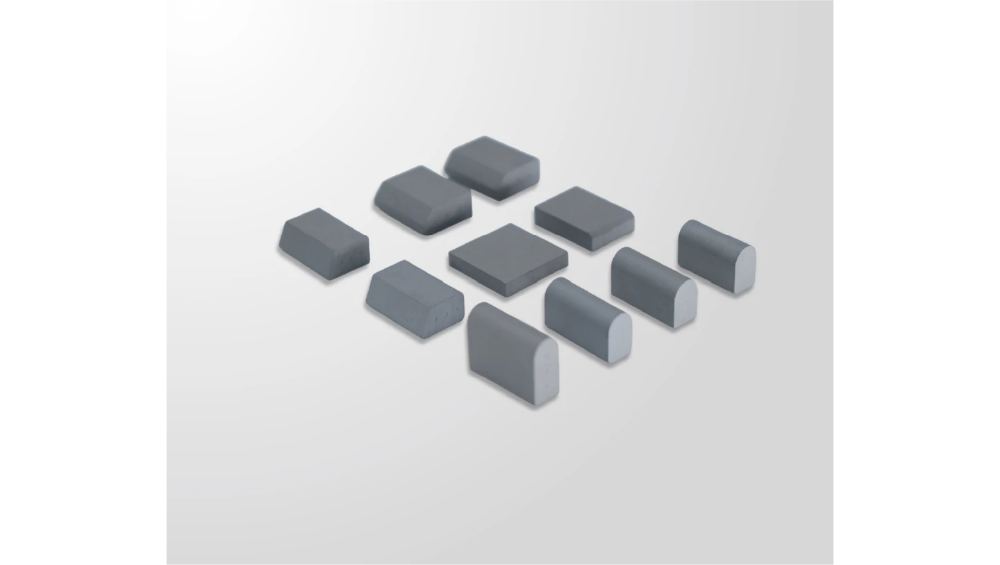
The JOMA-style blade’s reduced noise and vibration, combined with the impact management, fits the airport’s operating profile. The packed ice carbide kit covers the corridors where the ice needs the fracture capability.
What should airport teams specify?
The airport specification should name the demands:
- FOD prevention: the edge integrity and the inspection plan;
- Surface protection: the markings, the lights, and the pavement;
- Impact resistance: the construction for the high-speed impacts;
- Low temperature: the performance at the airport’s operating range;
- Noise: the night-operation consideration;
- Documentation: the batch records and the inspection data.
The specification, sent with the runway data and the equipment details, is the order’s basis.
The specification should also name the operational window: the clearing speed, the closing time, and the crew coordination, because the blade is part of the airport’s clearing system, and the system’s performance is the airport’s service standard.
The same operational view drives the spares: the staged sections at the airfield, the inspection tools, and the changeout procedure are part of the runway-grade program.
The runway-grade program should also be rehearsed: the changeout, the inspection, and the coordination, practiced in the calm, are the operations that the tight window demands. The rehearsal is the airport’s readiness.
The same readiness extends to the documentation: the batch records and the inspection data, confirmed and filed, are the airport’s quality record and the supplier’s accountability.
The readiness, rehearsed and documented, is the runway’s assurance, and the assurance is the airport’s standard.
The standard should also be audited: the readiness, the documentation, and the edge condition, reviewed by the airport’s quality function, are the program’s control. The audit is the airport’s discipline.
The same discipline extends to the suppliers: the batch records, the inspection data, and the corrective actions, reviewed with the manufacturer, are the supply’s quality evidence.
The audit, the review, and the evidence are the runway program’s governance, and the governance is the airport’s assurance.
The assurance should also extend to the changeout discipline: the runway sections are replaced on the condition and the standard, with the staged spares and the documented procedures, and the discipline is the runway’s reliability.
The reliability, governed and audited, is the airport’s winter operation, and the operation is the blade program’s purpose.
The purpose, kept current each season, is the runway-grade program’s standard of work.
The standard, held through every operation, is the airport’s winter reliability, and the reliability is the blade program’s final measure.
The measure, recorded each operation, is the runway’s own record, and the record is the airport’s assurance.
The assurance, kept current, is the runway program’s proof.
The proof is the airport’s own record.
The record is the runway’s winter file.
The file is the airport’s standard kept.
Who audits the runway blade program? The airport’s quality or maintenance function, with the supplier’s records and the field data. The audit is the program’s control.
How should the runway program be prepared? With the staged spares, the practiced changeout and inspection, and the documentation file, reviewed before the season and exercised in the calm.
What is the runway clearing speed? It depends on the airport and the equipment; the specification names the fleet’s actual speed, because the speed multiplies the impact energy that the blade must survive.
Plan a runway-grade edge program
The airport program is the plan: the runway-grade edge on the clearing units, the inspection routine after every operation, the staged spares for the FOD-sensitive corridors, and the record that ties the edge to the operation. The low-impact blade specification is the product reference, and the contact page is where the specification and the program conversation start.
Send the runway data, the clearing speed, and the inspection requirements through the contact page and ask for the runway-grade configuration. The runway is the operation’s highest standard, and the blade is part of meeting it.
Expert view — SENTHAI engineering team: “On a runway, the blade’s integrity is the safety record. FOD prevention starts with an edge that holds together.”
Frequently Asked Questions
Why is airport clearing different? The runway is safety-critical: FOD prevention, markings, lights, high speeds, and tight operational windows all shape the blade choice.
How does a failing edge cause FOD? Chipped inserts, separated rubber, and breaking sections shed debris onto the runway. The edge’s integrity is the FOD prevention.
How are the markings and lights protected? The flexible edge glides over the markings, and the rubber absorbs the impacts that would damage the embedded lights and the joints.
Does the airport’s speed matter? Yes. High speed multiplies the impact energy, and the blade’s impact resistance and retention are specified for it.
What should the airport specification include? FOD prevention, surface protection, impact resistance, low temperature, noise, and the documentation.
Does SENTHAI make runway-grade blades? SENTHAI’s JOMA-style line is built for impact resistance, surface protection, and reduced noise, with the packed ice kit for the ice corridors.
What should I send for the specification? The runway data, the clearing speed, and the inspection requirements. The runway-grade configuration follows.
Sources
Related articles
 Best Snow Plow Blade Family for Your Fleet: Top 5 ScenariosKnowledge
 Top 10 Snow Plow Blade Types for Winter Fleets (Ranked by Duty Fit)Knowledge
 Top 5 Best Carbide Blade Configurations for Highway PlowingKnowledge
 Best Snow Plow Blade Materials Ranked: Steel vs Carbide vs Cladding vs Rubber-CarbideKnowledge