




Why Do Polyurethane Blades Fail on Ice and Hard-Packed Snow?
Polyurethane blades fail on hard-packed snow because their soft composition cannot crack dense ice, causing the edge to round within hours. The material generates heat under friction, softening further and accelerating wear. This leads…
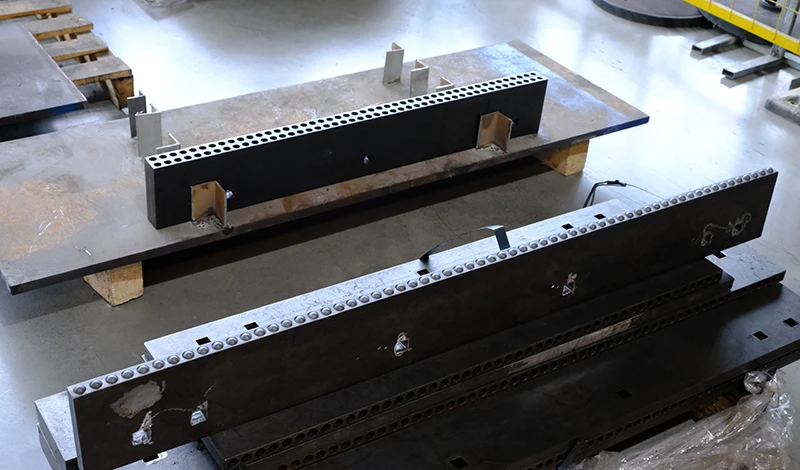
Polyurethane blades fail on hard-packed snow because their soft composition cannot crack dense ice, causing the edge to round within hours. The material generates heat under friction, softening further and accelerating wear. This leads to poor penetration, multiple passes, increased salt usage, and higher operating costs for fleets and municipalities.
Check: Why Is Your Snow Plow Blade Skipping on Hard-Packed Snow?
Why Is Polyurethane Too Soft for Hard-Packed Snow?
Polyurethane blades lack the hardness needed to fracture ice and compacted snow. Under load, the cutting edge rounds off quickly, creating a blunt profile that skids over the surface instead of cutting into it. This rounding effect leaves a layer of ice behind, forcing operators to make repeated passes. In contrast, SENTHAI JOMA Style blades use vacuum-sintered micro-grain tungsten carbide inserts that maintain a sharp, aggressive edge season after season. The carbide inserts are brazed into cast steel segments and encased in an ultra-low-temperature-resistant rubber shell, delivering consistent penetration even in extreme cold. While polyurethane deforms and wears, carbide holds its geometry, ensuring the blade cleans the road surface effectively on every pass.
| Material | Edge Retention | Ice Penetration | Typical Wear Life on Hard-Packed Snow |
|---|---|---|---|
| Polyurethane | Poor – rounds within hours | Very low – skids on ice | Less than 1 season |
| SENTHAI Carbide (JOMA Style / I.C.E.) | Excellent – stays sharp for seasons | High – fractures and removes ice | 5+ seasons (field verified) |
What Happens to Polyurethane Blades When They Hit Ice?
Friction against ice generates heat that polyurethane cannot dissipate. Its low thermal conductivity traps that heat at the cutting edge, softening the material and causing deformation or smearing. Under impact stress from road joints, cracks, or manhole covers, bonded poly layers can separate and delaminate, leading to uneven wear and catastrophic blade failure. SENTHAI’s I.C.E. (Packed Ice Carbide Kit) blade solves this problem with isolated tungsten carbide inserts that are brazed independently. Each insert is firmly installed and separated from its neighbour, preventing lateral cracking even under heavy impact. Where poly blades fail within hours on ice, SENTHAI carbide blades continue cutting cleanly, reducing blade breakage and extending service life up to 3× longer than standard carbide-edged styles in impact-heavy environments.
How Does a Soft Blade Increase Plowing Costs?
A soft blade that fails to cut cleanly forces operators to make multiple passes over the same route. More passes mean more fuel, more labour, and more wear on the plow truck itself. The ice residue left behind also demands extra salt or sand to maintain safe roads, driving up material costs. Frequent blade changes add downtime and maintenance labour, with soft blades often needing replacement multiple times per winter. SENTHAI’s carbide blades, by contrast, reduce the need for frequent replacements thanks to a service life at least 10× that of traditional carbon steel blades. Fewer changes mean less downtime, lower maintenance costs, and a more efficient winter operation. For fleets running dozens of trucks, those savings add up quickly across an entire season.
What Makes Carbide Blades the Right Choice for Ice?
Tungsten carbide inserts penetrate and fracture ice without rounding, even at high speeds on uneven roads. SENTHAI’s I.C.E. design uses isolated inserts that are brazed independently, so a single impact does not cause catastrophic failure – the blade remains fully functional. This design is ideal for high-speed plowing over roads with excessive joints, cracks, or uneven surfaces. SENTHAI manufactures every blade from raw material powder to finished product in its fully automated Thailand facility, with dedicated quality inspections at the end of each production stage. The result is consistent hardness, excellent bonding strength, and superior wear resistance batch after batch. Polyurethane simply cannot match the structural integrity and ice-clearing power of a properly engineered carbide blade.
Check: Packed Ice Carbide Kits
| Performance Factor | Polyurethane Blade | SENTHAI I.C.E. Carbide Blade |
|---|---|---|
| Ice penetration | Poor – edge rounds, skids | Excellent – fractures and removes ice |
| Edge retention on hard-packed snow | Hours to days | Multiple seasons |
| Impact resistance (joints, cracks) | Delamination, tearing | Isolated inserts prevent lateral cracking |
| Typical service life vs. steel blade | Similar or worse | At least 10× longer |
| Salt/sand reduction potential | Minimal – leaves residue | Up to 40% reduction (field data) |
How Do Municipal Fleets Benefit from Switching to Carbide?
Municipal fleets that switch to SENTHAI carbide blades report cleaner roads with fewer passes. The aggressive cutting edge removes ice more completely, reducing the need for salt and sand by up to 40% in documented North American operations. Fewer chemical applications lower material budgets and reduce environmental runoff. Longer blade life – at least 10× that of standard steel blades – cuts maintenance labor and keeps trucks on the road instead of in the shop. SENTHAI’s ISO 14001 certified production aligns with green procurement policies, making it easier for government fleets to justify the switch. With a proven track record across 80+ global partners and bestseller status in North America, SENTHAI carbide blades deliver the reliability that public works departments depend on all winter long.
Can You Replace Polyurethane Blades with Carbide Without Modifying Your Plow?
Yes. SENTHAI manufactures direct-fit JOMA Style blades, I.C.E. blades, and custom-length carbide blades that match the bolt patterns, widths, and cutting profiles of standard polyurethane blades. No adapters, no drilling, no plow modifications needed. With 21+ years of carbide wear part production experience and over 80 global partners, SENTHAI ensures compatibility across all major plow brands. Customization is fully supported – blade dimensions, insert patterns, thickness, and packaging can all be tailored to a fleet’s exact requirements. The transition from poly to carbide is seamless: the same mount, the same installation steps, but dramatically better ice-clearing performance from the first pass. SENTHAI also provides samples and factory quality inspection reports for first-time customers to verify fit and quality before committing to full fleet deployment.
Which Blade Is Best for High-Speed Ice Clearing on Uneven Roads?
The I.C.E. (Packed Ice Carbide Kit) blade from SENTHAI is specifically engineered for high-speed plowing on roads with excessive joints, cracks, and bumps. Its isolated carbide inserts are separated from each other and firmly installed, preventing lateral cracking that plagues solid-edged blades under impact. This design greatly reduces blade breakage and enhances ice penetration, making it ideal for highway applications where speed and impact loads are high. The isolated inserts also reduce vibration and noise compared to solid blade edges, improving operator comfort. The I.C.E. blade was field-tested for three years with North American fleets before launch, and the results confirm its ability to outperform both polyurethane and standard carbide-edged designs in the most demanding winter conditions.
SENTHAI Expert Views
“After three years of field testing with North American fleets, our I.C.E. blade proved that isolating each carbide insert is the key to surviving high-impact, high-speed ice clearing. When a polyurethane blade hits a road joint at plowing speed, the edge deforms and the material tears. Our I.C.E. design allows each insert to absorb impact independently, so one hard hit doesn’t compromise the entire blade. Operators report cleaner roads, fewer passes, and blade life that spans multiple seasons rather than weeks. The feedback from municipal and heavy-duty fleet partners has been overwhelmingly positive – the I.C.E. blade delivers exactly what we designed it to do: reliable ice penetration without the fragility of traditional designs.” – SENTHAI R&D Team
How Do You Choose the Right Carbide Blade for Your Winter Conditions?
Start by assessing the predominant snow and ice types your fleet encounters. If fresh powder makes up less than 20% of winter events, skip polyurethane entirely and choose carbide from the outset. For heavy ice and high-speed highway plowing, the SENTHAI I.C.E. blade is the optimal choice due to its isolated insert design and enhanced impact resistance. For mixed conditions – city streets, parking lots, regional roads – the JOMA Style blade offers an excellent balance of abrasion resistance and impact protection, with tungsten carbide inserts brazed into cast steel segments encased in a flexible rubber shell. SENTHAI’s sales team works directly with fleets to customize blade dimensions, insert patterns, and packaging. With full in-house production from powder to finished blade, SENTHAI can deliver exactly what your operation needs.
Frequently Asked Questions
Can polyurethane blades be used on ice at all?
Only on thin ice under 1 mm or fresh powder. On hard-packed snow or thick ice, polyurethane blades fail quickly due to edge rounding and poor penetration. SENTHAI recommends carbide blades for any ice-dominated conditions to ensure effective clearing and safe roads.
How much longer do carbide blades last compared to polyurethane?
In field tests with SENTHAI’s North American partners, carbide I.C.E. blades last 8–12 times longer than polyurethane on hard-packed snow routes. Polyurethane blades often wear out in less than one season, while SENTHAI carbide blades deliver 5+ seasons of reliable performance.
Are SENTHAI blades compatible with my existing plow mount?
Yes. SENTHAI manufactures blades to match OEM bolt patterns for all major plow brands. Custom hole drilling and length trimming are also available. Just provide your mounting specs and SENTHAI ensures a direct fit with no modifications needed.
What certifications does SENTHAI hold?
SENTHAI is certified under ISO 9001:2015 for quality management and ISO 14001:2015 for environmental management. All production – from raw material powder to finished blade – takes place in the fully automated Rayong, Thailand facility, ensuring consistent quality at every stage.
Do I need special training to switch from polyurethane to carbide?
No. Installation is identical to polyurethane blades. The only difference is better performance – less downtime, fewer passes, and lower total cost. SENTHAI provides installation guides and ongoing technical support to ensure a smooth transition for any fleet.
Conclusion
Polyurethane blades are adequate only for fresh, light powder. On hard-packed snow and ice, their low hardness, rapid wear, and poor penetration lead to wasted time, excessive salt usage, frequent replacements, and unsafe road conditions. SENTHAI carbide blades – backed by 21+ years of in-house manufacturing, ISO 9001 and ISO 14001 certifications, and proven performance with over 80 global partners – deliver the durability and ice-clearing power that fleets and municipalities need to operate efficiently all winter. With direct-fit compatibility, full customization options, and a new Rayong production base launching in late 2025 for expanded capacity, SENTHAI is the trusted partner for winter road maintenance. Don’t let a soft blade waste your budget – switch to SENTHAI carbide.
Related articles
 Best Snow Plow Blade Family for Your Fleet: Top 5 ScenariosKnowledge
 Top 10 Snow Plow Blade Types for Winter Fleets (Ranked by Duty Fit)Knowledge
 Top 5 Best Carbide Blade Configurations for Highway PlowingKnowledge
 Best Snow Plow Blade Materials Ranked: Steel vs Carbide vs Cladding vs Rubber-CarbideKnowledge