




Why Does Back-Dragging Ice Destroy Your Snow Plow Blade Without a Carbide Kit?
Back‑dragging ice with a standard steel blade fails because the continuous edge suffers concentrated impact and abrasion, causing rapid dulling and cracking. A carbide kit prevents this by using isolated or rubber‑encased carbide inserts…
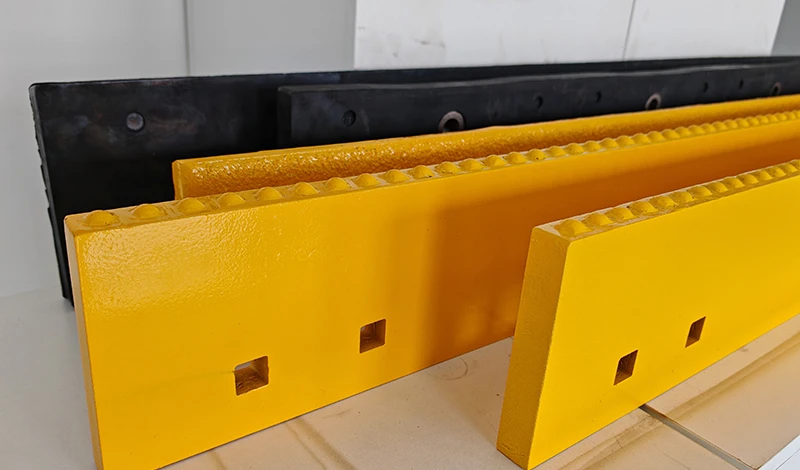
Back‑dragging ice with a standard steel blade fails because the continuous edge suffers concentrated impact and abrasion, causing rapid dulling and cracking. A carbide kit prevents this by using isolated or rubber‑encased carbide inserts that distribute stress, absorb shock, and resist wear. This extends blade life up to 10×, reducing downtime and replacement costs for fleet operators.
Check: Why Is Your Snow Plow Blade Skipping on Hard-Packed Snow?
What Makes Back‑Dragging So Destructive to Standard Steel Blades?
Reverse scraping motion forces the entire blade edge against packed ice and hidden gravel, creating extreme impact and abrasion. Continuous steel edges transmit stress laterally, leading to micro‑cracks that quickly propagate into chunk failures. Steel’s lower hardness (40–50 HRC) cannot resist the cutting action of ice‑embedded debris; the edge visibly rounds and chips within one season.
Standard steel blades lack the shock absorption and hardness needed for reverse scraping. The continuous edge acts like a lever, concentrating stress at the weakest point. As micro‑cracks form, they spread rapidly under the repeated impact of ice and debris. Within a single winter, the blade becomes rounded and ineffective, requiring replacement. This failure pattern is why many operators switch to carbide solutions for back‑dragging applications.
How Does a Carbide Kit Prevent Back‑Dragging Failure?
Isolated carbide inserts (e.g., SENTHAI’s I.C.E. design) break the continuous edge, preventing crack propagation under reverse load. Rubber encapsulation absorbs shock and protects the carbide from direct impact, while the carbide’s extreme hardness (≥88 HRA) resists abrasion. The bonding process (vulcanization) ensures inserts stay secure even under repeated back‑dragging stress.
Carbide kits fundamentally change the failure dynamics. By isolating each insert, lateral crack propagation is stopped. The rubber shell absorbs the shock of impact, reducing stress on the carbide. SENTHAI’s JOMA style blades combine tungsten carbide inserts brazed into cast steel segments encased in ultra‑low‑temperature‑resistant rubber, providing both hardness and flexibility. The vulcanization process creates a durable bond that withstands reverse scraping forces.
| Feature | Standard Steel Edge | Rubber‑Encased Carbide Edge | I.C.E. (Isolated Carbide‑Edged) Blade |
|---|---|---|---|
| Wear resistance | Low | High | Very High |
| Impact resistance | Low | Medium | High |
| Lifespan (vs. steel) | 1× | 3–5× | 8–10× |
| Risk of surface damage | High (steel gouges asphalt) | Low | Very low |
Which Carbide Blade Is Best for Skid Steers and Loaders?
For skid steers operating in tight parking lots, a carbide blade for skid steer in 3‑foot sections with a JOMA‑style profile allows precise maneuvering. Loaders benefit from JOMA style blades in 4‑foot or custom lengths; the segmented design reduces edge weight while maintaining strength. A parking lot snow removal blade must protect painted lines and asphalt; carbide kits with rubber base layers minimise surface scuffing.
Check: Packed Ice Carbide Kits
SENTHAI’s JOMA style blades are available in 3‑foot (36″ × 6″ × 7/8″) and 4‑foot (48″ × 6″ × 7/8″) sizes, ideal for skid steers and loaders. The rubber encapsulation conforms to road contours, cleaning surfaces effectively while reducing damage to lane markings. For heavy packed ice and frequent back‑dragging, the I.C.E. (Packed Ice Carbide Kit) blade is recommended. Its isolated inserts resist lateral cracking even on roads with excessive joints or uneven surfaces.
What Are the Hidden Costs of Back‑Dragging with a Steel Blade?
Frequent replacements (2–3 steel edges per season vs. one carbide kit lasting 3+ seasons) increase material and labor costs exponentially. Downtime during storms – changing a blade mid‑operation can lose 2+ hours of plowing time, risking customer contracts. Surface damage from steel edges (gouges, rutting) leads to costly asphalt patching; carbide kits with rubber outsoles eliminate this risk.
Operators often overlook the cumulative costs of steel blade failures. Each replacement requires labor, equipment downtime, and potential contract penalties. Steel edges also damage asphalt surfaces, leading to expensive repairs. Carbide blades from SENTHAI dramatically reduce these hidden costs. With service life at least 10× that of carbon steel blades, fewer changes mean less downtime and lower total ownership costs.
| Cost Item | Steel Blade (×3 replacements) | SENTHAI Carbide Kit (single set) |
|---|---|---|
| Blade purchase | $750 ($250 × 3) | $600 |
| Labor for changes | $450 (3 changes × $150) | $150 (1 change) |
| Asphalt repairs | $300 (estimated per season) | $0 |
| Total | $1,500 | $750 |
Assumes standard parking lot application with moderate ice conditions. Actual savings vary.
How Does SENTHAI’s I.C.E. Blade Specifically Address Back‑Dragging?
Isolated Carbide‑Edged design uses separated inserts vulcanised into a rubber base – each insert moves independently to absorb shock and prevent crack propagation. Powered by fully automated production lines in Thailand (wet grinding, pressing, sintering, welding, vulcanisation) for consistent quality and bonding strength. Proven in North America heavy‑duty fleets; ISO 9001/14001 certified with 80+ global partner references.
The I.C.E. blade’s isolated inserts are firmly installed to prevent lateral cracking, ideal for high‑speed plowing over roads with excessive joints, cracks, or uneven surfaces. It lasts up to 3× longer than standard carbide‑edged styles in impact conditions while greatly reducing blade breakage and enhancing ice penetration. SENTHAI’s commitment to full in‑house production ensures every batch meets strict quality standards.
SENTHAI Expert Views: How Do Engineers Design Carbide Kits for Back‑Dragging?
“Back‑dragging is the #1 cause of premature failure in standard edges. Our I.C.E. blade was engineered from the ground up to survive that reverse‑scrape stress – the key is isolation and encapsulation.” – SENTHAI Product Development Lead.
With over 21 years of carbide wear‑part manufacturing experience, SENTHAI’s engineers understand the metallurgy behind ice abrasion. In‑house R&D tests show ≤0.2 mm edge wear per 100 hours of back‑dragging on packed ice, versus 2–3 mm on steel. The proprietary vacuum sintering furnace ensures uniform grain size for excellent brazing in cold weather. Every production stage – from raw material powder to finished blade – is controlled to deliver consistent quality.
Why Do Heavy‑Duty Fleets Trust SENTHAI Carbide Blades for Back‑Dragging?
21+ years of carbide wear‑part expertise ensures metallurgical consistency and optimal tungsten carbide grades for ice abrasion. Full in‑house production in Thailand (from powder to finished blade) guarantees strict quality control and fast lead times – no outsourcing. Customizable length (3 ft / 4 ft / custom) and mount patterns fit most loader and skid‑steer brands; MOQ of 500 blades supports large fleet procurement.
SENTHAI’s products are bestsellers in North America, trusted by heavy‑duty fleets, municipal plows, and road maintenance contractors worldwide. The new Rayong production base launching in late 2025 will further expand capacity and innovation. Fleet managers appreciate the consistent quality and traceability of every batch, backed by rigorous inspection and performance testing before delivery.
How to Choose the Right Carbide Kit for Your Skid Steer or Loader?
Measure blade length and mounting holes; SENTHAI offers direct JOMA‑style and OEM‑compatible profiles. Consider conditions: I.C.E. blade for heavy packed ice and frequent back‑dragging; rubber‑encased JOMA for mixed snow/ice with occasional reverse use. Contact SENTHAI’s sales team for a custom quote tailored to your machine and fleet size – 80+ global partners provide proven references.
For most skid‑steer and loader applications, the JOMA style blade in 3‑foot or 4‑foot sections provides excellent durability and contour‑following ability. If your operation involves extensive back‑dragging on packed ice, the I.C.E. blade offers additional protection against lateral cracking. SENTHAI also supplies carbide inserts (trapezoid and bullnose shapes) for custom builds. Request samples and factory quality inspection reports for first‑time customers to ensure confidence before bulk orders.
Conclusion
Back‑dragging ice with a standard steel blade is a costly mistake – it destroys the edge rapidly, increases downtime, and can damage valuable pavement. A carbide kit, especially SENTHAI’s I.C.E. blade with isolated carbide inserts and rubber encapsulation, is the proven solution for fleets and contractors who demand durability and efficiency in tight‑space snow removal. With 21+ years of carbide expertise, ISO‑certified full‑in‑house production in Thailand, and North America bestseller status, SENTHAI delivers blades that outlast steel by 8–10× while reducing total cost of ownership.
Ready to eliminate back‑dragging failure from your operation? Request a quote for your fleet size at senthaitool.com/contact or explore the I.C.E. blade product page here.
Frequently Asked Questions
Can I use a standard steel blade for occasional back‑dragging, or is a carbide kit mandatory?
Steel will survive light use, but even occasional back‑dragging on ice accelerates wear significantly. A carbide kit pays for itself in reduced replacements and downtime. For any regular reverse scraping, a carbide blade is strongly recommended.
How long does a SENTHAI carbide kit last compared to a steel edge in back‑dragging applications?
Typically 8–10× longer. Fleet reports show one I.C.E. blade set outlasting 3–5 steel edges in parking lot/ice conditions. The exact lifespan depends on ice severity and frequency of back‑dragging, but the savings in replacements and labor are substantial.
Is the I.C.E. blade compatible with my existing skid‑steer moldboard?
Yes – it uses standard bolt‑on mounting. Available in 3‑ft and 4‑ft sections with drill patterns matching most OEM models. Custom sizes are also available from SENTHAI.
What warranty does SENTHAI offer on carbide blades used for back‑dragging?
SENTHAI provides a standard warranty against manufacturing defects. Specific terms vary by product; contact your sales rep for details. The company’s rigorous quality control process minimises defects.
Do I need to modify my equipment to install a carbide kit?
No modifications are needed. Simply remove the old steel edge and bolt on the SENTHAI carbide blade using the existing holes. The JOMA style blades and I.C.E. kits are designed as direct replacements for standard cutting edges.
Related articles
 Best Snow Plow Blade Family for Your Fleet: Top 5 ScenariosKnowledge
 Top 10 Snow Plow Blade Types for Winter Fleets (Ranked by Duty Fit)Knowledge
 Top 5 Best Carbide Blade Configurations for Highway PlowingKnowledge
 Best Snow Plow Blade Materials Ranked: Steel vs Carbide vs Cladding vs Rubber-CarbideKnowledge