
What Is the Ultimate Carbide Grade Cross Reference Chart for Snow Plow Blades?
Compare the Ultimate Carbide Grade Cross Reference Chart for Snow Plow Blades with verified fit, material, cost, maintenance, trial, and supplier checks f.
For the ultimate carbide grade cross reference chart for snow plow blades, the best result comes from matching the component, material, and setup to a documented operating condition, then validating fit, wear, safety, and cost in a controlled trial. This updated guide uses current search evidence and official-source checks to turn the topic into a repeatable selection process.
Updated: October 18, 2026
There is no universal carbide insert cross-reference chart that can safely convert a snow plow blade grade into an ISO machining grade or another supplier’s trade name. A defensible substitution requires matching the material data, insert geometry, brazing or retention method, and field conditions—then validating the candidate in a controlled trial.
Why a simple carbide grade cross-reference is unreliable
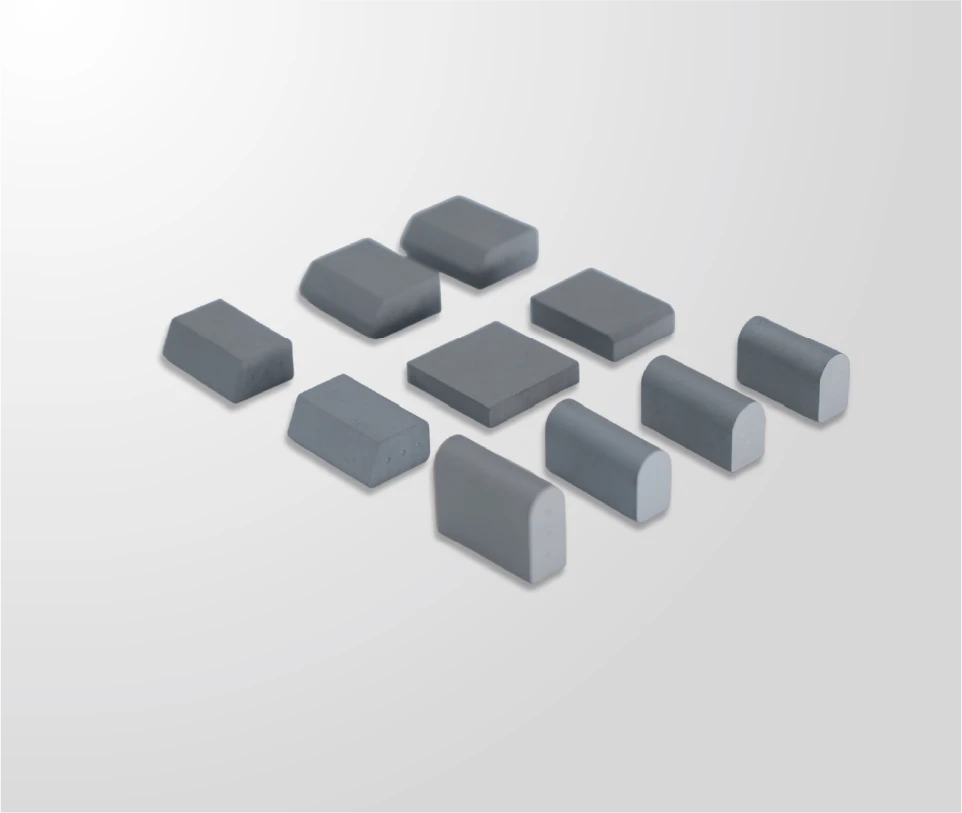
Grade names are supplier-specific, and similar hardness values do not prove equivalent field behavior. Cobalt or nickel binder percentage, tungsten carbide grain size, porosity, density, transverse rupture strength, residual stress, edge preparation, and braze quality can all change how an insert wears or fractures.
ISO 513 is often cited in carbide discussions, but its published scope covers hard cutting materials used for machining by chip removal. The standard states that it is not applicable to other uses. Snow plow wear inserts therefore should not be declared equivalent merely because two products are associated with the same K or M application group.
What a useful cross-reference should compare
Treat a cross-reference as a verification worksheet, not as proof of interchangeability. Leave a field blank when a supplier has not provided a value, and mark it for confirmation before ordering production quantities.
| Property | Current insert | Candidate insert | Evidence to request |
|---|---|---|---|
| Supplier and exact grade code | [record] | [record] | Current technical data sheet |
| Binder chemistry and percentage | [verify] | [verify] | Material specification or certificate |
| WC grain-size class | [verify] | [verify] | Supplier grade data |
| Density | [verify] | [verify] | Test method and batch result |
| Hardness scale and value | [verify] | [verify] | Test method, scale, and tolerance |
| Transverse rupture strength | [verify] | [verify] | Test method and specimen basis |
| Insert dimensions and tolerances | [measure] | [measure] | Dimensioned drawing and inspection report |
| Braze or retention process | [record] | [record] | Approved process and joint inspection |
| Intended wear environment | [record] | [record] | Application statement and limits |
How to qualify a substitute carbide insert
First, define the failure you are trying to correct. Uniform abrasion, edge chipping, insert loss, braze cracking, and steel-body wear point to different variables. A harder grade may help abrasion yet make an impact problem worse.
- Freeze the geometry. Confirm length, width, thickness, edge radius, seating surfaces, and blade-pocket fit.
- Compare disclosed material properties. Use the same test scales and methods; do not convert an approximate marketing description into an exact equivalence.
- Review the joint. Carbide composition alone cannot compensate for an unsuitable braze alloy, joint clearance, heat cycle, or steel support.
- Inspect samples. Check dimensions, visible defects, seating, and joint coverage before a field test.
- Run an A/B trial. Test both options on comparable blades, routes, operators, speeds, and weather conditions.
- Use a stop rule. Remove the candidate if cracking, insert loss, abnormal vibration, or damage exceeds the agreed limit.
A practical field-trial record
A trial is only useful when the exposure is recorded. Log blade position, truck, route, road-surface mix, operating hours or miles, storm conditions, operator, initial dimensions, inspection interval, mass or wear loss where practical, chip count, insert loss, and steel-body damage.
Compare cost per operating hour or route mile, not purchase price alone. Keep the trial long enough to observe the relevant failure mode, but do not continue after a safety or equipment-damage threshold is reached.
What to include in an RFQ
A clear request for quotation prevents a commercial “equivalent” from being mistaken for an engineering equivalence. Ask the supplier to identify exceptions rather than silently accepting every requirement.
- Drawing number, revision, dimensions, tolerances, and required fit
- Exact grade designation and disclosed composition/property ranges
- Required material and dimensional inspection documents
- Braze or retention-process requirements and acceptance criteria
- Sample quantity, lot traceability, packaging, and corrosion protection
- Field environment, known failure mode, and acceptance metrics
- Change-notification requirement for grade, powder source, geometry, or process
Specify the Material and Acceptance Evidence Before Comparing Grades
This research-backed framework closes a recurring gap in pages ranking for carbide grade cross reference snow plow blades: readers need a decision method, not a list of unsupported superlatives. Apply the same evidence fields to every option before choosing the ultimate carbide grade cross reference chart for snow plow blades.
| Decision gate | Evidence to collect | Release rule |
|---|---|---|
| Grade identity | Supplier grade, WC grain range, binder system, and lot number | Treat cross-reference charts as a shortlist, never automatic equivalence |
| Properties | Declared hardness, density, transverse-rupture or toughness evidence | Balance wear resistance against impact risk for the actual duty |
| Interface | Insert geometry, pocket fit, surface preparation, braze alloy, and gap control | A strong grade cannot compensate for poor fit or joining |
| Acceptance | Drawing, certificate, sampling plan, visual criteria, and destructive test where agreed | Approve the process and lot evidence, not only a sample photograph |
Hardness is only one screening value. Grade selection must also account for impact, thermal cycling, corrosion exposure, support geometry, joining quality, and the cost of an insert-loss failure.
Run a Controlled Trial Before Full-Fleet Adoption
-
Freeze the baseline: record the current component, carrier settings, route, weather, operator, hours, and reason for removal.
-
Approve fit first: compare the supplier drawing with the machine and attachment. Do not drill, grind, weld, or substitute fasteners without an approved procedure.
-
Change one major variable: keep route and operating method as consistent as practical so the result can be attributed to the component rather than a different setup.
-
Inspect at planned intervals: photograph the same locations, measure wear, check fastener torque and retention, and log impacts or abnormal vibration.
-
Release against written criteria: decide in advance what wear, removal quality, downtime, and cost per operating hour would justify expansion.
Official-Source and SERP Verification
The technical boundary was checked against Federal Highway Administration snow and ice guidance. That source is used for the operating or safety context; model-specific dimensions, settings, and limits must still come from the approved manual for the exact machine and component. The following leading pages were reviewed for search intent and missing decision details:
Frequently Asked Questions
What should be verified before selecting the ultimate carbide grade cross reference chart for snow plow blades?
Confirm the exact application, dimensions, carrier limits, operating surface, expected impacts, supplier drawing, and acceptance evidence. A product name or grade label alone is not enough.
How should the ultimate carbide grade cross reference chart for snow plow blades be compared on cost?
Compare landed and installed cost, service hours, maintenance labor, downtime, collateral wear, and replacement reason. Use cost per operating hour for comparable routes rather than purchase price alone.
When is a trial required?
Use a controlled trial whenever fit, material, setup, route conditions, or supplier process changes. Define the baseline and pass criteria before the trial starts.
Which document controls installation and operating limits?
The current manual, approved drawing, and written instructions for the exact carrier and component control. General articles and cross-reference tables are screening tools, not installation authority.
Request an Application Review
Send SENTHAI the carrier or machine model, drawing or dimensions, operating surface, route condition, current failure mode, expected quantity, and target service interval. The engineering team can then review a suitable product path without changing the evidence requirements described above.
Related articles
 Best Snow Plow Blade Family for Your Fleet: Top 5 ScenariosKnowledge
 Top 10 Snow Plow Blade Types for Winter Fleets (Ranked by Duty Fit)Knowledge
 Top 5 Best Carbide Blade Configurations for Highway PlowingKnowledge
 Best Snow Plow Blade Materials Ranked: Steel vs Carbide vs Cladding vs Rubber-CarbideKnowledge