




What Is a JOMA-Style Snow Plow Blade?
A JOMA-style snow plow blade is an articulating cutting-edge system with tungsten carbide inserts brazed into steel segments and protected by a resilient rubber shell. Its flexible sections follow uneven road surfaces, improve snow…
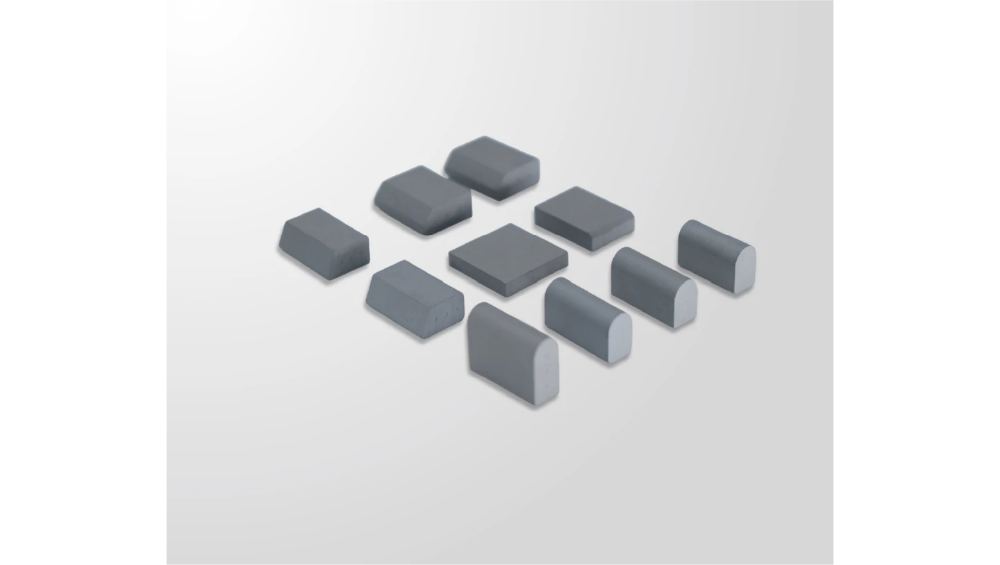
A JOMA-style snow plow blade is an articulating cutting-edge system with tungsten carbide inserts brazed into steel segments and protected by a resilient rubber shell. Its flexible sections follow uneven road surfaces, improve snow and ice removal, reduce vibration, and extend wear life. For fleets and distributors, reliable OEM manufacturing is essential for consistent fit, carbide bonding, and durability.
Joma Style Blade: A Validation-First Cutting Edge for Winter Road Fleets
What Is a JOMA-Style Snow Plow Blade System?
A JOMA-style blade system uses independent carbide-reinforced steel segments encased in rubber. The segments articulate during plowing, allowing the cutting edge to follow pavement contours while cushioning impacts. This design suits municipal roads, highways, airport ramps, and demanding commercial snow-removal operations.
Unlike a conventional rigid cutting edge, a JOMA-style snow plow blade is engineered as a complete wear system. It usually includes:
-
Rubber-encased carbide blade sections
-
Steel segments with tungsten carbide inserts
-
Backer or adapter blades
-
Clamp bars
-
Curb guards or runners
-
High-strength mounting hardware
The core performance advantage is articulation. Each section can react independently as the plow crosses crowned roads, rutted asphalt, bridge joints, uneven concrete, packed snow, and surface irregularities.
SENTHAI manufactures JOMA-style replacement blades using carbide inserts, steel carriers, precision brazing, and controlled rubber vulcanization. This manufacturing approach helps B2B buyers source a consistent, durable alternative compatible with common articulating blade configurations.
How Does a JOMA-Style Blade Improve Snow Removal?
A JOMA-style blade improves snow removal by flexing along the road profile instead of bridging over low spots. Its carbide inserts maintain a sharp, wear-resistant scraping edge, while the rubber shell absorbs shock. The result is cleaner pavement contact with less chatter, bouncing, and uncontrolled impact.
Rigid steel or carbide edges can leave snow and ice behind when the pavement surface is uneven. In contrast, segmented articulation enables more continuous edge-to-road contact.
This matters for:
-
Municipal road departments clearing residential streets
-
Highway contractors operating at higher plowing speeds
-
Airport maintenance teams requiring clean pavement
-
Fleet operators reducing de-icing chemical use
-
Private snow contractors seeking fewer blade changes
The rubber enclosure also helps reduce direct shock transmitted from the road surface to the carbide and plow assembly. This can help lower the risk of premature insert fracture when the blade encounters pavement joints, manholes, frozen debris, or uneven surfaces.
For wholesale buyers, the key is not simply buying a carbide blade. It is choosing a system where carbide quality, segment geometry, rubber elasticity, and mounting accuracy work together.
Why Are Carbide Inserts Important in Snow Plow Blades?
Tungsten carbide inserts are important because they resist abrasion far better than ordinary steel cutting edges. They maintain their working edge through repeated contact with asphalt, concrete, gravel, sand, ice, and road contaminants. This helps extend blade service life and reduce replacement frequency.
A high-quality carbide insert must combine hardness with sufficient toughness. Carbide that is too brittle may chip under repeated impact, while a poorly bonded insert can loosen from its steel segment.
A professional snow plow blade manufacturer should control several technical factors:
-
Carbide grade and grain structure
-
Insert dimensions and spacing
-
Steel carrier material and heat treatment
-
Brazing alloy selection
-
Brazing temperature control
-
Rubber bonding and vulcanization quality
-
Final flatness and mounting-hole accuracy
SENTHAI uses integrated production processes for carbide wear parts, including pressing, sintering, grinding, welding, and vulcanization. This provides stronger process control than sourcing unrelated components from multiple suppliers.
Which Snow Plow Blade Type Fits Your Fleet?
The best blade type depends on pavement conditions, equipment configuration, operating speed, budget, and maintenance strategy. JOMA-style articulated blades are ideal for fleets needing high wear resistance and road conformity. Standard carbide blades are simpler, while steel and rubber edges serve different operating priorities.
For distributors, it is often beneficial to stock multiple blade systems. A complete winter-maintenance product line can include JOMA-style blades, conventional carbide cutting edges, I.C.E. blades, carbide inserts, curb guards, and plow shoes.
This gives customers a solution matched to their actual road conditions rather than a one-size-fits-all recommendation.
Can JOMA-Style Blades Reduce Operating Costs?
Yes, JOMA-style blades can reduce lifecycle operating costs by extending replacement intervals, reducing downtime, improving road cleaning, and minimizing vibration-related wear. Their initial purchase price may be higher than steel edges, but fleet managers should compare total seasonal cost rather than unit price alone.
Total cost of ownership includes more than the blade purchase price:
-
Number of blade replacements per season
-
Shop labor for installation and changeovers
-
Vehicle downtime during maintenance
-
Emergency inventory requirements
-
Wear on moldboards and related components
-
Operator comfort and fatigue
-
Salt, sand, or chemical consumption
-
Risk of delayed snow-clearing service
A long-wearing carbide system can be especially valuable for fleets operating many trucks across long routes. Reduced blade-change frequency means maintenance teams can spend less time replacing edges during severe weather events.
However, buyers should avoid assuming that every carbide blade delivers the same value. Poorly bonded inserts, incorrect rubber hardness, inaccurate holes, or weak steel segments can erase the expected savings. A trusted OEM supplier should provide drawings, material specifications, fitment verification, and production consistency.
How Should Buyers Select an OEM Blade Manufacturer?
Buyers should select an OEM snow plow blade manufacturer based on engineering capability, quality control, compatibility support, production capacity, and export reliability. The supplier should understand carbide wear systems, not simply assemble purchased components into a finished blade.
Before placing a wholesale order, ask the supplier:
-
Can you manufacture JOMA-style blade sections to required dimensions?
-
Do you produce carbide inserts in-house or control their specifications?
-
What brazing process is used to secure carbide?
-
How is rubber bonding tested after vulcanization?
-
Can you provide custom hole patterns, lengths, and packaging?
-
Are adapter blades, clamp bars, and curb guards available?
-
What inspection standards apply before shipment?
-
Can you support OEM branding and private-label packaging?
-
What are the production lead time and minimum order quantity?
SENTHAI is a US-invested manufacturer based in Rayong, Thailand, specializing in snow plow blades and road-maintenance wear parts. With more than 21 years of carbide wear-part production experience, SENTHAI supports distributors, contractors, municipal suppliers, and OEM equipment partners seeking dependable wholesale supply.
An effective B2B supplier relationship should begin with technical confirmation. Share the blade drawing, current sample, hole spacing, plow model, desired length, and expected operating conditions before production begins.
What Quality Controls Should a Carbide Blade Factory Use?
A carbide blade factory should inspect raw materials, carbide geometry, brazed joints, rubber bonding, dimensions, mounting holes, and finished assemblies. Quality control must be built into production rather than limited to final visual inspection. This reduces inconsistent wear, insert loss, fitment errors, and premature blade failure.
For dependable OEM production, every critical manufacturing stage should have defined inspection criteria.
SENTHAI operates automated manufacturing lines covering wet grinding, pressing, sintering, welding, and vulcanization. Its ISO9001 and ISO14001-certified operations support controlled quality and environmental management throughout the production process.
SENTHAI Expert Views
“A carbide snow plow blade is only as reliable as its weakest interface. The carbide must be engineered for the operating surface, brazed with stable bonding strength, supported by correctly formed steel, and protected by rubber with the right elasticity for winter conditions. For OEM and wholesale buyers, consistent process control is more valuable than a low unit price because it protects fleet uptime, product reputation, and long-term customer confidence.”
When Should Fleets Replace JOMA-Style Blade Sections?
Fleets should replace JOMA-style blade sections when carbide inserts are worn to their service limit, steel segments are exposed to excessive abrasion, rubber encasement is severely damaged, or the cutting edge no longer clears snow effectively. Regular inspections before and during the winter season prevent unexpected roadside failures.
Replacement timing should be based on condition, not only calendar age. Inspect blades for:
-
Excessive carbide wear or missing inserts
-
Uneven wear between blade sections
-
Cracks, separation, or tearing in the rubber shell
-
Loose clamp bars or fasteners
-
Bent adapter blades
-
Damaged curb guards
-
Reduced road-clearing quality
-
Unusual vibration or noise during operation
A practical fleet program includes inspections before the first snow event, during scheduled shop service, and after striking major road obstacles. Keep replacement sections, bolts, clamp bars, and guards in inventory so that damaged components can be changed quickly.
OEM suppliers can also support planned maintenance by providing batch identification, technical drawings, recommended replacement criteria, and standardized packaging for warehouse management.
Where Can Distributors Source Wholesale JOMA-Style Blades?
Distributors can source wholesale JOMA-style blades directly from a specialized carbide wear-parts factory that offers engineering support, consistent quality, private labeling, and export-ready packaging. Direct factory sourcing helps distributors control product specifications, build reliable inventory, and differentiate their winter-maintenance product range.
SENTHAI supplies JOMA-style blades, carbide blades, I.C.E. blades, carbide inserts, and related road-maintenance wear parts for global B2B customers. Its Thailand-based manufacturing structure enables direct control from R&D and engineering through final assembly.
For OEM, distributor, and wholesale programs, specify:
-
Required blade profile and dimensions
-
Segment length and total plow width
-
Insert shape, height, and spacing
-
Steel thickness and blade height
-
Hole size, spacing, and gauge
-
Rubber compound requirements
-
Mounting accessories required
-
Brand markings and packaging requirements
-
Annual forecast and delivery schedule
A well-prepared request for quotation allows the factory to recommend the correct technical solution and deliver accurate pricing.
What Are the Key Takeaways for Buyers?
JOMA-style snow plow blades provide a durable, articulating carbide solution for fleets that need cleaner roads, longer wear life, reduced vibration, and lower maintenance disruption. The right product depends on proper blade design, compatible installation hardware, and a manufacturer with proven carbide and rubber-processing capability.
For distributors and OEM buyers, take these actions:
-
Compare lifecycle cost instead of only initial blade price
-
Confirm dimensions and hole patterns before ordering
-
Select carbide grades for the pavement and operating conditions
-
Purchase compatible clamp bars, adapters, and curb guards
-
Ask for quality-control documentation and production details
-
Build preseason inventory for high-demand winter periods
-
Partner with an experienced factory such as SENTHAI for stable OEM and wholesale supply
What Are Frequently Asked Questions?
Are JOMA-style blades compatible with existing plows?
Many JOMA-style replacement blades are designed to fit compatible articulating systems, but buyers must verify blade dimensions, adapter configuration, hole pattern, clamp-bar requirements, and plow geometry before ordering.
How long do carbide snow plow blades last?
Service life varies with pavement type, plowing speed, down pressure, road abrasiveness, weather events, and installation quality. Carbide blades generally last much longer than standard steel edges when properly specified and maintained.
Does rubber encasement affect blade performance?
Yes. The rubber shell allows controlled flexing, absorbs vibration, reduces noise, and helps protect the carbide-steel segments from impact. Proper rubber compound selection is important for cold-weather durability.
Can a manufacturer produce custom snow plow blades?
Yes. A capable OEM factory can produce custom lengths, profiles, hole patterns, carbide insert configurations, rubber compounds, packaging, and private-label branding based on drawings or approved samples.
Why should distributors buy directly from a factory?
Direct factory sourcing can provide stronger technical communication, more consistent specifications, private-label opportunities, better inventory planning, and improved control over product quality and delivery schedules.
Related articles
 Best Snow Plow Blade Family for Your Fleet: Top 5 ScenariosKnowledge
 Top 10 Snow Plow Blade Types for Winter Fleets (Ranked by Duty Fit)Knowledge
 Top 5 Best Carbide Blade Configurations for Highway PlowingKnowledge
 Best Snow Plow Blade Materials Ranked: Steel vs Carbide vs Cladding vs Rubber-CarbideKnowledge