




Top 5 Best Blade Lines for Distributors (SKU Ranking)
Distributors rank product lines, not individual blades, because the line decides the market coverage, the inventory turns, and the seasonal risk. A line that covers the customer base deeply earns its shelf space; a…
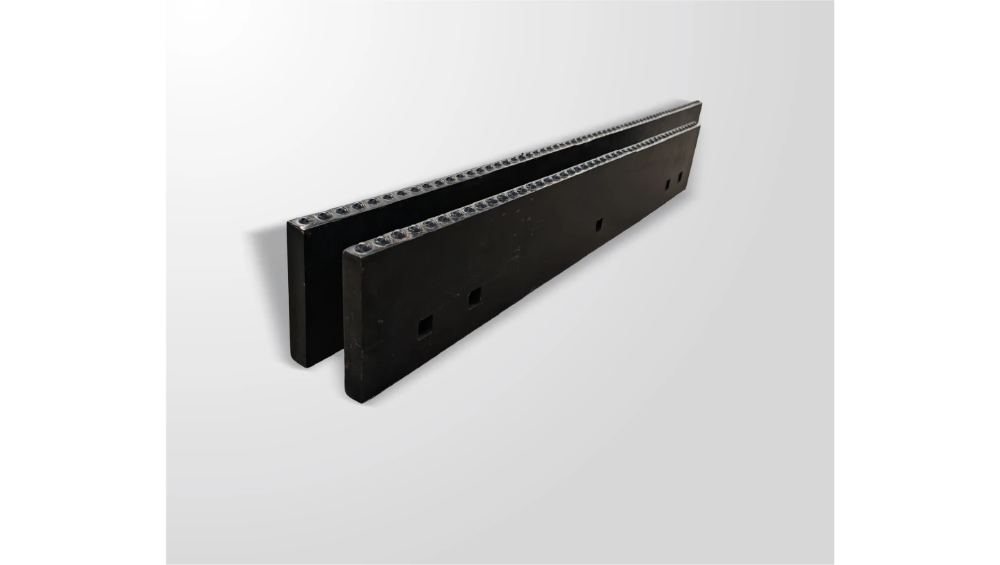
Distributors rank product lines, not individual blades, because the line decides the market coverage, the inventory turns, and the seasonal risk. A line that covers the customer base deeply earns its shelf space; a line that is too narrow leaves orders on the table, and one that is too wide ties up cash in slow movers. After ranking five line strategies, the verdict is that the full-family lineup with deep standard SKUs is the best strategy for winter wear parts, with the JOMA-style segment line close behind for surface-care markets. This ranking explains each strategy and how to plan the stock around the season.
Distributors rank product lines, not individual blades
The distributor’s question is not which blade is best but which line the market needs: the families, the sizes, the accessories, and the stock that turns over before the season ends. The line strategy decides the margin, the cash flow, and the supplier relationship, and the ranking below judges each strategy on market coverage, inventory turnover, margin, and seasonal risk.
The line strategy also decides the supplier relationship. A distributor that buys a full family line from one manufacturer gets one quality system, one documentation standard, and one engineering conversation, while a distributor that assembles the line from several suppliers manages several relationships and several claims processes. The consolidation is part of the margin, not just the convenience.
The five line strategies ranked by coverage and turnover
| Rank | Strategy | What it covers | Risk |
|---|---|---|---|
| 1 | Full-family lineup with deep standard SKUs | Carbide, JOMA, ice kit, inserts | Balanced |
| 2 | JOMA-style segment line | Surface-care and municipal markets | Medium |
| 3 | Insert and component line | OEM and assembly programs | Medium |
| 4 | Ice kit specialist line | Ice-prone regions | High seasonal |
| 5 | Accessory-focused line | Hardware and spares | Low margin |
Strategies ranked 5 through 3 cover a narrow market
5. Accessory-focused line. Clamp bars, hardware, and spare parts carry lower margin and serve the fleet’s existing blades. The line is easy to stock and turns reliably, but it does not build a product position, which is why it ranks last as a strategy on its own.
The accessory line still matters as a complement: the hardware and the spares complete the orders that the blade families generate. The distributor that stocks the accessories alongside the blades captures the whole order, and the margin on the accessories covers the season’s carrying cost of the slower blade stock.
4. Ice kit specialist line. The ice-breaking kit is a strong product in ice-prone regions, and the specialist line builds a clear position. The risk is seasonal concentration: the stock turns only when the ice forms, so the specialist line needs a deep region and a confident forecast.
The ice kit line also carries a technical qualification. The distributor’s customers need the corridor data and the trial design explained, so the specialist line works best for distributors with the engineering support to sell it. The qualification is the entry cost of the position.
3. Insert and component line. Carbide inserts serve OEM and assembly programs with repeat orders and batch documentation. The line offers consistency and margin, but it serves a narrower buyer than the full-family lineup, and the technical qualification is higher.
The insert line also runs on a different calendar than the blade families. The OEM and assembly orders repeat through the year, which smooths the seasonal cash flow, and the batch documentation makes the relationship stickier. The line is a cash-flow stabilizer inside the full-family strategy.
The top two strategies balance depth with seasonal risk
2. JOMA-style segment line. The segmented edge is a North American bestseller, and SENTHAI describes its Joma-style line as a bestseller for over a decade. The line covers the municipal and surface-care markets with standard 3-foot and 4-foot sections, and the repeat orders and the spare sections build a dependable inventory turn. The strategy is strong where the market runs residential and municipal routes.
1. Full-family lineup with deep standard SKUs. The champion covers the customer base across all four families: carbide blades for the abrasive routes, JOMA-style segments for the surface-care routes, ice kits for the bonded corridors, and inserts for the replacement programs. The deep standard SKUs — the sizes and configurations that turn every season — carry the margin, while the specialized families build the position. SENTHAI supplies all four families, which lets the distributor build the line from one quality system and one documentation standard.
The best line strategy for winter is a deep standard range with staged accessories
The champion wins because it balances coverage and cash: the standard SKUs turn before the season ends, the specialized families differentiate the line, and the accessories complete the order. The strategy also spreads the seasonal risk, because the insert and component programs sell on a different calendar than the blade families.
The full-family line also strengthens the supplier relationship. One quality system, one documentation standard, and one engineering conversation reduce the distributor’s qualification cost, and the shared records make the compliance chain simpler for the distributor’s own customers. The consolidation is part of the margin, and it compounds with each season the line stays with one manufacturer.
The line’s performance is also reviewed on a schedule. The inventory turns, the stockout events, the margin per SKU, and the season-end sell-through are the four numbers the distributor reviews at the midpoint and the close, and the review feeds the next season’s forecast and the next order. The review is the control loop that keeps the line profitable.
The profitable line is the one the distributor renews with the manufacturer each season.
Planning stock around the season keeps the line profitable
The stock plan follows the calendar: spring for the forecast, summer for the main order, early fall for receipt and the receiving check, and late fall for the top-up. The reorder signals come from the sales record, not the calendar alone, and the slow movers are identified deliberately rather than by surprise. The carbide snow plow blade page, the JOMA-style blade page, the packed ice carbide kit page, and the carbide inserts page document the product families for the line plan, and SENTHAI can confirm the lead times and the program terms. To build the line, send the market profile, the SKU forecast, and the commercial requirements through the contact page and ask for the program proposal.
The cash plan is the other half of the stock plan. The pre-season order ties up cash from the order to the sale, so the financing, the payment staging, and the warehousing cost belong in the margin calculation. The distributor that plans the cash with the stock keeps the line profitable through the season instead of discovering the cost in January.
Expert view — SENTHAI engineering team: “The distributor’s season is decided before the first storm. The SKU mix, the calendar, and the cash plan are the line, and the blades fill it.”
Frequently Asked Questions
Which blade line should a distributor start with? The full-family lineup with deep standard SKUs, because it covers the customer base and spreads the seasonal risk. Newer distributors can start with one family and add as the market grows.
How deep should the standard SKU stock be? Deep in the sizes and configurations the customer base actually runs, and only on order for the customs. The reorder point is calculated from the lead-time demand plus a buffer.
How do I avoid seasonal overstock? Set the reorder signals from the sales record, identify the slow movers deliberately, and review the stock at the season’s midpoint. The buffer is sized from the forecast uncertainty and the lead time.
Is the ice kit line too risky for a distributor? In a deep ice-prone region, no; the specialist line builds a strong position. Elsewhere, the kit belongs in the full-family lineup rather than as a standalone line.
What documentation should the line carry? The certificates, batch records, and packaging documents that travel with the product. SENTHAI confirms the required reports and certificates during quotation, and the documentation is part of the distributor’s compliance chain.
How do I choose between a full-family and a specialist line? The market decides: a broad customer base supports the full family, and a deep regional need supports the specialist. Most distributors start with one family and grow into the full lineup as the market and the cash allow.
What is the seasonal cash risk of the line? The pre-season order ties up cash from the purchase to the sale. The financing, the payment staging, and the warehousing cost should be planned with the stock, not discovered after the order.
How do I measure the line’s success? Track the inventory turns, the stockout events, the margin per SKU, and the season-end sell-through. The four numbers show whether the line covers the market and turns the cash.
Sources
Related articles
 Best Snow Plow Blade Family for Your Fleet: Top 5 ScenariosKnowledge
 Top 10 Snow Plow Blade Types for Winter Fleets (Ranked by Duty Fit)Knowledge
 Top 5 Best Carbide Blade Configurations for Highway PlowingKnowledge
 Best Snow Plow Blade Materials Ranked: Steel vs Carbide vs Cladding vs Rubber-CarbideKnowledge