




Tailor-Made Carbide Blades: From Powder to Blade for Extreme Conditions
Tailor-made carbide blades are engineered from powder to blade: tungsten carbide powder, binder selection, pressing, vacuum sintering above 1400°C, precision grinding, and automated brazing produce wear parts that survive freezing temperatures, corrosion, and abrasive…
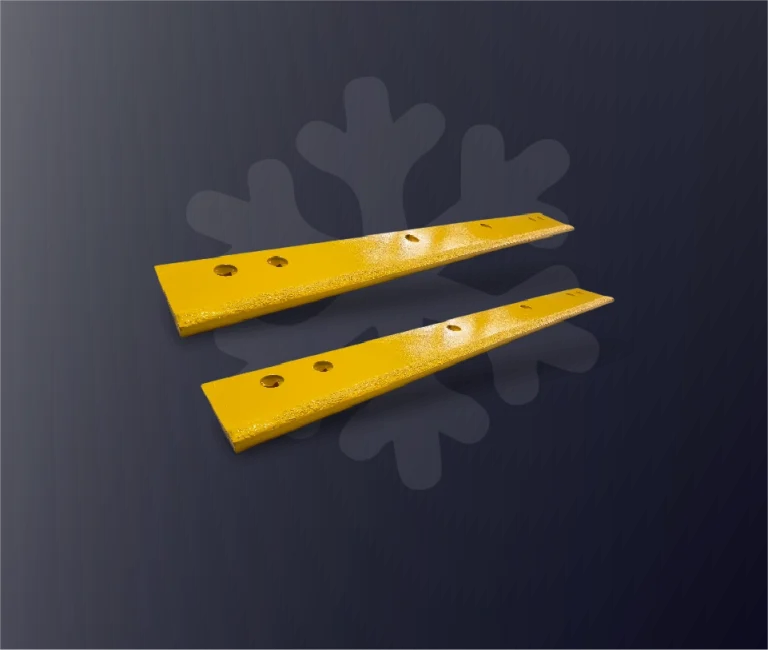
Tailor-made carbide blades are engineered from powder to blade: tungsten carbide powder, binder selection, pressing, vacuum sintering above 1400°C, precision grinding, and automated brazing produce wear parts that survive freezing temperatures, corrosion, and abrasive contact with gravel, ice, and asphalt. This full-process control is what separates custom performance from generic tooling.
(Last modified date: September 2, 2026)
Quick definition: The story of a carbide blade begins with fine tungsten carbide powder and a metallic binder — typically cobalt or nickel.
Key Takeaways
- Powder composition sets the hardness-toughness balance; snow plow blades favor toughness at sub-zero temperatures, mining favors hardness.
- Vacuum sintering above 1400°C bonds powder into a dense, monolithic carbide structure.
- Brazing parameters — temperature, filler alloy, and pressure — determine bond integrity and delamination resistance.
- Customization applies at every stage: grain size, geometry, edge profile, and anti-corrosion coatings.
From Powder Composition to Perfect Blend
The story of a carbide blade begins with fine tungsten carbide powder and a metallic binder — typically cobalt or nickel. Each formulation is tailored to the application: snow plow blades favor higher toughness for sub-zero flexibility; mining favors increased hardness for wear life. The composition determines the balance between hardness, toughness, and resistance to impact and corrosion. Once the mix is right, it’s homogenized using wet milling for even distribution, then spray-dried into granules ready for compacting. See when to replace a snow plow blade for the field perspective.
Pressing, Sintering, and Structure Control
Compact pressing determines density uniformity. Advanced automatic presses exerting several hundred tons of force mold the powder into near-net shapes. Green compacts then move into vacuum sintering furnaces where controlled temperatures above 1400°C bond the powder into a monolithic carbide structure. During sintering, the binder melts and fills microscopic pores, producing a fully dense component. Microstructure analysis confirms uniform grain distribution and optimal binder phases. See the science of precision and longevity in automated production.
Finishing, Brazing, and Blade Assembly
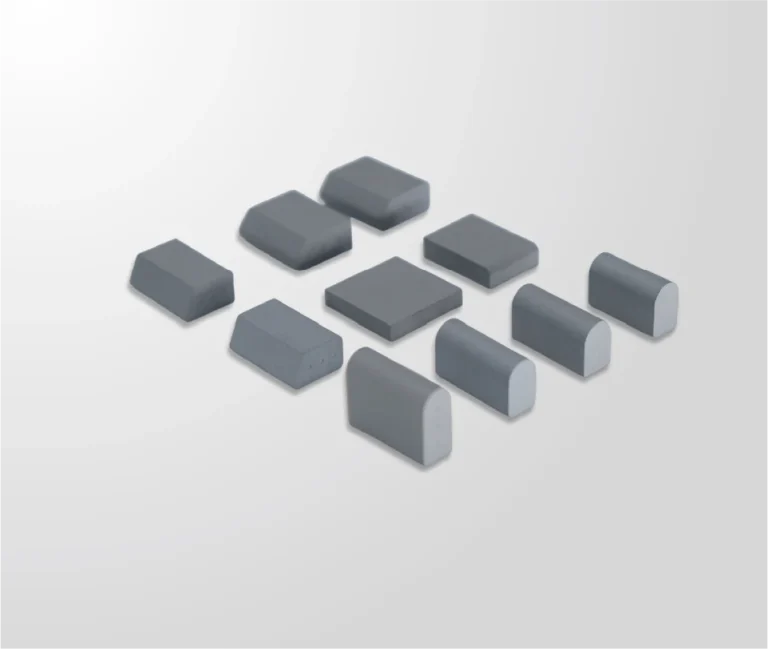
After sintering, each blank is precision-ground to exact tolerances. The next stage — brazing or welding — integrates carbide with the steel body. Brazing parameters such as temperature, filler alloy, and bonding pressure are optimized for the intended use, ensuring seamless bonding that prevents delamination under vibration and thermal cycling. Surface finishing follows: polishing, sharpening, and dimensional inspection, plus anti-corrosion coatings for road maintenance blades.
SENTHAI Carbide Tool Co., Ltd. Company Background
SENTHAI is a US-invested manufacturer based in Rayong, Thailand, specializing in snow plow blades and road maintenance wear parts. With over 21 years of experience, SENTHAI combines advanced technology, efficient cost control, and strict quality assurance, trusted by more than 80 global partners. See building a verified winter wear-parts supply program.
Market Trends and Industry Data
Demand for custom wear parts continues to surge across snow removal, mining, and road maintenance as operators seek longer life and predictable performance. Automation and traceability are now baseline expectations in custom carbide supply, not differentiators.
Customization Advantages and Applications
| Customization | Benefit | Application |
|---|---|---|
| Grain size | Tune hardness vs toughness | Plow blades vs mining tools |
| Edge geometry | Ice fracture or abrasion resistance | Packed ice routes |
| Binder ratio | Impact absorption | Cracked asphalt, gravel |
| Coatings | Corrosion resistance | Salt-heavy regions |
Real-World Cases and ROI Impact
Custom blades matched to route conditions extend service intervals and reduce changeouts. In salt-heavy municipal fleets, coated carbide edges last multiple seasons; in mining, hardness-tuned inserts cut cost per ton. The ROI shows up as lower cost per mile or per ton, not just edge price.
Future Trends in Carbide Blade Manufacturing
Expect tighter process traceability, in-line NDT of braze joints, and data-driven grade selection. Custom programs will shrink lead times with digital engineering and automated production. See whether your carbide circular saw blade is really maintained.
FAQs
Why does powder composition matter in carbide blades?
It sets the hardness-toughness balance that determines whether the blade wears slowly or absorbs impact without chipping.
What temperature does sintering require?
Vacuum sintering typically runs above 1400°C to bond tungsten carbide powder into a dense structure.
How is the carbide attached to the steel blade?
Through brazing or welding with controlled temperature, filler alloy, and pressure, creating a bond that resists delamination.
Can blades be customized for my fleet?
Yes — grain size, geometry, binder ratio, and coatings can be tailored to your routes and equipment.
Related Articles
- When to Replace a Snow Plow Blade
- Verified Winter Wear-Parts Supply Program
- Precision and Longevity in Automated Production
- Carbide Circular Saw Blade Maintenance
Official Resources
- SENTHAI — Carbide Snow Plow Blades
- SENTHAI — Replaceable Carbide Inserts
- SENTHAI — Contact for Custom Engineering
References
- SENTHAI powder-to-blade process documentation, 2026.
- Industry data on custom carbide wear part adoption, 2025–2026.
Related articles
 Best Snow Plow Blade Family for Your Fleet: Top 5 ScenariosKnowledge
 Top 10 Snow Plow Blade Types for Winter Fleets (Ranked by Duty Fit)Knowledge
 Top 5 Best Carbide Blade Configurations for Highway PlowingKnowledge
 Best Snow Plow Blade Materials Ranked: Steel vs Carbide vs Cladding vs Rubber-CarbideKnowledge