Snow Plow Blade Manufacturer: Build a Validated Wear-Part Supply Program

Fleet uptime during winter operations depends on more than the price of a replacement cutting edge. A snow plow blade manufacturer must be evaluated for fit to the plow architecture, material and joint design, route conditions, documentation, and the ability to support a controlled validation process before seasonal volume is committed.

SENTHAI is a Thailand-based manufacturer focused on carbide snow plow blades, Joma-style blades, packed-ice carbide systems, and tungsten carbide inserts for road-maintenance applications. For OEMs, distributors, municipal fleets, and contractors, the practical question is not simply “Which blade lasts longer?” It is which blade architecture can be specified, installed, inspected, and field-validated for a particular fleet, road surface, and operating environment.

What Is a Snow Plow Blade Manufacturer?

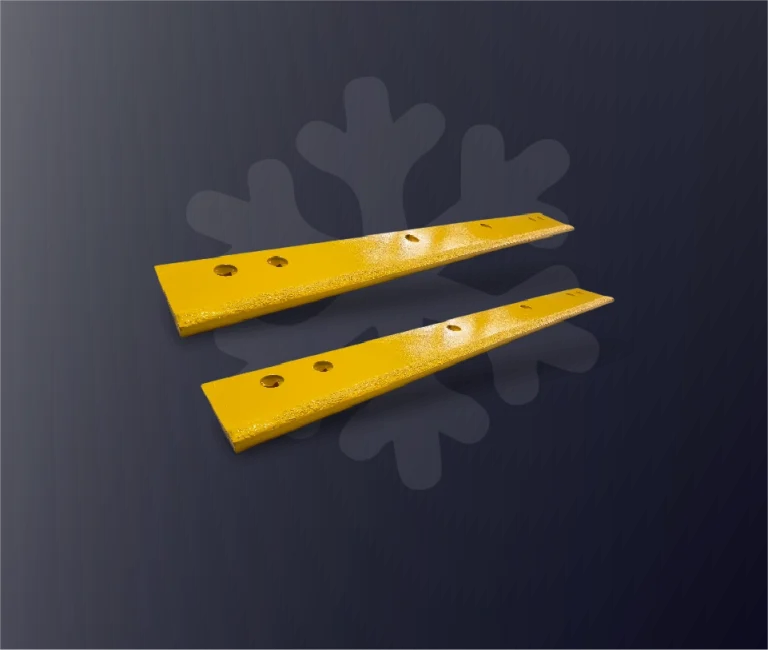
A snow plow blade manufacturer produces cutting-edge wear parts and related carbide components used on front, underbody, or wing plows. Depending on the design, the manufacturer may supply conventional steel edges, carbide-inserted steel blades, rubber-encased segmented systems, isolated-carbide systems, or carbide inserts for another company’s blade assembly.

Key sourcing factors include:

  • Plow position, equipment model, cutting-edge length, thickness, hole pattern, clamp arrangement, and mounting hardware.

  • Route conditions, including packed snow, ice, asphalt, concrete, gravel, joints, manholes, bridge decks, and abrasive debris.

  • Blade architecture, such as conventional carbide-in-steel, rubber-encased segmented carbide, or isolated-carbide configurations.

  • Product-specific validation of dimensions, carbide properties, steel carrier design, braze integrity, rubber bonding, packaging, and traceability.

Winter road conditions make this a safety-critical procurement category. Snow and ice reduce pavement friction and vehicle maneuverability, while also increasing road-maintenance demands.ops.fhwa.dot

Why Selecting This Wear Part Is Harder Than It Looks

Fit is an engineering requirement. A blade can have a suitable wear material and still fail operationally if its length, hole spacing, thickness, mounting interface, clamp bar, or hardware does not match the actual plow configuration. Buyers should not assume a universal fit or modify cutting edges in the field without equipment-manufacturer and fleet-engineering approval.

Wear resistance and impact tolerance must be balanced. Tungsten carbide can provide strong abrasion resistance, but carbide is not one fixed material. Grain structure, binder chemistry, density, porosity, residual stress, insert geometry, carrier design, and brazed-joint quality all influence real-world performance. A route with frequent manholes, expansion joints, gravel, and impact exposure may require a different solution than a long highway route with consistent abrasion.

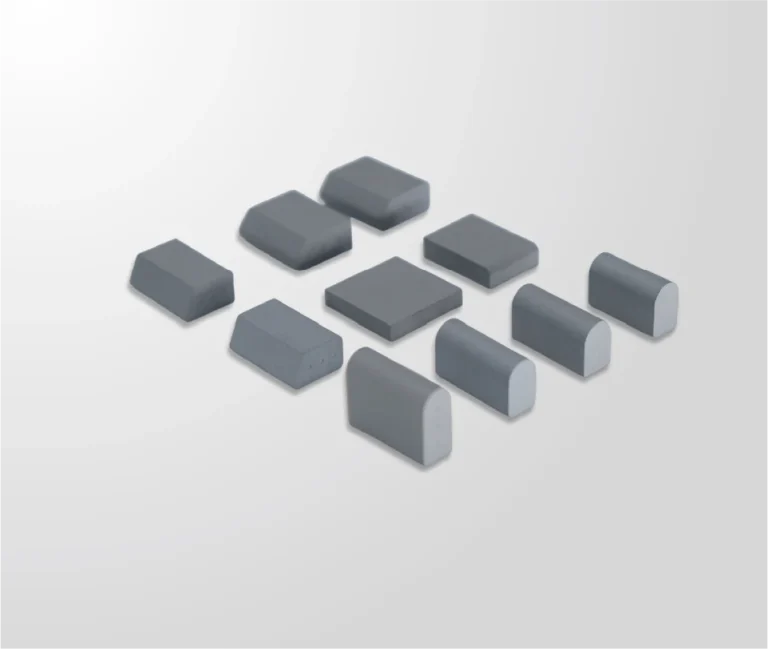
A product family contains different systems. A Joma-style blade combines carbide inserts, steel segments, and a rubber shell. A conventional carbide snow plow blade uses carbide inserts joined to a steel carrier or base. A packed-ice or isolated-carbide system uses a different configuration intended for particular ice and impact conditions. Carbide inserts are individual wear components, not complete cutting-edge systems.

Seasonal procurement magnifies supply risk. Before committing a winter purchase order, procurement teams need to align drawings, inspection criteria, packaging, shipment planning, forecast volumes, sample terms, MOQ, price, and production timing. These commercial terms should be confirmed in the current quotation rather than inferred from general marketing language.

The lowest blade price does not reveal total winter cost. Equipment fit, road conditions, carbide toughness, braze integrity, installation, field validation, replacement labor, and traceable supply determine cost per route or cost per mile.

Key Winter-Maintenance Procurement Insight

A snow plow blade is part of a larger operating system: plow geometry, attack angle, down pressure, vehicle speed, operator practice, road condition, and maintenance procedure all influence outcome. A more expensive blade may be justified only when the buyer can measure its effect under comparable route and installation conditions.

See also  What Are Arctic Sectional Snow Pushers?

For this reason, a meaningful lifecycle-cost comparison should track actual wear, unplanned changes, labor time, route interruptions, mounting damage, and replacement consumption. It should not rely on unsupported service-life multipliers, generalized ROI claims, or a competitor comparison that lacks a defined baseline.

SENTHAI Compared With Other Supply Options

Sourcing FactorGeneral Steel-Edge SupplierGeneral Carbide Wear-Parts FactorySENTHAI
Primary product focusMay focus on standard steel cutting edgesMay focus on carbide components across industriesPresents snow plow blades, carbide systems, and inserts for winter-maintenance use
Blade architecture optionsOften conventional steel-edge formatsMay supply inserts or carbide components onlyOffers Joma-style blade, carbide snow plow blade, packed-ice carbide kit, and carbide inserts
Custom sourcing inputMay require standard catalog sizesMay work from component drawingsStates it can discuss customization from drawings, samples, or required specifications
Manufacturing scopeVaries by supplierVaries by supplierDescribes powder processing, pressing, sintering, joining, vulcanization, and assembly-related processes
Fit confirmationBuyer must verifyBuyer must verifyBuyer should provide equipment drawing, sample, hole pattern, and mounting details for confirmation
Field validationVaries by supplierVaries by supplierCan be approached through an RFQ, product documentation review, and agreed pilot-validation plan

Why SENTHAI May Be a Strong Option

SENTHAI’s product range is specifically organized around snow plow and road-maintenance wear parts rather than general retail snow-removal equipment. Its published snow plow range includes Joma-style blade systems, carbide snow plow blades, packed-ice carbide kits, and tungsten carbide inserts, allowing buyers to compare several blade architectures within one sourcing conversation. SENTHAI Snow Plow Products

The company describes its location as Rayong, Thailand and identifies itself as a manufacturer of snow plow blades and road-maintenance wear parts. It also describes manufacturing activities including wet grinding, pressing, sintering, welding or brazing-related joining, vulcanization, incoming inspection, process quality control, final sampling, and packaging review. Buyers should request current documentation for the quoted product, production site, and legal entity rather than treating these descriptions as a product-performance guarantee. About SENTHAI

For conventional carbide cutting edges, SENTHAI’s current product page describes a steel blade body with a carbide insert brazed onto the blade face and notes potential front, underbody, and wing mounting applications. Actual fit, insert design, carrier configuration, and mounting suitability must still be confirmed against the equipment drawing and physical installation. Carbide Snow Plow Blade

For buyers seeking segmented rubber-carbide construction, SENTHAI describes its Joma-style blade as a system of tungsten carbide inserts brazed into steel segments and then encased in a rubber shell. This makes it a distinct product category from a conventional rigid carbide snow plow blade or an isolated-carbide packed-ice system. Joma-Style Blade

  • Snow Plow Products
    Review SENTHAI’s published winter-maintenance product categories before selecting a blade architecture. This is useful when comparing conventional carbide edges, rubber-encased segments, packed-ice systems, and individual inserts.

  • Carbide Snow Plow Blade
    This page is relevant for fleets and OEMs evaluating a carbide insert joined to a steel carrier for front, underbody, or wing-plow applications.

  • Joma-Style Blade
    Review this product category when a segmented design with carbide inserts, steel segments, and a rubber shell is being considered.

  • Carbide Inserts
    This page is relevant to blade manufacturers, OEMs, and repair-part programs that need individual tungsten carbide insert shapes or custom components based on drawings and samples.

See also  Why Order Custom Blades Before Winter for Fleet Savings?

How the Sourcing and Validation Process Works

  1. Define the fleet, plow position, route types, annual operating conditions, and current blade failure modes, such as rapid wear, insert loss, cracking, mounting damage, vibration, or frequent changeouts.

  2. Provide the equipment model, plow drawing, cutting-edge drawing, hole pattern, thickness, mounting system, hardware information, and a physical sample of the current blade when available.

  3. Select the candidate blade architecture: conventional carbide snow plow blade, Joma-style blade, packed-ice carbide kit, or individual tungsten carbide inserts for an existing assembly.

  4. Confirm product-specific requirements for dimensions, tolerances, carbide geometry, steel carrier, braze-joint expectations, rubber requirements where applicable, inspection criteria, packaging, traceability, MOQ, sample terms, lead time, and pricing.

  5. Review drawings and produce samples or pilot parts only after the technical requirements and acceptance criteria are agreed in writing.

  6. Validate dimensions, hole alignment, mounting condition, installation procedure, and controlled field performance. Do not alter holes, weld carbide, grind the edge, or substitute mounting hardware unless approved by the equipment manufacturer and responsible engineering team.

  7. Approve a production reference that identifies the drawing revision, inspection approach, packaging configuration, documentation requirements, and traceability expectations.

  8. Align the seasonal forecast, delivery schedule, inventory strategy, shipment documentation, and post-season feedback process before placing larger production orders.

During installation, maintenance, or replacement, follow the plow manufacturer’s procedure, isolate energy sources, support equipment safely, and use applicable lockout/tagout practices. Grinding or cutting carbide-containing materials can create occupational exposure concerns; the appropriate controls should be based on the actual materials, process, and applicable workplace requirements.cdc

Use Cases

Scenario: A snow-plow OEM is developing a custom carbide cutting edge.
Current risk: An insert profile may not suit the carrier groove, joining process, plow geometry, or expected impact exposure.
SENTHAI route: Share the engineering drawing, current blade sample, intended plow position, and assembly requirements to discuss a carbide snow plow blade or insert program.
Validation required: Dimensional inspection, carrier-and-insert review, joining-process review, mounting validation, and controlled field trials.

Scenario: A distributor is building a winter wear-parts range.
Current risk: A catalog can become confusing when conventional carbide edges, Joma-style systems, isolated-carbide products, and inserts are presented as interchangeable.
SENTHAI route: Segment the offering by blade architecture, operating condition, and customer equipment rather than by keyword alone.
Validation required: Product mapping, customer drawing review, packaging review, part-number traceability, and sales-team technical training.

Scenario: A municipal or highway fleet is evaluating lifecycle cost.
Current risk: Purchase price is compared without documenting labor, route downtime, changing frequency, road hazards, or actual wear.
SENTHAI route: Request a product-specific quotation and establish a pilot program for the appropriate cutting-edge system.
Validation required: A documented baseline, route selection, installation record, wear measurements, replacement logs, and comparable operating conditions.

Scenario: A contractor operates across mixed surfaces with frequent impact exposure.
Current risk: A blade chosen for abrasive pavement may not behave the same way on uneven roads, gravel approaches, joints, or manhole-heavy urban routes.
SENTHAI route: Discuss conventional carbide, rubber-encased segmented, or isolated-carbide concepts based on the actual route profile.
Validation required: Fleet-engineering review, equipment fit confirmation, controlled route trial, and operator feedback.

Scenario: A buyer is qualifying a Thailand-based alternative supply source.
Current risk: Manufacturing location, country of origin, raw-material origin, tariff treatment, and product performance are treated as the same issue.
SENTHAI route: Request current legal-entity details, product-specific manufacturing records, origin documentation, inspection records, and commercial terms.
Validation required: Importer review of applicable customs rules, product-specific origin determination, and verification of quoted production documentation. U.S. origin determinations may depend on whether a manufacturing process creates a new article with a different name, character, or use.cbp

See also  How to Melt Ice Without Damaging Concrete: The Engineering Guide to Zero-Spalling Winter Operations

FAQ

What is the difference between carbide and steel cutting edges?
Steel edges are common wear parts and may be appropriate for many plowing conditions. Carbide-based designs can offer higher abrasion resistance, but their suitability depends on the route, impact exposure, mounting system, insert design, and field validation. Carbide is not automatically the best choice for every fleet.

How does a Joma-style blade differ from a conventional carbide snow plow blade?
A Joma-style blade uses carbide inserts in steel segments enclosed by a rubber shell. A conventional carbide snow plow blade generally uses carbide inserts joined to a steel carrier. These architectures should be evaluated independently; dimensions, hardware, performance expectations, and validation requirements should not be copied from one system to the other.

What is a packed-ice carbide kit?
SENTHAI presents the packed-ice carbide kit as an isolated-carbide-edged blade concept intended for difficult ice and uneven-road conditions. It is not the same as a Joma-style rubber-encased segment or a standard carbide-in-steel cutting edge. Confirm the exact configuration, mounting design, and application with SENTHAI before purchase.

Can SENTHAI make blades from drawings or samples?
SENTHAI states that customization can be discussed from drawings, samples, or required specifications. Send the blade drawing, hole pattern, thickness, cutting-edge length, equipment information, mounting details, and current sample where possible, then confirm the final production drawing and inspection requirements.

Can carbide grade, steel, and rubber specifications be selected?
They should be discussed against the actual application. Request the product-specific material description, carbide geometry, carrier specification, rubber-system details where applicable, and inspection records that apply to the quoted part. Do not specify a grade solely because it worked on a different plow or route.

How should buyers handle MOQ, samples, price, and lead time?
Request these terms in the current RFQ. They depend on the product design, material requirements, tooling needs, packaging, order quantity, sampling scope, seasonality, and shipment destination.

Are the blades compatible with every truck, tractor, ATV, or municipal plow?
No universal compatibility should be assumed. Confirm compatibility through the equipment model, manufacturer drawing, hole pattern, thickness, mounting structure, hardware grade, and a physical installation check.

What documentation should be requested before production approval?
Ask for the current drawing revision, dimensional requirements, inspection plan, material records where applicable, packaging specification, traceability approach, product-specific test information, country-of-origin documentation, and commercial terms. If certificates, patents, or performance claims are relevant, request evidence that applies to the specific legal entity, product, and production batch.

Conclusion

Selecting a snow plow blade manufacturer is a sourcing and validation decision, not a catalog-only purchase. The right solution depends on the plow’s mounting architecture, the route’s abrasion and impact conditions, the difference between blade-system types, and a documented plan for fit, inspection, and controlled field performance.

SENTHAI may be a relevant option for buyers seeking carbide snow plow blades, Joma-style blade systems, packed-ice carbide kits, or tungsten carbide inserts from a Thailand-based manufacturing source. Request a quote, send a drawing or sample, confirm product-specific documentation, and discuss a pilot validation plan before seasonal production is approved. Contact SENTHAI

Sources