
Plow Shoes Versus Caster Wheels: Setting Ground Clearance
Every plow crew eventually faces the same argument: run the blade on shoes, or fit a set of caster wheels and let them carry the front of the plow. Both options set the height…
Every plow crew eventually faces the same argument: run the blade on shoes, or fit a set of caster wheels and let them carry the front of the plow. Both options set the height at which the cutting edge meets the surface, and both are paid for in the same currency — how much snow is left behind against how much damage the edge does to the surface. The choice is not about which part is better; it is about which surface, which contract and which machine the plow is going to work.
Plow shoes and casters also change how the plow behaves in the operator’s hands, and that setting is re-made every time the machine runs.
What Each Option Is Designed For
Shoes control clearance; casters carry the load.
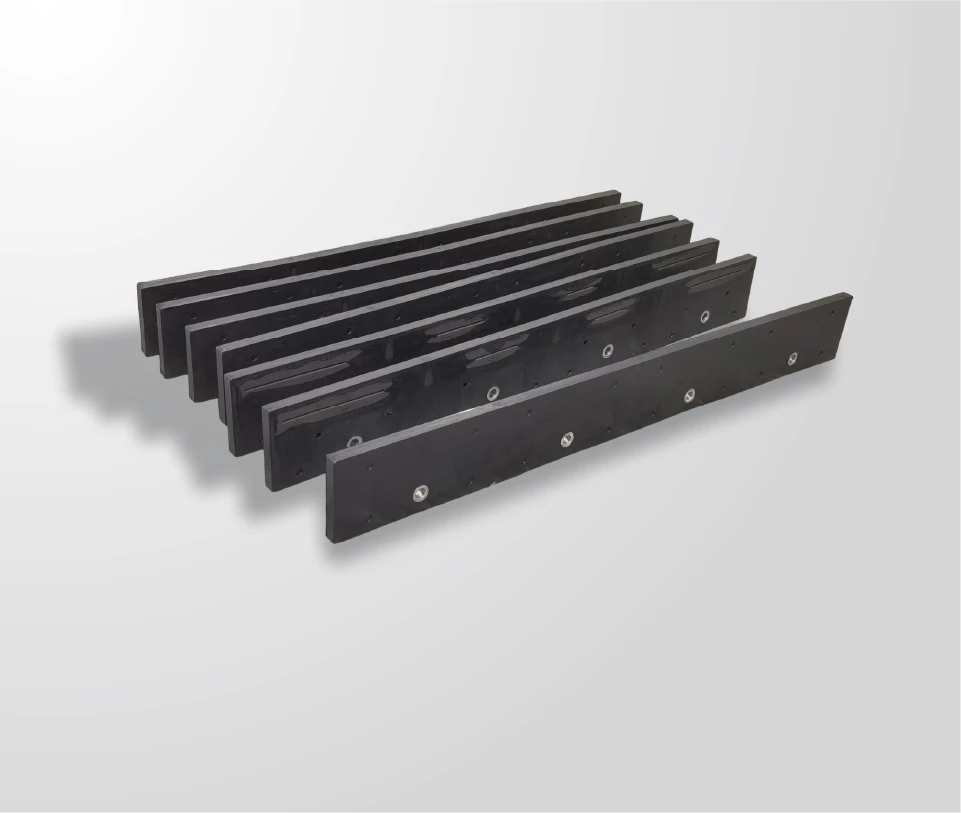
A plow shoe is a wear block bolted to the blade that rides on the surface and holds the cutting edge slightly above it; a caster wheel is a swivelling wheel on a frame that carries the front of the plow entirely, setting height and support together.
Plow shoes are the traditional answer for gravel lanes, unpaved roads and driveways, where a steel edge set to the surface would pull up the surface itself. They are fitted in pairs on the back of the blade and adjusted by shims or stepped mounts, holding the edge a set distance above the ground. Steel shoes last on abrasive gravel; polyurethane shoes mark less and suit finished surfaces.
Caster wheels replace that arrangement with a wheel on a swivel mount supporting the front of the plow. They hold a fixed height while carrying the weight, so the edge can float over uneven ground without the plow’s mass driving it down. That suits block paving, grating, turf and lighter machines where the operator cannot fight the plow’s weight.
The two are not interchangeable. A shoe is an abrasion item that holds the edge off the surface; a caster is a load-carrying assembly that takes the plow’s weight off the edge. Deciding between them starts with asking which of those two jobs is actually the problem.
How Each Affects the Cutting Edge
The setting decides how much work the edge is asked to do.
A shoe loads the edge a little more as it wears; a caster holds clearance constant, so the edge takes less shock and the wheel takes the wear.
The setting decides how much work the edge does. Held high on shoes or casters, the edge meets only the crown of the surface and leaves packed snow; set close to it, the edge scrapes clean but transfers every irregularity in the pavement into itself and the machine. What changes between the two options is how that load arrives.
A shoe carries load intermittently, riding the surface ahead of the edge and lifting the blade over high spots. Wear on the shoe changes the setting progressively: as the sole thins, the edge drops closer to the surface, the plow starts to dig, and the operator notices before any part visibly fails.
A caster carries load continuously and sets height from the wheel, so the edge sees a more constant clearance. That reduces the shock loading that damages an edge on uneven pavement, and it matters most where the edge is hardened or carbide-tipped. Wear then appears in the wheel and tyre instead, and a tyre that loses diameter lowers the plow just as a worn shoe does.
| Point | Plow shoes | Caster wheels |
|---|---|---|
| What carries the load | The blade and the shoe sole together | The wheel and its frame, ahead of the edge |
| Height control | Adjusted by shims or stepped mounts; changes as the sole wears | Set by wheel diameter; changes as the tyre wears |
| Effect on the cutting edge | Edge takes more load as shoes wear | More constant clearance, less shock into the edge |
| Surface protection | Good on gravel; polyurethane is kinder to finish surfaces | Good on paving, grating and turf where the load is the problem |
| Clearing performance | Leaves a layer that thickens with wear | Leaves a layer set by wheel height |
| Wear item | Shoe sole, then the edge | Tyre, bearings and swivel, then the frame |
Surface Damage and Operator Feedback
The surface decides which option is defensible. Asphalt and concrete tolerate a steel edge run close to the surface, and most municipal plowing is done that way. Gravel, dirt and unpaved lanes do not: an edge set to the surface pulls gravel out of the road, and a shoe holds it off. Block paving, stamped concrete, grating and decking need either a soft-faced shoe or a caster, because there the damage comes from weight rather than edge height.
Operator feedback is the second half of the decision and is often the reason a fleet changes its mind mid-season. Shoes give a progressive change the operator reads as the plow starts to bite, and they can be adjusted in minutes in the yard with shims. Casters give a more consistent feel and make a light plow easier to steer, but a wheel can drop into a joint or a thawing rut, and on uneven ground it can lift the edge clear of the surface altogether.
Winter maintenance programmes weigh the same trade-offs: practice notes from state agencies such as MnDOT describe what a route is expected to achieve, while surface condition and clearing performance are treated as linked in FHWA guidance. A route description, not a preference, should choose the setting.
Machine and Plow Compatibility
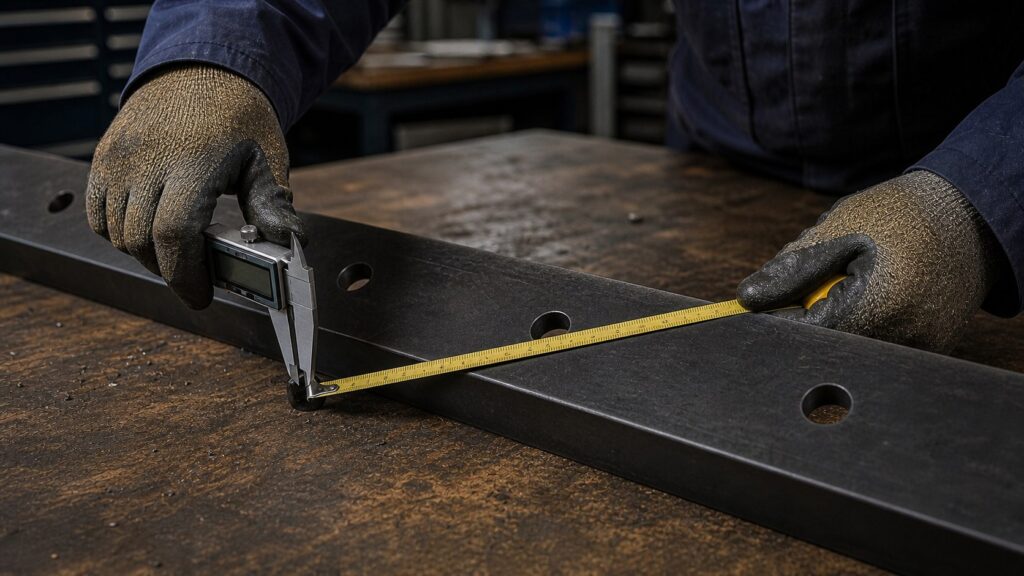
Compatibility comes down to three things: what the blade is drilled for, what the plow frame can carry, and whether the machine has the load capacity to spare. Shoes mount through brackets on the blade, and that pattern is part of the blade specification; a blade drilled for shoes cannot take a caster kit without modification, and modifying a hardened blade in the field is not a route to a reliable fit.
Casters need a mount on the plow frame or a purpose-made kit, and they add load paths the frame may not have been designed for. Where a plow is specified from new, decide the setting system at the same time as the blade so the mounting provisions exist rather than being improvised later. Where a blade is being replaced on an existing plow, supply the mounting dimensions with the enquiry: carbide-edged blades are supplied against a pattern, and the same discipline applies to the hardware that sets their height.
Interface conventions for machine-mounted equipment are documented through standards bodies such as SAE, a reference to cite when a mounting pattern is disputed. The measurements that matter are hole diameter and spacing on the blade, bracket height and offset, the weight the bracket will carry, and the wheel or shoe size the machine’s operating height assumes.
Operational Trade-Offs Beyond Cost
Three trade-offs sit outside the parts list. The first is clearing width and speed: a plow held high leaves a layer, and a layer that refreezes becomes the next run’s problem, so the setting changes the number of passes a route needs. The second is machine wear: casters move load into a wheel and swivel that need their own maintenance, and a seized swivel drags or skips.
The third is risk. On a mixed route where a paved street turns into a gravel lane, one setting has to cover both, so the edge is usually set for the softer surface and the paved stretch is cleared less completely. Crews manage it in different ways: carry shims and adjust at the transition, run two plows, or accept the layer on the gravel. Each choice has a labour cost that belongs in the comparison.
De-icing practice interacts with all three, because a surface left with a layer needs more material to finish the job, and salt spreading plus its effect on equipment and runoff are part of a municipal programme, as the EPA stormwater programme for municipal sources sets out. Snow and ice management practitioners, represented by the Snow and Ice Management Association, treat the setting decision as part of the level of service the client has bought rather than as a mechanic’s preference.
Cost Per Season Compared
Cost per season is where the two options separate, and unit price is the least useful input. The model is the parts replaced in a season, plus the labour to adjust and replace them, plus surface damage to repair, plus the extra passes the setting forces.
Plow shoes score well on unit price and poorly on frequency. Steel shoes on abrasive gravel wear quickly and are replaced more than once in a hard season; polyurethane shoes cost more per unit but last longer and mark less, which matters on a finish surface.
Casters carry a higher initial cost and a different wear pattern: tyres, bearings and swivels, replaced less often than shoes because the wheel is not in sliding contact with abrasive surfacing. Against that, the mount is a structural addition and frame damage is a workshop repair rather than a parts swap. Whether the arithmetic favours casters depends on the route mix, and replacing a chipped section of paving usually costs more than a season of either part.
Choosing by Surface and Contract Type
Choose by the surface the route presents and the level of service the contract promises, then confirm the hardware against the plow. That sequence avoids the common error of buying a setting system that suits the yard rather than the work.
- Gravel and unpaved lanes: plow shoes, sized to hold the edge clear of the surface, with the option of polyurethane where the client objects to marks.
- Asphalt and concrete streets: minimal or no clearance, with shoes or casters used mainly to protect the edge and the machine rather than the surface.
- Block paving, stamped finishes, grating and turf: casters or soft-faced shoes, because weight rather than edge height is the damage mechanism.
- Mixed routes: the setting follows the softest surface on the route, and the labour of adjusting at the transition is priced in.
- Mixed fleets: standardise the shoe pattern or caster mount that fits the largest share of blades, and keep the exception for the routes that damage standard hardware.
Validation practice matches any ground-engaging part: confirm by drawing or physical sample, with hole spacing, bracket geometry and wheel or shoe dimensions checked before the order goes in. Standards for highway materials and equipment, including the specifications state agencies adopt, are published through the AASHTO publications store, and wear and hardness test methods for the parts themselves sit with ASTM. Both are useful when a specification has to be defended rather than explained.
The comparison comes down to what is actually being controlled. Shoes hold the cutting edge off the surface, so clearance drifts downwards and the operator reads the change as the plow starts to bite. Casters carry the front of the plow and hold a more constant height, moving wear into tyres, bearings and swivels and taking shock load away from the edge. Surface type decides which behaviour is wanted, the contract’s level of service decides how much layer is acceptable, and the mounting pattern decides what can actually be fitted.
Send SENTHAI the plow and blade details, the surfaces on your routes and the layer left behind today, and the technical team will review the height-control options, the edge and the mounting pattern against the work your machines do.
Related reading: the snow plow range.
Frequently Asked Questions
What does a plow shoe actually do?
It holds the cutting edge a set distance above the surface and slides along the ground in place of the edge. That protects the surface on gravel and unpaved lanes, where a steel edge run at ground level would pull material out of the road. It also protects the edge itself from the shock of every stone and joint. Because the shoe is in sliding contact, it wears, and as the sole thins the edge drops closer to the pavement, so shoe condition and edge condition are checked together.
Do you need shoes or casters on a plow?
It depends on the surface rather than on preference. Gravel, dirt and soft shoulders normally need shoes, because the problem is the edge digging in. Block paving, stamped finishes, grating and turf are better served by casters or soft-faced shoes, because there the damage comes from the plow’s weight pressing the edge onto the surface. On clean asphalt and concrete the usual answer is minimal clearance, with either option fitted mainly to protect the edge and the machine.
How high should plow shoes be set?
Set the clearance to the surface and the level of service the route requires: enough height to keep the edge out of gravel and off finish surfaces, and as little as the route will tolerate where clean pavement matters, because every increment of clearance leaves a layer that may refreeze. Adjust both sides equally, then check the setting with the plow resting normally, since the blade’s own weight changes the figure once the machine takes it up. Record the setting used on each route so it can be repeated.
What wears out first on caster wheel assemblies?
The tyre or wheel, then the bearings and the swivel, with the frame last and the repair cost highest. A tyre that has lost diameter lowers the plow, so clearance drops quietly between inspections and the cutting edge starts working harder. Check wheel diameter, bearing play and swivel freedom at the same time as the blade, and treat a stiff swivel as a defect rather than an inconvenience, because a caster that cannot turn drags or skips on the surface.
How are plow shoes and caster kits quoted and supplied?
Quotations are written against the blade or plow they fit, naming the material, the mounting pattern and the hardware supplied with the set. Minimum order quantity and lead time are commercial terms, and the applicable figures are stated in the written quotation or order documents for the specification being bought. Send the mounting hole spacing, the bracket geometry and the wheel or shoe size with the enquiry so the pattern is confirmed rather than assumed from a model year.
Related articles
 Carbide Wear Parts for Abrasive and Rocky SoilsForestry, agriculture and specialty wear parts
 Tillage Wear Parts and Seedbed Tooling: Timing the ReplacementForestry, agriculture and specialty wear parts
 Agricultural Wear Parts: Sweeps, Points and Closing WheelsForestry, agriculture and specialty wear parts
 Forestry Equipment Wear Parts for Abrasive Ground ConditionsForestry, agriculture and specialty wear parts