
Carbide Wear Parts for Abrasive and Rocky Soils
Two fields, one machine, one set of tools, and by mid-season one field has consumed twice the metal of the other. The difference is the soil. Carbide wear parts for soils are specified against…
Two fields, one machine, one set of tools, and by mid-season one field has consumed twice the metal of the other. The difference is the soil. Carbide wear parts for soils are specified against the mineral content of the ground a tool works in, because it is the hard grit passing across a cutting face that removes material, not the hours on the clock. Where a specification ignores that, the parts budget is spent on the wrong ground.
This article sets out how soil type changes the requirement, how common soils compare, and where a hybrid design — a hard working edge on a tough body — is the sensible answer.
Why Soil Type Changes the Specification
Mineral grit, not workload, sets the wear rate.
Abrasion is driven by the hard mineral content of the soil, so the same tool can last many times longer in clay than in sand or gravel, and the specification has to follow the ground rather than the machine.
Soil is a mixture of mineral particles, organic material and water, and only the mineral fraction matters for wear. Quartz sand and silt are hard enough to cut steel, and the smaller and more angular the particles, the more efficiently they do it. Clay particles are soft by comparison; they deform and slide, so they load a tool and hold moisture against it rather than grinding it away. A field that drains well and contains wind-blown sand wears tools faster than a heavy, wet clay field worked at the same depth and speed.
Water changes the balance again. Moist soil can cushion impact and lubricate sliding contact, but it also promotes corrosion between passes, and wet clay that sticks to a tool changes the shape the tool presents to the ground. Dry, abrasive soil combines the highest wear rate with the highest dust exposure, which matters to the operator as well as the parts budget, since mineral dust from tillage is the fraction respiratory protection is designed for.
Stone content changes the requirement rather than the rate. Gravel and cobbles impose impact loads that a hardness-led specification handles badly, so stony ground is a toughness problem even when the surrounding soil is abrasive. Soil and tillage research published by USDA ARS covers the interaction between soil condition, implement performance and the work a tool has to do, which is the mechanism behind field-to-field differences.
Abrasion Ratings for Common Soils
Soils can be grouped by how they wear metal, which converts a general specification into a per-field one. The categories below follow mineral content, particle size and stone load rather than any formal classification, and are meant to be applied to the fields a fleet actually works.
| Soil group | Dominant wear mechanism | What the specification needs |
|---|---|---|
| Heavy clay, high organic matter | Load and adhesion, little true abrasion | Section strength and corrosion resistance rather than maximum hardness |
| Silt loam, mixed farmland | Moderate sliding abrasion | Heat-treated steel to a controlled hardness band |
| Sandy loam | Continuous abrasion from quartz sand | Hardness-led specification; consider a carbide-tipped working edge |
| Sand and blown sand | High-rate abrasion, minimal impact | Hardest working edge available, with change-out made easy |
| Sandy gravel | Abrasion plus repeated light impact | Balanced grade; strong body; edge geometry that does not chip |
| Rocky or stony ground | Impact first, abrasion second | Toughness and support; avoid brittle thin sections |
Classifying your own ground takes less effort than it sounds. Wear records are the strongest evidence: section loss per hectare on a known tool measures abrasiveness directly, with no laboratory needed. Where records do not exist, a district soil survey maps onto the groups above, and a season of measurement confirms it.
One specification rarely suits every block. Sandy loam and stony ground consume the same tool for different reasons and need different answers, and a fleet applying one part number across both discovers the difference by paying for it twice.
Hybrid Designs: Carbide on a Tough Body
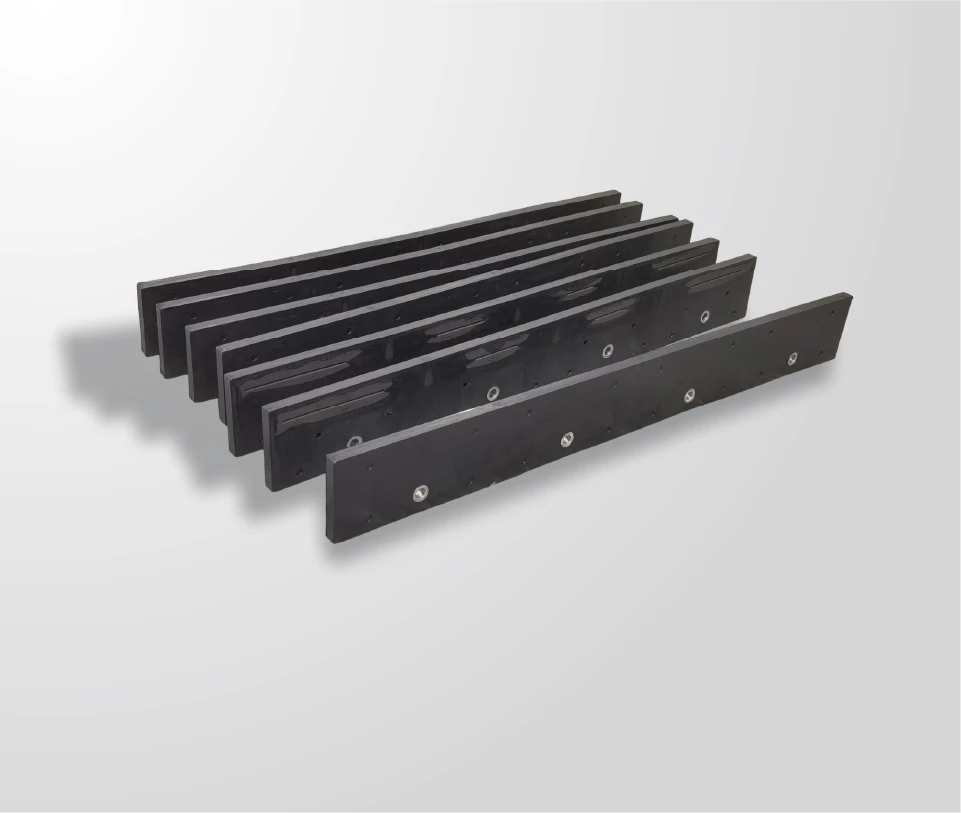
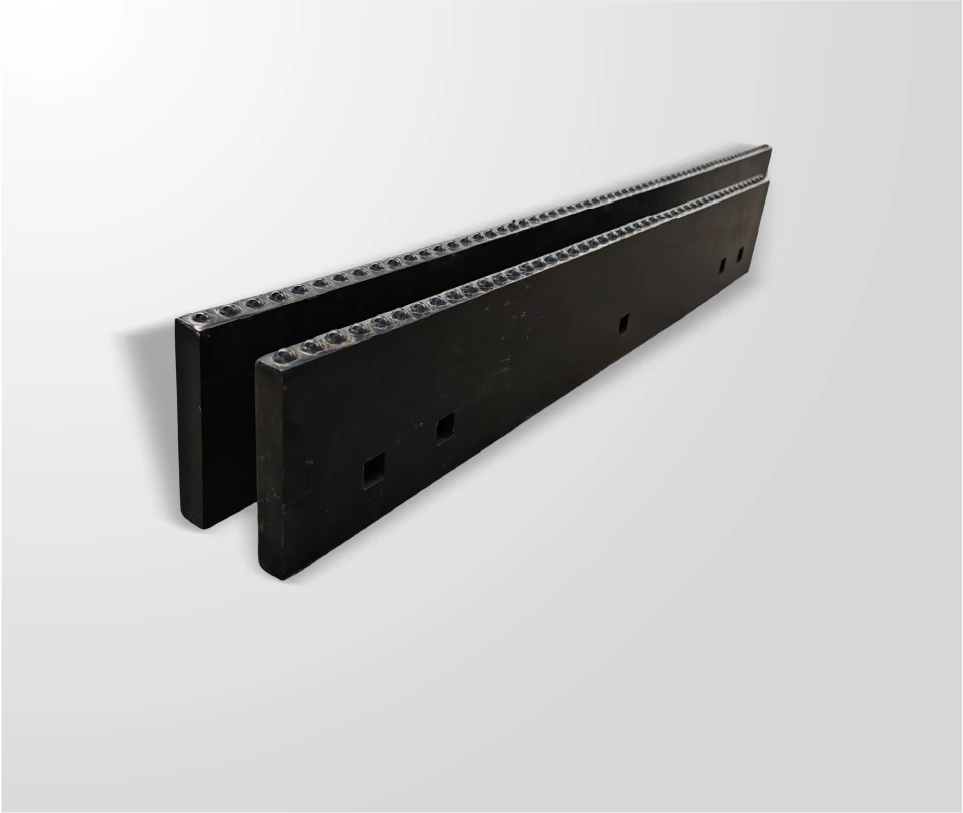
A hybrid wear part splits the two jobs between two materials. The working edge — the tip, the insert or the cutting face — is a cemented carbide selected for abrasion resistance, while the body or shank is steel or a hardened steel chosen to absorb load and carry the fixing. The carbide resists the grit; the body prevents the whole tool from failing under impact.
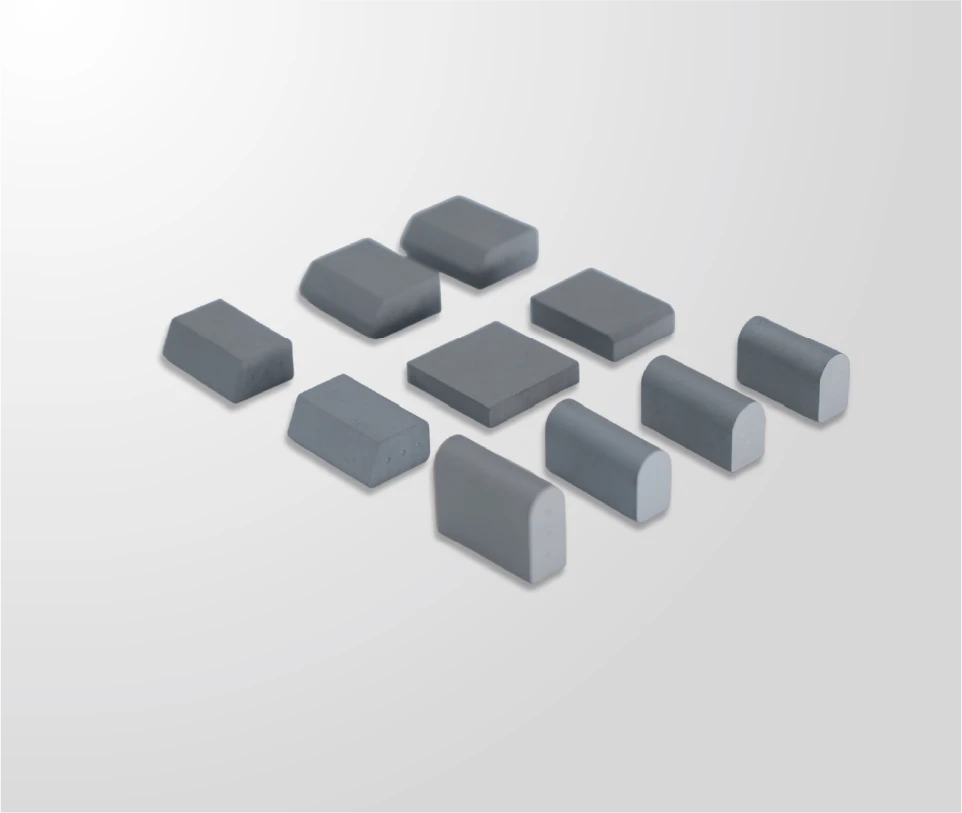
That split is what makes the design work in abrasive soil. A solid carbide tool of the size needed would be brittle and expensive, while a solid steel tool wears away far sooner on quartz sand. A pressed and sintered carbide tip, formed from tungsten carbide powder by a process the industry describes through bodies such as MPIF, gives the working face a wear resistance no steel matches.
The limits matter as much as the benefits. A carbide edge is at its strongest in continuous abrasive contact and at its weakest against large stones, where a chip consumes the tip in one pass. It also needs support: the pocket or seat determines whether the carbide is loaded in compression and shear as designed or in bending. Suppliers of cemented carbide publish grade data in terms of hardness and toughness, and Hyperion Materials & Technologies is one public reference, with ITIA indexing where the material is used across construction, agriculture and mining. Choosing between a hardened steel tool and a hybrid one is a decision about the ground: a hybrid earns its cost where abrasion is continuous and change-out is expensive.
Fitment and Machine Constraints
A hybrid tool has to fit the machine it is going onto, and the constraints are tighter than for a plain steel part. A carbide-tipped body is thicker at the working end and needs a seat that supports it square, so the interface, clamp and shank must carry the extra working load without allowing movement, and the fastening has to be serviceable with hand tools.
Three constraints decide most of it. The interface, meaning the stem, clamp or hole pattern that locates the tool, which has to be validated against a drawing or a physical sample. The seat, meaning the face the tool bears against, since a repaired or worn seat will load the tip unevenly and turn an abrasion-resistance advantage into a chipping problem. And the section, because pushing a thicker tool into a narrow seat creates a fitment problem rather than a performance one.
Weight and balance matter on assemblies that rotate or pivot, such as drill opener groups and press wheels, because a heavier tip changes how the assembly tracks. Mixing hybrid and plain tools in the same row also changes how load is distributed along the toolbar. Both are settled by a drawing, a measurement or a worn sample from the machine that will take the new part.
Quality Evidence to Request With the Quote
With a hybrid part, the evidence is split between two materials. For the carbide, ask for the grade with its hardness and grain size, plus the profile and dimensions of the tip. The ISO grade classes are set out in this grade explainer. For the body, ask for the material or grade, the hardness band and the section supplied. For the assembly, ask how the tip is joined to the body and what inspection confirms that joint, since the joint is where a hybrid part most often fails.
Dimensional evidence comes next. The tolerance that locates the tip in its pocket decides whether the tool wears as designed, and machine insert pockets held to plus or minus 0.02 mm belong in writing on a drawing. Hardness and wear test methods sit with ASTM, so a grade comparison can be made on a common basis rather than on marketing language.
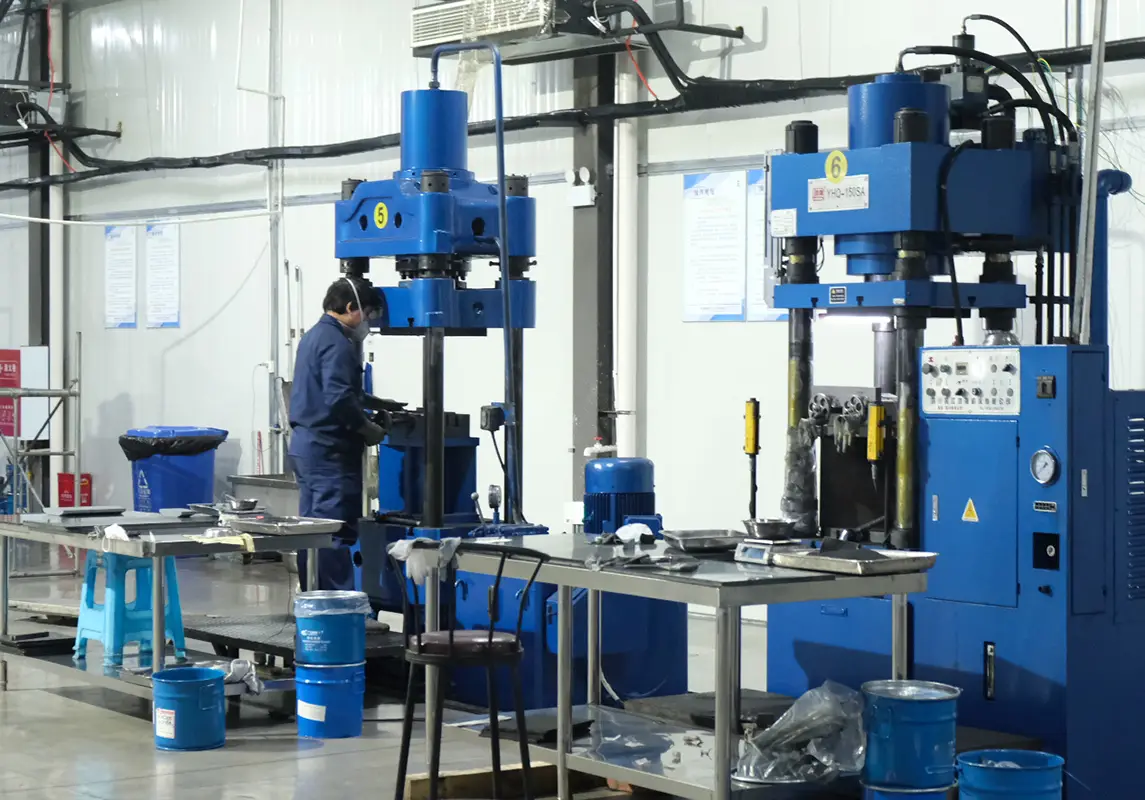
Finally, ask for lot-level traceability and an archived inspection record. A manufacturer running the full chain in-house — powder preparation by wet grinding, robotic pressing, sintering, controlled joining and finishing — can trace a delivery through each step and produce the batch record later, which is what allows a season’s wear data to be compared against the parts that produced it.
Cost Per Hectare Compared
Cost per hectare is the only comparison that reflects what a tool costs, because it captures both the price of the part and how often it is changed. The model is parts consumed per hectare multiplied by unit price, plus labour and lost time per change, plus secondary damage and the extra passes a dulled tool forces.
Each specification route behaves differently in that model. A plain or heat-treated steel tool has the lowest unit price and the highest consumption on abrasive ground. A wear-resistant steel tool improves abrasion resistance within the same family and is the sensible baseline where the soil is abrasive but the duty is not extreme; producers publish measured abrasion data for those grades, and SSAB is one public reference. A hybrid tool has the highest unit price and the lowest consumption in abrasive soil, but only where the ground does not punish a brittle edge.
Two cautions belong with the arithmetic. Change-out cost is not constant: a fleet changing tools in its own workshop has a lower marginal cost than one calling a contractor to a field. And a wear-resistance advantage only holds under the conditions it was measured in, so a tool that lasts in sand may chip in sandy gravel.
Selecting for Mixed Ground
Most farms and contract operations work mixed ground, and the practical answer is usually two specifications rather than one. A hardness-led or hybrid specification covers the blocks that are abrasive and clean, where the tool sees sand and silt and little stone. A toughness-led specification covers the blocks with stone, where the dominant risk is impact and a brittle edge is a liability rather than an advantage.
Then decide where the tools move. Tools that can be swapped between blocks are worth managing by block rather than by machine, so the abrasive-specification tools stay on the abrasive fields and the tough ones work the stony ground. Where that is impractical, the specification follows the worst ground and the tool is over-specified for the easier blocks, which is cheaper than the reverse, because the reverse fails mid-season.
Keep the decision visible in the records. Section loss per hectare by block and tool, the stones encountered and any chipping events, and the grade or lot supplied, together make the next season’s specification a matter of evidence. When that evidence is sent with an enquiry, the supplier can quote against the duty the tools actually face, and the terms of the supply — minimum order quantity, lead time and the rest — are stated in the written quotation or order documents for that specification, which is also where the delivery pattern belongs.
Soil decides more about a wear part than the machine does. Mineral grit sets the abrasion rate, moisture and clay change how the tool is loaded and how it corrodes, and stone content turns an abrasion problem into an impact problem. A hybrid design answers the abrasive case by putting carbide at the working edge and steel behind it, earning its price where abrasion is continuous and change-out expensive, provided the seat supports the tip and the ground does not punish it. Specifying per block, with two specifications where the ground demands it, is what keeps cost per hectare predictable.
Send SENTHAI the soils and crops your machines work, the tools that fail early and the wear records you hold, and the technical team will review material route, grade, geometry and fitment for each block and quote against the duty the ground imposes.
Related reading: wear parts beyond plows.
Frequently Asked Questions
Are carbide wear parts worth the cost in sandy soil?
In continuous abrasive contact, they usually are, because the wear resistance of the working tip is the dominant factor in cost per hectare and the change-out is paid for less often. The condition is that the ground does not punish the tip with repeated impact. On clean sand and sandy loam the arithmetic normally favours a hybrid tool; on soils carrying gravel and stone, a toughness-led steel specification can be the cheaper answer because a chipped tip ends a tool’s life early.
How do I work out how abrasive my soil is?
Measure the result rather than the soil. Section loss per hectare on a known tool, recorded by block, is a direct measure of abrasiveness and is already available wherever replacement parts are being booked out. Where that record does not exist, a soil survey gives texture and mineral content for the area, and one season of measurement converts it into numbers for your own fields. Either route tells you which blocks need a hardness-led specification and which need toughness.
Can carbide-tipped tools be used in rocky ground?
They can be used, but they are not the first choice. A cemented carbide tip resists abrasion far better than any steel, and at the same time it is more sensitive to impact, so large stones and repeated shock can chip or fracture it. Where the soil carries stone, the specification should move toward toughness, thicker supporting sections and geometry that presents the tip with support rather than exposure. For mixed ground, the usual answer is two specifications rather than one part number across the whole farm.
What should be recorded per block to compare tool options?
Record the tool and its specification, the block worked, hectares covered, the depth and speed settings, the section or dimension lost, and the failure mode, plus the grade or lot number supplied. A photograph of each tool as it comes off takes seconds and settles later questions about whether the wear was normal. With that record, cost per hectare can be calculated for two candidate specifications on the same block, which is the only comparison that reflects what a tool really costs.
How are soil-specific wear parts quoted and supplied?
Quotations are written against the duty, so send the block descriptions, the soils and crops, the tools that fail early and the measurements you hold. The quotation names the material route or grade, the geometry, the fitment and the documentation supplied with each line. Minimum order quantity and lead time are commercial terms, and the applicable figures are stated in the written quotation or order documents for the specification being bought.
{
“@context”: “https://schema.org”,
“@type”: “FAQPage”,
“mainEntity”: [
{
“@type”: “Question”,
“name”: “Are carbide wear parts worth the cost in sandy soil?”,
“acceptedAnswer”: {
“@type”: “Answer”,
“text”: “In continuous abrasive contact, they usually are, because the wear resistance of the working tip is the dominant factor in cost per hectare and the change-out is paid for less often. The condition is that the ground does not punish the tip with repeated impact. On clean sand and sandy loam the arithmetic normally favours a hybrid tool; on soils carrying gravel and stone, a toughness-led steel specification can be the cheaper answer because a chipped tip ends a tool’s life early.”
}
},
{
“@type”: “Question”,
“name”: “How do I work out how abrasive my soil is?”,
“acceptedAnswer”: {
“@type”: “Answer”,
“text”: “Measure the result rather than the soil. Section loss per hectare on a known tool, recorded by block, is a direct measure of abrasiveness and is already available wherever replacement parts are being booked out. Where that record does not exist, a soil survey gives texture and mineral content for the area, and one season of measurement converts it into numbers for your own fields. Either route tells you which blocks need a hardness-led specification and which need toughness.”
}
},
{
“@type”: “Question”,
“name”: “Can carbide-tipped tools be used in rocky ground?”,
“acceptedAnswer”: {
“@type”: “Answer”,
“text”: “They can be used, but they are not the first choice. A cemented carbide tip resists abrasion far better than any steel, and at the same time it is more sensitive to impact, so large stones and repeated shock can chip or fracture it. Where the soil carries stone, the specification should move toward toughness, thicker supporting sections and geometry that presents the tip with support rather than exposure. For mixed ground, the usual answer is two specifications rather than one part number across the whole farm.”
}
},
{
“@type”: “Question”,
“name”: “What should be recorded per block to compare tool options?”,
“acceptedAnswer”: {
“@type”: “Answer”,
“text”: “Record the tool and its specification, the block worked, hectares covered, the depth and speed settings, the section or dimension lost, and the failure mode, plus the grade or lot number supplied. A photograph of each tool as it comes off takes seconds and settles later questions about whether the wear was normal. With that record, cost per hectare can be calculated for two candidate specifications on the same block, which is the only comparison that reflects what a tool really costs.”
}
},
{
“@type”: “Question”,
“name”: “How are soil-specific wear parts quoted and supplied?”,
“acceptedAnswer”: {
“@type”: “Answer”,
“text”: “Quotations are written against the duty, so send the block descriptions, the soils and crops, the tools that fail early and the measurements you hold. The quotation names the material route or grade, the geometry, the fitment and the documentation supplied with each line. Minimum order quantity and lead time are commercial terms, and the applicable figures are stated in the written quotation or order documents for the specification being bought.”
}
}
]
}
Related articles
 Tillage Wear Parts and Seedbed Tooling: Timing the ReplacementForestry, agriculture and specialty wear parts
 Agricultural Wear Parts: Sweeps, Points and Closing WheelsForestry, agriculture and specialty wear parts
 Forestry Equipment Wear Parts for Abrasive Ground ConditionsForestry, agriculture and specialty wear parts
 Stump Grinder Teeth: Carbide Grade and Sharpening CyclesForestry, agriculture and specialty wear parts