




I.C.E. Blades vs Standard Carbide Blades: Choosing Carbide Insert Grades for Harsh Winter Roads
The best snow plow blade is not simply the hardest blade on paper. For harsh winter roads, the right choice depends on whether your fleet is fighting packed ice, abrasive salt and sand, hidden…
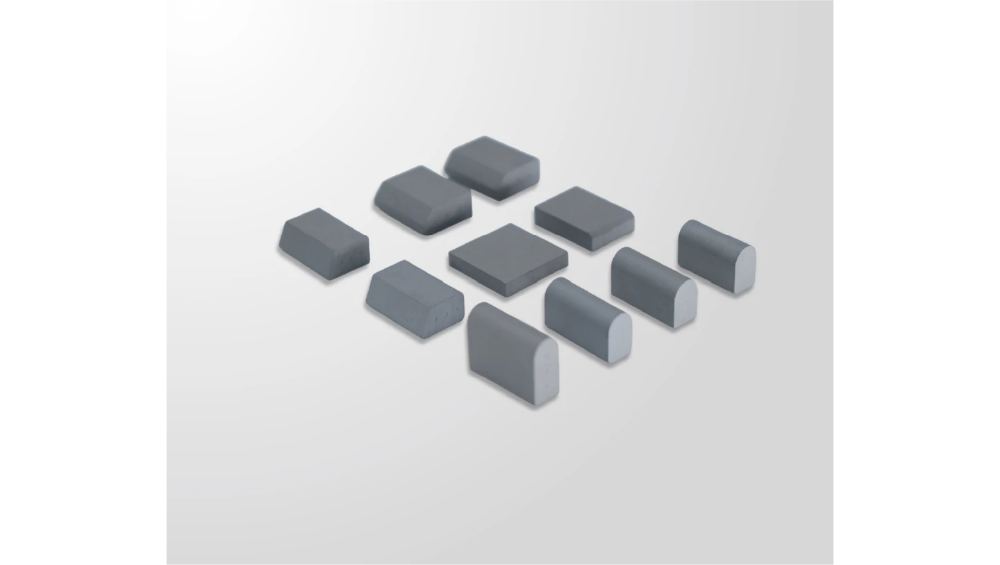
The best snow plow blade is not simply the hardest blade on paper. For harsh winter roads, the right choice depends on whether your fleet is fighting packed ice, abrasive salt and sand, hidden impact hazards, or a mix of all three.
Best Answer for Fleet Buyers
Choose I.C.E. Blades when the main problem is dense packed ice, road joints, cracks, frozen ruts, and repeated impact. Choose Standard Carbide Blades when the main problem is general winter abrasion from snow, salt, sand, gravel, and mixed pavement conditions.
For either option, the real performance driver is the carbide insert grade behind the blade. A strong winter-road specification should verify cobalt binder ratio, tungsten carbide grain size, density consistency, transverse rupture strength, porosity control, brazing quality, and field test results before large-volume procurement.
Why Winter Roads Need a Different Carbide Grade
Most carbide grade discussions are written for machining tools. Snow plow blades work in a very different environment. Instead of controlled cutting, they face frozen pavement, buried gravel, manhole covers, bridge joints, salt corrosion, and sudden shock loads in sub-zero conditions.
That is why winter road tools require a carbide grade that balances wear resistance and impact toughness. A grade that performs well in a lathe can still chip early on a plow if it is too brittle, poorly bonded, or inconsistent from batch to batch.
| Winter Road Factor | What It Does to the Blade | Why the Carbide Grade Matters |
|---|---|---|
| Packed ice | Creates high scraping force and impact loading | Requires toughness and stable edge geometry |
| Salt and sand | Accelerate abrasive wear | Requires wear-resistant tungsten carbide |
| Road joints and cracks | Trigger sudden edge shock | Requires fracture resistance and strong brazing |
| Uneven pavement | Produces repeated vibration | Requires density consistency and low defect levels |
| Long fleet routes | Increase downtime cost | Requires predictable batch-to-batch performance |
I.C.E. Blades vs Standard Carbide Blades
I.C.E. Blades and Standard Carbide Blades are both designed to outperform plain steel edges, but they are not the same tool. The better option depends on your road profile, failure mode, and maintenance economics.
| Selection Factor | I.C.E. Blades | Standard Carbide Blades |
|---|---|---|
| Best use case | Packed ice, frozen ruts, high-impact routes, roads with joints or cracks | Mixed snow removal, abrasive roads, salt and sand exposure, general winter service |
| Primary advantage | Better survival in impact-heavy ice conditions | Strong all-around wear life and cost efficiency |
| Main risk if misused | Higher cost may not be justified on mostly light abrasion routes | May chip faster than I.C.E. style designs in severe impact conditions |
| Typical buyer | Municipal fleets, mountain road teams, highway agencies, airports | Contractors, highway maintenance fleets, mixed-route municipalities |
| Procurement focus | Impact resistance, insert isolation, brazing integrity, field trial data | Wear life, carbide grade, insert size, steel backing, replacement interval |
| Best KPI | Cost per road mile under severe ice and impact | Cost per operating hour under mixed abrasive wear |
SENTHAI lists both Carbide Snow Plow Blades and Packed Ice Carbide Kits in its snow plow product line, which makes the comparison useful for fleet buyers who need to match blade construction to route severity.
How Carbide Insert Grades Affect Plow Performance
The carbide insert grade controls how the blade behaves when it meets abrasion and shock. In tungsten carbide-cobalt materials, lower cobalt content usually increases hardness and wear resistance, while higher cobalt content usually improves toughness and crack resistance.
For high-impact snow plow applications, a practical winter-road target is often a tough fine-grain carbide with enough cobalt binder to resist chipping. The exact grade should always be matched to the route, blade design, mounting method, and field test data.
- Cobalt binder ratio: Higher cobalt generally improves impact toughness, while lower cobalt generally improves hardness and abrasive wear resistance.
- Tungsten carbide grain size: Fine and controlled grain size supports consistent hardness, edge stability, and wear performance.
- Density consistency: Uniform density reduces weak points that can become cracks under impact.
- TRS value: Transverse rupture strength helps indicate resistance to breakage under load.
- Porosity control: Low porosity reduces hidden defects that can shorten blade life.
- Brazing quality: Strong bonding between carbide and steel is essential because insert loss can be as damaging as insert wear.
The U.S. Department of Transportation’s Snow Plow Cutting Edge Evaluation notes that carbide insert durability is influenced by properties such as hardness, transverse rupture strength, fracture toughness, grain size, density, and porosity. This supports a specification-driven buying process rather than choosing by marketing claims alone.
When to Choose I.C.E. Blades
I.C.E. Blades are the stronger choice when the route regularly creates impact failures. Their value is not only wear life, but the ability to reduce cracking, edge breakage, and unplanned blade changes in severe winter service.
- Packed ice routes: Choose I.C.E. Blades when the blade must penetrate dense, polished, or glacier-like ice.
- High-impact roads: Choose I.C.E. Blades when the route includes bridge joints, pavement cracks, uneven surfaces, or frozen ruts.
- Mountain passes: Choose I.C.E. Blades where grades, low temperatures, and repeated ice buildup increase blade stress.
- Airport and priority routes: Choose I.C.E. Blades when downtime, surface safety, and predictable scraping matter more than initial purchase price.
- Severe failure history: Choose I.C.E. Blades if standard carbide edges have chipped, cracked, or lost inserts too early.
SENTHAI describes its Packed Ice Carbide Kit as using isolated tungsten carbide inserts designed to help prevent lateral cracking and improve service life in impact conditions.
When to Choose Standard Carbide Blades
Standard Carbide Blades are usually the better choice for fleets that need reliable wear life across broad winter conditions without paying for a more specialized ice-focused system. They are especially useful when abrasion is the main cost driver.
- Mixed winter roads: Choose Standard Carbide Blades for routes with snow, slush, sand, salt, gravel, and normal pavement abrasion.
- High-mileage plowing: Choose Standard Carbide Blades when replacement frequency and downtime are the main cost concerns.
- Contractor fleets: Choose Standard Carbide Blades when one blade type must cover many customer sites and surface conditions.
- Budget-sensitive procurement: Choose Standard Carbide Blades when the fleet needs long life but does not face constant packed-ice impact.
- General highway maintenance: Choose Standard Carbide Blades for predictable scraping performance across routine winter operations.
SENTHAI states that its Carbide Snow Plow Blade uses carbide inserts with a steel blade body to improve wear life and reduce downtime compared with traditional steel cutting edges.
Procurement Checklist for Carbide Snow Plow Blades
A good tender should not rely on vague phrases such as premium carbide, heavy duty, or long wear life. It should request measurable properties that can be audited.
- Grade composition: Request tungsten carbide and cobalt percentage by weight.
- Grain size range: Ask for the stated tungsten carbide grain size range and the inspection method.
- Hardness range: Require a practical hardness range rather than only a maximum hardness claim.
- TRS data: Request transverse rupture strength values for the carbide grade.
- Density data: Ask for density values and batch consistency controls.
- Porosity limits: Require porosity acceptance criteria or metallographic inspection data.
- Brazing evidence: Ask how the supplier verifies insert bonding, wetting, and delamination resistance.
- Dimensional tolerances: Confirm bolt hole, insert, and blade dimensions for your fleet standard.
- Route recommendation: Require the supplier to recommend I.C.E. or Standard Carbide based on route severity.
- Sample trial: Test the blade on representative routes before committing to full-season volume.
Tender Specification Template
Use this structure when preparing a municipal, contractor, or OEM request for quotation.
- Application profile: Supplier shall recommend a blade type for routes involving packed ice, abrasive salt and sand, gravel exposure, pavement joints, and repeated shock loading.
- Carbide grade disclosure: Supplier shall provide carbide composition, cobalt binder ratio, grain size range, hardness range, TRS, density, and porosity control method.
- Bonding requirement: Supplier shall describe the brazing or joining method used to secure carbide inserts to the steel body.
- Quality documentation: Supplier shall provide a certificate of analysis, metallurgical report, or batch inspection record upon request.
- Field validation: Supplier shall support sample testing or pilot-route comparison before full procurement.
- Customization requirement: Supplier shall confirm blade dimensions, hole spacing, insert geometry, packaging, and fleet compatibility.
- Failure review: Supplier shall assist with analysis if premature chipping, insert loss, or abnormal wear occurs during the trial period.
Cost and ROI Factors
The lowest purchase price is rarely the lowest operating cost. Winter maintenance fleets should evaluate carbide blade cost by service hours, road miles, replacement labor, truck downtime, inventory planning, and emergency repair risk.
A standard carbide blade can be the best ROI choice on long abrasive routes because it reduces blade changes over ordinary steel edges. An I.C.E. Blade can be the best ROI choice on impact-heavy ice routes because it can reduce premature breakage and route interruptions.
- Cost per hour: Divide total blade cost by operating hours before replacement.
- Cost per mile: Divide total blade cost by road miles cleared.
- Downtime cost: Include technician labor, lost truck availability, and emergency replacement time.
- Failure cost: Include risk from cracked inserts, lost inserts, poor scraping, and return trips.
- Inventory cost: Consider whether the blade type simplifies stocking for seasonal demand.
Why SENTHAI Fits High-Impact Winter Road Procurement
SENTHAI is positioned for B2B buyers because its value is not only product supply, but control over carbide production, blade manufacturing, and customization. The company describes itself as a snow plow blade and road maintenance wear parts manufacturer located in Rayong, Thailand, with carbide wear parts experience, automated production capacity, and quality control processes shown on its About Us page.
For carbide inserts, SENTHAI highlights low-pressure processing, automated production, closed-loop production control, and brazing technology on its Carbide Inserts page. These points matter because winter-road performance depends on both metallurgy and manufacturing consistency.
- Manufacturing control: Integrated production helps reduce variation between batches.
- Carbide expertise: Micro-grain carbide and controlled sintering support consistent wear and toughness.
- Product range: Buyers can compare Standard Carbide Blades, Packed Ice Carbide Kits, JOMA style blades, and carbide inserts from one supplier.
- Customization support: Fleet buyers can request blade dimensions, insert geometry, and packaging based on operational needs.
- Procurement support: Buyers can request quotes, samples, or technical discussion through the SENTHAI contact page.
Field Testing Plan Before Full Deployment
A short field trial can prevent an expensive full-season mismatch. The goal is not only to prove that a blade lasts longer, but to understand how it fails under your exact route conditions.
- Route selection: Test on routes that represent packed ice, mixed abrasion, high impact, and normal highway service.
- Baseline comparison: Compare the new blade against the current steel or carbide blade under similar routes and driver behavior.
- Inspection schedule: Inspect edge wear, insert cracking, insert loss, bolt condition, and blade backing condition at planned intervals.
- Performance metric: Track operating hours, road miles, scraping quality, replacement labor, and downtime.
- Failure documentation: Photograph chips, cracks, uneven wear, and bond failures so the supplier can recommend a better grade or blade design.
- Procurement decision: Choose I.C.E. Blades for impact-dominated failures and Standard Carbide Blades for abrasion-dominated failures.
Common Mistakes to Avoid
Many blade failures begin before the blade ever reaches the road. They start with vague specifications, poor route matching, or a focus on hardness without checking toughness and bonding.
- Buying only by hardness: Maximum hardness can increase brittle failure risk if toughness is ignored.
- Ignoring cobalt binder ratio: Binder content strongly affects the balance between wear resistance and impact resistance.
- Skipping grain size data: Grain size influences hardness, abrasion resistance, and structural stability.
- Overlooking brazing quality: A strong carbide insert can still fail if the bond to the steel body is weak.
- Using one blade everywhere: Packed ice routes and mixed abrasive routes may need different blade designs.
- Skipping field trials: Lab values help, but route-specific testing confirms real-world performance.
- Comparing purchase price only: True value comes from cost per hour, cost per mile, and reduced downtime.
Frequently Asked Questions
What is the difference between I.C.E. Blades and Standard Carbide Blades?
I.C.E. Blades are designed for severe packed ice and impact-heavy routes, while Standard Carbide Blades are designed for broader mixed winter conditions where abrasion, snow, salt, and sand are the main challenges.
Are I.C.E. Blades always better than Standard Carbide Blades?
No. I.C.E. Blades are better when impact and packed ice are the main problems. Standard Carbide Blades may deliver better value when the route is mostly abrasive rather than impact-heavy.
What carbide insert grade is best for snow plow blades?
The best grade is usually a tough tungsten carbide-cobalt grade with controlled grain size, consistent density, suitable hardness, strong TRS, and low porosity. The exact grade should be matched to route severity and validated through field testing.
How does cobalt binder ratio affect snow plow performance?
Higher cobalt content generally improves toughness and crack resistance, while lower cobalt content generally improves hardness and abrasion resistance. Snow plow blades need a balance because they must resist both wear and shock.
Why do carbide inserts chip in winter road service?
Chipping can happen when the carbide is too brittle, the grade is not suited for impact, density is inconsistent, porosity is too high, brazing is weak, or the blade hits pavement joints, rocks, manhole covers, or frozen ruts at speed.
What should be included in a carbide blade test certificate?
A useful certificate should include carbide composition, cobalt percentage, grain size range, hardness, TRS, density, porosity control, and batch traceability. For high-impact blades, brazing or bonding quality should also be reviewed.
How should a fleet compare blade cost?
Fleet buyers should compare cost per operating hour, cost per road mile, labor hours for replacement, downtime, emergency failure risk, and inventory requirements. Purchase price alone does not show the real economics of winter blade performance.
Can SENTHAI customize carbide snow plow blades?
SENTHAI states that it offers various blade sizes, carbide inserts, and customization options for snow plow applications. Buyers should confirm drawings, samples, hole patterns, route conditions, and packaging requirements before ordering.
Related articles
 How to Select a Rear Snow Plow Blade for Professional Snow RemovalHot Products
 What John Deere Snow Plow Blade Sizes Fit 1-5 Series Tractors?Hot Products
 How to Set Back Blade Snow Plow Height on Gravel Roads?Hot Products
 How Does HRA Hardness in Tungsten Carbide Snow Plow Blades Handle High-Speed Impacts?Hot Products