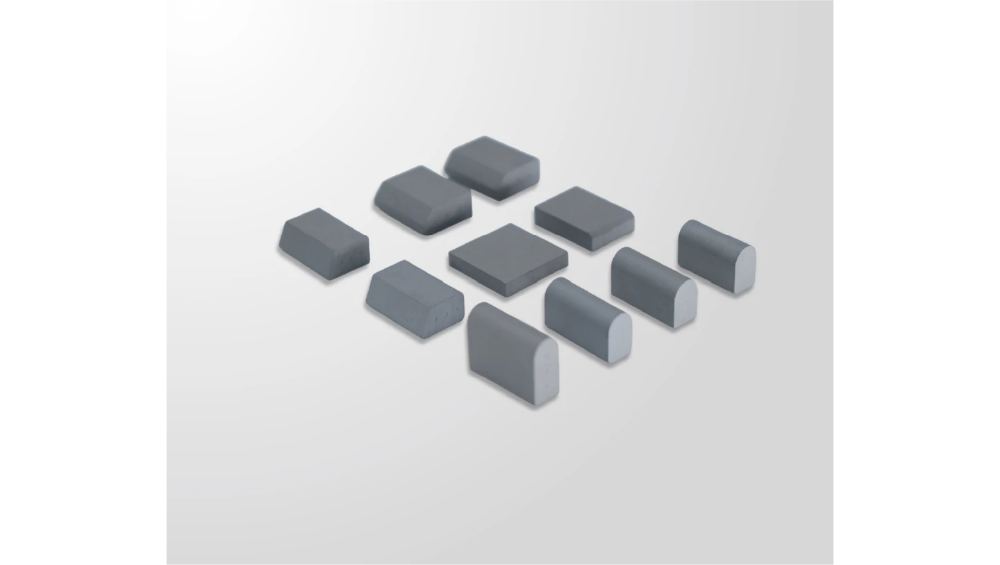
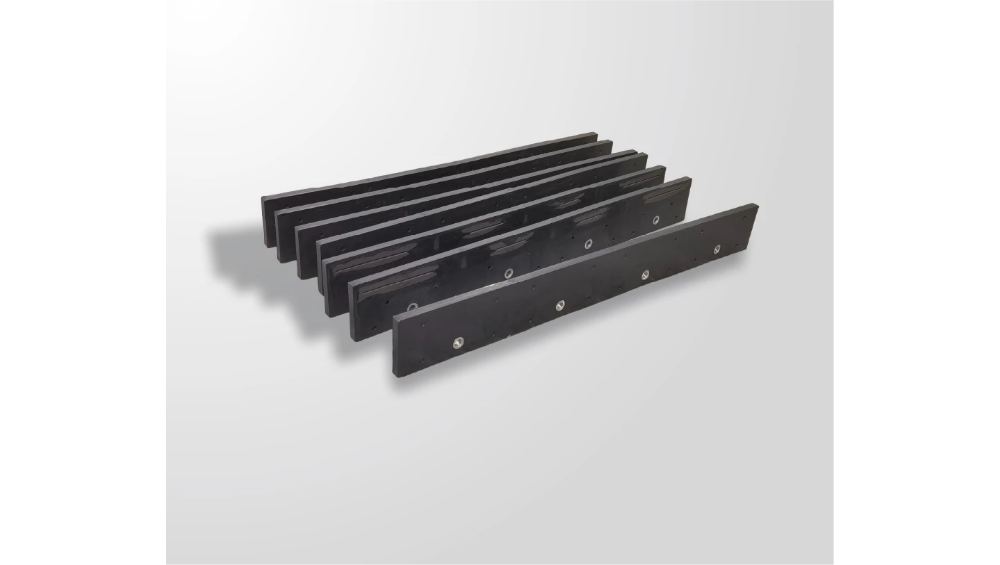
Isolated carbide I.C.E. edges transform packed ice removal by concentrating impact through independent carbide “buttons” mounted on spring or rubber dampers. This architecture fractures dense ice layers without continuously scraping the road surface, lowering vibration, noise, and carrier stress. For highway fleets, it means higher speed, longer life, and safer, more predictable winter maintenance.
Premium I.C.E. Packed Ice Clearing Systems
What makes isolated carbide I.C.E. edges fundamentally different from traditional straight blades?
Isolated carbide I.C.E. edges use separated, ball‑shaped carbide inserts mounted in individual damping units, while traditional blades use a continuous straight steel or carbide edge. The I.C.E. geometry localises contact into multiple point loads that punch and fracture packed ice, instead of relying on a uniform scraping line that quickly wears and transmits shock directly into the plow and chassis.
At factory level, I see three structural changes that define this difference:
Contact pattern changes from a continuous line to a discrete “impact grid” of carbide domes.
Vertical compliance is relocated into spring or rubber modules, not the carrier or truck frame.
The wear path follows concentrated impact craters in the carbide, instead of even edge thinning.
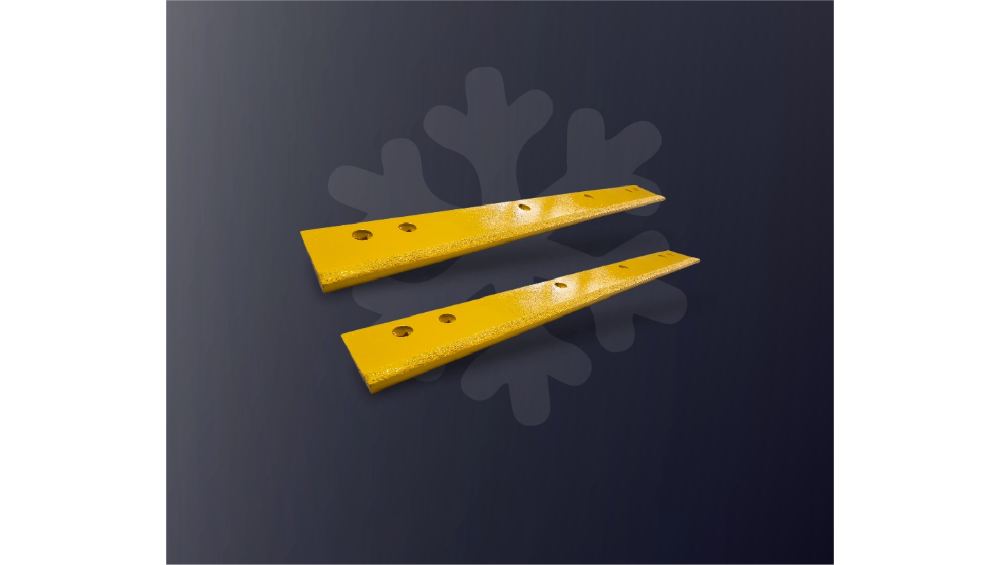
For snow plow blade manufacturers, this radically changes how we design the steel carrier, bolt pattern, and blade pitch. SENTHAI configures the I.C.E. modules so each carbide dome has a defined protrusion height and attack angle, typically 5–10 degrees steeper than conventional cutting edges. That allows the dome to bite into glazed ice at highway speeds without rolling or chattering across micro‑ruts in the asphalt.
From a B2B buyer’s perspective—municipal fleets, DOTs, or winter service contractors—the difference shows up as:
Higher effective removal of heavily compacted ice with fewer passes.
Lower driver fatigue due to reduced vibration.
A wider acceptable speed envelope before chatter and bouncing start.
How does an I.C.E. blade interact with packed ice and asphalt at highway speed?
An I.C.E. blade interacts with packed ice as a multi‑point impact tool rather than a scraper: each isolated carbide dome penetrates and fractures the ice in front of it, creating radial cracks that propagate through the layer. The asphalt sees intermittent, filtered contact because springs or rubber dampers allow the modules to retract when encountering high local resistance or road irregularities, protecting both pavement and carrier.
When we model this at SENTHAI, we treat each carbide dome as a rigid body with high hardness and compressive strength, moving across a visco‑elastic ice layer bonded to a stiffer asphalt substrate. At 60–80 km/h, the contact time between the dome and a given ice patch is milliseconds, so the local pressure spike is extremely high. That spike drives micro‑fracturing in the ice; the next domes in the array then capture and eject the broken fragments.
If you looked at the pass under a high‑speed camera, you’d see a sequence:
Carbide dome contacts ice, penetrates slightly.
Local stress field exceeds the ice’s tensile strength, forming radial cracks.
The spring or rubber absorber compresses, limiting peak force transmitted to the carrier.
As the module rides over the broken ice, the dome lifts briefly, then re‑engages downstream.
By contrast, a continuous straight blade keeps full‑length contact, so when it hits a hard ridge or pothole, the whole cutting edge and truck feel the shock. That’s what the I.C.E. concept is engineered to avoid.
How do independent spring and rubber damping units dissipate energy in I.C.E. systems?
Independent spring and rubber damping units in I.C.E. systems dissipate energy by converting impact loads into controlled elastic deformation and hysteretic heat. Springs store part of the load temporarily, then release it over a longer time, reducing peak force. Rubber elements add visco‑elastic damping, absorbing vibration and preventing high‑frequency shock from transmitting into the plow frame, hydraulics, and truck chassis.
On the factory floor, we tune three parameters for each module:
Static stiffness (k): how much force it takes to deflect the module a given distance.
Damping coefficient (c): how quickly oscillations decay after an impact.
Travel range: maximum compression before mechanical stops engage.
From a system engineering point of view, each I.C.E. module behaves like a mass–spring–damper impacting a rigid–brittle layer (ice) over a layered elastic substrate (asphalt–base–subgrade). When a dome hits a high spot of packed ice, the spring compresses, lengthening the impact duration and reducing the peak load transmitted upstream. The rubber element, with its internal friction, dissipates part of this energy as heat, quickly stabilising the module motion.
In practice, this is why SENTHAI’s isolated carbide snow plow blades run smoother at higher speeds than cheaper “rigid” carbide bars. Where a rigid bar might bounce, leaving intermittent contact and unsafe patches, a properly tuned I.C.E. module array keeps average contact pressure high but filtered, improving both ice removal and driver comfort.
How do spring and rubber modules compare in damping behaviour?
For OEM customers, SENTHAI often co‑designs hybrid modules—steel springs nested with rubber—to achieve both strong load support and controlled damping tailored to local road, ice, and speed conditions.
Why do isolated carbide I.C.E. kits improve highway safety and lifecycle cost?
Isolated carbide I.C.E. kits improve highway safety by clearing more of the bonded ice layer in fewer passes while reducing plow bounce, steering disturbances, and driver fatigue. They improve lifecycle cost by extending carbide life, protecting the steel carrier and truck suspension from repeated high‑G impacts, and reducing unplanned downtime due to cracked blades, failed welds, or hydraulic leaks.
From a lifecycle engineering standpoint, the cost stack for a snow removal operator is dominated not by the blade purchase price but by:
Labour and truck operating hours.
Unplanned stoppages due to blade or plow damage.
Road user accidents caused by residual packed ice.
I.C.E. kits change the economics because each module can be individually replaced when worn, without scrapping the entire edge. SENTHAI designs its I.C.E. kits as modular assemblies, allowing B2B buyers to replace only worn carbide domes or failed dampers during summer maintenance cycles.
For highway authorities and large contractors, a well‑tuned I.C.E. system reduces the number of post‑storm “clean‑up passes,” where trucks otherwise need to grind away remaining ice ridges. That saves fuel and overtime, but more importantly, it reduces the time window where roads are partially clear but still hazardous.
What are the core engineering principles behind I.C.E. dynamics on packed ice?
The core engineering principles behind I.C.E. dynamics include contact mechanics, fracture mechanics, and vehicle–road interaction. Each carbide dome generates localised Hertzian contact stresses that exceed the ice’s yield and tensile strengths, initiating cracks. The dynamic system—blade, carrier, modules, and truck suspension—is tuned so that the contact force is high enough to fracture ice but filtered enough to protect hardware and pavement.
In SENTHAI’s internal modelling, we build a multibody dynamics model of the plow system:
Truck mass and suspension characteristics.
Plow frame, hydraulic cylinder stiffness, and damping.
Blade carrier geometry and mounting height.
I.C.E. modules as lumped mass–spring–damper units.
Ice as a layered visco‑elastic/plastic material bonded to asphalt.
This model allows us to answer questions engineers at OEMs care about:
How does contact force vary with speed and blade angle?
What module stiffness maximises ice fracture while minimising carrier stress?
At what speeds do resonances occur between module impacts and truck suspension?
Because SENTHAI is both manufacturer and OEM supplier, we can refine carbide dome shapes, tungsten carbide grades, sintering profiles, and bonding processes in lockstep with these models, instead of treating the blade as a commodity part.
Which design parameters must manufacturers and OEM buyers specify for I.C.E. kits?
Manufacturers and OEM buyers must specify I.C.E. design parameters such as carbide dome diameter, protrusion height, spacing, grade and binder ratio, module stiffness/damping, and steel carrier geometry. They also need to define target vehicle speeds, average ice thickness, typical pavement types, and plow mounting configurations. These inputs allow a factory like SENTHAI to tune each kit to a fleet’s real‑world duty cycle, not an abstract test track.
For a B2B factory conversation, I always ask new customers five questions:
What is your typical plowing speed range (km/h)?
What is your ice profile: slush, compact snow, or polished, truck‑compacted ice?
What pavement mix and condition are you working on—new asphalt, aged concrete, chip seal?
How aggressive can we be on blade angle before the truck becomes unstable or the pavement wears too fast?
What is your acceptable rebuild cycle—seasonal, biennial, or multi‑year?
With those answers, SENTHAI can recommend specific carbide diameters and grades, such as finer‑grained tungsten carbide for higher fracture toughness in gravelly conditions, or coarser grades for pure highway ice where wear resistance dominates. Bolt patterns and kit modularity are then aligned with the OEM’s moldboard designs and stocking strategy, so distributors and wholesalers can manage inventory efficiently.
How does SENTHAI’s manufacturing process support consistent I.C.E. quality for B2B customers?
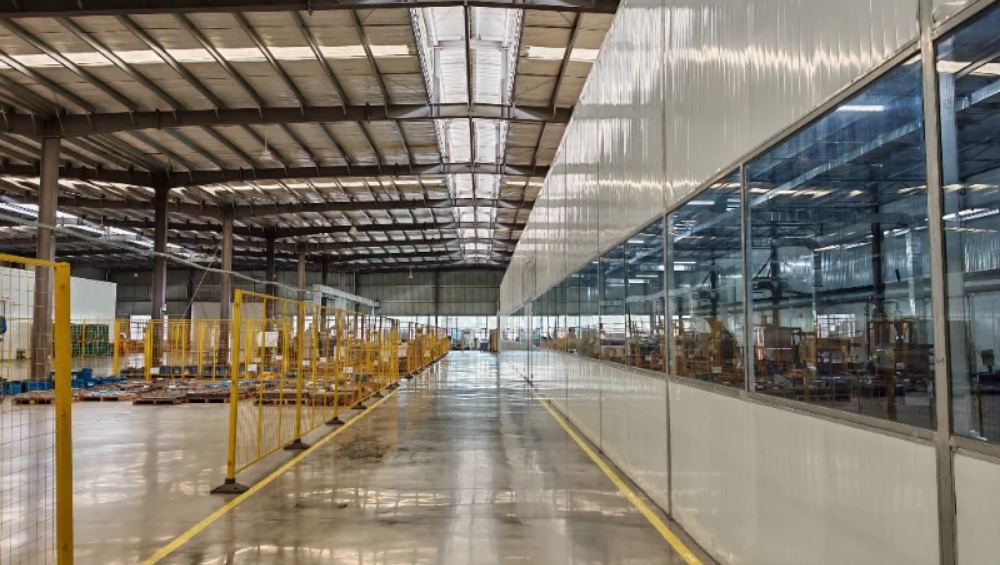
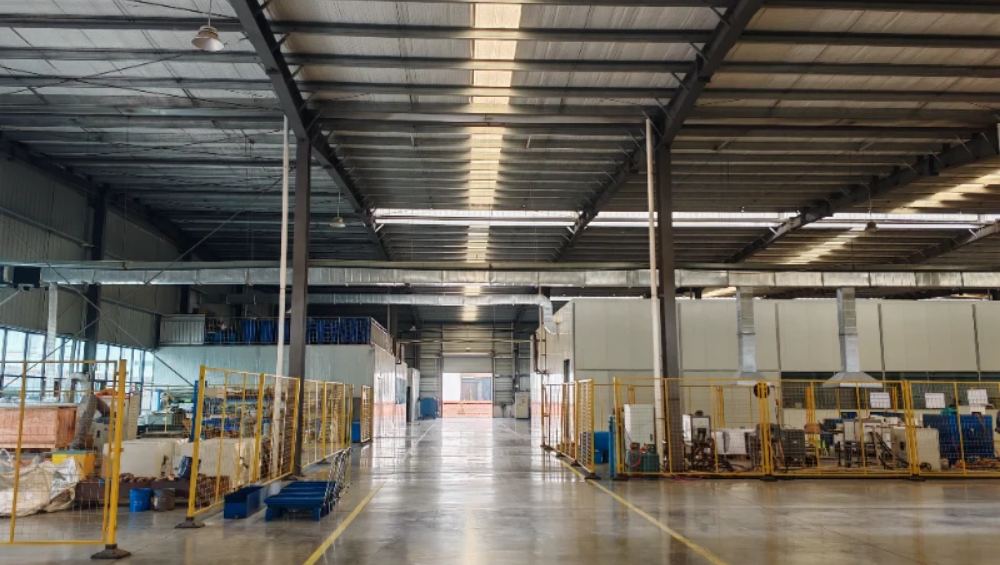
SENTHAI’s manufacturing process supports consistent I.C.E. quality through fully integrated carbide production—wet grinding, pressing, sintering, brazing or welding, vulcanisation, and final assembly—all controlled in‑house. ISO9001 and ISO14001 systems ensure that each batch of carbide inserts, steel carriers, and damping elements meets tight dimensional and metallurgical tolerances, giving OEM and wholesale partners repeatable performance across large fleet orders.
From a factory engineer’s viewpoint, the key quality levers are:
Powder preparation: precise control of carbide grain size, WC–Co ratio, and additives to hit target hardness and toughness.
Pressing and sintering: uniform density and microstructure to avoid internal pores that can initiate premature chipping.
Bonding: optimised brazing or welding procedures between carbide and steel, with strict thermal profiles to prevent residual stress.
Vulcanisation: controlled rubber module curing to achieve stable stiffness and damping over a wide temperature range.
Because SENTHAI operates out of Rayong, Thailand with full vertical integration, we can not only deliver consistent I.C.E. blades but also customise them for OEM customers without sending critical steps to multiple subcontractors. For distributors and wholesalers, that means shorter lead times, easier traceability, and a single technical contact for the entire blade system.
Why should global fleets and OEMs consider SENTHAI as their I.C.E. kit partner?
Global fleets and OEMs should consider SENTHAI as their I.C.E. kit partner because we combine 21+ years of carbide wear part manufacturing with specific domain knowledge in highway snow and ice removal. As a factory‑direct manufacturer, we offer flexible OEM design, competitive wholesale pricing, and stable quality for isolated carbide blades, JOMA‑style edges, and complete I.C.E. kits tailored to regional conditions.
Unlike generic blade suppliers who treat carbide as a bolt‑on accessory, SENTHAI designs the carbide grade, insert geometry, steel profile, and damping modules as an integrated system. That integration is crucial when fleets are trying to balance high‑speed ice removal with pavement conservation and truck maintenance budgets.
For large distributors and resellers, SENTHAI’s modular I.C.E. concept simplifies stocking: common carriers can be paired with different carbide modules for light, medium, or heavy‑duty customers, and individual modules can be replaced during summer overhauls. This reduces capital tied up in fully assembled blades while still giving end users a premium, high‑performance winter tool.
Who benefits most from modular isolated carbide I.C.E. kits in the field?
The biggest beneficiaries of modular isolated carbide I.C.E. kits are national and regional road authorities, large municipal fleets, and OEM plow manufacturers supplying multi‑climate markets. These users gain from improved ice removal at speed, lower downtime, and the ability to adapt the blade configuration to different routes and seasons. Resellers and distributors also benefit from a more rational inventory built around kits and modules rather than dozens of one‑off blade SKUs.
In my experience, the most enthusiastic adopters are:
Highway concessionaires operating long, high‑speed corridors with demanding service level agreements.
Northern city fleets dealing with frequent freeze–thaw cycles and hard, polished ice.
OEMs that need a premium blade option to differentiate their plow offerings and meet tender specs.
For these customers, SENTHAI designs modular I.C.E. kits that can be configured from a shared parts pool—carriers, modules, and fasteners—so that maintenance teams can quickly swap wear elements, experiment with different carbides, and tune spring rates as field data accumulates.
SENTHAI Expert Views
“When we first moved from monolithic carbide edges to isolated I.C.E. modules, the biggest surprise was not just longer wear—it was how much quieter and more stable the trucks became at 70–80 km/h. On our Rayong pilot lines we saw that by tuning spring rate and dome spacing, we could shift the impact spectrum out of the truck’s natural frequencies. That’s the kind of system‑level tuning you only get when the factory owns the carbide, steel, rubber, and assembly process under one roof.”
This factory‑floor insight underpins SENTHAI’s OEM partnerships: we’re not only selling carbide pieces, we’re co‑engineering dynamic systems that protect both equipment and drivers.
What are the key takeaways for engineering high‑velocity packed ice clearing equipment?
The key takeaways for engineering high‑velocity packed ice clearing equipment are:
Treat the blade as a dynamic system, not a static edge.
Use isolated carbide domes and damping modules to concentrate impact on ice while protecting hardware.
Model the entire plow–vehicle–road interaction to avoid resonances and bounce.
Design modular kits so fleets can refine configurations using real field data.
At SENTHAI, we encourage OEMs and large fleets to integrate simulation, test track trials, and fleet feedback. That means building digital twins of plows and running parameter sweeps: module stiffness, dome height, blade angle, and speed. The result is a set of regional I.C.E. configurations—for example, one tuned for North American asphalt, another for Nordic concrete and studded‑tyre wear patterns.
When those engineering insights are embedded in modular kits, resellers can offer clear value tiers (standard, enhanced, premium I.C.E.) instead of generic “carbide edge” upgrades. For a B2B factory like SENTHAI, that is where true non‑commodity technical content lives.
FAQs
Highway authorities can quantify I.C.E. benefits by tracking pass count, residual ice thickness, and truck downtime before and after deployment. Telematics data on speed, vibration, and blade position, combined with accident statistics, gives a hard ROI picture. SENTHAI often supports OEMs in building such pilot programs.
Can isolated carbide modules be retrofitted onto existing plows?
Yes, most isolated carbide modules can be adapted to existing plows using carrier bars matched to the plow’s bolt pattern and moldboard curvature. SENTHAI frequently supplies OEM‑style retrofit kits to fleets and distributors, including mounting hardware and setup guidelines for angle and downforce.
Are I.C.E. blades suitable for mixed routes with both city streets and highways?
I.C.E. blades are suitable for mixed routes if the module stiffness and dome geometry are tuned to avoid excessive pavement wear at lower speeds. Many fleets run a compromise configuration that still outperforms traditional blades on packed ice while remaining gentle on urban streets.
Do modular I.C.E. systems increase maintenance complexity?
Modular I.C.E. systems change maintenance patterns but don’t necessarily increase complexity. Instead of replacing entire blades, workshops replace worn modules during scheduled service windows. SENTHAI supports this with clear wear indicators and replacement procedures tailored for fleet technicians.