




How Commercial Contractors Maximize Billable Plow Time with JOMA-Style Blades
A snow removal contractor does not sell blades; it sells time. The revenue comes from plowing hours under contract, and every minute a truck spends in the shop changing an edge is a minute…
A snow removal contractor does not sell blades; it sells time. The revenue comes from plowing hours under contract, and every minute a truck spends in the shop changing an edge is a minute it is not clearing a driveway, a lot, or a route. For a contractor, blade selection is therefore not a maintenance decision; it is a revenue decision.
This article looks at blade choice through the contractor’s economics: what a changeout costs in billable hours, how edge reliability protects response-time contracts, how blade quality can become a pricing lever, and how to choose edges that protect margins instead of just minimizing cost.
The scale of the math is worth stating up front. A contractor with six trucks, each changing edges four extra times a season because of premature wear, is losing the equivalent of roughly one truck’s worth of plowing time every season to changeouts. That is not a parts budget line; it is a capacity decision. The blade choice either adds billable capacity to the existing fleet or quietly removes it.
Contractors sell uptime, not blades
The contractor’s business model is built on availability. Contracts promise a response window, and the fleet has to be ready when the storm starts. Every blade that fails between contracts, or during a storm window, converts a revenue hour into a cost hour: the changeout labor, the missed route, and the risk of a service complaint.
That is why the cheapest blade is rarely the most profitable blade. A low price that costs two extra changeouts per season is a bad trade if each changeout falls in a billable window. The economics change when the edge lasts: fewer shop visits, more plowing hours, and a fleet that can say yes to more work.
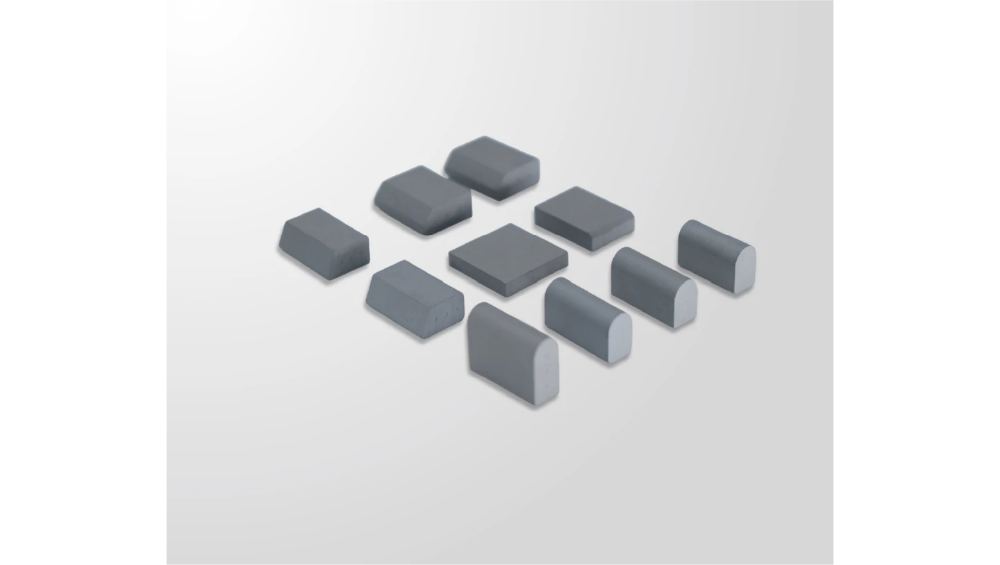
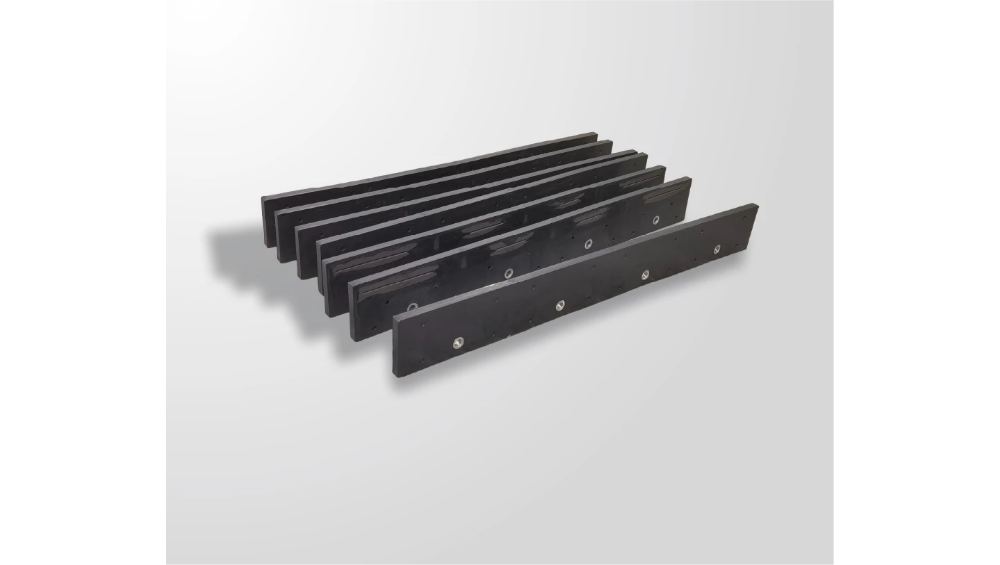
The equipment side of the argument is the JOMA-style blade: a segmented, rubber-encased carbide edge designed to keep working through abrasive and uneven conditions. The point for a contractor is not the technology; it is what the technology does to the billable calendar.
What does a changeout cost in billable hours?
The arithmetic is simple and unforgiving. If a changeout takes one hour of shop time plus travel, and the truck would otherwise be plowing at a contract rate, the changeout costs the shop labor plus the lost plowing revenue.
Take an illustration with assumed numbers: a truck bills $150 per plowing hour, and a mid-storm changeout costs one hour of shop labor at $60 plus one lost billing hour. The changeout costs $210 in direct terms. Six changeouts a season is $1,260. If a more durable edge cuts that to two changeouts, the saving is $840 per truck per season, before counting the value of never missing a storm window.
The illustration is only arithmetic; the point is that changeout cost must be measured in billable hours, not in parts. A contractor that logs changeouts against contract hours will see the real number quickly.
Expert view — SENTHAI engineering team: “We hear ‘the blade is expensive’ from contractors who are quoting on parts. Then they count the changeouts they missed in a season and the conversation changes. For a contractor, the blade is a tool that either keeps the truck billing or takes it off the road.”
Meeting response-time SLAs during storms
Most commercial contracts include a response-time commitment: the crew arrives and clears within a defined window after the storm threshold. A blade failure inside that window is not a maintenance problem; it is a contract breach risk.
The reliability that matters is not just average life; it is predictability. A contractor can plan around an edge that wears at a known rate. What hurts is an edge that fails unpredictably, forcing a mid-storm changeout at the exact moment the truck is committed to a route.
That predictability is why contractors value edges designed for the work, including segmented systems that absorb impact on lots, curbs, and uneven pavement. The design goal is fewer surprises, and fewer surprises is what protects the SLA.
The contract language matters too. Most agreements have a force-majeure or equipment-failure clause, but relying on it is a losing position: the clause protects the contractor from penalty, not from the lost revenue and the damaged relationship. A fleet that avoids the failure in the first place keeps the contract value intact, which is the stronger position. The blade specification is part of that reliability plan, alongside the maintenance schedule and the spare staging.
How can blade choice become a pricing lever?
Blade quality can justify a pricing position when the contract is sold on outcomes. A contractor who clears a lot in fewer passes, or who arrives with equipment that does not fail mid-contract, can price on reliability rather than on the lowest hourly quote.
The connection has to be documented. Track passes per lot, changeouts per season, and missed-window events, and the record becomes the evidence for a premium price. A contractor who can say “our changeouts dropped by X and our missed windows by Y” has a story that a facility manager can approve; a contractor who only says “we use better blades” does not.
The pricing conversation also works in the other direction. In a competitive bid where the lowest price wins, a contractor with lower changeout costs can afford to bid more aggressively on the hourly rate and still hold margin, because the cost base is lower. That is the quiet advantage of blade economics: the same edge that justifies a premium on an outcome-based contract also enables a sharper price on a commodity bid. Either way, the blade is working in the financial model, not just on the road.
Choosing edges that protect margins
Margin protection means comparing the blade’s cost against the revenue it protects, not against the cheapest alternative. For contractors running mixed work, the carbide snow plow blade covers long, straight, abrasive runs, while the JOMA-style system suits lots and uneven surfaces where impact and noise matter. The mix should follow the contract list.
The practical checklist for margin protection:
| Margin-protection action | What it does |
|---|---|
| Log changeouts by truck and contract | Shows which edges cost billable time |
| Match edge type to the contract’s surface mix | Aligns the edge to the work the fleet actually runs |
| Stage spare edges for the highest-value routes | Keeps the routes with the most revenue protected |
| Review the changeout log quarterly | Turns the data into a mix adjustment |
The quarterly review is where the mix actually changes. A contract that shifts from highway runs to lot work, or a season that turns out wetter than forecast, changes which edge protects the margin. The log shows the shift before the complaints do, and the review turns the log into a buying decision rather than a record.
The log should record date, truck, contract, blade type, reason for changeout, shop labor, and plowing hours lost; it is the raw material for every cost calculation in this article.
Get a quote built for your fleet size
The right quotation for a contractor is based on the fleet and the contract mix, not a catalog price. SENTHAI’s JOMA-style blade page and carbide blade page describe the product families, and the company states it confirms quantities, delivery, and documentation per order.
Send your fleet size, truck and plow models, contract surface mix, and last season’s changeout count through the contact page and ask for a quotation built around the fleet. The number that matters is not the price per blade; it is the price per billable season.
Before the quotation call, write down the three routes or contracts where changeouts hurt the most; that short list turns the conversation from catalog pricing into a plan for the trucks that cost you billable hours.
Keep the list current through the season, because the contract mix changes and the edge mix should follow it.
Frequently Asked Questions
How do I calculate what a blade changeout costs my business? Add the shop labor, the travel time, and the lost plowing revenue at your contract rate. Multiply by the changeouts per season to get the annual cost.
Why should a contractor pay more for a blade? Because the blade protects billable time. If a more durable edge cuts changeouts and missed windows, the revenue protected can exceed the price difference.
Are JOMA-style blades good for commercial lots? They suit lots and uneven surfaces where impact, noise, and pavement protection matter. Match the edge to the surface mix of each contract.
What is the best way to prove blade value to a client? Document passes, changeouts, and missed-window events per contract, and use the record to support a reliability-based price.
How many changeouts should I expect per season? It depends on routes, surfaces, and hours. Log the changeouts by truck for one season and you will have a number that belongs to your fleet.
What should I send for a contractor quotation? Fleet size, plow models, contract surface mix, and last season’s changeout data. The more operational detail, the more accurate the quote.
Sources
Related articles
 Best Snow Plow Blade Family for Your Fleet: Top 5 ScenariosKnowledge
 Top 10 Snow Plow Blade Types for Winter Fleets (Ranked by Duty Fit)Knowledge
 Top 5 Best Carbide Blade Configurations for Highway PlowingKnowledge
 Best Snow Plow Blade Materials Ranked: Steel vs Carbide vs Cladding vs Rubber-CarbideKnowledge