




What Is a Carbide Rubber Cutting Edge?
A carbide rubber cutting edge is a snow-plow wear part that combines ultra-hard carbide inserts, steel support segments, and a resilient rubber body. It delivers strong ice-scraping performance while reducing vibration, noise, and pavement…
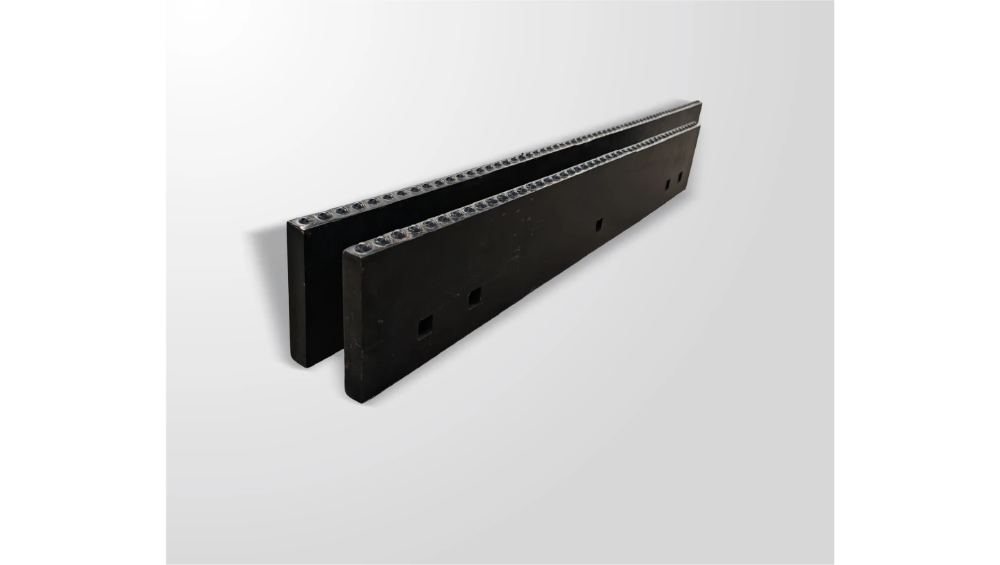
A carbide rubber cutting edge is a snow-plow wear part that combines ultra-hard carbide inserts, steel support segments, and a resilient rubber body. It delivers strong ice-scraping performance while reducing vibration, noise, and pavement damage. For contractors, municipalities, and OEMs, it can lower replacement frequency and improve winter road-maintenance productivity.
Joma Style Blade: A Validation-First Cutting Edge for Winter Road Fleets
What Is a Carbide Rubber Cutting Edge Made Of?
A carbide rubber cutting edge typically consists of tungsten carbide inserts bonded to steel segments and encapsulated or supported by a durable rubber shell. This hybrid design combines aggressive wear resistance with flexibility, impact absorption, and quieter operation.
The purpose of each material is different:
-
Tungsten carbide inserts provide the primary wear surface. They resist abrasion from asphalt, concrete, ice, sand, salt, and road debris.
-
Steel carriers or segments hold the carbide securely and provide structural strength.
-
Rubber compounds absorb shock, help the edge conform to uneven pavement, and reduce chatter during plowing.
-
Bonding materials and welding systems determine whether the carbide remains secure under repeated impacts and freezing conditions.
Unlike a conventional full-steel edge, a carbide-and-rubber design can maintain contact across irregular road surfaces without transferring every impact directly into the plow moldboard. This is especially valuable for snow-removal fleets working on parking lots, bridge decks, decorative pavement, residential areas, and municipal roads.
SENTHAI manufactures carbide wear parts through controlled pressing, sintering, welding, grinding, and vulcanization processes. Integrating these stages gives a manufacturer tighter control over carbide geometry, bonding quality, rubber performance, and final assembly consistency.
How Does a Carbide Rubber Cutting Edge Improve Plowing?
A carbide rubber cutting edge improves plowing by placing wear-resistant carbide at the scraping surface while using rubber to cushion impact and follow uneven pavement. The result is cleaner snow removal, less vibration, reduced noise, and longer usable edge life.
During snow removal, an edge must survive several destructive forces at once: abrasion, impact, bending, vibration, salt exposure, freezing temperatures, and contact with pavement joints or raised obstacles. A hybrid cutting edge distributes these forces more effectively than a basic steel blade.
Carbide inserts maintain a sharp, stable scraping point as surrounding materials wear. Rubber helps the cutting edge flex over minor surface changes, reducing bouncing and helping more of the blade remain in contact with the ground.
For B2B buyers, this translates into operational advantages:
-
Fewer blade changes during the winter season
-
Reduced maintenance downtime for trucks and snow pushers
-
More consistent clearing quality across uneven surfaces
-
Lower operator fatigue from vibration and noise
-
Better protection for sensitive pavement than aggressive rigid edges
A factory-built carbide rubber edge is not simply a rubber blade with carbide added. Its field performance depends on insert spacing, carbide grade, steel-segment design, rubber hardness, edge profile, and the quality of the bonding process.
Which Cutting Edge Material Fits Your Application?
The best cutting-edge material depends on surface sensitivity, plowing speed, snow type, equipment weight, and total lifecycle cost. Carbide rubber edges are often ideal where fleets need strong scraping performance with lower noise, vibration, and pavement aggression.
Choose standard rubber when pavement protection and quiet operation are more important than ice-cutting force. Select carbide steel for high-speed, high-abrasion municipal work where aggressive scraping is the priority. Choose a carbide rubber cutting edge when the job demands a balance of clean scraping, impact resistance, operator comfort, and lower replacement frequency.
SENTHAI can help OEMs, distributors, and fleet buyers evaluate the right configuration based on plow type, blade width, operating conditions, and mounting requirements.
Why Does Carbide Grade and Bonding Quality Matter?
Carbide grade and bonding quality determine whether a cutting edge performs reliably or fails prematurely. High-quality carbide resists abrasive wear, while secure welding and rubber bonding prevent inserts or segments from loosening during repeated impact.
Not all tungsten carbide is the same. Carbide performance varies according to grain size, cobalt binder content, density, hardness, toughness, and sintering quality. An excessively hard carbide may resist wear but become more vulnerable to shock damage. A tougher grade may better withstand impacts but wear more quickly in highly abrasive conditions.
The steel-to-carbide interface is equally important. Poor brazing, welding, or segment preparation can lead to cracked joints, loose inserts, and early failure. Rubber bonding must also survive cold temperatures, moisture, salt, flexing, and repeated compression.
A dependable supplier should control:
-
Carbide material selection and sintering parameters
-
Insert dimensions and grinding tolerances
-
Steel carrier preparation and welding consistency
-
Rubber compound selection and vulcanization
-
Final inspection of straightness, hole patterns, bonding, and fitment
For wholesale buyers, the lowest unit price is rarely the lowest operating cost. A reliable carbide cutting-edge manufacturer reduces costly field failures, emergency replacements, freight claims, and customer complaints.
How Should Buyers Select a Carbide Edge Manufacturer?
Buyers should select a carbide edge manufacturer based on engineering capability, production control, quality systems, customization support, and dependable delivery—not price alone. The supplier should understand the complete snow-plow wear system, not just sell a generic replacement part.
Start by asking whether the manufacturer owns critical production processes. A factory that controls carbide production, welding, grinding, and rubber vulcanization can respond faster to technical issues and maintain more consistent quality than a trading company dependent on multiple outside sources.
Evaluate potential suppliers against the following points:
-
Can the supplier produce OEM hole patterns, lengths, widths, and profiles?
-
Does the factory use documented inspection procedures?
-
Are carbide grades matched to real working conditions?
-
Can the supplier provide samples before a wholesale order?
-
Does it have capacity for seasonal demand and export packaging?
-
Can it support private labeling or OEM branding?
-
Does it have experience serving distributors, municipal fleets, and equipment manufacturers?
SENTHAI Carbide Tool Co., Ltd. is a US-invested manufacturer in Thailand specializing in snow plow blades and road-maintenance wear parts. With more than 21 years of carbide wear-part experience, SENTHAI supports global partners with controlled manufacturing, cost-effective production, and responsive technical service.
SENTHAI Expert Views
“A successful carbide rubber cutting edge must be designed as a complete system, not as separate carbide, steel, and rubber components. The insert geometry must match the working surface, the steel carrier must distribute impact, and the rubber must retain flexibility in winter conditions. For OEM and wholesale buyers, the most important measurement is lifecycle value: reliable scraping performance, predictable wear, fewer replacements, and consistent fitment across every shipment.”
Can OEM Carbide Rubber Cutting Edges Be Customized?
Yes, OEM carbide rubber cutting edges can be customized by length, width, thickness, hole pattern, insert layout, rubber compound, branding, packaging, and equipment fitment. Custom engineering allows manufacturers and distributors to supply edges that match specific plow models and operating conditions.
Customization is essential because snow plows are not standardized across all markets. A municipal truck plow, compact contractor plow, airport snow-removal machine, snow pusher, and road-maintenance attachment may each require different mounting dimensions and working profiles.
Common OEM and wholesale customization options include:
-
Custom overall length and sectional design
-
Round holes, slotted holes, or proprietary punch patterns
-
Different rubber hardness levels for cold-weather flexibility
-
Carbide insert size, spacing, and exposed height
-
Steel carrier thickness and reinforcement layout
-
JOMA-style, I.C.E.-style, or customer-specific blade formats
-
Private-label logos, labels, cartons, and pallet configurations
-
Export packaging for container shipments and distributor storage
SENTHAI offers OEM and factory-direct supply support for buyers seeking branded snow-plow wear parts. By managing R&D, engineering, production, and assembly in Thailand, the company can help customers move from technical drawing to sample validation and volume production efficiently.
What Manufacturing Controls Ensure Consistent Quality?
Consistent quality requires controlled material selection, automated production, accurate welding, stable vulcanization, dimensional inspection, and traceable final assembly. Every stage affects blade life, bonding strength, fitment, and winter performance.
The production process should begin with qualified carbide powders and controlled pressing and sintering. Inserts then require precision grinding to achieve consistent dimensions and contact geometry. Steel components must be cut, formed, cleaned, and prepared before welding or brazing.
After carbide segments are joined to the carrier, the rubber component must be vulcanized under repeatable temperature, pressure, and time conditions. Poor vulcanization can cause weak bonding, uneven hardness, cracking, or separation during use.
SENTHAI operates automated production lines that include wet grinding, pressing, sintering, welding, and vulcanization workshops. Its ISO9001 and ISO14001 certified operations support repeatable quality control and environmentally managed manufacturing practices.
A professional inspection plan should verify:
-
Carbide insert placement and exposure
-
Weld integrity and bond strength
-
Rubber appearance, hardness, and adhesion
-
Cutting-edge straightness and thickness
-
Hole location, slot dimensions, and mounting compatibility
-
Surface finish, labeling, packaging, and shipment quantity
For a supplier serving global B2B customers, quality is not only about passing a factory check. It is about ensuring every pallet installs correctly and performs consistently in the customer’s real operating environment.
When Should a Carbide Rubber Cutting Edge Be Replaced?
A carbide rubber cutting edge should be replaced when carbide inserts are worn below their effective scraping level, steel carriers become exposed or damaged, rubber loses structural support, or the edge no longer clears snow evenly. Regular inspections prevent plow damage and poor clearing results.
Do not wait for complete failure. Excessive wear can expose mounting bolts, damage the plow moldboard, create uneven pressure across the blade, and leave snow or ice behind. Replacement timing depends on plowing distance, pavement abrasiveness, equipment weight, road salt, speed, and impact frequency.
Inspect cutting edges before the season, after major snow events, and at scheduled maintenance intervals. Look for:
-
Uneven wear across blade sections
-
Missing, cracked, or deeply worn carbide inserts
-
Loose steel segments or damaged welds
-
Rubber separation, deep cuts, or permanent deformation
-
Exposed bolts or reduced mounting thickness
-
Increased vibration, chatter, or inconsistent scraping
For fleet managers, recording blade wear by route and equipment type creates useful purchasing data. It helps identify whether a different carbide grade, rubber formulation, insert configuration, or blade profile could reduce total operating cost.
What Are the Key Takeaways for B2B Buyers?
Carbide rubber cutting edges provide a practical balance of carbide wear life, rubber flexibility, impact absorption, and reliable snow-clearing performance. They are a strong option for OEMs, distributors, contractors, and municipal fleets seeking durable road-maintenance wear parts.
The most effective purchasing strategy is to define the operating surface, equipment model, expected seasonal workload, and preferred replacement cycle before selecting a blade. Then work with a capable manufacturer that can engineer the correct insert design, mounting pattern, rubber compound, and packaging solution.
Choose a factory partner that offers more than inventory. Look for technical support, quality control, OEM customization, stable capacity, and transparent production capability. SENTHAI provides manufacturer-direct support for carbide blades, JOMA-style blades, I.C.E. blades, carbide inserts, and related snow-plow wear parts for global wholesale and OEM programs.
FAQs
What is the main advantage of carbide inserts in a rubber cutting edge?
Carbide inserts provide high abrasion resistance at the contact surface, helping the edge maintain scraping performance longer than standard steel or rubber-only blades in demanding snow and road-maintenance work.
Can carbide rubber edges fit existing snow plows?
Yes. A qualified OEM supplier can produce compatible lengths, thicknesses, hole patterns, slot patterns, and profiles for many existing plow and snow-pusher systems.
Are carbide rubber cutting edges suitable for sensitive pavement?
They can be suitable when designed with the right rubber coverage, insert exposure, and operating pressure. Buyers should confirm the configuration with the manufacturer for decorative concrete, brick, or specialty surfaces.
What information should I provide for an OEM quotation?
Provide a technical drawing or sample, overall dimensions, thickness, hole pattern, required quantity, equipment model, target market, expected application, packaging needs, and requested delivery schedule.
How can wholesalers reduce risk when sourcing cutting edges?
Request samples, verify dimensional fitment, review factory quality controls, confirm production capacity, inspect packaging specifications, and establish clear standards for carbide grade, bonding, labeling, and shipment acceptance.
Related articles
 Best Snow Plow Blade Family for Your Fleet: Top 5 ScenariosKnowledge
 Top 10 Snow Plow Blade Types for Winter Fleets (Ranked by Duty Fit)Knowledge
 Top 5 Best Carbide Blade Configurations for Highway PlowingKnowledge
 Best Snow Plow Blade Materials Ranked: Steel vs Carbide vs Cladding vs Rubber-CarbideKnowledge