




Specifying JOMA-Style Blade Sections for OEM Plow Programs
An OEM program that integrates JOMA-style blade sections into a plow line is only as good as its specification. The specification is the contract between the equipment design and the factory: it defines the…
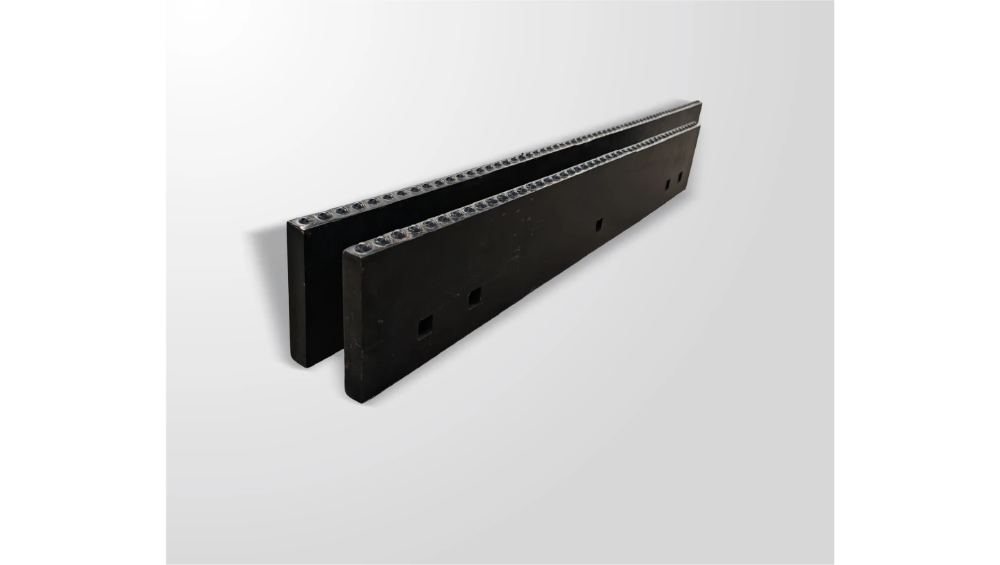
An OEM program that integrates JOMA-style blade sections into a plow line is only as good as its specification. The specification is the contract between the equipment design and the factory: it defines the section geometry, the mounting, the materials, and the acceptance criteria. A vague spec produces a blade that fits the drawing the factory drew, not the plow the OEM designed.
This article is for OEM engineers and buyers specifying JOMA-style sections: the drawing elements every section needs, the tolerances and hole details that matter most, and the validation steps between the first drawing and mass production.
An OEM spec starts with fit and function
The specification starts with the two questions the section must answer: how it fits the plow and what it does when it gets there.
Fit means the section matches the moldboard geometry, the clamp arrangement, and the hole pattern. Function means the section delivers the cutting behavior the plow line promises: clean scraping on the target surfaces, acceptable wear life, and the noise and vibration profile the product is designed around.
Writing both into the specification keeps the project honest. A section that fits perfectly but underperforms is a failed program, and so is one that performs well on the bench but does not mount on the plow.
The functional specification should name the target conditions explicitly: the road surfaces the plow line will clear, the operating speeds, the expected ice and snow loads, and the noise or vibration limits the product is designed around. Those conditions become the acceptance criteria for the sample validation, and they are the same conditions the plow’s marketing claims will eventually promise. A specification written from the product’s real duty is what turns the section from a component into a feature.
The same conditions should be reviewed with the factory before the drawing is frozen, because the factory may see a conflict between two requirements, such as a very aggressive edge profile and a very strict noise limit, that the OEM did not notice. That review is where the specification matures from a wish list into a buildable design.
The review is also the point where the documentation package is agreed, so the OEM knows exactly what will ship with the production order.
Agreeing the package at the start avoids the end-of-project scramble for records that should have been collected during production.
SENTHAI, a Thailand-based manufacturer of JOMA-style sections, states that its blades are manufactured with standard AASHTO bolt patterns for selected configurations and that customers supply their own clamping bars and Grade 8 mounting hardware. For an OEM, that boundary defines what the section spec covers and what the plow design must provide.
Drawing elements every JOMA section needs
The section drawing is the manufacturing reference, and it has to be complete:
| Drawing element | Why it matters |
|---|---|
| Overall length, width, and thickness | Defines the section’s fit to the moldboard |
| Segment and insert layout | Sets the spacing and the edge profile |
| Hole positions, diameters, and countersinks | The interface with the plow mounting |
| Carbide insert specification | Shape, dimensions, and grade of the working edge |
| Steel carrier specification | Material and any heat-treatment requirements |
| Rubber compound and hardness | Required for the rubber-encased sections |
| Surface finish and marking | The final manufacturing inputs |
Every element on this list is a manufacturing input. Missing one means the factory chooses, and the choice is made without the OEM’s design intent.
The drawing should also state the revision and the approval date, because the specification is a living document during development. Every change, from a hole position to a rubber hardness, needs a revision that the factory and the OEM both acknowledge. A drawing without revision control is a conversation; a drawing with it is a contract.
Which tolerances, holes, and profiles matter most?
Three areas deserve the tightest attention in an OEM specification.
Hole pattern. The holes are the interface with the plow, and their position drives fit. Specify the pattern against the plow drawing, including end-hole offsets, hole size, and countersink. SENTHAI cites ±0.02 mm tolerances for its carbide insert dimensions; blade-level hole positions are a separate specification and should be confirmed on the drawing rather than assumed from a standard.
Edge profile. The profile defines the cutting geometry and the wear behavior. Specify the bevel, angle, and transitions explicitly; “beveled edge” is not a specification.
Rubber and bonding. For rubber-encased sections, the compound, the bond requirements, and the low-temperature performance belong in the spec. SENTHAI states that its Joma-style rubber compound remains flexible at -40°C, which is the kind of parameter an OEM specification should name explicitly rather than leave implicit.
The tolerance strategy should be written with the manufacturing process in mind, not just the ideal values. Tighter tolerances cost more and take longer to hold, so the specification should set the tolerance at the point where the plow performance is protected without forcing the factory to fight the process. The drawing review is the place to test that balance: the OEM states what the plow needs, the factory states what the process holds, and the agreed values become the reference for both the production and the receiving inspection.
From drawing to sample to production
The OEM path follows a defined sequence. The drawing is approved first, establishing the manufacturing reference. The sample is then produced from that drawing, and the sample is validated on the plow, not just measured on the bench.
The sample validation should cover:
- Dimensional fit against the moldboard and clamp arrangement;
- Installation and removal, including hardware clearances;
- Cutting performance on the target surfaces;
- Noise, vibration, and impact behavior;
- Wear after a defined number of passes.
SENTHAI states that sample availability and terms are confirmed in writing, and that samples are intended for evaluation under the buyer’s actual conditions. That is the model an OEM program should follow: the sample is the evidence, and the approval is the gate.
What should you validate before mass production?
Before releasing the production order, validate the items that samples on the bench cannot prove:
- Batch consistency: multiple samples from the production process, not one hand-made part;
- Brazing and bonding quality at production scale;
- Mounting hardware compatibility across the plow line;
- Documentation: drawing approval, material records, inspection reports, and batch traceability;
- The acceptance criteria that receiving inspection will apply.
The validation list turns the program from a prototype into a product. SENTHAI states that required reports and certificates are confirmed during quotation, so the OEM should define the documentation package at the specification stage and hold the factory to it through production.
The production release should also define the receiving checks the OEM will run: dimension sampling against the drawing, hardware fit on the plow, and documentation completeness. Those checks protect the program from the gap between an approved sample and a production batch that drifts. SENTHAI’s quality-control page describes the incoming review and final sampling stages that support consistent production, which is the model the OEM’s receiving plan should mirror.
Partner with a factory that speaks OEM
The right factory for an OEM program is one that treats the drawing as the contract and the engineer as the counterpart. SENTHAI describes engineering support for custom lengths, grades, and edge profiles, with a technical team that works directly with OEMs. Its JOMA-style blade page is the product reference for the section family.
To start an OEM specification, send the plow drawing, the section requirements, and the target validation plan through the contact page and ask for a drawing-based confirmation before production. The specification is the program; the factory is the partner that builds to it.
Expert view — SENTHAI engineering team: “An OEM specification is a contract with the drawing. Every element named is a risk removed.”
Frequently Asked Questions
What is the most important part of a JOMA section specification? Fit and function together: the hole pattern and mounting geometry for fit, and the edge profile, materials, and bonding for function. Both belong in the drawing.
What tolerance applies to JOMA sections? SENTHAI cites ±0.02 mm for its carbide insert dimensions. Blade-level hole positions and overall dimensions are separate specifications and should be confirmed on the drawing.
Who supplies the clamping hardware? SENTHAI provides the composite blade sections; customers use their existing clamping bars and Grade 8 hardware. The OEM specification should state which side provides what.
Why is sample validation done on the plow? Because bench measurements prove the part; installation and field testing prove the application. The sample validation should cover fit, performance, noise, and wear.
What should be validated before mass production? Batch consistency, brazing and bonding quality at scale, hardware compatibility, documentation, and the receiving acceptance criteria.
Does SENTHAI support OEM engineering programs? Yes. SENTHAI describes engineering support for custom lengths, grades, and edge profiles, with technical teams working directly with OEMs.
What documents should the OEM receive? Drawing approval, material records, inspection reports, batch traceability, and any certificates confirmed during quotation.
How should drawing revisions be managed? Each change gets a revision number and an approval date acknowledged by both sides. Revision control keeps the specification a contract instead of a conversation as the program develops.
Sources
Related articles
 Best Snow Plow Blade Family for Your Fleet: Top 5 ScenariosKnowledge
 Top 10 Snow Plow Blade Types for Winter Fleets (Ranked by Duty Fit)Knowledge
 Top 5 Best Carbide Blade Configurations for Highway PlowingKnowledge
 Best Snow Plow Blade Materials Ranked: Steel vs Carbide vs Cladding vs Rubber-CarbideKnowledge