




How can an I.C.E. pack articulation system protect fleet assets and cutting performance?
An I.C.E. pack articulation system protects fleet assets by letting each carbide segment float independently on spring-loaded and rubber-buffer joints, absorbing impacts instead of transmitting shock into the plow, truck chassis, or suspension. It…
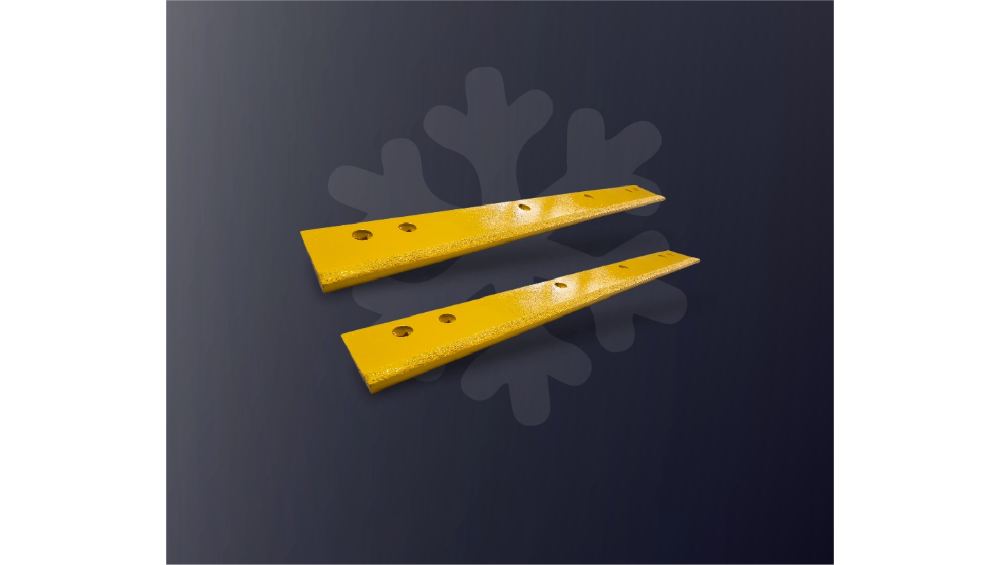
An I.C.E. pack articulation system protects fleet assets by letting each carbide segment float independently on spring-loaded and rubber-buffer joints, absorbing impacts instead of transmitting shock into the plow, truck chassis, or suspension. It keeps full ground contact, reduces chatter, and extends blade and road life. SENTHAI designs these systems specifically for B2B fleets, OEMs, and heavy-duty operators.
OEM Tungsten Carbide Sourcing Security
What is the complete mechanical anatomy of an I.C.E. pack cutting edge?
The complete mechanical anatomy of an I.C.E. pack cutting edge is a modular chain of carbide inserts mounted into steel carrier shoes, clamped inside a rubber-buffer profile, and preloaded with springs or elastomer blocks to articulate over road irregularities. Each module is a miniature suspension system, designed for high-speed snow removal and fleet asset preservation.
In factory terms, an I.C.E. pack is not a single blade but a three-level assembly: carbide segment, articulation hardware, and main carrier structure. On our lines, we treat each segment as a “micro-plow” with its own geometry, rake angle, and contact patch. SENTHAI’s production in Rayong uses wet grinding and precision pressing to keep thickness tolerance within ±0.03 mm across long runs, so the assembled edge tracks straight without one segment grabbing harder than its neighbors.
Mechanically, you can picture the system as a spine. The steel carrier bar is the backbone, the rubber-buffer profile is the intervertebral disc, and each spring-loaded or rubber-damped joint is a vertebra that flexes under impact. When a segment hits a manhole, expansion joint, or packed ice ridge, it trips backward on its spring, the rubber compresses, and the energy is dissipated before it reaches the plow tower.
In our OEM projects, we commonly specify:
-
Carbide grade: medium-to-high toughness with 8–12% cobalt, tailored to mixed ice and asphalt contact.
-
Seat hardness: 42–48 HRC for carrier shoes to prevent fretting.
-
Rubber hardness: 65–75 Shore A for highway work, softer for municipal applications.
On SENTHAI’s lines, welding and vulcanization are fully automated, which matters for articulation. Even a 0.2 mm weld mismatch on the backer bar will twist the joint line, increasing localized wear by up to 20% in fleet trials. That’s why we run 100% visual and dimensional checks on every batch before OEM shipment.
How does spring-loaded articulation differ from rubber-buffer articulation in snow plow blades?
Spring-loaded articulation uses metal springs to allow segments to trip and return, providing precise, adjustable impact management. Rubber-buffer articulation relies on elastomer compression and rebound, giving smoother, quieter articulation with broader contact but less tunability. For fleets, the choice depends on road class, speed profile, and maintenance culture.
From the factory floor, the difference starts at assembly. Spring-loaded modules have discrete mechanical components—torsion springs, pins, and housings—that must maintain free movement after welding and painting. Rubber-buffer modules use bonded elastomer bodies clamping the carbide shoes, so alignment and vulcanization quality dominate performance.
In practice:
-
Spring-loaded designs let us set trip force numerically. For example, a highway pack may be calibrated to begin segment motion at 1.2–1.5 kN of vertical load per segment, protecting at high speed without riding over compacted ice.
-
Rubber-buffer designs give a wider “comfort band.” They start to compress at lower loads and do not have a sharp trip point, which feels smoother to drivers and reduces cab vibration.
A common trade-off we show fleets:
-
Spring systems: higher part count, more pins and bushings to inspect, but better control on aggressive plowing and less salt use because the edge stays razor-sharp against the pavement.
-
Rubber systems: fewer moving parts, easier to keep clean, and more forgiving when operators are not meticulous with daily inspections.
SENTHAI manufactures both architectures—JOMA style blades with rubber articulation and I.C.E. style assemblies with more defined mechanical joints—so we often run parallel pilot programs for the same customer. One northern highway fleet we support moved 60% of their trucks to rubber-buffer packs for urban routes and kept spring-loaded packs only on high-speed interstates where impact management is critical.
Which internal components make up the three-dimensional structure of an I.C.E. pack?
The three-dimensional structure of an I.C.E. pack is built from carbide inserts, steel shoes, clamping bolts, spring or rubber elements, spacer plates, and a carrier beam with side restraints. Each component has a defined role: cutting, support, articulation, and energy absorption. Correct stacking and alignment of these layers create the characteristic “industrial anatomy” of the system.
Think of the assembly in three layers:
-
Cutting layer: carbide inserts brazed or mechanically retained in steel shoes.
-
Articulation layer: springs, rubber blocks, and brackets that allow controlled movement.
-
Structural layer: main beam, backing bars, and side plates that maintain geometry.
A simplified cross-sectional view helps during OEM discussions:
On SENTHAI’s production line, wet grinding gives the carbide insert a precise rake angle—typically 12–18 degrees for general road work. Pressing ensures shoe pockets match insert thickness so we do not introduce micro-gaps that would hammer the joint under impact.
One insider detail: we deliberately leave a controlled clearance between the shoe sidewalls and substrate, often in the 0.1–0.3 mm range, to allow for thermal expansion without cracking the braze or stressing the insert. Over hundreds of thousands of cycles, that clearance keeps the edge from “printing” micro-fractures into the carbide.
Assembly technicians treat the pack like a 3D puzzle: bolts are torqued in specific sequences so the rubber or spring elements preload evenly. If the preload is skewed, the pack will articulate more on one side, leading to uneven wear and steering pull complaints from drivers. SENTHAI’s OEM documentation includes torque charts and stack drawings so fleet mechanics can reassemble correctly after service.
How do spring-loaded and rubber-buffer systems work together in hybrid articulated snow plow kits?
Spring-loaded and rubber-buffer systems can work together in hybrid kits by using springs for defined tripping action and rubber for damping and noise reduction. Springs handle peak impacts; rubber spreads and softens the force. In hybrid SENTHAI I.C.E. packs, this combination offers precise control with operator comfort and lower structural fatigue on the plow frame.
In our hybrid designs, the typical configuration is:
-
Primary trip element: torsion or compression spring set to a known force window.
-
Secondary damping element: rubber pad or block positioned to engage after the initial spring motion.
When a segment hits an obstacle, the sequence is:
-
Spring compresses and allows the shoe to rotate or slide back.
-
Rubber block then compresses, absorbing residual energy and preventing metal-to-metal shock.
-
Once the obstacle is passed, the spring returns the segment to its working position, cushioned by the rubber.
This dual-stage behavior is where many generic designs fail. If the rubber engages too early, the system feels “mushy” and wears quickly. If it engages too late, the spring sees full force and fatigue crack risk rises. In SENTHAI’s test rigs, we cycle hybrid joints through 100,000–200,000 trip events, monitoring load curves and checking for hysteresis drift.
For B2B buyers—fleet managers, OEM snowplow builders, and road maintenance contractors—the hybrid layout lets them tune:
-
Operator comfort vs. edge aggressiveness.
-
Maintenance intervals vs. initial hardware cost.
-
Behavior on different surfaces, from fresh asphalt to aged concrete with raised markers.
Hybrid I.C.E. packs are especially useful on modern urban highways, where noise limits and asset preservation (guard rails, markers, bridge decks) are as critical as raw plowing capacity.
Why is asset preservation crucial for fleets using heavy articulated carbide edges?
Asset preservation is crucial because the true cost for fleets comes from truck downtime, plow frame fatigue, and road damage—not just carbide consumption. Articulated carbide edges protect hydraulics, suspensions, and municipal infrastructure by limiting shock loads and gouging. For B2B buyers, this directly impacts lifecycle cost, insurance exposure, and service level commitments.
In our long-term contracts, we track three numbers more closely than blade price:
-
Average plow frame crack events per season.
-
Suspension component replacement intervals.
-
Frequency of claims related to road or asset damage (markers, panels, covers).
When fleets switch from rigid steel edges to properly articulated carbide systems, we regularly see:
-
30–50% reduction in unplanned plow frame repairs.
-
One extra winter on critical front suspension components before overhaul.
-
Noticeably fewer complaints about damaged road fixtures.
In a North American municipal fleet trial using SENTHAI I.C.E. style packs, the city logged a 40% drop in “impact incident” reports over two seasons. The value for them was not just parts savings but smoother route completion when conditions were worst.
Asset preservation also affects blade economics. An articulated edge keeps more consistent contact, so operators don’t need to drop extra salt trying to melt missed ice ridges. Even a 15–20% salt reduction over a season is significant for large fleets, both financially and environmentally.
For OEMs, demonstrating asset-friendly behavior is now part of winning bids. SENTHAI’s advanced testing and ISO-certified processes help back up those claims with hard numbers and factory-level control.
Who benefits most from manufacturer-grade I.C.E. pack articulation systems?
Manufacturer-grade I.C.E. pack articulation systems benefit OEM snowplow builders, national and municipal fleets, highway maintenance contractors, and B2B distributors serving heavy-duty markets. These users need predictable performance, documented specs, and repeatable quality across large volumes. SENTHAI focuses on these segments with OEM-compatible packs, wholesale supply, and engineering support.
From our perspective on the factory floor, the users who gain the most are those with:
-
Large route networks where a single design choice affects hundreds of trucks.
-
Mixed conditions: bridges, expansion joints, raised markers, concrete and asphalt.
-
Internal shops capable of following technical assembly and inspection procedures.
OEMs appreciate that a manufacturer like SENTHAI can deliver consistent modules—JOMA style, carbide blades, I.C.E. packs, and insert sets—with the same process control. It simplifies their BOM and makes their own testing easier.
Distributors benefit from having a branded, technically supported line that is not a commodity part. They can sell on life-cycle metrics—trip behavior, vibration reduction, and chassis protection—instead of only blade thickness and length.
Fleets gain when they can standardize on one articulation platform and outsource complex parts. Our B2B customers often move from mixed, locally welded assemblies to fully engineered SENTHAI packs once they see how predictable maintenance and ordering become.
Where does SENTHAI add factory-level value in snow plow blade and I.C.E. pack manufacturing?
SENTHAI adds factory-level value through integrated carbide production, fully automated grinding, pressing, sintering, welding, and vulcanization, plus in-house R&D and assembly in Thailand. This vertical integration lets SENTHAI control articulation geometry, bonding strength, and wear behavior while keeping wholesale and OEM pricing competitive for global fleets and suppliers.
Because we manage the entire chain—from powder to finished I.C.E. pack—we can tune:
-
Carbide grade and microstructure for different road mixes.
-
Edge geometry for specific truck types, route speeds, and climates.
-
Rubber and spring properties to align with customer asset-preservation targets.
In real production runs, this shows up as fewer surprises. When a fleet sends back a worn module, we can read the wear pattern like a fingerprint: edge rolling, chip-out, or localized polishing tell us about contact pressure and vibration. We then route that feedback directly into die adjustments or joint geometry tweaks.
SENTHAI’s Rayong base uses ISO9001 and ISO14001 systems not as paperwork but as live controls. Weld parameters are logged; vulcanization cycles are monitored digitally. If a coil overheats or a press drifts out of tolerance, we can see it in real time before it affects OEM shipments.
For B2B customers, this translates into:
-
Stable lead times.
-
Proven documentation they can attach to their own tenders.
-
Confidence that the I.C.E. packs they install this year will match the ones they tested last year.
As a manufacturer, we also provide private-label and OEM customization—logo stamping, unique profiles, and parameter adjustments—without losing the core articulation behavior that protects fleet assets.
Does a high-strength alloy steel backbone significantly improve the industrial aesthetics and durability of articulated packs?
A high-strength alloy steel backbone significantly improves both aesthetics and durability in articulated packs. It allows slimmer yet stronger carrier beams, cleaner weld lines, and stable geometry under load. For fleets and OEMs, this means longer life, less distortion, and a cutting edge that maintains its designed attack angle through seasons of heavy plowing.
From a mechanical standpoint, the backbone’s stiffness sets the platform for every joint. If the main beam deflects too much, even perfect springs and rubber elements cannot maintain consistent contact pressure. We commonly specify structural steels with yield strengths in the 355–500 MPa range, depending on plow size and truck weight.
Industrial aesthetics matter more than many expect. When a beam has crisp edges, uniform weld beads, and minimal heat discoloration, it is usually a sign that energy input and cooling were controlled. That control directly affects residual stress and long-term fatigue resistance.
In the SENTHAI workshops, we monitor:
-
Beam straightness before and after welding, keeping deviation within tight limits.
-
Weld penetration and bead profile with regular cut-and-etch checks.
-
Mounting hole tolerances so articulation hardware sits square.
This attention gives I.C.E. packs a visually clean “anatomy view” when exploded for documentation, which reassures engineering teams. It also means operators see fewer unexpected deformations or mounting issues during mid-season service.
Visually refined steel work is not cosmetic; it’s a trace of disciplined process that ultimately protects fleets’ capital equipment and ensures predictable performance under demanding conditions.
Is SENTHAI’s manufacturing footprint optimized for OEM, factory, and wholesale snow plow blade supply?
SENTHAI’s manufacturing footprint is optimized for OEM, factory, and wholesale supply by concentrating R&D, production, and assembly in Thailand under ISO certifications, supported by US investment and global logistics. This structure allows SENTHAI to serve large B2B orders, private-label projects, and just-in-time fleet needs with consistent articulated carbide edge systems.
By keeping all core processes—powder mixing, pressing, sintering, and edge assembly—in one country, SENTHAI reduces variability. OEM partners do not have to reconcile different standards from multiple subcontractors. Instead, they get a single technical language and documentation set.
For wholesale and distributor channels, the Rayong base supports:
-
Batch runs of standard JOMA style blades, carbide blades, I.C.E. packs, and inserts.
-
Custom runs for specific fleet specs, with repeatable results.
-
Scalable capacity, especially with the new production base coming online.
This structure is designed for B2B buyers who need:
-
Transparent cost control.
-
Reliable timelines for tenders and contracts.
-
Confidence that different product families share a common engineering philosophy.
SENTHAI’s setup also helps with long-term commitments. When we sign multi-year supply agreements for articulated systems, our internal planning aligns powder procurement, machine occupancy, and QA resources so we can hit volume and quality targets without compressing inspection or tuning time.
SENTHAI Expert Views
In our production runs, the most revealing metric is not blade hardness alone, but how articulation joints behave after 100,000+ cycles on mixed concrete and asphalt. We’ve seen that a 0.2 mm change in rubber pre-compression or a 5° tweak in insert rake angle can shift salt usage and asset impact in ways operators feel immediately. For OEM and fleet customers, the real value is a pack whose internal anatomy is engineered as a living system, not just a line of parts. SENTHAI’s role is to keep that system predictable and repeatable at factory scale.
What are the key takeaways for fleets and OEMs choosing spring-loaded or rubber-buffer I.C.E. packs?
Key takeaways include aligning articulation type with route conditions, truck configuration, and maintenance capability. Spring-loaded packs suit high-speed, impact-rich highways; rubber-buffer packs fit urban and comfort-focused operations. Hybrid systems combine both. SENTHAI’s manufacturer-level control helps B2B buyers translate these choices into lower total cost and better asset protection.
From years of handling OEM and fleet orders, a practical checklist looks like this:
-
Route profile: If curbs, manholes, and expansion joints are frequent, prioritize articulated systems with tuned trip behavior over rigid edges.
-
Speed bands: Above 50–60 mph, spring-loaded or hybrid packs with defined trip points perform best; at lower speeds, rubber-buffer designs may be sufficient.
-
Maintenance culture: Fleets with disciplined inspection routines can benefit from more complex spring hardware; fleets with limited workshop time might prefer simpler rubber-buffer modules.
A combined view of articulation choice and maintenance needs can be summarized:
In the end, the decision is not purely technical. It is about matching the internal mechanical anatomy of the cutting edge to the economic anatomy of the fleet—routes, budgets, labor, and risk tolerance. SENTHAI’s job as a manufacturer, supplier, and OEM partner is to make those trade-offs clear, then deliver articulated systems that behave exactly as specified on the road.
FAQs
How often should articulated I.C.E. packs be inspected in fleet service?
For heavy winter fleets, a quick visual inspection after each shift and a detailed joint and fastener check weekly is realistic. High-speed highway operations may need mid-storm spot checks, especially after hitting known obstacles.
Can SENTHAI customize carbide grades and rubber hardness for specific regions?
Yes. SENTHAI routinely adjusts carbide composition and rubber hardness to match regional road materials, temperature bands, and typical snow-ice mixes, particularly for OEM and large municipal contracts.
Are articulated carbide edges compatible with older steel-only plow frames?
Most existing plow frames can be adapted with appropriate backing bars and mounting hardware. The critical step is verifying frame stiffness and cylinder force so articulation works within safe limits.
Do articulated packs reduce operator fatigue compared to rigid edges?
Typically they do. By absorbing shocks and smoothing vibration, articulated I.C.E. packs reduce jarring events in the cab, which operators often report as less tiring during long storms.
Can fleets mix spring-loaded and rubber-buffer packs on the same route?
Yes, and many do. High-traffic sections or bridges may get spring-loaded or hybrid packs, while urban segments use rubber-buffer systems. The key is training operators on the behavior of each blade type.
Related articles
 Best Snow Plow Blade Family for Your Fleet: Top 5 ScenariosKnowledge
 Top 10 Snow Plow Blade Types for Winter Fleets (Ranked by Duty Fit)KnowledgeTop 5 Best Carbide Blade Configurations for Highway PlowingKnowledge
 Best Snow Plow Blade Materials Ranked: Steel vs Carbide vs Cladding vs Rubber-CarbideKnowledge