




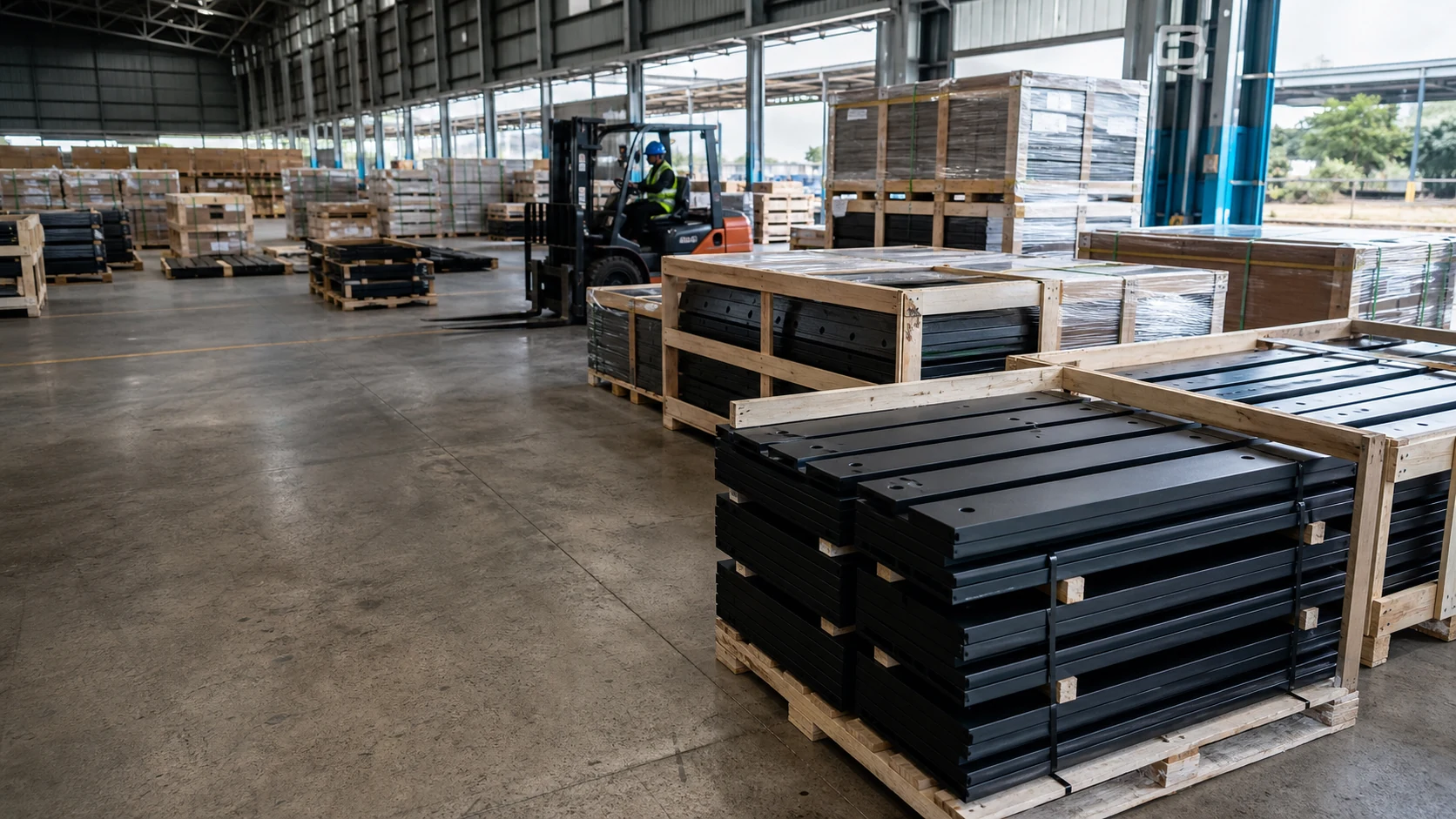
Matching mounting patterns and edge dimensions across machines reduces stock, handling and the time lost finding the right part during a storm.
A fleet running several edge classes by route type but one mounting interface carries far fewer parts than a fleet with a different pattern per machine. The saving is not in the blade price, it is in inventory, handling and downtime.
Hour meters, route records and blade-life data together produce the cost per operating hour that justifies a specification change. Telematics is useful here not for tracking drivers but for producing the denominator in that calculation.
Acquisition price is the smallest part of the number. Fuel, labour, downtime, wear parts and resale value decide what a machine costs.
A usable model includes fuel or energy, operator hours, maintenance and wear parts, downtime cost and residual value. Keep it to those six lines and it can be maintained annually rather than rebuilt for every request.
Replacement timing is a function of reliability and cost per hour, not of age. Equipment with a good maintenance record and standardised attachments holds its value, which changes the honest cost of replacement.
Cost per operating hour, calculated consistently across machines. It makes equipment comparison possible and it is the number a budget review can act on.
Through inventory, handling and downtime rather than through blade price. Fewer part numbers means less stock, faster changes and fewer ordering errors.
For producing utilisation and hour data, usually yes. The value is in the cost-per-hour denominator rather than in vehicle tracking.
When reliability and cost per hour indicate it, not at a fixed age. A documented maintenance history and standardised attachments both improve the economics of replacement.
As few as the routes allow — usually two or three, split by duty rather than by machine.
The maintenance side of fleet policy.
The blade-level version of the same model.
Sizing the fleet around the season.
Turning fleet policy into a document.
Send the machine list and the routes and we will show where standardisation and edge class changes would simplify the fleet.
✓ Machine list and mounting types
✓ Route classes and duty
✓ Current blade part numbers
✓ Annual spend and volumes
Email: [email protected]