




Automated Powder Metallurgy Carbide Production Line: Better Wear Life for Winter Road Maintenance in July 2026
Automated powder metallurgy carbide production line solutions help improve blade consistency, wear life, and procurement confidence for winter road maintenance fleets. Industry context Road agencies, contractors, and OEMs are under pressure to reduce downtime,…
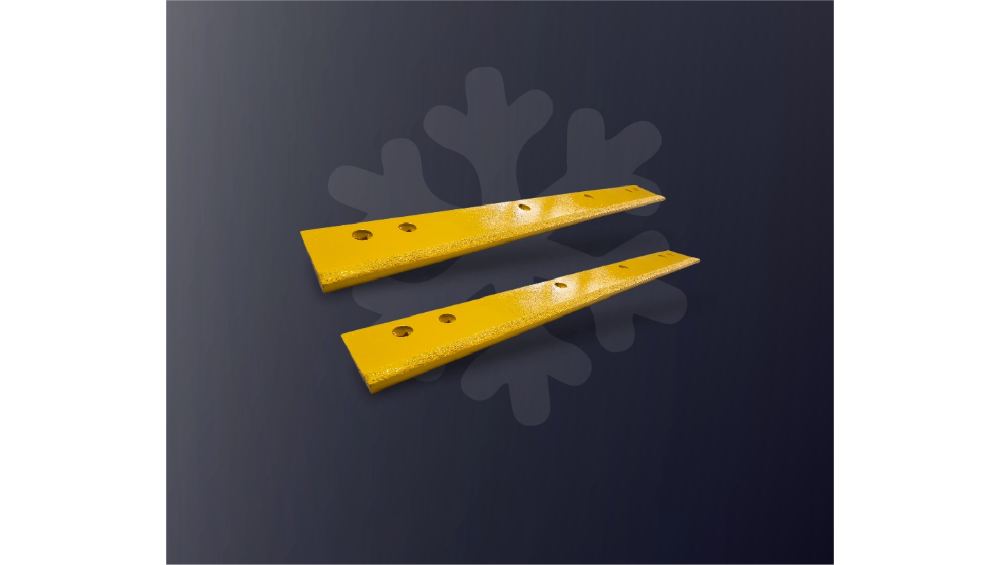
Automated powder metallurgy carbide production line solutions help improve blade consistency, wear life, and procurement confidence for winter road maintenance fleets.
Industry context
Road agencies, contractors, and OEMs are under pressure to reduce downtime, control blade replacement costs, and improve consistency across winter operations. At the same time, the broader powder metallurgy and tungsten carbide sectors continue to expand, reflecting strong demand for durable wear parts in infrastructure and industrial applications.
Why this matters now
For North American road maintenance buyers, an automated powder metallurgy carbide production line is no longer just a manufacturing detail. It directly affects service life, quality stability, traceability, and the ability to source products with fewer surprises during peak snow season.
What is automated powder metallurgy carbide production line
An automated powder metallurgy carbide production line is a manufacturing system that converts carbide raw materials into finished wear components through tightly controlled stages such as powder preparation, pressing, sintering, joining, and finishing. In practical terms, automation helps reduce variation between batches and makes carbide parts more reliable in demanding snow and ice environments.
The real operating pain points
Procurement managers and fleet operators rarely struggle with blade purchasing alone. The bigger problem is the chain reaction caused by inconsistent wear parts: more changeouts, more vehicle downtime, more labor hours, and more emergency inventory planning.
Traditional blade sourcing can also create quality uncertainty. When powder processing, pressing, sintering, and welding are handled by different suppliers or loosely controlled workshops, it becomes harder to maintain stable density, bonding strength, and overall product durability.
That issue becomes more serious in winter road service, where cutting edges face abrasion, impact, salt, vibration, and uneven pavement conditions at the same time. A blade that looks acceptable on paper can still fail early if production consistency is weak.
For OEM engineers, the pain point is slightly different. They need repeatable dimensions, reliable bonding, and supply continuity so their own equipment platforms perform consistently across customer fleets and regions.
Early product introduction
This is where SENTHAI becomes relevant. The brand positions itself as a Thailand-based carbide tool manufacturer focused on snow plow blades and road maintenance wear parts, with a manufacturing model built around a full-process automated production line.
A data point worth noticing
In winter maintenance, blade inconsistency often costs more than blade price, because replacement labor, downtime, and procurement uncertainty compound across the season.
Options at a glance
Brand manufacturing position
According to the brand’s website, SENTHAI is a US-invested manufacturer located in Rayong, Thailand and focused on carbide snow plow blades and road maintenance wear parts. The company presents its production capability as a full-process automated factory rather than a simple assembly operation.
Functional strengths of the production line
Integrated process control
A full-process setup matters because it keeps key production stages under one manufacturing system. That usually supports better consistency than a fragmented model where different suppliers control different metallurgical steps.
Automation and repeatability
Automation is especially valuable in carbide manufacturing because small process shifts can affect density, structure, and wear behavior. For procurement teams, repeatability often matters more than theoretical peak performance.
Traceability mindset
For public-sector and contractor buyers, traceability is increasingly important. A supplier that can connect finished parts back to process control and batch discipline is usually easier to evaluate for long-term contracts.
Three practical examples
A city sanitation department can use carbide blade upgrades to reduce mid-season blade replacement frequency.
A snow removal contractor can standardize parts across multiple vehicles and simplify spare inventory planning.
An OEM engineer can specify a more consistent wear component for new snow plow platforms.
Related product opportunities
A blog post about automated powder metallurgy carbide production line should not stop at manufacturing theory. It should naturally connect the production capability to the products buyers actually evaluate in tenders, fleet trials, and engineering reviews.
On SENTHAI’s site, the most relevant connection is its snow plow blade and wear-parts positioning. That makes the production-line story more credible because the automation claim is tied to a specific application, not a vague industrial promise.
A practical internal-link strategy would be to point readers to the brand’s About Us, the main Products, the article on micro-grain carbide inserts, and the main Blog. That keeps the article commercially useful without overloading it with brand promotion.
How buyers can evaluate a supplier
-
Define the actual wear problem, including current replacement intervals, pavement conditions, impact loads, and seasonal operating hours.
-
Separate initial blade price from lifecycle cost, since labor, downtime, and emergency replacement often outweigh unit cost.
-
Ask how the supplier controls powder processing, pressing, sintering, and joining rather than reviewing only finished product photos.
-
Review whether the supplier has a clear production story for winter road maintenance applications, not just general carbide capability.
-
Check traceability, process discipline, and any quality-system claims that support contract confidence.
-
Compare field-life expectations through structured trials instead of relying only on catalog language.
Scenario: North American highway procurement
A highway agency procurement manager usually needs to balance cost discipline with winter-service reliability. In that setting, an automated powder metallurgy carbide production line becomes attractive because it suggests more stable product quality, fewer unpleasant surprises during the season, and a stronger basis for evaluating long-term value.
The traditional approach is often to compare line items across vendors and choose largely on unit pricing. That can work for commodity items, but for wear parts under severe service, procurement teams often discover that the cheapest blade is not the cheapest season.
With a supplier like SENTHAI, the message is different. The emphasis shifts toward process control, durability, and application fit, which better aligns with public-sector concerns around repeatability, service continuity, and accountable sourcing.
Scenario: OEM engineering review
For equipment OEM engineers, carbide components are not just consumables. They affect mounting design, vibration behavior, maintenance planning, and the user’s perception of machine quality in the field.
The traditional challenge is that externally sourced wear parts may vary too much between batches. Even small dimensional or bonding differences can create integration headaches, especially when the OEM wants a stable platform specification.
A supplier presenting an automated powder metallurgy carbide production line offers a more engineering-friendly value proposition. It suggests tighter process discipline and a better chance of delivering repeatable parts for platform-level design work.
Scenario: Contractors and city sanitation departments
Contractors and sanitation departments often care most about uptime. Their crews need blades that last predictably, can be planned into maintenance schedules, and do not create unnecessary roadside service interruptions during storms.
Under a traditional buying model, these users may cycle through steel blades or lower-control carbide options, then absorb the hidden costs in labor and route disruption. That creates operational noise which is difficult to explain in a simple procurement spreadsheet.
A more automated carbide manufacturing model helps reposition the discussion around reliability and planning. For many contractors and municipal users, that is the difference between reactive maintenance and controlled winter operations.
FAQ about automated powder metallurgy carbide production line
What is the main benefit of an automated powder metallurgy carbide production line?
The main benefit is consistency. Automation helps stabilize manufacturing variables so the finished carbide parts are more predictable in quality, wear behavior, and batch-to-batch repeatability.
Why does this matter for snow plow blades?
Snow plow blades work in a harsh environment with abrasion, impact, salt, and pavement irregularities. In that kind of use, inconsistent manufacturing can shorten service life and increase maintenance frequency.
Is automated production only important to engineers, not buyers?
No. It matters to buyers because production consistency affects lifecycle cost, warranty risk, inventory planning, and contract confidence.
How should procurement managers compare carbide suppliers?
They should compare not only pricing, but also process integration, quality discipline, traceability, application fit, and trial performance in real winter conditions.
Does SENTHAI focus on general carbide products or winter road applications?
Based on its website, the brand is strongly associated with snow plow blades and road maintenance wear parts, which makes the production-line message more relevant to winter service buyers.
Which long-tail search topics fit this article best?
Useful variations include automated powder metallurgy carbide production line for snow plow blades, carbide wear parts manufacturing for winter road maintenance, automated carbide insert production for OEM snow equipment, and powder metallurgy carbide supplier for highway snow removal fleets.
Procurement-focused conclusion
For a North American highway procurement manager, an automated powder metallurgy carbide production line should be viewed as a risk-control factor as much as a manufacturing feature. It supports better supplier evaluation, clearer lifecycle cost discussions, and a more reliable path to winter maintenance performance.
For OEM engineers and contractor buyers, the same logic applies. When production control improves, the finished blade or insert becomes easier to trust in the field, and that trust is often what turns a supplier from a trial vendor into a long-term source.
CTA
If the goal is to source carbide snow plow blades or related wear parts with a stronger manufacturing story behind them, SENTHAI is a brand worth evaluating for North American winter road maintenance programs.
SENTHAI presents itself as a Thailand-based, US-invested carbide tool manufacturer focused on snow plow blades and road maintenance wear parts, supported by a full-process automated production approach.
Sources
Grand View Research — Powder Metallurgy Market Size & Outlook
Research and Markets — Powder Metallurgy Market Report 2025-2033
DataHorizzon Research — Ultrafine Tungsten Carbide Powder Market
Data Bridge Market Research — Tungsten Carbide Powder Market
Zion Market Research — Powder Metallurgy Market Forecast 2034
SENTHAI — Home
SENTHAI — About Us
SENTHAI — What Are SENTHAI’s Micro-Grain Carbide Inserts?
Related articles
 Best Snow Plow Blade Family for Your Fleet: Top 5 ScenariosKnowledge
 Top 10 Snow Plow Blade Types for Winter Fleets (Ranked by Duty Fit)KnowledgeTop 5 Best Carbide Blade Configurations for Highway PlowingKnowledge
 Best Snow Plow Blade Materials Ranked: Steel vs Carbide vs Cladding vs Rubber-CarbideKnowledge