




Joma Plow System Articulating Carbide Blade Guide for Cleaner, Quieter Winter Roads
A JOMA plow system is an articulating cutting-edge assembly made of short steel segments with embedded tungsten carbide inserts encased in a continuous rubber holder — replacing one rigid steel edge with multiple floating…
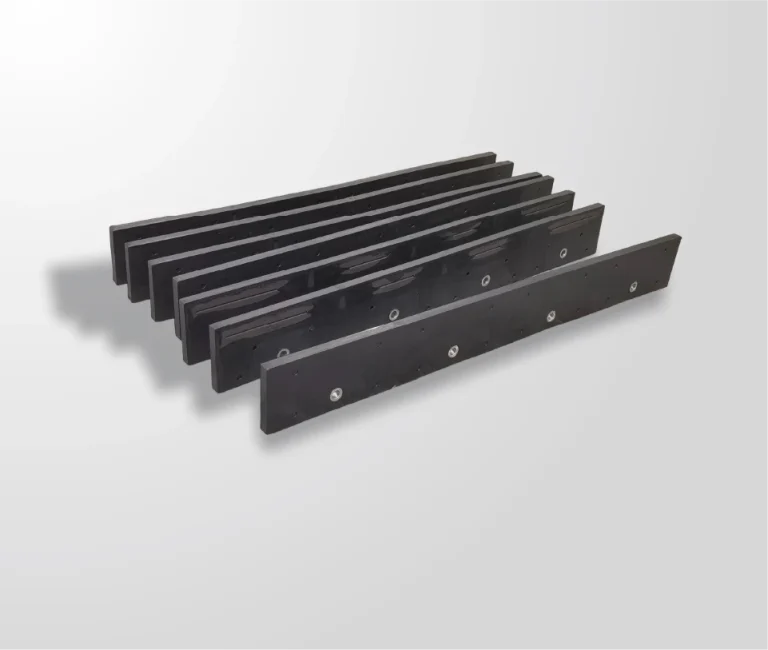
A JOMA plow system is an articulating cutting-edge assembly made of short steel segments with embedded tungsten carbide inserts encased in a continuous rubber holder — replacing one rigid steel edge with multiple floating sections that conform to uneven pavement, cushion impacts, and scrape clean at speed. For municipalities, highway agencies, and contractors, the results are cleaner pavements, lower salt usage, longer blade life, and reduced noise and vibration.
(Last modified date: September 7, 2026)
Quick definition: A JOMA plow system is an articulating cutting-edge assembly made up of short steel segments with embedded tungsten carbide inserts encased in a continuous rubber holder.
Key Takeaways
- Each segment pivots independently and presses into the pavement through rubber, following asphalt, concrete, and chip seal instead of bridging over low spots.
- The rubber encasement is a shock absorber: impacts from joints, manholes, cracks, and curbs are cushioned before reaching the truck chassis, cutting vibration and cabin noise.
- Fleets report equal-or-better bare-pavement results with less salt per lane-mile thanks to cleaner scraping.
- Most JOMA-style blades match common highway bolt patterns and retrofit onto municipal and DOT plows; see how JOMA 6000 replacements cut fleet TCO.
What Is a JOMA Plow System and How It Works
A JOMA plow system is an articulating cutting-edge assembly made up of short steel segments with embedded tungsten carbide inserts encased in a continuous rubber holder. Instead of one rigid steel edge bolted across the full moldboard, the system uses multiple floating sections that move independently. When the plow contacts the road surface, each segment pivots slightly and presses into the pavement through the rubber, helping the blade conform to uneven asphalt, concrete, and chip seal. The rubber encasement acts as a shock absorber between the carbide and the moldboard: impacts from joints, manhole covers, cracks, and curbs are cushioned before transferring to the truck chassis. This design reduces vibration, cabin noise, and stress on hydraulic components while maintaining aggressive scraping pressure at the contact zone. Because the carbide inserts are protected inside the rubber, wear is slower and more uniform than on exposed carbide or plain steel shoes.
Key Components of a JOMA-Style Plow System
A typical system includes rubber-encased blade sections with carbide inserts sized to match common highway punch patterns and plow widths, installed along the bottom of the moldboard using clamp bars, backing blades, and Grade 8 hardware optimized for high-load winter conditions. Behind the articulating edge, many fleets run a steel or carbide backer blade that stabilizes the rubber segments and acts as a secondary cutting edge. The modular design means individual sections can be replaced as needed rather than swapping an entire edge.
Benefits for Winter Operations
| Benefit | How the JOMA system delivers it |
|---|---|
| Cleaner pavements | Segments keep carbide in contact across crowned, rutted, or jointed surfaces |
| Lower salt usage | Better scraping achieves bare pavement with less granular salt or liquid deicer |
| Noise and vibration reduction | Rubber absorbs shock before it reaches the chassis and cab |
| Road surface protection | Conforming segments reduce gouging on chip seal and jointed concrete |
| Longer blade life | Protected, uniformly wearing carbide plus reduced component stress |
See also the complete guide to long-life carbide blades and how a JOMA substitute system fits a fleet.
JOMA vs Traditional Steel and Carbide Blades
| Aspect | Traditional steel/carbide edge | JOMA plow system |
|---|---|---|
| Construction | One rigid edge | Multiple articulating carbide segments in rubber |
| Road contact | Bridges over low spots | Conforms to uneven surfaces |
| Noise/vibration | Higher | Reduced |
| Maintenance | Full-edge replacement | Individual section replacement |
| Salt usage | Higher due to poorer scrape | Lower with cleaner scrape |
Installation, Maintenance, and Service Life
Most JOMA-style blades are engineered to match common highway bolt patterns, allowing retrofit on many municipal and DOT plows with only minor adjustments to mounting hardware and attack angle. Routine inspections for wear, damaged segments, and proper bolt torque are usually sufficient; individual sections can be replaced as needed, and the reduced vibration often extends the life of plow components. See also I.C.E. vs standard carbide blades and shock-absorbing rubber-ceramic JOMA-style blades.
ROI: Cost, Savings, and Payback
When evaluating ROI, include purchase price, expected blade life, labor for changeouts, salt consumption, and equipment repair costs in a multi-season analysis. Many agencies find the payback period is short when all savings are counted — reduced salt, fewer changeouts, less downtime, and longer component life. See also the I.C.E. road-wear blade guide and I.C.E. wear resistance.
FAQs
How does a JOMA plow system differ from a standard carbide blade?
A JOMA system uses multiple articulating carbide segments encased in rubber, while a standard carbide blade is a rigid edge; the JOMA design improves road contact, reduces noise, and protects equipment.
Is a JOMA-style plow system suitable for high-speed highways?
Yes. Articulating carbide-rubber blades are widely used on high-speed routes because they conform to the road surface, scrape clean at speed, and minimize vibration for the truck and driver.
Can JOMA-style snow plow blades be retrofitted on existing plows?
Most JOMA-style blades match common highway bolt patterns, allowing retrofit on many municipal and DOT plows with minor adjustments to mounting hardware and attack angle.
Do JOMA plow systems really reduce salt usage?
Fleets frequently report that improved scraping performance allows equal-or-better bare-pavement results with less granular salt or liquid deicer per lane-mile.
What kind of maintenance do JOMA-style blades require?
Routine inspections for wear, damaged segments, and proper bolt torque are usually sufficient; individual sections can be replaced as needed.
How should a fleet evaluate ROI for switching to a JOMA plow system?
Include purchase price, expected blade life, labor, salt consumption, and equipment repair costs in a multi-season analysis; payback is often short when all savings are counted.
What types of roads see the biggest benefit from JOMA-style blades?
Routes with uneven pavements, jointed concrete, chip seal, and high-speed traffic see the largest gains from articulating carbide edges.
How can a buyer ensure they select the right JOMA-style configuration?
Work with suppliers to match blade segment size, carbide grade, rubber formulation, and mounting pattern to specific plow models and route conditions, and consider a pilot program before full fleet adoption.
Related Articles
- How to Cut Winter Fleet TCO with JOMA 6000 Replacements
- Long Life Carbide Blades: The Complete Guide
- Optimizing Winter Fleets: The Kueper Plow Blade Substitute Guide
- I.C.E. Blades vs Standard Carbide Blades
- Shock-Absorbing Rubber-Ceramic JOMA-Style Blades
Official Resources
References
Related articles
 Carbide Corrosion Resistance: Complete Guide to Materials, Grades, and Real-World Performance2026
 Snow Plow Carbide Blades: Durability, Performance, and Market Evolution2026
 Sustainable Road Carbide Solutions For Greener, Longer-Lasting Highways2026Superior Carbide Bonding for Snow Plow Blades and Roadwear Parts2026