Municipal snow removal face severe seasonal operational pressures: volatile winter weather, tightening public budgets, and rising citizen expectations for immediate, safe road clearance. For public works departments and state Departments of Transportation (DOTs) managing large mixed fleets, a cutting edge failure mid-storm translates directly into extended labor hours, route delays, and increased road safety hazards.
To stabilize seasonal budgets and keep critical transit corridors open, procurement teams are shifting away from short-term unit price evaluations toward comprehensive procurement architecture. This guide analyzes how material specifications, manufacturing quality, and total cost of ownership (TCO) dictate long-term fleet performance.
Total Cost of Ownership Over Price in Winter Operations
In large-scale winter fleet management, selecting a low-bid cutting edge without strict quality controls consistently creates disproportionate downstream operational expenses. When mounting hole tolerances drift or steel backing plates deform under stress, maintenance crews encounter extended installation delays, stripped hardware, and premature blade failure during severe weather events.
True operational efficiency is determined by Total Cost of Ownership ($TCO$). This holistic financial metric incorporates the initial purchase price, the labor cost for mid-season replacements, truck downtime, and the broader economic risk exposure of leaving routes underserved during severe freeze-thaw cycles.
The operational and financial impact of different supply models reveals why specification-driven sourcing matters:
| Operational Metric | Low-Control Broker Model | High-Control Manufacturing Model |
| Bolt Hole Accuracy | Variable, manual punching causes alignment friction. | CNC-controlled, standardized to strict standards. |
| Material Consistency | Mixed, undocumented or reclaimed carbide grades. | Verified, batch-traceable raw materials. |
| Delivery Reliability | Highly dependent on logistics intermediaries. | Direct, scalable factory production capacity. |
| Mid-Storm Failure Risk | High fracture and premature detachment rates. | Low, predictable and uniform wear profiles. |
| Overall TCO Impact | Hidden labor, emergency reorders, route delays. | Stable, highly predictable cost-per-mile. |
Material Integrity and the Science of Tungsten Carbide Inserts
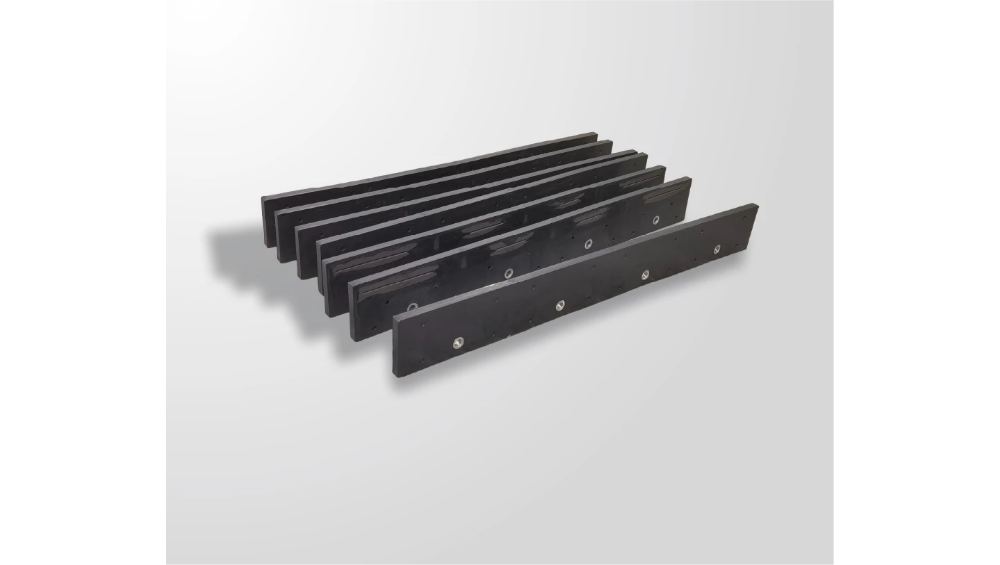
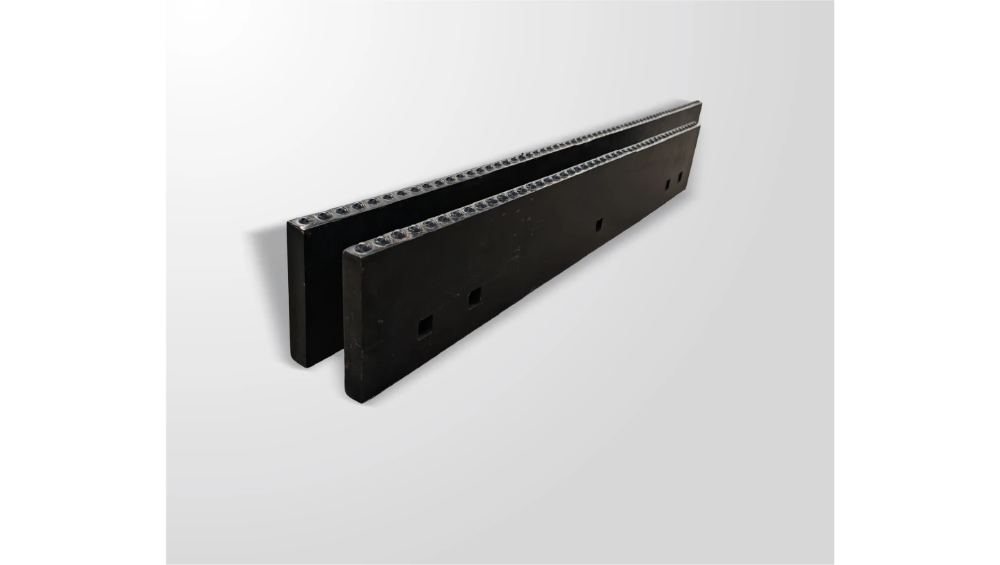
Carbide insert cutting edges are widely specified for heavy-abrasion municipal routes, but significant differences exist in the raw materials used across the industry. The distinction between virgin tungsten carbide and reclaimed or mixed-grade materials directly determines fracture resistance, wear uniformity, and bonding reliability with the outer steel substrate.
High-purity virgin carbide inserts combined with premium steel backing plates deliver distinct mechanical advantages:
Consistent Wear Profiles: Uniform material composition prevents uneven scraping along long highway runs.
Impact Shock Resistance: Micro-grain structures minimize the risk of insert detachment when hitting manhole covers or joint edges.
Freeze-Thaw Durability: Reduced micro-porosity prevents structural degradation during extreme temperature fluctuations.
While SENTHAI carbide insert municipal snow plow solutions utilize micro-grain tungsten carbide and premium C45 steel to provide a service life at least ten times longer than traditional carbon steel blades, actual field performance remains context-dependent. Local aggregate hardness, average plowing speeds, and operator technique all influence wear rates. Municipal specifications must require verifiable material declarations and strict batch consistency rather than relying on abstract performance claims.
AASHTO Standardization and Hole Geometry Accuracy
One of the most frequent mechanical failure points in municipal snow plow deployment is inaccurate bolt hole geometry. Standardized plow blades must adhere strictly to AASHTO (American Association of State Highway and Transportation Officials) punching geometries to guarantee absolute compatibility across diverse vehicle fleets and mounting configurations.
When suppliers deviate from these precise dimensional tolerances through manual or inconsistent punching methods, public works crews experience immediate logistical issues:
Misaligned Configurations: Forcing field crews to perform on-site modifications, delaying truck deployment.
Uneven Load Distribution: Creating mechanical stress concentrations across the mounting bolts.
Accelerated Hardware Wear: Leading to bolt loosening and significant safety risks during active high-speed plowing.
Adhering to strict standardization directly reduces seasonal shop labor hours and minimizes structural stress on plow frames, wings, and underbody mounts.
Technical Specifications for Municipal RFQs
To exclude low-tier brokers who cannot provide verifiable manufacturing data, procurement teams drafting Requests for Quotes (RFQs) should utilize the following technical criteria:
Carbide Grade Composition: Explicitly require disclosure of virgin vs. reclaimed materials and the precise brazing or bonding method.
Steel Backing Grade: Verify the chemical consistency, tensile strength, and mechanical properties of the supporting steel.
Punching Automation Method: Specify CNC or automated high-precision punching aligned perfectly with AASHTO patterns.
Dimensional Hole Tolerance: Define strict acceptable variances to prevent field installation friction and hardware misalignment.
Wear Distribution Uniformity: Demand manufacturing proof of consistent insert spacing and distribution across the entire length of the blade.
Micro-Porosity Quality Control: Require quality assurance documentation that proves internal material defect testing.
Production Batch Traceability: Ensure the ability to track production components from raw material sourcing to the finished delivery.
Comparing Municipal Cutting Edge Alternatives
Selecting the appropriate edge style requires balancing wear life against specific route conditions and vehicle types. The following table provides an analytical framework for comparing standard options against specialized SENTHAI high-performance configurations:
| Option Type | Wear Life Potential | Operational Downtime | Surface Scraping Performance | Primary Fleet Use Case |
| Carbide Insert Blade | Up to 10–20x traditional carbon steel lifespan. | Exceptionally low due to fewer mid-season changes. | Maximum scraping aggressiveness on ice and packed snow. | High-abrasion public works fleets requiring continuous uptime. |
| Standard Carbon Steel | Short lifespan on abrasive pavement. | High frequency of replacement and maintenance shop stops. | Excellent initial scrape, but degrades rapidly under friction. | Budget-constrained, low-mileage setups with low wear stress. |
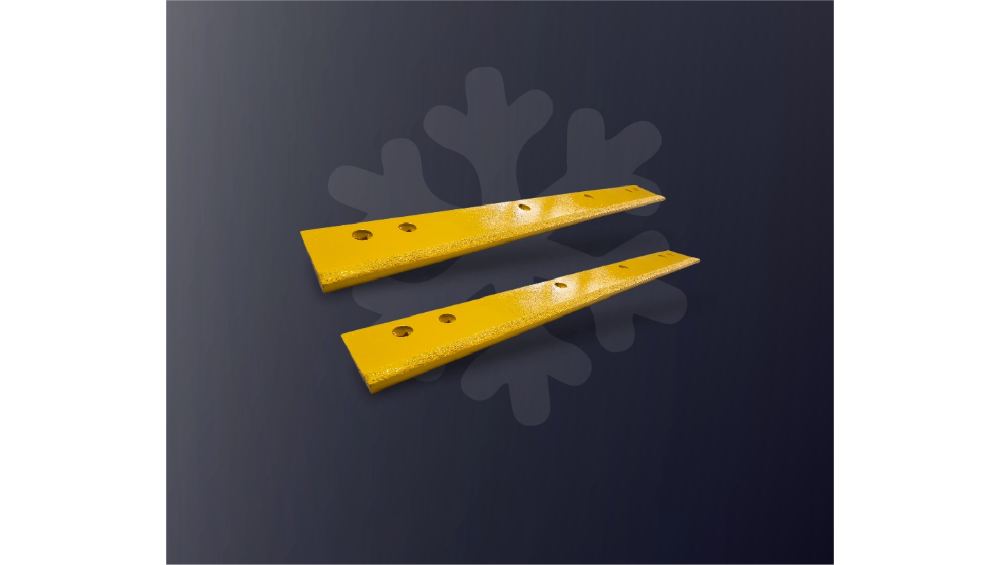
| Rubber or Composite Systems | Specialized wear pattern, lower abrasion tolerance. | Moderate; depends on surface friction levels. | Low scraping aggressiveness; protects road markings. | Specialty clearing tasks, airport runways, or sensitive surfaces. |
Aligning Blade Configurations with Winter Operations
No single municipal snow plow solution performs perfectly across all winter environments. Procurement committees must calibrate technical specifications against distinct operational scenarios:
Downtown Arterial Routes: Heavy traffic quickly compacts snow into ice. Traditional steel edges require frequent, dangerous mid-storm swaps. Utilizing carbide insert municipal snow plow solutions preserves a clean scrape on the first pass, protecting labor hours and reducing traffic disruption.
Mixed Residential Streets: Neighborhood routes feature frequent manhole covers and utility joints. While softer or cheaper edges reduce upfront spend, they wear rapidly on uneven roads. A standardized carbide setup maintains edge consistency and reduces the risk of sudden blade failure away from the central maintenance yard.
Heavy-Abrion Corridors: Remote highways treated with heavy sand, salt, and abrasive grit require extreme wear resistance. Specialized high-performance carbide snow plow blades provide the structural integrity needed to survive long shifts without continuous inspection intervals.
Mixed Fleet Flexibility: Procurement teams often manage diverse equipment programs involving trucks, tractors, and smaller utility vehicles. Sourcing scalable configurations that fit front, wing, and underbody plows simplifies spare-parts inventory planning and reduces unnecessary warehouse SKUs.
Manufacturing Scale and Supply Chain Resilience
Severe winter weather creates unpredictable demand spikes that expose weaknesses in fragmented, broker-based supply chains. Municipal buyers require absolute container-scale delivery stability to prevent stockouts when severe winter weather patterns persist.
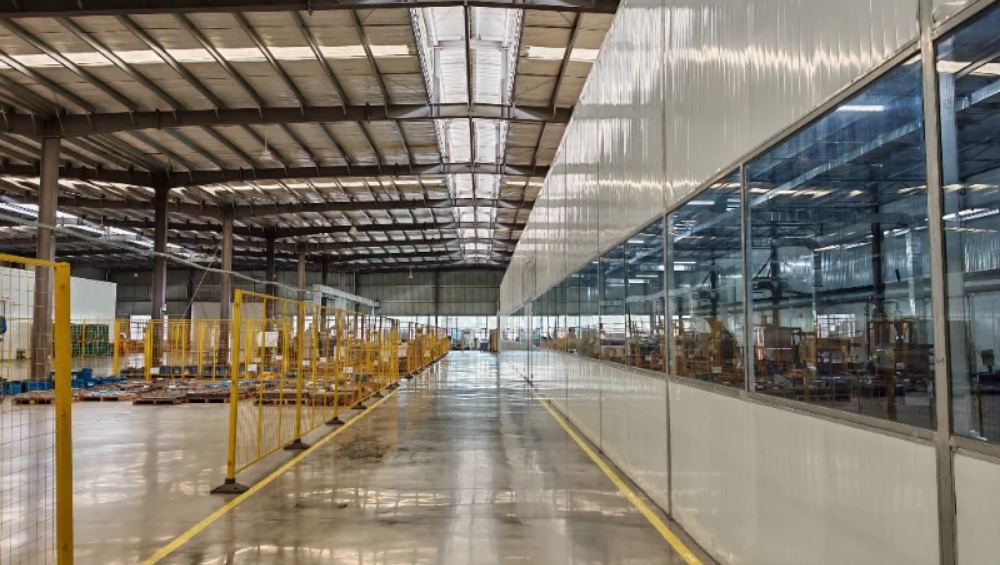
Suppliers operating vertically integrated production facilities aligned with international factory certifications like ISO 9001 and ISO 14001 are structurally positioned to ensure supply chain protection:
Consistent Batch Quality: Automated production lines ensure the thousandth blade matches the precision of the first.
Reliable Production Lead Times: Direct factory control mitigates unexpected delays during global logistics or raw material disruptions.
Contract Compliance Portfolios: Streamlined access to the material testing data, environmental records, and manufacturing submittals required for public contract verification.
Frequently Asked Questions
What technical factors should municipal DOTs prioritize when sourcing carbide snow plow solutions?
Procurement teams should focus on material composition consistency (requiring virgin tungsten carbide), precise AASHTO-compliant hole geometry, automated CNC manufacturing, and verifiable factory batch traceability. These metrics directly dictate installation speed, wear predictability, and overall vehicle uptime.
How do standardized AASHTO bolt patterns reduce fleet maintenance overhead?
Standardized bolt patterns ensure an exact structural match between the blade and the plow frame. This eliminates time-consuming field modifications, guarantees even load distribution across mounting hardware, and prevents premature bolt loosening during high-speed highway operations.
How can public works departments accurately calculate Total Cost of Ownership for cutting edges?
Total Cost of Ownership ($TCO$) calculations must extend beyond the initial unit purchase price. Fleet managers must calculate total seasonal costs by adding parts cost, operator and mechanic labor rates for blade changes, vehicle downtime losses, hardware replacement expenses, and the operational risk of taking trucks off their assigned routes during an active storm cycle.
Are carbide insert blades suitable for underbody and wing plow configurations?
Yes. Precision manufactured carbide snow plow blades are designed to be mounted interchangeably across front, underbody, and wing plow setups. This cross-platform compatibility allows municipal fleets to standardize their wear-part inventory across multiple truck configurations.
What validation documentation should be required in public bidding tenders?
A robust municipal submittal package must include formal ISO quality management certifications, raw material sourcing verification, automated production line descriptions, non-destructive testing protocols, and logistical proof of container-scale delivery capabilities.