




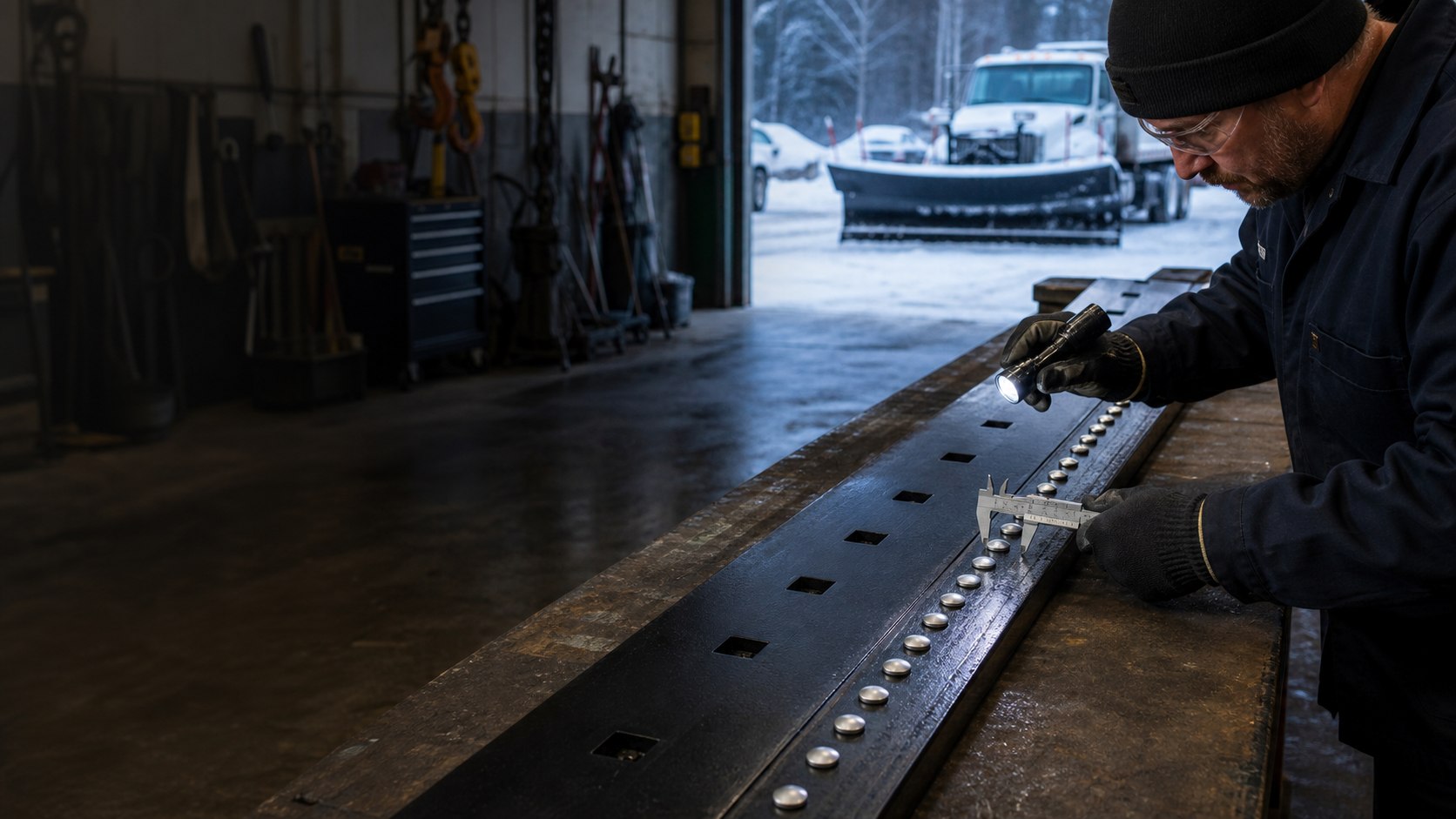
Three ways to hold an insert
Brazing bonds continuously, mechanical fixing allows replacement, clips hold the insert in a pocket. Each changes the maintenance model.
Brazed retention
A brazed insert transfers load across its whole face and has no loose parts. It cannot be replaced in the field, so the maintenance model is a spare blade rather than a spare insert, and the failure mode is gradual bond degradation.
- how Does Carbide Porosity Destroy Snow Plow Blade Inserts
- why Do Carbide Inserts Fall Out
- why Don’t Tungsten Carbide Rings Match Tire Stud Durability
- vacuum Sintered Tungsten Carbide Inserts for Extreme Winter Operations
- how Do Coated and Uncoated Carbide Inserts Compare for Manufacturers
- what Makes Carbide Insert Lathe Tools Essential for Precision Manufacturing
Mechanical retention and clips
Clips, pins and pocket designs let an insert be changed without returning the blade. The trade-off is a load path that concentrates stress at the fixing point, which is why retaining hardware has to be inspected as carefully as the insert.
- why is the retainer clip the most critical safety component
- why does a loose pick in a mounting block shatter
- how to Maintain Retainer Clips and Pick Sockets
- can coercive force testing predict HRA hardness of carbide inserts
- how Does Cobalt Shortage Affect Carbide Insert Supply
- how Do SENTHAI 400-Stud Tires Compare to Chains for Snow Plows
- best Carbide Blades for Cutting Metal Studs with a Circular Saw
- what Are Carbide Threading Inserts and How Are They Manufactured
- how Can Carbide Inserts Extend Snow Blade Service Life for Manufacturers…
Choose the method by where the maintenance happens
If the fleet can change inserts in the workshop, mechanical retention pays. If not, brazed retention with spare blades is simpler and more reliable.
Service model and downtime
Field-replaceable inserts reduce the spare blade inventory but need trained staff and correct tooling. Brazed inserts need fewer skills but a higher spare-blade level. The cheaper model depends on which resource is scarcer.
- carbide Insert Tender Specification: Writing Requirements That Hold
- how does rocky soil mixed with ice affect carbide pick durability
- what Is the Difference Between Carbide Pick Taper vs. Flat Head for Snow Plows
- seasonal Supply Planning for Carbide Inserts: Stock Before the Snow Season
- batch-to-Batch Consistency in Carbide Inserts: Why Production Lines Depend…
- insert Hardness and HRA: What the Metric Means and Why Toughness Matters Too
- vacuum Sintering and Grain Structure: What Makes Inserts Tough in the Cold
- how Carbide Inserts Are Made: Sintering, Grain Size, and Consistency
- how does ASTM B406 TRS testing prove the real toughness of heavy plow…
- what Are Carbide Inserts and How Do You Decide Which One to Buy
The load path at the fixing
Any mechanical fixing concentrates stress where it holds. The design question is whether that concentration stays in the fixing or passes into the carbide, which is why pocket geometry and clip material matter as much as the insert itself.
- which Ice Tire Stud Material Delivers the Best Performance
- what Is the TRS Test for Carbide and Why It Matters for Tungsten Carbide…
- why Does Precision Grinding Matter for Carbide Inserts in Snow Plow Blades
- engineering Impact-Resistant Carbide Insert Road Maintenance Blades for…
- what Are the Best Carbide Inserts for Exotic Alloys
- the Tribology of Ice: Benefits of Tungsten Carbide Studs on Ice Resurfacer…
- how to Choose Carbide Inserts for Concrete and Asphalt Surfaces for…
Insert retention questions
Can I replace a brazed insert myself?
Not reliably. Re-brazing needs controlled heating, the right filler and a clean joint; done in a workshop without that control it usually fails earlier than the original.
Are mechanically retained inserts as durable?
They can be, where the fixing is designed for the load. The failure mode moves from the bond to the fixing point, so the retaining hardware becomes the inspection priority.
What causes an insert to come out?
Bond failure on brazed edges, or lost preload and wear at the fixing on mechanical designs. Both are progressive and visible before they become a lost insert.
Should I switch to a serviceable design?
Only if you can support it with tooling and training. Otherwise the extra complexity moves the downtime from the workshop to the route.
Do loose inserts damage anything else?
Yes. A lost insert exposes the carrier and the surrounding pockets, and the metal-on-road contact accelerates wear across the rest of the edge.
Brazing and bond quality
What makes a brazed joint last.
Re-tipping and rebuilding
Refurbishing worn edges economically.
Insert wear and inspection
Spotting retention problems early.
Fasteners and hardware
The hardware around the edge.
Ask which retention fits your fleet
Tell us where your maintenance happens and how much downtime a blade change costs, and we will say which design is cheaper for you.
✓ Workshop capability and tooling
✓ Downtime cost per machine
✓ Current retention method
✓ Annual insert or blade volume
Email: [email protected]