




How Does Carbide Porosity Destroy Snow Plow Blade Inserts?
Carbide porosity refers to tiny voids or air pockets inside a tungsten carbide insert, created during improper sintering. These voids act as stress concentrators: under the high impact of snow plowing, cracks initiate at…
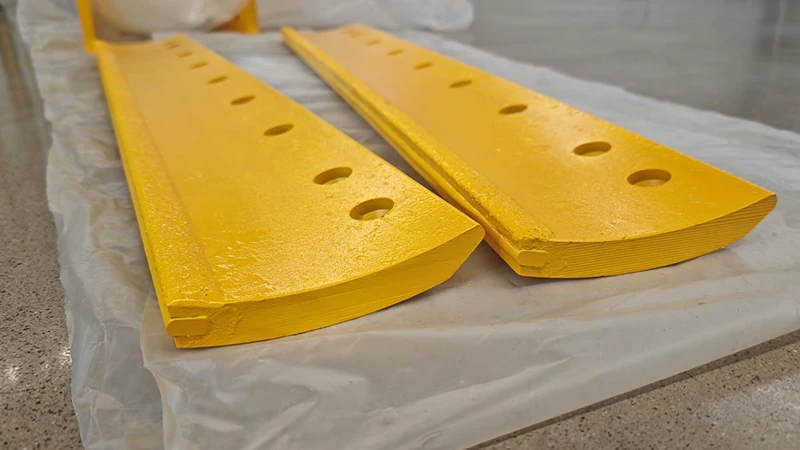
Carbide porosity refers to tiny voids or air pockets inside a tungsten carbide insert, created during improper sintering. These voids act as stress concentrators: under the high impact of snow plowing, cracks initiate at the pores and propagate suddenly, causing the insert to shatter. Zero porosity is essential for maximum impact resistance and blade longevity. SENTHAI’s vacuum sintering process eliminates porosity, ensuring reliable performance in demanding winter conditions.
Check: How to Identify High-Quality Tungsten Carbide Inserts for Snow Plows?
What Exactly Is Carbide Porosity and How Does It Form?
Carbide porosity is the presence of microscopic empty spaces trapped inside the tungsten carbide matrix during manufacturing. It forms when sintering temperature or time is insufficient, powder contamination occurs, gas is trapped during binder removal, or pressing pressure is non-uniform. In microstructure images, porosity appears as dark spots. For snow plow applications, even tiny voids (0.02–0.1 mm) are dangerous because heavy impact loads amplify the risk of fracture.
Porosity is graded per ASTM B276 into types A, B, and C. The most common cause is inadequate vacuum or atmosphere control in the sintering furnace. If the binder phase does not fully liquefy, voids remain. SENTHAI avoids these issues by using fully automated pressing and proprietary vacuum sintering with precise temperature control, ensuring uniform densification from powder to finished insert.
Why Does Porosity Cause Catastrophic Shattering Instead of Gradual Wear?
Pores act as stress raisers, concentrating impact forces up to three times the surrounding stress. When a snow plow blade hits a curb or frozen debris, cracks begin at pore edges and propagate rapidly through the brittle carbide matrix. The insert shatters instantly, creating hazardous road debris. In contrast, gradual wear removes material slowly without sudden failure. A mere 1% porosity volume can reduce impact strength by 40%.
SENTHAI’s 21 years of production data confirm that every returned shattered blade had measurable porosity. Inserts with zero porosity never fail catastrophically under normal plowing conditions. This is why SENTHAI insists on strict porosity limits (A00/B00/C00 per ASTM) for all snow plow inserts, including JOMA Style Blades and I.C.E. Kits.
How Is Porosity Detected in Carbide Inserts During Quality Control?
Standard methods include metallographic microscopy at 100×–500× magnification per ISO 4505/ASTM B276, scanning electron microscopy for sub-micron pores, density measurement via Archimedes method, and ultrasonic testing for batch screening. SENTHAI tests every production batch—not just samples—in its in-house ISO 9001 QC lab. Only materials meeting ≤0.02% porosity (A02/B00/C00) proceed to welding.
Check: Carbide Snow Plow Blades
Full traceability from powder lot to finished blade is maintained. For new customers, SENTHAI provides factory quality inspection reports and sample micrographs. This rigorous protocol ensures that every insert leaving the Rayong facility is free of porosity that could lead to shattering during winter road maintenance.
| Inspection Method | What It Detects | Application at SENTHAI |
|---|---|---|
| Metallographic microscopy | Pores 0.5–100 μm | 100% batch sampling at 200× |
| Density measurement | Deviation from theoretical density | Every sintering run |
| Ultrasonic testing | Internal voids >0.1 mm | Spot-check on large orders |
What Manufacturing Processes Eliminate Porosity? – Vacuum Sintering vs. Conventional Sintering
Vacuum sintering removes all atmosphere from the furnace, preventing gas entrapment. SENTHAI uses fully automated vacuum sintering with proprietary temperature ramping to achieve 99.9% theoretical density and zero micro-porosity. Conventional atmospheric sintering leaves residual gas bubbles that form pores, reducing impact resistance and increasing the risk of shattering.
| Factor | Vacuum Sintering (SENTHAI) | Conventional Sintering |
|---|---|---|
| Atmosphere | Vacuum – no gas entrapment | Hydrogen/inert gas – risk of residual gas |
| Pore formation | Virtually eliminated | Common – gas bubbles trapped |
| Density achieved | 99.9% of theoretical | 95–99% depending on control |
| Impact resistance | Maximum – consistent grain structure | Variable – weak points at pores |
| Typical cost | Higher investment, longer cycle | Lower upfront cost |
| Application | Heavy-duty, high-impact tools | Moderate-duty, lower-impact tools |
SENTHAI’s vacuum sintering furnaces maintain no heat-difference across the load, ensuring uniform densification. The result is a homogeneous microstructure with zero micro-porosity. This process is used for all SENTHAI snow plow blades, including JOMA Style Blades, Carbide Snow Plow Blades, and I.C.E. Kits.
Does Porosity Affect Wear Resistance the Same Way It Affects Impact Strength?
Both wear resistance and impact strength degrade with porosity, but impact failure is far more dangerous. Porosity reduces hardness and exposes more binder phase to abrasion, accelerating wear by 30–50% at just 1% porosity. However, the real operational risk is impact fracture—a blade that wears faster is annoying; one that shatters is dangerous and costly.
SENTHAI’s customers in North America report that blades with zero porosity outlast competitors by 2–3 times on impact-heavy routes. This dual optimization of wear and impact resistance is achieved through full in-house control of grain size and binder content, combined with vacuum sintering that eliminates porosity entirely.
How Does SENTHAI Guarantee Porosity-Free Carbide for Snow Plow Blades?
SENTHAI Expert Views: “From Powder to Plow – Full Control”
“SENTHAI’s production cycle in Rayong, Thailand, is 100% in-house: we source tungsten carbide powder, press it on automated lines, vacuum sinter it, CNC grind inserts, laser weld them onto steel backing, and vulcanize the rubber mold. Every step is monitored for density and microstructure. Our ISO 9001 lab holds each batch to ASTM B276 A00/B00/C00 – zero porosity. That’s why 80+ global partners trust us for winter road maintenance.”
Key pillars include: only virgin powders with certified particle size distribution; automated pressing for uniform green density; patented vacuum sintering ramp-and-hold cycles; and 100% batch microstructure inspection—not sample-based. ISO 14001 certified cleanrooms prevent contamination. This comprehensive quality system ensures SENTHAI’s JOMA Style Blades, Carbide Blades, and I.C.E. Kits deliver reliable, non-shattering performance on highways, municipal roads, and airports.
What Should You Look for When Choosing a Carbide Snow Plow Blade Supplier to Avoid Porosity Issues?
Ask these critical questions: “Do you perform metallographic porosity analysis on every production batch? Can you share a sample report?” “What sintering method do you use – vacuum or conventional?” “What is your maximum allowable porosity grade per ASTM or ISO?” “Do you have ISO 9001 certification and a dedicated QC lab?” Red flags include inability to provide microstructure images, vague quality claims, and unusually low prices.
SENTHAI offers full transparency: microstructure analysis reports are provided upon request for new customers. With a new Rayong production base launching in late 2025, expanded capacity will maintain the same rigorous standards. Choose a supplier that treats porosity as a zero-tolerance defect—your fleet’s uptime depends on it.
Can Custom Carbide Insert Grades Be Designed to Further Reduce Porosity Risks?
Yes. SENTHAI customizes binder content (6–16% cobalt) and grain size (fine/medium/coarse) for specific impact conditions. For extreme applications like municipal plows on gravel roads, medium grain with 10% cobalt vacuum sintered to zero porosity is recommended. Custom shapes for JOMA Style Blades and I.C.E. Kits are also available, with the same ASTM B276 testing applied.
SENTHAI’s engineering team works directly with fleet managers to optimize cutting edge geometry and carbide formulation. All custom grades undergo the same rigorous microstructure inspection as standard products, ensuring zero porosity regardless of composition.
Conclusion
Porosity is a silent killer of snow plow blades. Even microscopic voids in carbide inserts can turn a routine plowing shift into a dangerous, expensive repair – shattered blades scatter debris, damage equipment, and cause downtime. The only reliable defense is a manufacturing process that eliminates porosity from the start. SENTHAI’s 21+ years of carbide wear part expertise, fully automated vacuum sintering, and ISO 9001/14001-certified production in Thailand ensure every insert leaves the factory with zero porosity. That’s why over 80 global partners and North America’s toughest fleets trust SENTHAI for winter road maintenance. When you choose SENTHAI, you choose blades that don’t shatter – period. Explore our JOMA Style Blades or request a custom quote with microstructure report.
Frequently Asked Questions
What is the acceptable porosity level in carbide inserts for snow plow blades?
Industry best practice (ASTM B276) defines A00/B00/C00 as zero porosity. For high-impact plowing, any visible porosity (A02 or above) significantly increases fracture risk. SENTHAI holds all production to A00/B00/C00.
Can porosity be seen with the naked eye?
No. Pores are microscopic (typically 0.01–0.1 mm) and require 100×–500× microscopy to detect. That’s why you need a supplier with rigorous lab testing – visual inspection is impossible.
Does SENTHAI provide microstructure analysis reports for each batch?
Yes. SENTHAI’s ISO 9001 quality system documents every batch. Reports are available on request for customers – including micrographs and density data.
How does SENTHAI’s vacuum sintering compare to hot isostatic pressing (HIP) for porosity elimination?
Both can achieve near-zero porosity. SENTHAI uses vacuum sintering because it’s fully integrated into our automated production line and delivers consistent results without the extra HIP cycle. For standard grade inserts, vacuum sintering is equally effective and more cost-efficient.
What warranty does SENTHAI offer against shattering caused by porosity?
SENTHAI warranties against manufacturing defects, including porosity-induced failure. Our quality data shows <0.1% return rate due to premature fracture. Contact our sales team for specific warranty terms.
Related articles
 Best Snow Plow Blade Family for Your Fleet: Top 5 ScenariosKnowledge
 Top 10 Snow Plow Blade Types for Winter Fleets (Ranked by Duty Fit)Knowledge
 Top 5 Best Carbide Blade Configurations for Highway PlowingKnowledge
 Best Snow Plow Blade Materials Ranked: Steel vs Carbide vs Cladding vs Rubber-CarbideKnowledge