




How Can a Simple Density Test Spot Fake Tungsten Carbide?
A simple density test reveals fake tungsten carbide by measuring mass and volume. Weigh the insert on a gram scale, submerge it in water to record displaced volume (cm³), then divide mass by volume.…
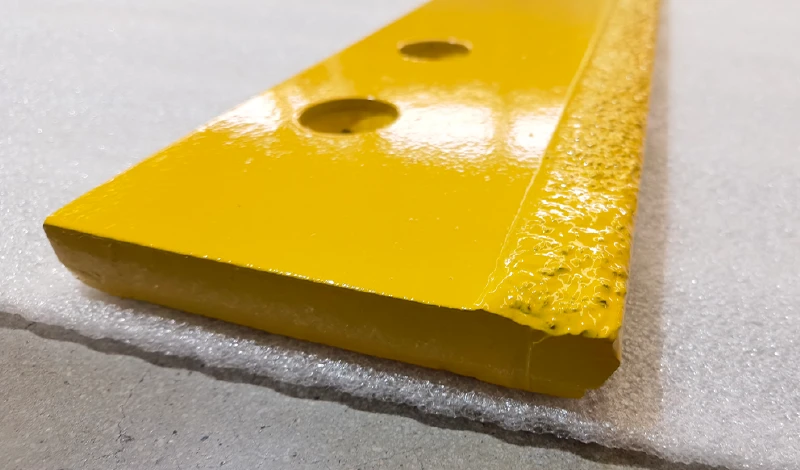
A simple density test reveals fake tungsten carbide by measuring mass and volume. Weigh the insert on a gram scale, submerge it in water to record displaced volume (cm³), then divide mass by volume. Pure tungsten carbide density ranges from 14.8–15.1 g/cm³. A result below 14.5 g/cm³ signals impurities or a lower-density substitute, meaning drastically reduced wear life for your snow plow blade.
Check: How to Identify High-Quality Tungsten Carbide Inserts for Snow Plows?
Why Does Carbide Density Matter for Snow Plow Blades?
Density directly correlates with tungsten carbide purity. Higher density means more tungsten content and superior wear resistance. Fake or “lightweight” carbide uses fillers like steel powders, dropping density below 14.5 g/cm³. This causes rapid edge blunting and blade failure mid‑season. For fleet managers, density is the most reliable metric to verify blade quality without expensive lab equipment.
| Material | Typical Density (g/cm³) | Wear Life Expectancy |
|---|---|---|
| Pure tungsten carbide (WC) | 14.8 – 15.1 | High (best) |
| Low‑quality “carbide” with fillers | <14.5 | Low (fails quickly) |
| Hardened steel | 7.8 – 8.0 | Very low (rapid wear) |
What Equipment Do You Need to Perform a Carbide Density Test?
You need a digital gram scale (precision to 0.1g), a graduated cylinder or narrow container with water, and a thin thread or fine mesh to suspend the insert. A calculator or smartphone helps with the simple math: density = mass ÷ volume. All items are inexpensive and widely available at hardware or lab supply stores.
How Do You Calculate Density Step-by-Step in the Field?
Step 1: Weigh the dry insert and record mass in grams. Step 2: Fill the cylinder with a known water volume, tie the insert with thread, and fully submerge it. Step 3: Measure the water rise (displaced volume) in cm³. Step 4: Divide mass by volume. For example, 70g ÷ 4.7 cm³ = 14.9 g/cm³ (real carbide). Step 5: Compare to the 14.8–15.1 g/cm³ threshold; anything lower warrants suspicion.
What Are Common Tricks Used to Fake Carbide Density?
Counterfeiters add heavy but soft metals like lead (density ~11.3 g/cm³) to increase weight without improving wear resistance. Some use a steel backing with a thin carbide tip, so the composite density may read borderline but performance is compromised. Others produce “lightweight” inserts that are only partially sintered or made from recycled tungsten with high binder content.
| Material Type | Density Range (g/cm³) | Typical Outcome |
|---|---|---|
| Real tungsten carbide (SENTHAI verified) | 14.8–15.1 | Excellent wear life, consistent performance |
| Fake or lightweight carbide | Below 14.5 | Rapid wear, frequent replacements |
How Does Low Density Affect Your Blade’s Real-World Performance?
Low‑density carbide accelerates wear rate 3–5 times faster than genuine carbide, forcing mid‑season replacements that double labor and downtime costs. Impurities create weak points under impact from ice, debris, and asphalt, increasing the risk of breakage. Buying cheaper fake blades often costs more per hour of effective use than a premium carbide blade.
“At SENTHAI, we test every production batch for density using ISO 9001‑approved methods. Our 21+ years of fully automated manufacturing in Thailand ensure consistent 14.9–15.0 g/cm³ across all Joma‑style and I.C.E. blades. If a supplier can’t provide density specs, that’s a red flag.” – SENTHAI Quality Manager
Can a Supplier’s Density Claims Be Trusted Without a Test?
Independent verification is critical; even reputable brands may mix batches. Always ask for a Certificate of Analysis (CoA) with density values. SENTHAI provides batch‑traceable density data for every shipment, thanks to in‑house vacuum sintering and wet grinding processes that guarantee uniformity. Tip: request a free sample insert from any supplier and run the scale‑and‑water test before placing a bulk order.
Check: Carbide Snow Plow Blades
Which SENTHAI Products Use Verified High-Density Carbide?
JOMA Style Blades use trapezoid carbide inserts with 14.9+ g/cm³, welded onto a steel backing for heavy‑duty fleets. Carbide Blades feature full‑width tungsten carbide edges for municipal plows, tested at every sintering cycle. I.C.E. (Packed Ice Carbide Kit) Blades are designed for extreme ice removal; density ensures edge retention under continuous scraping. Custom Carbide Inserts are tailored to OEM specifications with density validated in SENTHAI’s Rayong factory.
What Should You Do If You Suspect Fake Carbide in Your Current Blades?
Run the density test immediately on a spare insert or removed segment. Document the results and request a refund or replacement from your supplier, demanding a density CoA for future orders. Switch to a manufacturer with full vertical integration (powder‑to‑finished blade) and ISO certifications, like SENTHAI, trusted by over 80 global partners and a best‑selling snow plow blade supplier in North America.
Conclusion
A 5‑minute density test using a scale and water is the most practical way to spot “lightweight” fake carbide and protect your fleet from premature blade failure. With 21+ years of dedicated carbide production, ISO 9001/14001 certifications, fully automated Thailand facilities, and a global network of 80+ partners, SENTHAI delivers verified high‑density carbide blades that outperform imitators. Visit senthaitool.com to request a density CoA for any Joma‑style, I.C.E., or custom blade, or contact our team for a free sample test kit.
FAQs
Is a density test accurate for small carbide inserts (e.g., trapezoid segments)?
Yes. Even a 1‑inch insert can be tested with a precise scale and a narrow graduated cylinder. The water displacement method works for any solid shape.
What if my scale reads in ounces instead of grams?
Convert ounces to grams (1 oz ≈ 28.35 g) and record volume in cubic inches. Then convert to g/cm³ (1 in³ ≈ 16.39 cm³). For simplicity, use a gram scale – they are inexpensive and widely available.
Can a fake blade still pass the density test if it contains heavy metals?
Some counterfeiters add lead or tungsten‑iron mixtures to boost weight. However, these materials wear differently. A density test is a strong first filter; combine it with a scratch test (real carbide is extremely hard) and checking the spark pattern when grinding.
Does SENTHAI test density for every production batch?
Absolutely. We perform density verification during sintering and final QC for every batch, as part of our ISO 9001 quality management system. Batch records are available upon request.
How often should I test blades from a new supplier?
Test every first shipment, and then periodically (e.g., once per season) to ensure consistency. SENTHAI recommends making density verification a standard part of your receiving inspection procedure.
Related articles
 Best Snow Plow Blade Family for Your Fleet: Top 5 ScenariosKnowledge
 Top 10 Snow Plow Blade Types for Winter Fleets (Ranked by Duty Fit)Knowledge
 Top 5 Best Carbide Blade Configurations for Highway PlowingKnowledge
 Best Snow Plow Blade Materials Ranked: Steel vs Carbide vs Cladding vs Rubber-CarbideKnowledge