




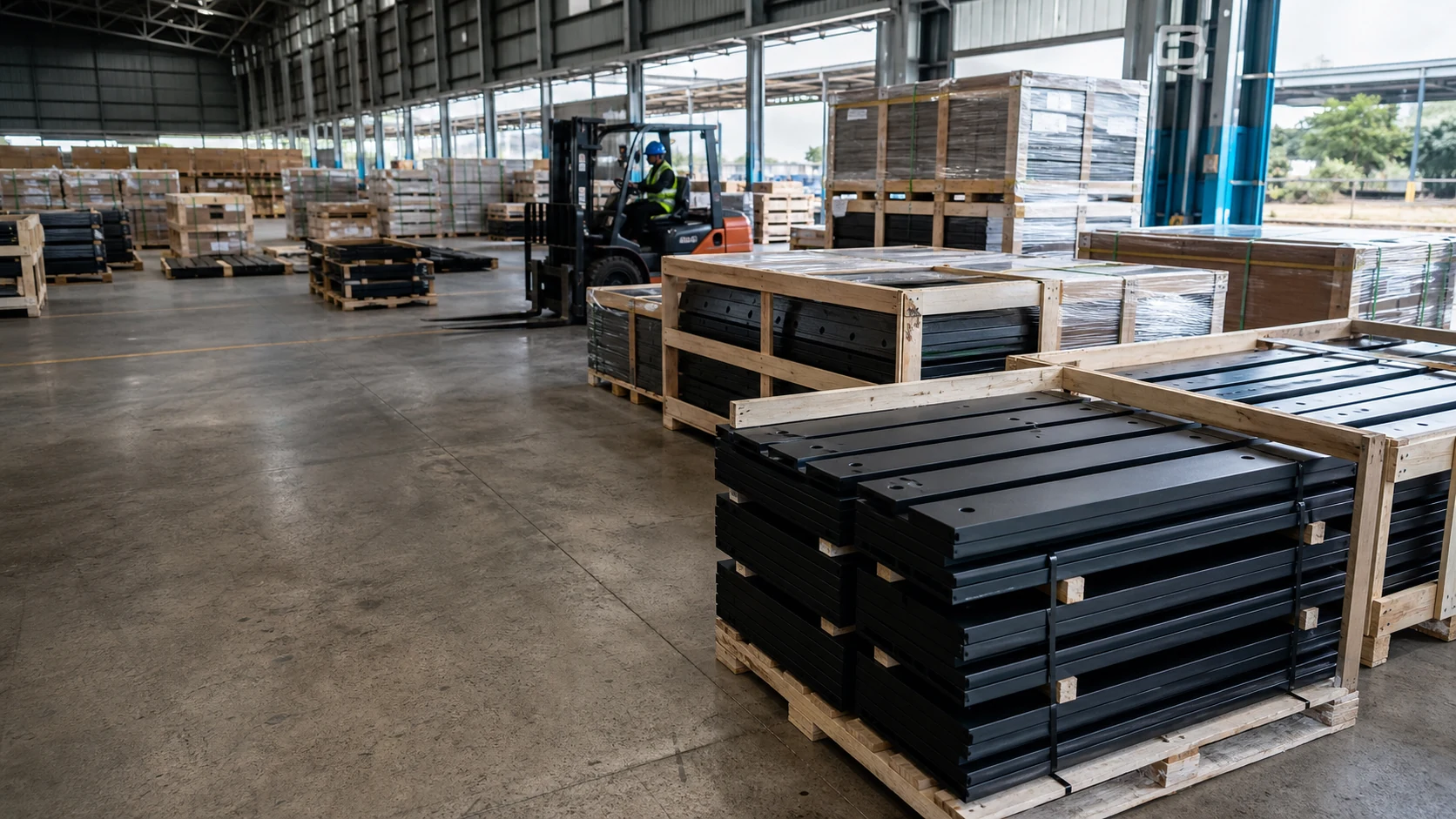
Getting the mounting pattern and edge dimensions consistent across machines lets you carry fewer part numbers without compromising on which edge each route needs.
Fleets that standardise the mounting interface typically cut their blade part numbers substantially while still running two or three edge classes by route type. The saving is in stock, handling and the time lost hunting for the right part.
A written specification that survives supplier changes is what stops the fleet drifting back into mixed part numbers. It is the same document covered in the selection cluster, applied at fleet scale.
One calendar with three entries per machine is enough: pre-season inspection, mid-season rotation and the service intervals in between.
Set the spare level from your own replacement rate over the two busiest weeks of the season, plus one set for the highest-duty machine. Fleets that calculate this carry less stock than fleets that guess, and run out less often.
Record specification, fit date, removal date and hours per edge. At season end that data produces a cost per operating hour, a replacement forecast and an evidence base for the next specification change.
A blade change in the yard is a scheduled task. The same change on a route during a storm is a lost shift, an angry client and a safety exposure.
The material saving from a good programme is real but modest. The larger saving is the shift that did not stop, and that is what makes the case to a finance review rather than the price difference on the blade.
Start with the pre-season inspection, the measurement records and a defined spare level. Those three items are implementable in a fortnight and produce most of the benefit; the rest of the programme follows from the data they generate.
Standardising the mounting interface across machines. It reduces part numbers, simplifies spares and makes every other part of the programme easier to run.
Enough to cover your replacement rate through the two busiest weeks of the season, plus one set for the highest-duty machine. Calculate it from your own records rather than from a rule of thumb.
On downtime avoided rather than on blade price. A shift lost to a mid-storm blade change usually costs more than the annual saving on the blades themselves.
Yes, where the duty genuinely differs. Standardise the interface and keep separate edge classes for high-mileage and light residential work.
The pre-season inspection and spares level show results in the first season. Cost-per-hour reporting takes a full season to produce a usable baseline.
The document that holds the fleet standard.
The routines the programme schedules.
Rotation timing and refurbishment decisions.
Turning the data into a procurement case.
Send your machine list and current blade part numbers and we will show you where standardisation would simplify the fleet.
✓ Machine list and mounting types
✓ Current blade part numbers
✓ Annual blade spend and volumes
✓ Route classes per machine
Email: [email protected]