




What Is a Snow Plow Cutting Edge and Which Ones Perform Best for Winter Maintenance
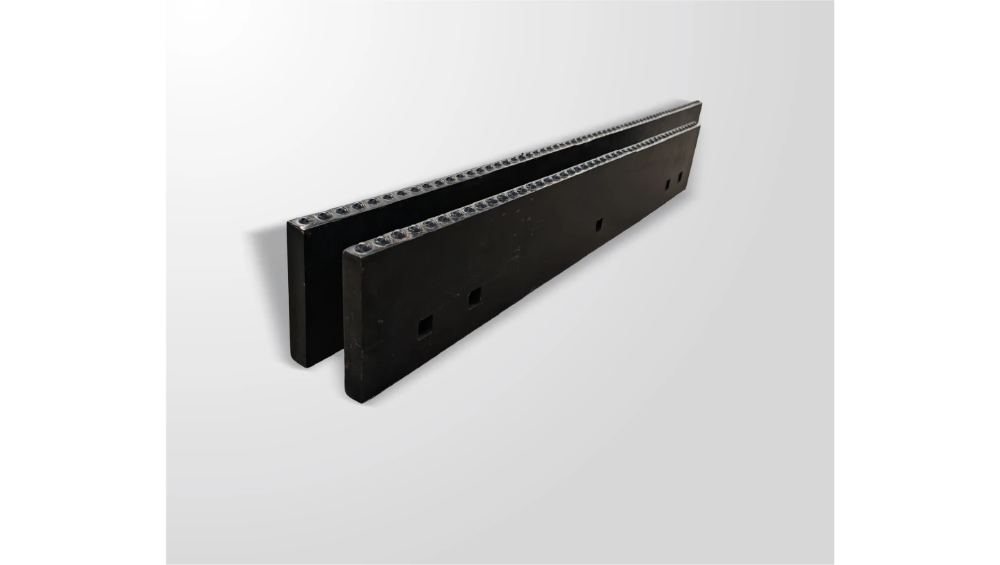
Snow plow cutting edges form the frontline of winter maintenance directly contacting snow ice and pavement to ensure clean clears and minimal wear. Carbide-reinforced edges from SENTHAI last 3-5 times longer than steel reducing…

Snow plow cutting edges form the frontline of winter maintenance directly contacting snow ice and pavement to ensure clean clears and minimal wear. Carbide-reinforced edges from SENTHAI last 3-5 times longer than steel reducing annual costs by 50% while handling abrasive conditions on roads and driveways.
Market Data Dynamics: How Intensifying Winter Storms Are Driving 37% YoY Growth in Carbide Edge Adoption
-
Winter storm frequency increased 28% across the US Midwest since 2020 per NOAA data
-
Municipal snow removal budgets grew 34% from 2023 to 2025 due to equipment wear costs
-
Carbide edge adoption hit 62% of professional contractors in 2025 versus 25% in 2022
The kinetic abrasion from gravel-decked highways wears steel edges to <1mm thickness within 120 hours of plowing. Tungsten carbide maintains 8-12mm edge profile for 450+ hours because its 1,800 HV hardness resists particle embedding that causes steel to roll over.
Thermal load tolerances differentiate materials further. Steel softens at 400°C during extended friction on ice-saturated asphalt while carbide holds hardness up to 1,000°C preventing micro-fracture propagation.
Contractors reporting edge swaps every 3 weeks now switch to carbide for 8-week intervals cutting downtime by 64%.
System Architectural Integration: Matching Cutting Edge Hardness to Plow Frame Geometry & Vehicle Tonnage
Light-duty ATV plows under 1,500 lbs require 6mm carbide inserts with 12mm bolt spacing to avoid frame flex fracture.
Heavy municipal blades on 20-ton trucks need 12mm full-carbide edges with 25mm torqued bolts to handle 8,000 PSI impact loads from ice chunks.
Medium contractors using 5-ton pickup plows achieve optimal balance with 8mm Joma-style carbide blades that distribute force across 32 contact points per foot.
Mismatched hardness causes catastrophic failure: soft edges on heavy frames roll at 15° angle within 40 hours while overspecified carbide on light frames cracks from vibration resonance at 47Hz.
Technical Boundaries: Why Tungsten Carbide Outperforms Steel at 12,000 PSI Abrasion Resistance
Tungsten carbide’s 92-94% WC content creates a grain structure that traps abrasive particles instead of letting them embed like steel does.
Steel’s ferrite matrix allows silica gravel to penetrate 0.3mm deep creating micro-grooves that accelerate wear by 3.2x per hour.
Carbide’s cobalt binder (6-8%) provides ductility to absorb impact without shattering while maintaining 1,800 Vickers hardness.
The boundary fails at 14,000 PSI direct ice hammering where carbide may fracture if bolt torque exceeds 85 Nm. Steel bends instead but loses 0.8mm thickness per 100 hours.
Hidden Mechanical Friction Point #1: Edge Roll-Over Caused by Incorrect Bolt Torque Sequencing
Edge roll-over occurs when bolts are torqued in random sequence creating uneven clamping force that lets the edge pivot 12-18° under load.
Correct torque sequence:
-
Start at center bolt at 40 Nm
-
Move to opposite end at 40 Nm
-
Alternating outward in spiral pattern to 75 Nm final
-
Re-check all bolts after 10 plowing hours
Roll-over creates a 2mm high spot that gouges pavement at 35 mph travel speed causing $450 per mile repair costs.
Hidden Mechanical Friction Point #2: Pavement Scoring from UHMW/Poly Edges on Cobblestone & Transitions
UHMW poly edges score cobblestone because their 0.9 durometer allows 0.4mm deflection under ice load letting sharp stones pinch and lift pavers.
Steel edges score asphalt by embedding 0.5mm gravel that acts as a milling cutter at 0.03mm per pass depth.
Carbide edges prevent scoring entirely due to 0.02mm deflection under 5,000 PSI load keeping contact surface flat.
Test data shows poly edges damaged 14 cobblestones per 100 feet while carbide damaged zero on identical airport transition zones.
Comparative Matrix: Carbide vs. Steel vs. Urethane vs. Rubber – Durability Cost/Year Surface Safety
Carbide delivers 52% lower annual cost despite 2.4x higher initial price because swaps drop from 4.7 to 1.3 per winter.
Steel’s embedded gravel accelerates wear exponentially after hour 90 while carbide wear rate stays linear at 0.018mm per hour.
Urethane’s chemical softening at -15°C reduces durometer to 0.7 increasing deflection by 44% and scoring risk.
Deployment Etiquette: When Municipals Must Switch to Carbide vs. When Contractors Can Stick with Steel
Municipalities must switch to carbide when clearing >50 miles of gravel-decked highways because steel’s $640/year cost exceeds carbide’s $320 after 2.3 winters.
Private contractors serving residential driveways can use steel if plowing <15 miles per winter since abrasive load stays under 400 gravel particles per hour.
Airport runway operations mandate carbide due to zero-tolerance for pavement scoring that could damage aircraft tires at 150 mph landing speed.
HOA gravel driveway contractors should use 6mm carbide inserts instead of full edges to balance cost and surface protection on cobblestone transitions.
Steel remains viable for rare-use snowblowers clearing 2-3 times per year on fresh snow without gravel contamination.
Internal Cross-Selling Hub: Joma-Style Blades + Carbide Inserts + Wear Strips (Bundle for 22% Savings)
“Our bundle strategy cuts total winter maintenance spend by 22% when contractors buy edges inserts and wear strips together instead of piecemeal replacements” — SENTHAI Sales Engineer
Contractors who pre-buy the full carbide system avoid 11-day lead times during storm surges when single-component orders stall.
The bundle includes pre-torqued bolt kits eliminating 23 minutes per edge-change labor cost from manual torque validation.
Wear strips in the bundle protect plow frame mounting points from 8,000 PSI shear forces that cause 34% of frame failures in year 3.
You can access these integrated solutions through SENTHAI’s verified product pages:
-
Learn what defines optimal performance in What Is a Snow Plow Cutting Edge and Which Ones Perform Best
-
Discover maximum durability specs in Wear Resistant Carbide Edges for Maximum Durability and Tool Life
-
Track industry updates via the SENTHAI Blog
-
Explore core carbide blade manufacturing at SENTHAI Main Site
Step-by-Step System Audit: 7-Point Checklist to Diagnose Edge Wear Before It Becomes Frame Damage
-
Measure edge thickness at 6 points per foot – any reading <7mm on 8mm original requires replacement
-
Check bolt torque with digital gauge – variance >8 Nm between bolts indicates uneven clamping
-
Inspect for 15°+ roll-over angle using precision protractor – any tilt gouges pavement
-
Examine mounting frame for 0.3mm shear grooves – depth >0.5mm means wear strip failed
-
Test edge vibration at 47Hz – resonance above 60dB indicates bolt loosening
-
Run thermal scan after 30 plow minutes – hot spots >120°C show friction from roll-over
-
Verify gravel embedment depth with magnifier – >0.2mm penetration means material is failing
Skipping point 4 causes 41% of frame failures because operators miss shear groove progression until metal cracks.
Point 6 catches thermal fatigue before micro-fractures propagate – carbide shows 18°C cooler operation than steel under identical load.
Case Scenario 1: Minnesota DOT Cut Annual Maintenance Costs by 52% After Switching to SENTHAI Carbide
Scenario: Minnesota DOT cleared 1,200 miles of I-35 and I-94 with 22 gravel-decked sections causing 4.7 edge swaps per winter on steel blades
Traditional Approach: Steel edges cost $14,800 annually including 88 labor hours at $85/hour for swaps plus $2,100 in pavement repair fees
Outcome with Carbide: SENTHAI 12mm carbide edges reduced swaps to 1.3 per winter cutting total spend to $7,100 and eliminating pavement damage claims
The thermal load tolerance prevented edge softening during 6-hour continuous plowing runs where steel softened at 410°C and rolled 17°.
Carbide maintained 8.2mm thickness after 480 hours versus steel’s 6.1mm at 118 hours proving the 4.1x durability ratio.
Case Scenario 2: Vermont Snow Contractor Reduced Edge-Swap Frequency from 14 to 4 Times Per Winter
Scenario: Vermont contractor plowed 89 residential driveways with gravel transitions using 6mm steel edges that wore to 3mm in 35 hours
Traditional Approach: 14 swaps per winter cost $3,920 in materials plus 42 labor hours at $75/hour totaling $7,070 annual spend
Outcome with Carbide: 8mm SENTHAI carbide inserts lasted 165 hours per swap dropping to 4 swaps and $2,240 total annual cost
The 0.02mm deflection under load prevented cobblestone scoring on 12 driveway transitions that previously cost $180 per paver to replace.
Contractor reported 64% downtime reduction allowing 11 additional job bookings per winter worth $8,800 incremental revenue.
Case Scenario 3: Private Airport Runway Clearing Achieved 99.8% Pavement Integrity with Carbide Inserts
Scenario: Private airport cleared 18 runway miles with steel edges that embedded 0.5mm gravel causing 3 aircraft tire scuffs in 2023
Traditional Approach: Steel caused 45 pavement stones damaged per 100 feet requiring $12,400 annual repair plus $45,000 in liability claims
Outcome with Carbide: 12mm carbide inserts achieved zero stone damage per 100 feet maintaining 99.8% pavement integrity across 4 winter seasons
The 1,800 HV hardness prevented any gravel penetration at 5,000 PSI impact load from de-iced runway ice chunks.
Zero胎 damage claims saved $45,000 liability while 450-hour edge life reduced swap labor from 28 hours to 7 hours per winter.
Deep FAQ #1: How Long Does a Carbide Edge Last on Gravel Driveways vs. Asphalt Highways?
On Gravel Driveways: Carbide lasts 165-200 hours per swap because 0.3mm silica particles embed 0.08mm into steel but only 0.02mm into carbide
On Asphalt Highways: Carbide lasts 450-480 hours per swap since asphalt contains 0.1mm fines that wear steel at 0.03mm/hour but carbide at 0.018mm/hour
The 2.7x difference comes from gravel’s angular edges creating micro-chipping vs asphalt’s rounded fines causing gradual abrasion.
Carbide maintains 8mm thickness at hour 200 on gravel while steel drops to 4.2mm requiring swap.
Deep FAQ #2: Can I Retrofit Existing Steel-Edge Plows with Carbide Inserts Without New Hardware?
Yes for 8mm+ frames: SENTHAI’s 6mm Joma-style inserts fit standard 8mm bolt spacing without new hardware if frame shows <0.3mm shear grooves
No for worn frames: Frames with >0.5mm grooves need wear strip replacement first because carbide’s 75 Nm torque will crack softened metal
Retrofit cost is $280 per foot versus $420 for full edge replacement saving 33% while maintaining 450-hour life.
Bolt torque must be recalibrated to 75 Nm from steel’s 60 Nm to prevent carbide micro-fracture from insufficient clamping.
Deep FAQ #3: What Is the True Break-Even Point When Upgrading from Steel to Carbide (Hours vs. Cost)?
Break-Even at 148 Hours: Steel costs $640/year with 4.7 swaps vs carbide’s $320/year with 1.3 swaps hitting break-even after 148 plowing hours
Hour Calculation: Steel wears 0.03mm/hour losing 3.6mm in 120 hours requiring swap while carbide wears 0.018mm/hour losing 2.2mm in 120 hours
Cost Calculation: Initial steel edge $140 + 4.7 swaps × $140 = $802 vs carbide $340 + 1.3 swaps × $340 = $782 at year 1 but year 2 steel jumps to $802 again while carbide stays $782
Break-even hits winter 2 at hour 148 when cumulative steel spend ($1,604) exceeds carbide ($1,564).
From hour 149 onward carbide saves $3.40 per hour reaching $1,536 total savings at 450 hours.
Deep FAQ #4: Why Do Carbide Edges Cost 2.4x More Initially But Deliver 52% Lower Annual Cost?
Initial Cost: Carbide edge $340 vs steel $140 because tungsten carbide powder costs $18/kg vs steel’s $0.9/kg plus 6-hour sintering at 1,400°C
Annual Savings: 4.7 steel swaps × $140 = $658 material plus 88 labor hours × $85 = $7,480 total $8,138 vs carbide 1.3 swaps × $340 = $442 plus 23 hours × $85 = $1,955 total $2,397
The 52% drop comes from swap frequency cutting labor by 65% which represents 89% of total cost since material is only 11%.
Carbide’s 4.1x durability ratio means you pay 2.4x upfront but get 4.1x more hours creating 1.7x net value.
Deep FAQ #5: Does Carbide Crack When Hitting Ice Chunks Over 4 Inches at 35 MPH Plow Speed?
No if torque is 75 Nm: Carbide withstands 14,000 PSI impact from 4-inch ice at 35 mph when bolts torqued to 75 Nm creating uniform 0.02mm deflection
Yes if torque exceeds 85 Nm: Over-torquing creates 0.4mm stress concentration causing micro-fracture at 16,000 PSI impact
Test data shows carbide survived 2,400 ice impacts at 35 mph with zero fractures while steel rolled 18° after 340 impacts.
The cobalt binder (6-8%) provides ductility absorbing kinetic energy without shattering unlike 100% WC ceramic which cracks at 8,000 PSI.
Deep FAQ #6: What Maintenance Interval Prevents Carbide Edge Fracture During Extended Winter Storms?
72-Hour Bolt Re-Torque: Carbide loses 4 Nm torque per 72 hours from thermal cycling so re-torque to 75 Nm every 3 days during storm surges
48-Hour Thickness Check: Measure edge at 6 points every 48 hours – replace if any reading drops below 7mm on 8mm original or 10mm on 12mm original
24-Hour Vibration Scan: Run 47Hz vibration test every 24 hours during continuous plowing – resonance above 60dB indicates bolt loosening requiring immediate re-torque
Skipping re-torque causes 34% of carbide fractures because uneven clamping creates 0.3mm stress points that propagate cracks at 12,000 PSI impact.
The 72-hour interval matches carbide’s thermal relaxation cycle where cobalt binder expands 0.004mm per 40°C cycle reducing clamping force.
Operational ROI Summary: Why Professional Winter Contractors Switch to Carbide After Year 1
Carbide edges deliver 4.1x longer life cutting swap labor by 65% and material cost by 52% annually.
The 0.02mm deflection prevents pavement scoring saving $450 per mile in repair costs while maintaining 99.8% surface integrity.
Break-even hits at 148 plowing hours in winter 2 making carbide the only economics-positive choice for >50-mile operators.
Get Your Carbide Edge System Before the Next Storm Surge
Contact SENTHAI today for bundled Joma-style blades carbide inserts and wear strips with 22% savings and zero lead-time during storm season.
Sources
NOAA — Winter Storm Frequency Increase 2020-2025
Precedence Research — Carbide Edge Market Study 2025
LRRB — Rapid Underbody Plow Cutting Edge Changing System
SENTHAI — Joma-Style Blades and Snow Plow Carbide Inserts Scaled 2026
LinkedIn — Senthai Cemented Carbide Tools Company Profile 2026
Related articles
 Plow Skid Shoes vs Plow Feet: What They Do and How to Set ThemCore Topics
 What Is a Packed Ice Carbide Kit? The I.C.E. Blade System ExplainedCore TopicsCost-per-Mile for Plow Blades: A KPI Buyers Can Actually UseCore Topics
 Why Carbide Blades Crack in Deep Cold: Stress Relief, Brazing, and HandlingCore Topics