




How Can Thailand Pre-Sintering Hubs Secure US Carbide OEM Supply Chains?
Sourcing tungsten carbide wear parts from Thailand pre-sintering hubs gives US equipment brands and CPOs a stable, tariff-resilient OEM supply corridor with predictable cost and lead time. By anchoring manufacturing in advanced industrial parks…
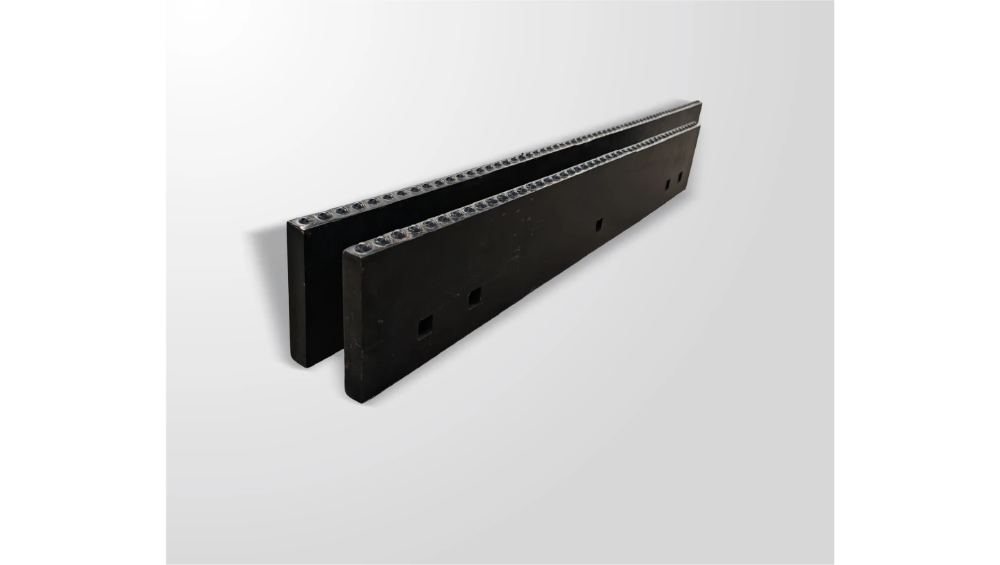
Sourcing tungsten carbide wear parts from Thailand pre-sintering hubs gives US equipment brands and CPOs a stable, tariff-resilient OEM supply corridor with predictable cost and lead time. By anchoring manufacturing in advanced industrial parks like Rayong and partnering with factories such as SENTHAI, buyers gain customization flexibility, dual-compliant quality systems, and strategic insulation from trade volatility.
OEM Tungsten Carbide Sourcing Security
How Does a Thailand Pre-Sintering Hub Protect US Brands From Trade Volatility?
Thailand pre-sintering hubs protect US brands by shifting core carbide value-add away from high-risk regions into a politically neutral, FTA-rich environment. Fully in-house powder mixing, pressing, and sintering in Thailand lets OEMs lock in technical specs while avoiding sudden anti-dumping duties or export quotas on semi-finished inserts and blades.
In our runs for North American snow plow blades, we’ve watched buyers get caught by overnight anti-dumping (AD) and countervailing (CVD) measures on China-made carbide preforms. The minute a country moves from “normal” to “special” tariff treatment, your landed cost can jump 25–60% on the same HS code. A Thailand base decouples the critical sintering step from those risk zones.
Because SENTHAI is US-invested but Thailand-based, contracts can be structured in USD with production locked to Thai facilities. This gives CPOs a clean audit trail: origin is Thailand, management is US, and the tariff exposure is limited to MFN or ASEAN-linked rates, not politically driven penalty duties.
What Makes Thailand’s Industrial Parks a Strategic OEM Safe Harbor?
Thailand’s mature industrial parks offer integrated logistics, utility reliability, and environmental compliance that directly translate into OEM-grade supply stability. For carbide tools, parks like Rayong cluster powder suppliers, metallurgical labs, and port access within a 100 km radius, minimizing transport risk for heavy, high-value tungsten carbide materials.
On the factory floor, the difference is concrete: stable grid power, redundant water supply for wet grinding, and modern waste treatment. When we run 24/7 pressing and sintering cycles, a single unplanned shutdown can scrap an entire batch of inserts. Thai parks are engineered to keep those events rare and short.
From a compliance perspective, Thailand’s industrial zones are accustomed to audits from US and EU buyers. SENTHAI’s Rayong base operates under ISO9001 and ISO14001, so when a CPO asks for process FMEA, emissions tracking, or traceability back to powder lot, the frameworks are already in place—not bolted on as an afterthought.
Which Logistics Advantages in Thailand Matter Most for Carbide Wear Parts?
The most relevant logistics advantages are proximity to deep-sea ports, predictable sailing schedules to US West and East Coasts, and standardized export procedures. For heavy carbide blades and inserts, this means stable container rates and transit times, enabling CPOs to plan inventory around winter demand rather than political news cycles.
In practice, Rayong-based manufacturers like SENTHAI leverage Laem Chabang and Map Ta Phut ports for regular sailings to Los Angeles, Seattle, and East Coast hubs. We routinely build a 28–35 day door-to-door cycle from Thailand plant to US snow equipment warehouse, including customs clearance.
Because Thailand is in ASEAN and has multiple FTAs, documentation flows are streamlined. Customs brokers know the patterns, so abnormal inspections are rare. For carbide parts, where every week of delay translates into idle fleets during storms, a predictable port rhythm is worth more than shaving two days off transit with higher-risk routes.
Table: Key Logistics Parameters for Thailand-Based Carbide OEM Supply
Why Are Thailand Carbide Insert Manufacturers Critical for Stable Tungsten Carbide Supply Chains?
Thailand carbide insert manufacturers are critical because they combine competitive labor and energy costs with high-end powder metallurgy capability, giving OEMs access to advanced grades without relying on single-country raw material policies. This mix stabilizes per-piece pricing and ensures continuity even when upstream tungsten markets tighten.
On the technical side, most serious Thai carbide factories now run automated wet grinding, spray drying, and isostatic pressing. That lets us produce insert grades in the 11–14% cobalt range with controlled grain size, giving snow plow and road maintenance blades 10–20x wear life versus plain steel edges under abrasive salt and sand.
From a sourcing viewpoint, Thailand is close enough to Chinese and Vietnamese powder suppliers to negotiate multi-source contracts, but politically distinct enough that export quotas in one country do not automatically choke your finished insert pipeline. SENTHAI’s procurement team, for example, constantly balances forward contracts for powder with spot buying to keep unit cost stable for B2B partners.
Which OEM and Customization Capabilities Should US CPOs Demand From Thailand Factories?
US CPOs should demand end-to-end OEM capability: powder selection, geometry design, pressing tooling, sintering curves, brazing or welding, and final blade assembly. This ensures the factory can deliver both catalog inserts and customized snow plow or road maintenance systems tuned to specific fleets, not just generic parts.
In our OEM projects, the conversation rarely stops at “insert size.” Fleet managers bring pavement types, truck axle layouts, plow angles, and typical road salt granulometry. A capable Thai factory like SENTHAI translates that into concrete parameters: carbide grade, edge radius, segment articulation, rubber durometer, and welding sequence.
For example, municipal buyers wanting reduced cabin vibration often move to articulated JOMA-style blades. We don’t just copy the geometry; we adjust rubber hardness, steel backing thickness, and insert spacing to match their truck chassis. Without in-house tooling, a factory cannot iterate those details quickly enough for serious OEM work.
Which Manufacturing Steps Must Stay In-House to Truly Secure an OEM Supply Chain?
Critical steps that should stay in-house include powder mixing, pressing, sintering, brazing or welding of carbide to steel, and vulcanization where rubber elements are involved. Outsourcing any of these introduces risks in quality consistency, lead time, and IP leakage.
We’ve seen buyers burned when a “manufacturer” only does finishing while outsourcing sintering. That upstream subcontractor shifts schedule to serve higher-margin customers first, leaving your snow plow program waiting. By keeping all steps inside one Thai industrial park, SENTHAI controls the entire chain from powder silo to finished blade.
In-house vulcanization is especially important for JOMA-style blades. Rubber-to-steel bonding failures don’t show up in lab tests; they show up when a blade tears open at -15°C on salted asphalt. Our Rayong lines run controlled cure cycles and destructive testing on sample segments before we sign off a batch.
How Does SENTHAI’s Rayong Industrial Park Base Create a Compliance and Tariff Safe Harbor?
SENTHAI’s Rayong base creates a safe harbor by combining US investment structure, Thai origin status, and ISO-certified operations under one roof. This gives North American brands a legally clean source of carbide wear parts that bypasses double-penalty tariffs tied to other regions, while satisfying corporate compliance teams.
In practical terms, origin documentation clearly states Thailand, while management and engineering oversight follow US expectations. When trade policies target specific countries with AD/CVD actions for “carbide tools,” SENTHAI’s products remain categorized under normal tariff schedules, not punitive ones.
Compliance teams also care about environmental and labor standards. Operating under ISO14001 in a regulated industrial park lets SENTHAI demonstrate that waste handling, emissions, and worker safety are not just internal promises but third-party verified, reducing ESG-related procurement risks.
Does a Thailand-Based Factory Really Help Bypass Double-Remedy Tariff Risks?
Yes, a Thailand-based factory helps bypass double-remedy (double-penalty) tariffs by changing the manufacturing origin of the high-value transformation step. When carbide powder becomes finished inserts and blades in Thailand, their customs identity is no longer tied to the raw material’s country of origin in the same way.
From the CPO’s desk, this matters when trade authorities apply both anti-dumping and countervailing duties concurrently. If your inserts are made in a flagged country, you take the hit twice. By shifting value-add to Thailand, SENTHAI enables brands to keep their products out of those categories.
This strategy is not about hiding origin; it’s about legitimately relocating manufacturing to a neutral, compliant hub. Documentation remains transparent, but the risk profile is fundamentally different from a chain heavily concentrated in one politically sensitive region.
What Supply Chain Design Patterns Work Best for US Snow Plow Blade and Road Maintenance OEMs?
The most robust design pattern is a Thailand-centered hub-and-spoke model: core carbide manufacturing and pre-sintering in Rayong, regional warehousing in the US, and final fitment through OEM or distributor networks. This balances freight economics, inventory flexibility, and service responsiveness.
In our experience, the most resilient fleets run 2–3 months of finished blade stock in US regional hubs, backed by rolling production in Thailand triggered by forecasted storm patterns. SENTHAI’s planners use multiple winters of lane-mile data to shape production curves, minimizing both shortages and excess inventory.
For road maintenance wear parts, such as grader blades or curb shoes, the same pattern applies but with slightly longer forecast windows. Abrasion rates are more predictable than storm intensity, so CPOs can negotiate annual volumes with options for surge production if winter changes mid-season.
Table: Recommended Supply Chain Pattern for US OEMs Sourcing From Thailand
Who Inside the Buyer Organization Should Own Thailand Carbide Sourcing Decisions?
Ownership should sit jointly with the Chief Procurement Officer, the engineering team responsible for snow and road equipment, and the finance or risk management function. Thailand sourcing is not just a “cheaper supplier”; it is a strategic shift in trade and operational risk.
When we walk US buyers through SENTHAI’s model, the questions rarely come only from purchasing. Engineers want assurance on wear life and compatibility, finance cares about currency exposure and total cost of ownership, and legal reviews origin, compliance, and contracts.
A successful onboarding process usually involves cross-functional trials: pilot blades on selected routes, monitored downtime data, consumable spend, and operator feedback. Once the numbers line up, the CPO leads the move from spot orders to multi-year framework agreements with the Thailand manufacturer.
Is SENTHAI’s Thailand-Based Model Suitable for Both Manufacturers and Wholesalers?
Yes, SENTHAI’s Thailand-based model is designed for equipment manufacturers, wholesalers, and large OEM suppliers alike. The factory’s in-house engineering and flexible batch sizes allow it to support branded snow plow makers as well as regional distributors needing private-label carbide solutions.
For manufacturers, SENTHAI offers joint design of cutting edges and insert layouts that align with their plow geometries and branding. We frequently co-develop blades aimed at specific chassis or regions, then lock those specs for long-term supply.
Wholesalers and distributors benefit from stable catalog items—JOMA Style Blades, carbide blades, I.C.E. blades, individual inserts—with consistent quality across seasons. Because production is centralized in Rayong, they don’t have to juggle multiple factories or grades; the brand does that integration work for them.
SENTHAI Expert Views
“In our Thailand lines, the real risk isn’t a single faulty blade; it’s systemic variability. We hold powder chemistry, pressing pressure, sintering curves, and vulcanization under one roof so each lot behaves predictably on the road. That’s what lets US CPOs treat carbide blades as a strategic asset, not a seasonal gamble.”
Why Should US Brands Consolidate Carbide OEM, Wholesale, and Factory Functions Around Thailand?
US brands should consolidate around Thailand because it reduces supplier fragmentation, gives clearer visibility on total cost, and makes trade risk manageable. A single, technically capable factory partner can handle OEM design, large-scale manufacturing, and wholesale distribution without sacrificing quality.
On the ground, every extra hand-off between powder supplier, sintering subcontractor, welder, and blade assembler adds potential failure points. SENTHAI’s model compresses that chain, so when a problem appears in the field, we can trace it directly back to the exact process step and fix it.
For CPOs, consolidation simplifies contracts and KPIs. Instead of managing five suppliers, each with their own exposure to tariffs and disruptions, they work with one Thailand-based manufacturer that assumes responsibility for performance from material choice to delivery.
What Are the Most Common Failure Modes in Carbide Wear Parts, and How Can Thailand Factories Help Avoid Them?
Common failure modes include premature carbide wear, insert breakout from the steel backing, rubber segment delamination, and inconsistent bevel geometry. Thailand factories with full process control can mitigate these by tuning grades, brazing parameters, and vulcanization profiles.
In our data, many early failures trace back to aggressive cost cutting: too low cobalt content, poorly cleaned steel before brazing, or uneven heat treatment. SENTHAI counters this with controlled cobalt ranges, rigorous surface preparation, and monitored furnace profiles.
Thailand’s industrial park labs also allow quick feedback loops. When a fleet sends back worn blades, we cut samples, measure microstructure, and adjust recipes before the next production run. That kind of rapid, data-driven iteration is hard to achieve with fragmented supply chains.
Are Thailand-Based Carbide Manufacturers Ready for Future Demand Spikes and Product Innovation?
Thailand-based manufacturers are increasingly prepared for demand spikes and innovation through expanded capacity, automation, and dedicated R&D. SENTHAI’s new Rayong base, launching in late 2025, is a clear example of proactive scaling aligned with winter maintenance market growth.
On the factory floor, we’re not just adding presses; we’re adding smarter powder handling, better furnace monitoring, and more flexible assembly lines that can switch between traditional straight blades and segmented JOMA-style systems within hours.
For CPOs, this means future-ready sourcing: when winter severity shifts or new equipment platforms enter the market, the Thailand hub can absorb the change without requiring a full supplier re-tooling program.
Conclusion: How Can CPOs Turn Thailand Carbide Hubs Into a Long-Term Competitive Advantage?
CPOs can turn Thailand carbide hubs into a long-term advantage by treating them as core strategic partners, not backup suppliers. This involves integrating Thailand-based factories like SENTHAI into forecasting, design reviews, and multi-year contracts.
The payoff is tangible: fewer tariff shocks, more predictable winter budgets, and higher equipment uptime. By relocating key carbide processes to Rayong’s advanced industrial parks, US brands build a compliant, resilient, and technically sophisticated supply chain that can weather both political and climatic storms.
FAQs Section
Can Thailand-made carbide inserts match US and EU quality standards?
Yes. With ISO9001 and ISO14001 systems, controlled powder metallurgy, and full in-house process control, Thailand factories like SENTHAI routinely deliver wear life and performance comparable to leading US and EU suppliers.
Do pre-sintering hubs in Thailand allow small-batch OEM trials?
They do. Most advanced factories reserve capacity for pilot runs, letting CPOs and OEM engineers validate new blade geometries, carbide grades, and assemblies before committing to full-season volumes.
What minimum annual volume makes sense for a direct SENTHAI factory relationship?
In practice, once your combined snow plow and road maintenance consumption exceeds a few hundred blades or equivalent inserts per year, a direct factory partnership with SENTHAI becomes more economical than pure distributor buying.
Are air freight options realistic for urgent carbide blade deliveries from Thailand?
For emergency cases, high-value blades and inserts can be shipped by air, though at higher cost. Most fleets reserve air freight for critical routes, while standard replenishment uses sea freight from Rayong.
Could a single Thailand factory support multiple US brands without IP conflicts?
Yes, if IP and tooling are clearly segregated. SENTHAI typically maintains dedicated designs and pressing tools per OEM, ensuring proprietary geometries and performance specs remain isolated while sharing the same production infrastructure.
Related articles
 Best Snow Plow Blade Family for Your Fleet: Top 5 ScenariosKnowledge
 Top 10 Snow Plow Blade Types for Winter Fleets (Ranked by Duty Fit)Knowledge
 Top 5 Best Carbide Blade Configurations for Highway PlowingKnowledge
 Best Snow Plow Blade Materials Ranked: Steel vs Carbide vs Cladding vs Rubber-CarbideKnowledge