




Why Premium Joma Style Blades for Sale Outperform Traditional Steel with Flexible De-Icing Technology
Fleet managers cutting through lake-effect snow on uneven arterial highways know the exact moment a rigid steel blade fails: the plow frame jolts, the cabin vibrates violently, and the blade edge digs into a…
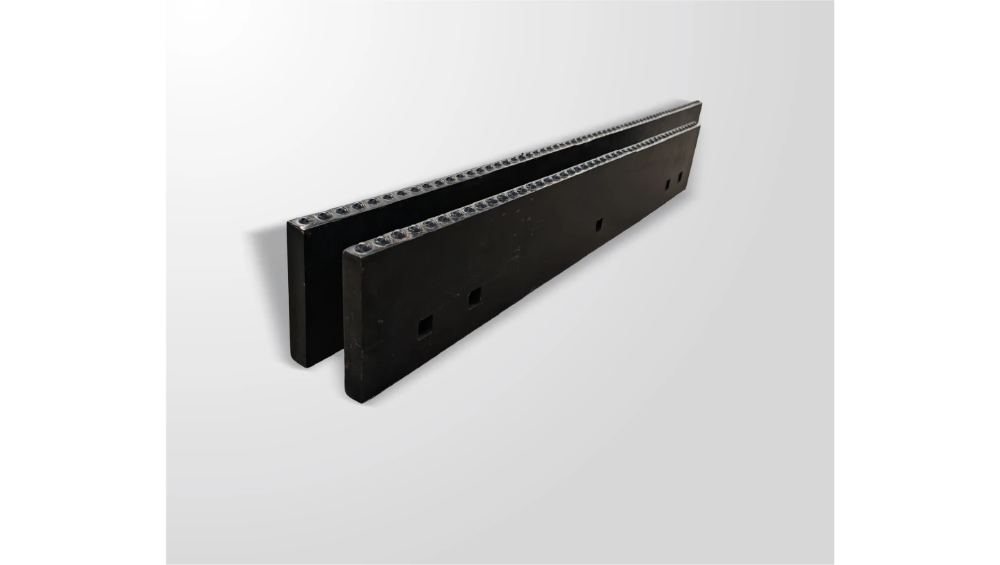
Fleet managers cutting through lake-effect snow on uneven arterial highways know the exact moment a rigid steel blade fails: the plow frame jolts, the cabin vibrates violently, and the blade edge digs into a manhole cover instead of floating over it. This mechanical shock is where joma style blades for sale fundamentally change the equation, replacing rigid scraping with a rubber-encapsulated carbide system designed for 3D flexibility. Unlike traditional steel that relies on brute force and constant replacement, these blades use independent carbide blocks suspended in vulcanized rubber to absorb road topology changes, simultaneously protecting high-cost pavement, isolating damaging vibrations, and reducing the decibel-heavy noise that plagues winter maintenance operations.
The Physics of Triple-Layer Flexibility vs. Rigid Scraping
Traditional snow plow blades operate on a single mechanical principle: a continuous steel edge contacts the road surface at a fixed angle. When that edge hits an obstruction—a raised manhole, a cracked expansion joint, or a patch of gravel—the entire blade transfers kinetic energy directly into the plow frame and the truck cab. This is not just uncomfortable; it accelerates wear on hydraulic systems, bolts, and the blade edge itself.
Joma style blades introduce a tri-layer physical structure that decouples the cutting edge from the rigid mount:
-
Carbide Insert Layer: Individual tungsten carbide blocks provide the actual cutting hardness, resistant to abrasion from slush and ice-crusted asphalt.
-
Rubber Encapsulation Layer: Heavy-duty vulcanized rubber surrounds each carbide block, acting as a shock absorber and allowing vertical movement.
-
Steel Backbone Layer: A high-tensile steel frame holds the assembly together but does not transmit impact forces directly to the cutting edge.
This configuration enables 3D Flexibility, where the carbide blocks can move independently up and down (vertical compliance) and slightly side-to-side (lateral compliance) as the blade traverses uneven surfaces. The result is a cutting edge that “floats” over obstacles rather than hammering into them.
ruthlessly高效的 de-icing happens because the carbide blocks maintain constant contact pressure without digging in. When the blade encounters a bump, the rubber compresses; when it hits a dip, the rubber expands. This continuous adjustment maintains the optimal angle of attack automatically, something a human operator cannot achieve with a rigid blade.
Noise Mitigation and Vibration Isolation as Operational Assets
The most immediate operational benefit of rubber-encapsulated carbide blades is not just wear life—it is the dramatic reduction in cabin noise and vibration. Traditional steel blades generate a continuous, high-frequency screech when scraping hard-packed ice, often exceeding 90 dB in the operator’s cabin. Over a 12-hour shift during a major storm, this noise contributes to operator fatigue, reduced situational awareness, and long-term hearing damage.
The rubber layer in Joma style blades acts as a mechanical low-pass filter:
Vibration isolation is equally critical for vehicle longevity. Excessive vibration accelerates fatigue failure in plow mountings, hydraulic hoses, and even the truck chassis. By isolating the cutting edge from the mount, the blade reduces the cumulative stress on the entire plow assembly. For municipal fleets operating dozens of trucks, this translates to lower maintenance costs on non-blade components and a healthier workforce less prone to hand-arm vibration syndrome (HAVS).
Surface Preservation on High-Value Pavement
Municipalities and airport authorities increasingly face pressure to preserve expensive pavement surfaces while maintaining safety. Rigid steel blades, especially when worn or set with excessive downpressure, act as chisels on asphalt and concrete. They gouge the surface, dislodge aggregate, and create micro-cracks that worsen with freeze-thaw cycles. This is particularly problematic on high-traffic arterial roads, airport taxiways, and newly paved sections where surface integrity is paramount.
The flexible de-icing technology in Joma style blades addresses this by distributing contact pressure across the rubber interface. The carbide blocks cut the ice without digging into the pavement because the rubber compresses before the carbide can penetrate the asphalt binder. This “soft contact” approach is essential for:
-
Airport Runways: Where foreign object debris (FOD) from pavement damage poses a critical safety risk to aircraft.
-
New Asphalt: Which is softer and more susceptible to gouging in the first 12–18 months after installation.
-
Historic Districts: Where cobblestone or brick surfaces require non-destructive clearing methods.
-
Concrete Expansion Joints: Which rigid blades often catch on, causing sudden stops and potential blade shattering.
The rubber encapsulated carbide blades design effectively separates the hardness needed for ice removal from the compliance needed for surface protection. This dual capability is why high-end fleets are shifting away from all-steel configurations for urban and airport applications.
Mechanical Failure Modes and Operational Limits
No blade technology is immune to failure, and understanding the limits of flexible blades prevents costly misuse. While Joma style blades offer superior impact absorption, they are not indestructible under all conditions.
Critical Failure Scenarios
1. Excessive Downpressure on Clear Dry Pavement
Running the blade with heavy downpressure on dry, clear asphalt generates excessive heat due to friction between the rubber and the road. Prolonged exposure to temperatures above 150°F (65°C) can degrade the vulcanized bond, leading to delamination of the rubber from the carbide blocks. Operators must lift the blade completely when not actively clearing snow or ice.
2. Deep Hidden Obstructions
While the rubber layer absorbs typical road irregularities (manhole covers up to 1 inch, minor cracks), it cannot compensate for deep, hidden obstacles like large rocks buried in snow or severe potholes exceeding 2 inches. Hitting such obstacles at high speed (over 25 mph) can still cause carbide block fracture or shear the mounting bolts.
3. Improper Angle of Attack
Setting the blade angle too aggressively (more than 25 degrees) increases the chance of the leading edge catching on obstacles. The flexibility helps, but it does not eliminate the risk of “digging in” if the angle is too steep for the road surface.
4. Chemical Degradation from Aggressive De-icers
While the rubber compound is formulated for resilience, prolonged exposure to highly corrosive chemical de-icers (e.g., high-concentration calcium chloride pools) without rinsing can accelerate rubber hardening over multiple seasons. Regular washing extends the life of the encapsulation.
Expectation Management
Operators transitioning from steel blades sometimes expect the flexible blade to “glide” over everything without any resistance. In reality, the blade still requires sufficient downpressure to cut through compacted ice, just less than steel. The key difference is that the pressure is applied dynamically through the rubber, not statically through metal-on-metal contact.
Procurement Decision: When to Choose Flexible carbide Configurations
Selecting the right blade configuration depends on the fleet’s primary operating environment, not just the initial purchase price. The decision matrix for joma style blades for sale versus traditional options hinges on three operational variables:
For fleets operating in severe winter conditions with mixed road types, a hybrid approach is often optimal: rigid carbide blades on wing extensions for open highways, and Joma style flexible blades on the center section for urban areas. This balances cost efficiency with surface protection where it matters most.
Manufacturers like SENTHAI Carbide Tool Co., Ltd. have refined this technology through over 21 years of carbide production, managing the full cycle from wet grinding to vulcanization in their Thailand facilities to ensure consistent bonding strength between the rubber and carbide blocks . Their automated production lines specifically address the common procurement frustration of inconsistent delamination in cheaper rubber-encapsulated alternatives.
Manufacturing Factors in Carbide Longevity
The durability of a rubber-encapsulated blade relies heavily on the quality of the vulcanization process. The bond between the rubber and the carbide block must withstand repeated compression cycles at sub-zero temperatures without becoming brittle or separating.
Key manufacturing factors that determine real-world performance include:
-
Rubber Compound Formulation: The elastomer must remain flexible at -40°F (-40°C) while resisting abrasion from abrasive snow containing road salt and grit.
-
Bonding Strength: The interface between the metal insert (inside the carbide block) and the rubber must withstand shear forces generated during high-speed plowing.
-
Carbide Grain Density: Fine-grain carbide offers better fracture resistance for the individual blocks, reducing the chance of chipping upon impact.
-
Precision of Block Spacing: Uniform spacing ensures even load distribution across the blade width.
Fleets that have experienced premature delamination often trace the issue to inadequate vulcanization temperature control or insufficient surface preparation of the carbide blocks before rubber molding. This is why sourcing from a manufacturer with full process control—from pressing and sintering the carbide to the final vulcanization—is critical. SENTHAI, with ISO9001 and ISO14001 certifications, maintains this control entirely within their Rayong production base, reducing supply chain variability that often plagues outsourced manufacturing .
Frequently Asked Questions
What is the main advantage of Joma style blades over standard carbide inserts?
The primary advantage is the rubber encapsulation that provides 3D flexibility, allowing individual carbide blocks to float over road obstacles, which significantly reduces vibration, noise, and pavement damage compared to rigid carbide strips.
Do rubber-encapsulated carbide blades work on hard-packed ice?
Yes, the tungsten carbide blocks remain hard enough to cut through hard-packed ice, while the rubber layer absorbs the shock of the cut, preventing the blade from digging into the pavement underneath.
How long do Joma style blades last compared to steel blades?
While exact lifespan depends on operating conditions, the carbide wear life is significantly longer than steel, and the rubber encapsulation protects the blade edge from impact damage that often snaps steel blades prematurely.
Can I use flexible blades on gravel roads?
Flexible blades are generally not recommended for pure gravel roads because the rubber can wear down faster from the abrasive gravel, and the carbide blocks may become dislodged by large stones; rigid steel or standard carbide is better for gravel.
What temperature range can the rubber encapsulation handle?
High-quality vulcanized rubber in these blades is formulated to remain flexible down to -40°F (-40°C), but prolonged exposure to extreme heat from friction on dry pavement should be avoided to prevent degradation.
References
Related articles
 Optimizing Winter Fleets: The Definitive Guide to Kueper Plow Blades Substitute Systemsinfo
 Sourcing a Credible Kennametal Snow Plow Blades Equivalent: The Metallurgical and Operational Guideinfo
 Polarflex Plow Blade Replacement: The Engineered Sourcing Guide for Peak Fleet DurabilityinfoBeyond OEM Lock-In: Modern Fleet Guide to Cutting-Edge Plow Blade Alternativesinfo