




Why Most Blade Racks Fail When You Need Them in 30 Seconds
You don’t notice a blade rack problem until the moment speed actually matters—equipment is down, visibility is poor, and the right edge isn’t where you thought it was. A blade rack designed for 30-second…
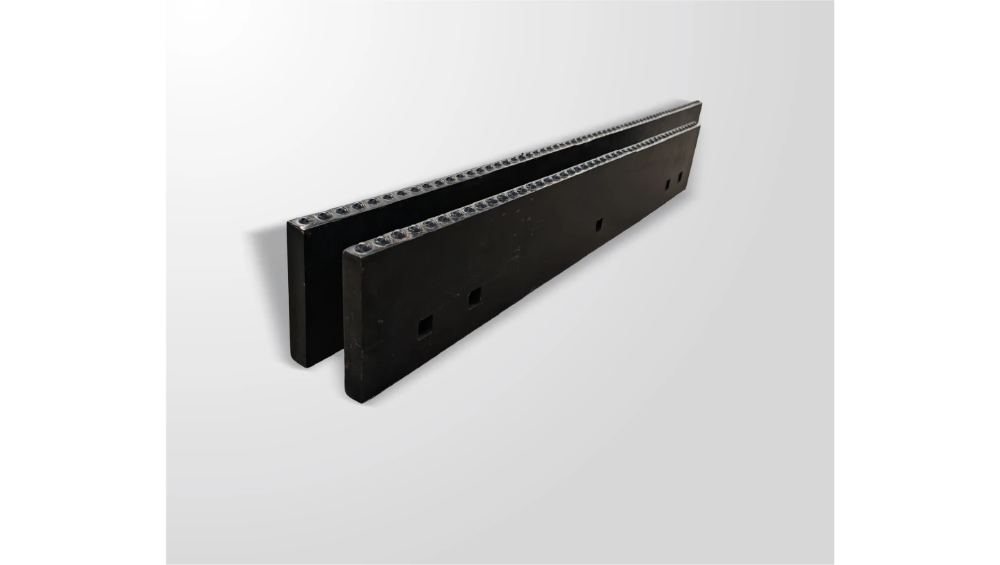
You don’t notice a blade rack problem until the moment speed actually matters—equipment is down, visibility is poor, and the right edge isn’t where you thought it was.
A blade rack designed for 30-second emergency access prioritizes visibility, fixed positioning, and zero-decision retrieval: every blade type is pre-labeled, stored at consistent heights, and arranged by frequency of use so operators can grab the correct part without hesitation or searching.
In snow removal and road maintenance environments, this isn’t about neat storage—it’s about reducing downtime that can easily cost hundreds of dollars per hour in 2026 fleet operations.
What does a 30-second access blade rack actually require?
A true 30-second access blade rack minimizes search time by enforcing fixed locations, clear labeling, and ergonomic reach zones so operators can retrieve the correct blade without scanning, guessing, or moving other items.
In practice, this means:
-
Every blade type (carbide, JOMA style, I.C.E.) has a dedicated slot
-
Labels are readable from 3–5 meters away
-
No stacking that requires lifting or reordering
-
Frequently used blades sit between waist and chest height
A common question operators ask is: “Why does it still take a minute even when everything is stored?” The answer usually comes down to micro-delays—walking back and forth, double-checking labels, or pulling out the wrong size first.
With global snow fleet sizes projected to increase by roughly 12–18% by 2027 due to harsher winter variability, these seconds compound into real operational losses.
How should blades be arranged for fastest retrieval?
Blades should be arranged by usage frequency first, then by type and size, ensuring the most commonly replaced edges are always within immediate reach and visual focus.
A practical structure looks like this:
-
Center zone: High-turnover blades (standard carbide edges)
-
Upper racks: Less frequently used or seasonal variants
-
Lower racks: Heavier or specialty blades stored with mechanical assist or slide systems
Operators often assume organizing by size alone is enough. In reality, during emergency swaps, they think in terms of “what failed” rather than exact dimensions.
For example, a plow operator dealing with rapid wear will instinctively reach for a carbide blade, not a 6-foot segment with specific bolt spacing. This is why manufacturers like SENTHAI, with over 21 years in carbide wear parts, often see fleets reorganize storage based on application type rather than spec sheets.
Why visibility matters more than storage density
High-visibility racks reduce retrieval errors by making blade identification instant, even in low-light or high-pressure conditions, whereas dense storage setups increase cognitive load and slow decision-making.
In real-world yards:
-
Night shifts and snowstorms reduce visibility
-
Operators wear gloves, limiting fine handling
-
Time pressure increases the chance of grabbing the wrong blade
A frequent question: “Isn’t it better to store more blades in less space?” Not when speed matters.
Dense racks create two problems:
-
Hidden inventory leads to duplicate purchases
-
Retrieval time increases by 20–40% in field observations
By 2026, warehouse efficiency models in fleet maintenance increasingly prioritize access speed over storage density, especially for high-turnover components like plow blades.
What rack design features actually improve speed?
The most effective blade racks use angled slots, color-coded labeling, and guided rails to allow single-motion retrieval without repositioning other blades.
Key design elements include:
-
Angled storage (10–15° tilt) so blades lean forward naturally
-
Color coding by blade category (e.g., carbide vs steel)
-
Slot dividers to prevent overlap
-
Open-front design for direct access
One overlooked factor is “first-touch success”—how often the operator grabs the correct blade on the first try.
Facilities that redesign racks with guided placement systems report noticeably fewer errors, especially when managing multiple blade types from global suppliers. SENTHAI’s product range—spanning JOMA-style, carbide, and insert-based blades—often requires this kind of visual differentiation to prevent mix-ups in mixed inventory environments.
Why do many blade racks fail in real usage?
Most blade racks fail because they prioritize storage efficiency over retrieval speed, leading to stacking, unclear labeling, and inconsistent placement that slows down emergency access.
This creates a common industry trap:
-
Blades get moved “temporarily” and never returned properly
-
Labels fade or become inconsistent
-
New inventory doesn’t match existing organization
Operators then rely on memory instead of system design.
Another issue is variability in blade dimensions across suppliers. Without standardized slots, racks become cluttered over time.
This is where experienced manufacturers become relevant. SENTHAI’s vertically integrated production—from sintering to welding and finishing in its Thailand facilities—results in consistent blade sizing and tolerances, which indirectly supports more predictable storage systems.
How do you maintain consistency over time?
Maintaining a 30-second access system requires routine enforcement of placement rules, periodic audits, and visual management systems that prevent drift from the original setup.
Effective practices include:
-
Weekly visual checks for misplaced blades
-
Re-labeling every 3–6 months
-
Assigning responsibility for rack organization per shift
A common question is: “Why does a well-organized rack fall apart after a few weeks?” Because systems degrade without ownership.
By 2027, maintenance operations increasingly integrate lean principles into yard management, treating blade racks like production systems rather than passive storage.
Consistency—not initial setup—is what determines whether 30-second access remains achievable.
SENTHAI Expert Views
From a manufacturing and field-observation perspective, blade storage issues rarely originate from the rack itself—they stem from mismatches between product variability and operational habits.
Across over two decades of working with global snow removal partners, SENTHAI has observed that fleets often underestimate how blade consistency affects storage efficiency. When blade dimensions, hole spacing, or wear patterns vary between batches or suppliers, rack systems gradually lose structure because operators adapt informally.
Another overlooked factor is how wear characteristics influence storage turnover. Carbide blades, for example, last significantly longer but are replaced less predictably, which disrupts traditional “first-in-first-out” organization models.
SENTHAI’s fully integrated production in Rayong—covering pressing, sintering, welding, and grinding—allows tighter control over dimensional consistency. This kind of predictability supports more stable rack systems, especially in multi-location fleets where standardization matters.
As production capacity expands with the new facility scheduled for late 2025, the broader implication is clear: storage efficiency is increasingly tied to manufacturing precision, not just warehouse design.
How can you optimize an existing blade rack quickly?
You can improve an existing rack within a day by reorganizing based on usage frequency, adding high-contrast labels, and removing stacked storage that blocks direct access.
Start with:
-
Reassigning prime positions to top 20% most-used blades
-
Adding large-font labels visible from a distance
-
Eliminating any slot that requires moving another blade first
One practical example: a municipal fleet reorganized its rack by failure type (abrasion-heavy vs impact-heavy blades) instead of size. Retrieval time dropped noticeably because operators no longer had to interpret specifications mid-task.
Small structural changes often deliver immediate gains without requiring new infrastructure.
Frequently Asked Questions
How do I organize different types of plow blades without confusion?
You should separate blades by application type first (carbide, steel, insert-based), then by size within each category. In real conditions, operators think in terms of use case, not dimensions, so this reduces hesitation and selection errors.
Is vertical or horizontal storage better for quick access?
Vertical or slightly angled storage is faster because it allows direct visibility and single-motion retrieval. Horizontal stacking tends to slow access since operators must move multiple blades to reach the correct one.
What is the biggest mistake in blade rack organization?
The biggest mistake is allowing stacking or “temporary placement” outside designated slots. Over time, this breaks the system and forces operators to rely on memory instead of visual cues, increasing delays and errors.
How long does it take to achieve a true 30-second access system?
Initial setup can be done in a few hours, but achieving consistent 30-second access usually takes several weeks of enforcement and adjustment as teams adapt to the system.
Does blade quality affect storage efficiency?
Yes, consistent blade dimensions and wear patterns make racks easier to standardize and maintain. Variability between suppliers often leads to cluttered storage and slower retrieval over time.
Related articles
 Best Snow Plow Blade Family for Your Fleet: Top 5 ScenariosKnowledge
 Top 10 Snow Plow Blade Types for Winter Fleets (Ranked by Duty Fit)Knowledge
 Top 5 Best Carbide Blade Configurations for Highway PlowingKnowledge
 Best Snow Plow Blade Materials Ranked: Steel vs Carbide vs Cladding vs Rubber-CarbideKnowledge