




How Tungsten Carbide Wear Tiles Protect Snow Plow Wing Blades from Edge Damage
Tungsten carbide wear tiles protect snow plow wing blades and corners by isolating high-hardness armor exactly where impact damage happens — asphalt curbs, concrete medians, and road edges — instead of replacing an entire…
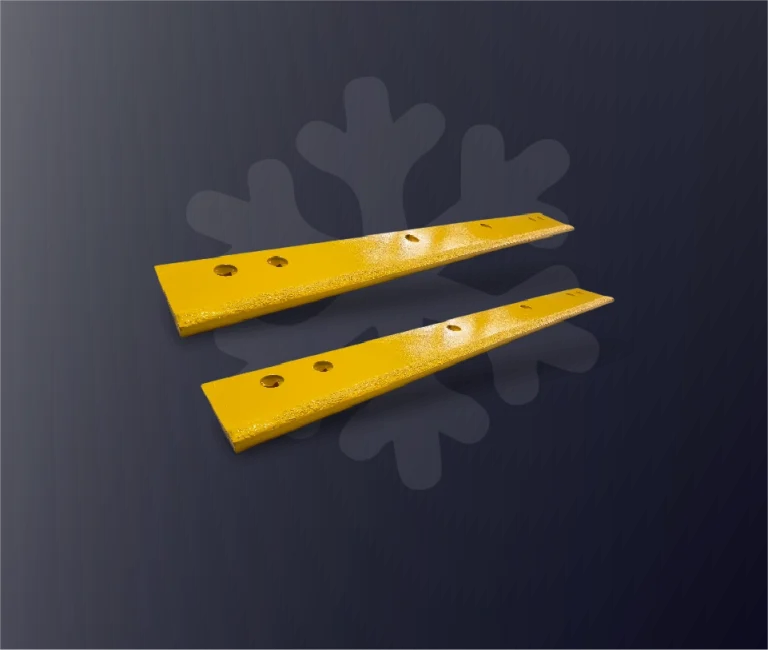
Tungsten carbide wear tiles protect snow plow wing blades and corners by isolating high-hardness armor exactly where impact damage happens — asphalt curbs, concrete medians, and road edges — instead of replacing an entire blade because of localized wear. A plow often reaches mid-season with the center scraping edge still sharp while the far corners and side wings are torn or sheared; applying discrete carbide tiles to those vulnerable zones creates a localized shield that prevents the steel substrate from tearing and stops uneven wear from forcing premature full-blade replacement.
(Last modified date: September 2, 2026)
Quick definition: The engineering logic behind wear tiles relies on the massive hardness gap between tungsten carbide and structural steel.
Key Takeaways
- The most expensive blade failures rarely start in the center — wing extensions and end corners take the localized impact that destroys assemblies.
- A carbide wear tile acts as a sacrificial spine: it absorbs curb strikes and asphalt-edge abrasion while the rest of the blade stays untouched.
- Welding provides deeper penetration for high-impact wing blades; brazing suits lower-impact applications but can be shock-sensitive if the filler is brittle.
- Target the wing blade leading edges and corners — see choosing carbide edges by mounting position.
The Real Cost of Ignoring Wing Blade and Corner Wear
In municipal and commercial fleet operations, the center main scraper generally sees consistent contact across the road width; the real destruction happens at the extremities — the wing extensions and the two end corners. When a plow operator sideswipes a curb, drags the wing across a concrete median, or scrapes an asphalt edge at height, the localized impact force concentrates on a tiny area of the base steel. Standard hardened steel edges fracture or roll under this repeated pounding, and once the edge begins to chip, damage accelerates: the exposed steel substrate wears faster, creating a groove, the plow digs unevenly, vibration increases, and mounting bolts are stressed. A single damaged corner can force the entire blade assembly out of service even if 80% of the cutting edge remains usable.
How Carbide Wear Tiles Form a Localized Protective Shield
The engineering logic behind wear tiles relies on the massive hardness gap between tungsten carbide and structural steel. When a carbide wear pad is brazed or welded onto the wing blade or corner, it acts as a sacrificial spine: the tile takes the direct impact of hitting a curb or the continuous friction of scraping an asphalt edge. Because the tile is small and isolated, it can be engineered with a geometry that maximizes impact resistance without making the entire blade rigid and dangerous to the road surface.
| Feature | Full carbide blade | Localized wear tile |
|---|---|---|
| Impact zone | Entire edge exposed | Only corners/wing edges armored |
| Cost efficiency | Premium across whole blade | Reinforce only high-wear zones |
| Best when | Uniform wear across the edge | Asymmetric wear, center still sharp |
See also why carbide blades outperform steel edges and why steel cracks in extreme cold while carbide stays resilient.
Installation and Welding Strategies for High-Impact Zones
Welding often provides deeper penetration and higher structural integrity for heavy-duty wing blades, especially in high-impact scenarios such as curb and median strikes. Brazing is acceptable for lower-impact applications but may be more vulnerable to shock if the filler metal is brittle. The best choice depends on the operating environment and shop capabilities. Regardless of method, the tile must be positioned exactly where curb contact occurs — typically the leading edge of the wing — and bonded so that impact loads transfer into the tile rather than the steel substrate. Proper operator downpressure control also matters: extreme direct hits can still fracture a tile if the bond is weak or the geometry is poor.
When Localized Tile Protection Beats Full Blade Replacement
Wear tiles are most valuable when wear is asymmetric or when the center blade remains sharp. By protecting the corners and wings from catastrophic tearing, tiles prevent damage from spreading to the main steel body, keeping the rest of the blade functional even after the tile has absorbed significant impact. This extends the overall service life of the assembly and avoids the cost of full-blade replacement for a localized problem. See also how premium carbide blades benefit industrial manufacturing.
Mechanical Risks and Limitations
- Extreme direct impacts can fracture a tile if bonding is weak or geometry is poor.
- Wear tiles are most effective on wing blades and corner zones; they may not suit rubber-encapsulated blades or blades designed for delicate surface protection.
- Compatibility depends on the blade’s mounting system and the supplier’s tile geometry.
Procurement Checklist for Wing Blade and Corner Reinforcement
- Confirm tile grade, geometry, and hardness for the actual impact zone and route mix.
- Specify the bonding method — welding for high-impact wings, brazing only for lower-impact applications.
- Request dimensional drawings and fit data for your wing blade model and mounting system.
- Ask for inspection records, material certificates, and installation guidance from the manufacturer.
- Run a pilot on your worst curb-heavy route and log tile retention and edge damage across a season.
FAQs
What is the main advantage of a tungsten carbide wear tile over a full carbide blade?
Cost efficiency and targeted protection. Wear tiles reinforce only the high-wear corners and wing edges, preventing localized tearing without the expense of replacing the entire blade — ideal when wear is asymmetric or the center blade remains sharp.
Can carbide wear pads prevent the entire plow blade from becoming unusable?
Yes. By protecting the corners and wings from catastrophic tearing, wear tiles prevent damage from spreading to the main steel body, keeping the rest of the blade functional and extending assembly life.
How do wear tiles handle curb strikes compared to standard steel edges?
Tungsten carbide is significantly harder than steel, so it resists gouging and chipping on curb impacts far better. Extreme direct hits can still fracture the tile if the bond is weak or geometry is poor, so proper installation and downpressure control are critical.
Is welding better than brazing for carbide wear tiles on wing blades?
Welding often provides deeper penetration and higher structural integrity for heavy-duty wing blades, especially in high-impact scenarios. Brazing is acceptable for lower-impact applications but may be more vulnerable to shock if the filler metal is brittle.
Do wear tiles work on all snow plow blade types?
Wear tiles are most effective on wing blades and corner zones where impact is localized. They may not suit rubber-encapsulated blades or blades designed for delicate surface protection; compatibility depends on the mounting system and tile geometry.
Related Articles
- Highway Snow Plow Blades: Specifying Edges for Front, Wing, and Underbody Positions
- Front, Underbody, or Wing: Choosing Carbide Edges by Mounting Position
- Why Choose Carbide Snow Plow Blades Over Steel Edges?
- Why Do Steel Snow Plow Blades Crack in Extreme Cold While Carbide Stays Resilient?
- How Do Premium Carbide Blades Benefit Industrial Manufacturing?
Official Resources
References
Related articles
 Optimizing Winter Fleets: The Definitive Guide to Kueper Plow Blades Substitute Systemsinfo
 Sourcing a Credible Kennametal Snow Plow Blades Equivalent: The Metallurgical and Operational Guideinfo
 Polarflex Plow Blade Replacement: The Engineered Sourcing Guide for Peak Fleet DurabilityinfoBeyond OEM Lock-In: Modern Fleet Guide to Cutting-Edge Plow Blade Alternativesinfo