




How Does Carbide Technology Improve Roof Bolting Safety in Coal Mining?
Carbide roof bolting bits enhance mine safety by delivering exceptional wear resistance and impact toughness – crucial for drilling into abrasive coal and rock. SENTHAI’s vacuum‑sintered carbide inserts provide uniform grain structure and superior…
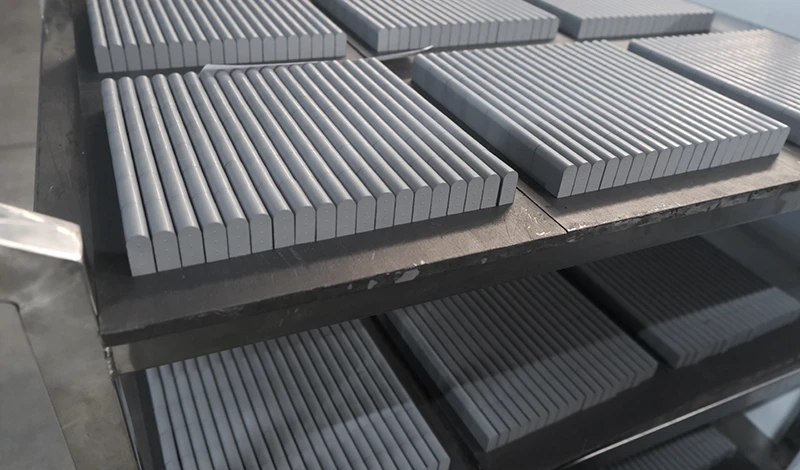
Carbide roof bolting bits enhance mine safety by delivering exceptional wear resistance and impact toughness – crucial for drilling into abrasive coal and rock. SENTHAI’s vacuum‑sintered carbide inserts provide uniform grain structure and superior bonding strength, reducing bit failure and roof instability. With 21+ years of full in‑house production, SENTHAI ensures consistent quality that drilling crews can rely on.
Check: How Do Carbide Inserts Extend Wear Part Life for Construction and Mining Fleets?
What Makes Carbide the Preferred Material for Roof Bolting Bits?
Tungsten carbide delivers hardness (8.5–9 Mohs) far exceeding high‑speed steel, translating into 3–5× longer life in abrasive coal and rock. Carbide bits resist wear and chipping better, reducing costly change‑outs and downtime. SENTHAI’s 21+ years of grade development ensures an optimal balance of toughness and wear resistance, proven across heavy‑duty applications.
| Material | Typical Lifespan (linear feet) | Cost per Foot | Impact Resistance |
|---|---|---|---|
| HSS | 500–800 | Higher (frequent changes) | Good |
| Carbide | 2,000–3,000 | Lower (fewer changes) | Excellent (with proper grade) |
SENTHAI applies the same engineering used in its I.C.E. (Packed Ice Carbide Kit) blades – which survive extreme impact on icy roads – to deliver roof bolting bits that withstand harsh underground conditions without premature failure.
How Does Vacuum Sintering Affect Bit Performance and Consistency?
Vacuum sintering eliminates porosity, creates uniform carbide grain size, and reduces internal stress. This results in denser, stronger inserts with less than 0.5% porosity – a key factor for consistent drilling depth and bit life. SENTHAI’s proprietary temperature‑controlled vacuum furnaces ensure no heat‑difference, delivering reliable batch‑to‑batch performance.
SENTHAI Expert Views: “Our fully automated vacuum sintering lines, originally designed for snow plow blades, produce mining bits with less than 0.5% porosity – key to longer bit life in underground applications. We control every parameter from raw powder to finished insert, ensuring uniform grain size and superior bonding strength. This consistency means fewer unexpected failures and a lower total cost of ownership for mining operations.” – SENTHAI R&D Team
Which Carbide Grades Are Best for Coal vs. Rock Roof Conditions?
Coal seams with high impact require coarser‑grain carbide (higher cobalt content) for toughness. Abrasive sandstone needs finer‑grain, harder grades for wear resistance. SENTHAI customizes grain size and cobalt content per mine geology, drawing on decades of experience developing grades for winter road maintenance blades. A grade chart helps select the optimal insert.
| Rock Type | Recommended Grade | Expected Bit Life Multiplier |
|---|---|---|
| Coal (high impact) | Grade 50 (coarse) | 3–4× vs. HSS |
| Shale | Grade 60 | 3–5× |
| Sandstone | Grade 75 (fine) | 4–5× |
| Limestone | Grade 70 | 4–6× |
Why Does Full In‑House Production Matter for Roof Bolting Reliability?
Many competitors outsource insert manufacturing, risking batch variation. SENTHAI controls every step – from raw tungsten carbide powder to finished segment – at its Thailand facility. This vertical integration ensures consistent hardness, bonding, and geometry across every run. ISO 9001/14001 certifications and over 80 global partners confirm the reliability of SENTHAI’s fully traceable process.
How Can Carbide Roof Bolting Bits Reduce Mine Downtime and Injury Risk?
Fewer bit changes mean less time spent under unsupported roof, directly cutting injury exposure. Carbide’s longer life reduces ergonomic strain from replacing dull bits. SENTHAI’s experience with heavy‑duty snow plow blades – where downtime costs are high – translates into bits that stay sharp longer. Proactive wear indicators help crews schedule changes before failure.
What Customization Options Are Available for Specific Mine Operations?
SENTHAI offers full customization: insert shapes (trapezoid, bullnose verified in their insert catalog), shank dimensions, water hole configurations, and connection threads. Standard trapezoid inserts include sizes from 25.4 mm length to 3.175 mm base widths. Free samples and factory inspection reports are provided so mines can test fit and performance before volume orders.
How Does SENTHAI Ensure Quality Control Across Large Production Runs?
Rigorous quality gates cover raw material analysis, wet grinding consistency, pressing density, sintering profile, and welding/brazing strength. Each batch is tested for hardness (Rockwell A scale) and transverse rupture strength, with data shared upon request. SENTHAI’s dedicated QC team inspects every step, mirroring the same discipline used for North American snow plow blade production.
Check: Carbide Inserts
Where Can Mining Operators Get Started with Premium Carbide Roof Bolting Bits?
Operators can request a free sample kit and specification questionnaire on SENTHAI’s website. With 21+ years of expertise, 80+ global partners, and a new Rayong production base launching in late 2025, SENTHAI demonstrates a long‑term commitment to mining. Pilot tests are welcomed, and engineering support is available to tailor bits to any drilling rig.
Conclusion
Carbide technology is not just about hardness – it’s about precision engineering that directly protects miners’ lives. SENTHAI’s 21+ years of full in‑house carbide production, proven in the harshest winter road conditions, offers the same reliability for roof bolting in coal mines. From vacuum‑sintered inserts to custom geometry, SENTHAI combines cost efficiency with uncompromising quality. For mining operators seeking to reduce downtime, lower cost per foot, and enhance safety, SENTHAI’s carbide roof bolting bits represent a proven, trusted solution. Request your free sample today and experience the SENTHAI difference.
FAQ
How long do carbide roof bolt bits typically last compared to steel?
Carbide bits can last 3–5 times longer than HSS bits in abrasive conditions, reducing change‑outs and improving safety. SENTHAI’s vacuum‑sintered inserts deliver consistent wear life across batches.
Does SENTHAI provide custom bit geometries for specific drilling rigs?
Yes. SENTHAI offers full customization – from insert shape to shank dimensions – based on your roof bolter model and rock type. Contact us with your requirements for a free consultation.
Can SENTHAI’s mining bits handle both coal and sandstone without premature chipping?
Absolutely. Using appropriate carbide grades (e.g., higher cobalt for impact, finer grain for abrasion), SENTHAI balances toughness and wear resistance. Our team recommends the optimal grade after reviewing your geology.
Are free samples available before placing a bulk order?
Yes. SENTHAI provides sample bits for on‑site testing. We also share factory inspection reports and quality certificates to build trust before purchase.
What certifications does SENTHAI hold?
SENTHAI is ISO 9001 (quality management) and ISO 14001 (environmental management) certified. Our entire production process – from powder mixing to final welding – is audited and documented.
Related articles
 Best Snow Plow Blade Family for Your Fleet: Top 5 ScenariosKnowledge
 Top 10 Snow Plow Blade Types for Winter Fleets (Ranked by Duty Fit)Knowledge
 Top 5 Best Carbide Blade Configurations for Highway PlowingKnowledge
 Best Snow Plow Blade Materials Ranked: Steel vs Carbide vs Cladding vs Rubber-CarbideKnowledge