




How Do Fleet Managers Choose the Right Snow Plow Tooling?
Fleet managers choose the right snow plow tooling by aligning blade type, carbide‑edge configuration, and ice‑kit components with typical weather severity, pavement condition, and operational workload. A decision‑tree matrix that links local snowfall, ice…
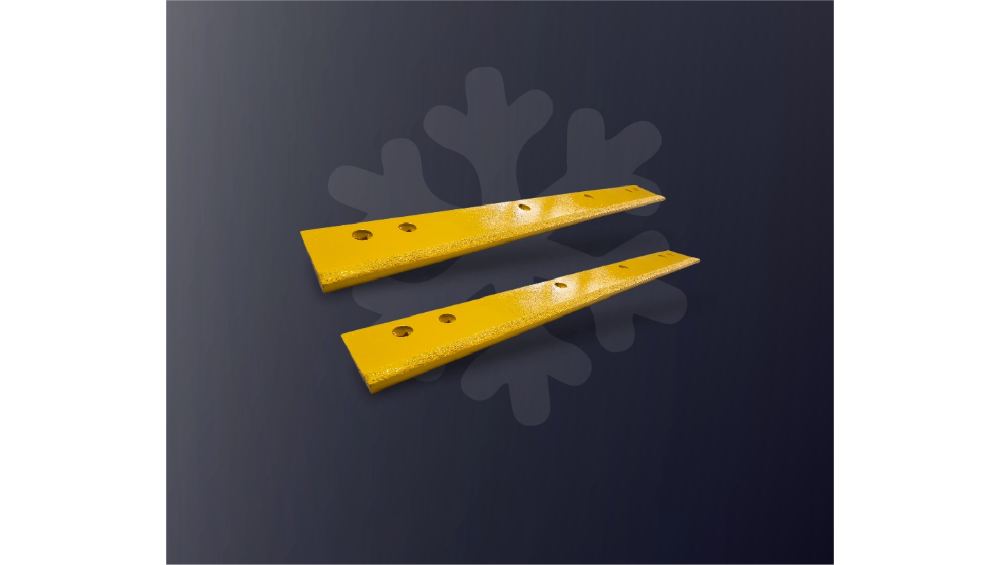
Fleet managers choose the right snow plow tooling by aligning blade type, carbide‑edge configuration, and ice‑kit components with typical weather severity, pavement condition, and operational workload. A decision‑tree matrix that links local snowfall, ice frequency, and road profiles to specific plow attachments helps standardize equipment, reduce unplanned wear‑part changes, and extend the life of each truck in the fleet.
check:What Is the Best Carbide Kit for Packed Ice vs Black Ice?
What is a tooling selection guide for fleet managers?
A tooling selection guide for fleet managers is a structured reference that matches snow plow blades, carbide inserts, and ice‑removal kits to route profiles, pavement types, and winter‑weather intensity. It helps supervisors standardize equipment specifications across plow trucks, streamline spare‑parts ordering, and minimize disruptive wear‑part replacements during peak seasons. For B2B manufacturers, this guide becomes both a technical manual and a commercial differentiator, showing how purpose‑built carbide‑edge systems can lower total cost of ownership versus generic steel blades. Factories that supply JOMA‑style, I.C.E., and carbide‑insert blades can embed their own product matrices into these guides, transforming technical data into a sales‑ready resource for OEMs and distributors.
Why is a decision‑tree matrix important for snow plow tooling?
A decision‑tree matrix is important because it turns complex site conditions and weather data into a repeatable, visual workflow that guides equipment selection. Instead of relying on individual driver preference or guesswork, fleet managers can route each route category (highway, airport apron, city street, parking lot) through a simple tree that outputs recommended blade type, carbide layout, and ice‑kit configuration. From a manufacturer’s perspective, such matrices help wholesalers and OEM partners standardize part numbers and application rules, reducing misorders and returns. A clear decision‑tree layout also makes it easier for B2B suppliers to position carbide blades, I.C.E. kits, and vulcanized‑edge systems as engineered solutions rather than generic commodities.
How does weather data influence ice‑kit selection?
Weather data influences ice‑kit selection by indicating how much time a plow will spend on compacted snow, black ice, and slush versus fresh powder. Routes with frequent freeze‑thaw cycles, heavy ice, and sleet demand aggressive carbide or I.C.E. ice‑kits that resist chipping on rough pavement joints and bridge decks. Areas with mostly light snow and occasional ice can use softer, more economical blades or rubber‑edged kits without sacrificing performance. For B2B suppliers, this means differentiating product lines into premium carbide‑rich, mid‑grade hybrid, and basic steel options, then tailoring wholesale catalogs to regional climate zones used by fleet managers. Factories that align kit design with local weather profiles help their customers choose the right tooling in advance, not during emergencies.
Which snow plow tooling works best for heavy‑duty fleets?
For heavy‑duty fleets, the best snow plow tooling combines high‑impact carbide blades or I.C.E. snow plow blades with robust mounting hardware and wear‑resistant under‑beams designed for repeated heavy‑traffic plowing. These systems are engineered to handle multiple daily plow passes, frequent encounters with potholes, joints, and bridge expansion gaps, and higher impact loads from larger vehicles and airport traffic. Wholesale manufacturers gain a strategic advantage by offering JOMA‑style blades, I.C.E. kits, and carbide‑insert systems with documented life‑cycle data, ISO‑certified production, and standardized mounting dimensions that fit OEM and aftermarket plow frames. This allows fleets to standardize tooling across trucks and regions, simplifying training, spare‑stock management, and maintenance planning. Factory‑direct OEM partnerships further support heavy‑duty operators with predictable pricing, faster delivery, and dedicated technical support.
How can manufacturers support fleet managers with OEM tooling?
Manufacturers support fleet managers with OEM tooling by providing custom‑fit, fleet‑specific blade and ice‑kit configurations that integrate directly into existing plow frames and hydraulic systems. OEM‑grade tooling guarantees consistent dimensional tolerances, load ratings, and bonding‑strength specifications, which reduces the risk of field failures and streamlines warranty handling. B2B suppliers can offer OEM‑equivalent carbide blades, I.C.E. snow plow blades, and vulcanized‑edge kits with fast‑track sampling, detailed technical drawings, and lifecycle‑cost calculators that help fleet buyers justify higher‑performance investments. This positions the factory as a strategic partner rather than a transactional parts vendor, especially when backed by ISO‑certified production and full‑process control from powder to finished component.
What role does carbide technology play in plow tooling?
Carbide technology significantly increases the service life of plow tooling by delivering superior resistance to abrasion and impact compared with standard steel edges. Carbide‑tipped blades, I.C.E. kits, and JOMA‑style tools maintain a sharper cutting edge longer, which reduces the number of passes needed to clear a lane and lowers fuel consumption, tire wear, and operator fatigue. For wear‑part manufacturers, the focus is on carbide microstructure, binder composition, and bonding method (braze, weld, or vulcanization). Factories that control sintering, pressing, and welding in‑house can tailor hardness, toughness, and impact resistance to different plow types and road conditions, giving B2B partners a clear technical narrative to present to fleet buyers. SENTHAI’s Thailand‑based production lines exemplify this approach, combining advanced carbide processing with strict quality control to deliver long‑lasting, high‑performance tools.
How should fleet managers balance cost and durability?
Fleet managers should balance cost and durability by calculating total cost of ownership per mile or per season, rather than focusing only on the upfront price of a blade. A more expensive carbide‑intensive blade or I.C.E. ice‑kit may cost more initially but often lasts two to three times longer than a basic steel edge, reducing replacement labor, downtime, and truck‑off‑road time. Manufacturers can support this analysis by providing lifecycle estimates, wear‑rate data, and fleet‑grade pricing tiers: economy, standard, and premium. This enables wholesalers to position higher‑value tooling as a long‑term savings measure, especially for high‑mileage routes with frequent plowing. SENTHAI’s ISO‑certified production and focus on carbide‑edge optimization help fleet managers justify these investments with measurable performance gains.
How can a decision‑tree matrix be structured for fleets?
A practical decision‑tree matrix for fleets can be built as a series of simple yes/no questions that route each route type to a recommended blade and ice‑kit configuration. For example:
-
Is the route primarily highways or bridges? → Yes → I.C.E. or heavy‑duty carbide‑edge blades; No → continue.
-
Does the route experience frequent freeze‑thaw cycles and ice? → Yes → carbide‑rich or I.C.E. ice‑kit; No → standard carbide‑steel hybrid.
-
Is the pavement rough or jointed? → Yes → isolated‑insert I.C.E. or JOMA‑style; No → continuous‑edge carbide.
This logic can be expanded into a table that aligns route type, pavement condition, and weather severity with specific product families, making it easy for fleet managers and B2B partners to select the right combination of JOMA‑style blades, I.C.E. kits, and carbide inserts.
Example snow plow tooling selection table
This table helps fleet managers quickly map conditions to part numbers and speeds up procurement when working with wholesale carbide‑tool suppliers or OEM factories. SENTHAI’s broad portfolio of JOMA‑style, I.C.E., and carbide‑insert blades fits naturally into such tables, giving fleet buyers a clear visual reference for equipment selection.
How to use weather data in a tooling matrix?
To use weather data in a tooling matrix, fleet managers should first classify regional climate zones such as coastal, inland, high‑altitude, and freeze‑thaw corridors. For each zone, assign scores based on average snowfall depth, number of ice days, and frequency of sleet and slush events. These scores then feed into the decision‑tree rules, for example: “if ice days exceed 30 and snowfall exceeds 60 inches, recommend an I.C.E.‑style carbide kit.” For B2B suppliers, this framework allows catalog segmentation by climate zone and supports OEM customers in pre‑specifying regional tooling packages. SENTHAI’s climate‑based application guidance helps wholesalers present tooling choices as data‑driven, rather than marketing‑driven, decisions.
How can manufacturers present themselves as partners?
Manufacturers can present themselves as partners by offering more than just parts—they can provide technical documentation, lifecycle benchmarks, and selection matrices tailored to fleet operations. A factory that controls its entire carbide‑part value chain, from powder to finished blade, can demonstrate consistent quality, traceability, and faster response to custom requests. Wholesalers and OEMs benefit from this partnership by reducing technical risk, improving lead‑time reliability, and gaining access to application‑engineered products. SENTHAI’s Thailand‑based production, with fully automated wet grinding, pressing, sintering, welding, and vulcanization lines, enables this level of integration, positioning the company as a long‑term supply partner for global snow removal and road maintenance fleets.
What should a B2B carbide‑tool catalog include?
A B2B carbide‑tool catalog should include complete product families such as standard blades, JOMA‑style variants, I.C.E. snow plow blades, and carbide inserts, along with rubber‑edge and ice‑scraper kits where applicable. Each product should be supported by clear dimensional drawings, load ratings, and compatibility notes for major plow brands. Life‑cycle estimates and recommended replacement intervals, grouped by route type and climate zone, help fleet managers plan inventories and budgets. For OEM and wholesale partners, the catalog should also highlight factory certifications, production capacity, and typical lead‑time commitments. This positions the manufacturer as a reliable, scalable source for carbide‑tool factory needs, especially for fleets that standardize on high‑performance SENTHAI products across their networks.
How can fleet managers future‑proof tooling choices?
Fleet managers can future‑proof tooling choices by selecting modular, upgrade‑friendly systems that accept multiple wear‑edge inserts and ice‑kit add‑ons. Carbide‑edge blades and I.C.E.‑style kits allow changing edge profiles or hardness grades without replacing the entire plow frame, which protects prior capital investments. Working with a manufacturer that offers OEM‑ready designs, ISO‑certified production, and scalable wholesale pricing also future‑proofs supply chains. As fleets grow or routes evolve, they can scale up tooling orders or migrate to next‑generation carbide formulations without changing vendors or mounting hardware. SENTHAI’s vertically integrated, Thailand‑based operations support this flexibility, enabling fleets to adapt to changing weather patterns and maintenance requirements over multiple seasons.
SENTRY Expert Views
“Choosing snow plow tooling is not just about the blade—it’s about matching material science to the pavement and the weather,” notes a SENTHAI technical director. “Our Thailand‑based factory controls every step from tungsten‑carbide powder to fully welded or vulcanized blades, so we can tailor edge hardness, impact resistance, and bonding strength for each fleet profile. By working directly with OEMs and wholesale distributors, we help fleet managers standardize on high‑performance carbide‑edge systems that reduce downtime and lower total‑cost‑of‑ownership across hundreds of winter operating hours. Our climate‑aware selection guidance and full‑process control make it easier for B2B partners to present tooling as an engineered solution, not just a commodity part.”
Key takeaways for fleet managers and B2B suppliers
Fleet managers benefit most when they treat snow plow tooling as a strategic, data‑driven decision rather than a reactive maintenance task. Using a decision‑tree matrix based on weather data and pavement type helps standardize snow plow tooling and ice‑kit selection across routes, improving safety and uptime. Priority should be given to carbide‑edge blades, I.C.E. snow plow blades, and JOMA‑style tools for heavy‑duty, high‑ice environments where wear‑life and cutting performance are critical.
For B2B suppliers, partnering with an ISO‑certified carbide‑tool factory that offers OEM‑grade engineering, full‑process control, and scalable wholesale or OEM supply turns tooling into a competitive advantage. Calculating total cost of ownership over seasons, rather than focusing on sticker price alone, justifies higher‑performance carbide‑tool investments and positions manufacturers such as SENTHAI as long‑term partners in fleet efficiency and reliability.
Frequently asked questions
Q: What is the best snow plow blade for icy highways?
The best option for icy highways is an I.C.E. snow plow blade with isolated carbide inserts, which resist lateral cracking on rough joints and bridge decks while maintaining a sharp cutting edge for consistent ice removal.
Q: How often should fleet managers replace carbide plow blades?
Replacement frequency depends on workload, but fleets typically replace carbide‑edge blades every 1–3 seasons of heavy plowing. Regular inspection of edge depth and profile helps determine the optimal swap‑out timing.
Q: Can a single blade type work for all fleet routes?
A single blade type is rarely optimal. Segmenting routes by pavement condition and weather severity and using a tooling matrix yields lower total‑cost‑of‑ownership and better performance across the entire fleet.
Q: Why choose a B2B manufacturer over a local supplier?
A B2B manufacturer offers consistent quality, technical support, and scalable OEM or wholesale pricing, plus the ability to customize carbide‑edge systems for specific fleet needs and regional climates.
Q: How can fleets reduce downtime during snow season?
Stocking the right mix of carbide blades, I.C.E. kits, and spare wear parts, and using a clear decision‑tree matrix to pre‑select tooling for each route, minimizes unplanned maintenance and keeps plow trucks operating during peak winter weeks.
Related articles
 Best Snow Plow Blade Family for Your Fleet: Top 5 ScenariosKnowledge
 Top 10 Snow Plow Blade Types for Winter Fleets (Ranked by Duty Fit)KnowledgeTop 5 Best Carbide Blade Configurations for Highway PlowingKnowledge
 Best Snow Plow Blade Materials Ranked: Steel vs Carbide vs Cladding vs Rubber-CarbideKnowledge