




Why Precision-Milled Pockets Boost Braze Strength 30%?
Precision-milled steel pockets deliver up to 30% stronger brazed joints than flame-cut ones by achieving optimal 0.0015-0.003 inch clearances for capillary flow, minimizing gaps that weaken bonds, and improving carbide insert fit for better…
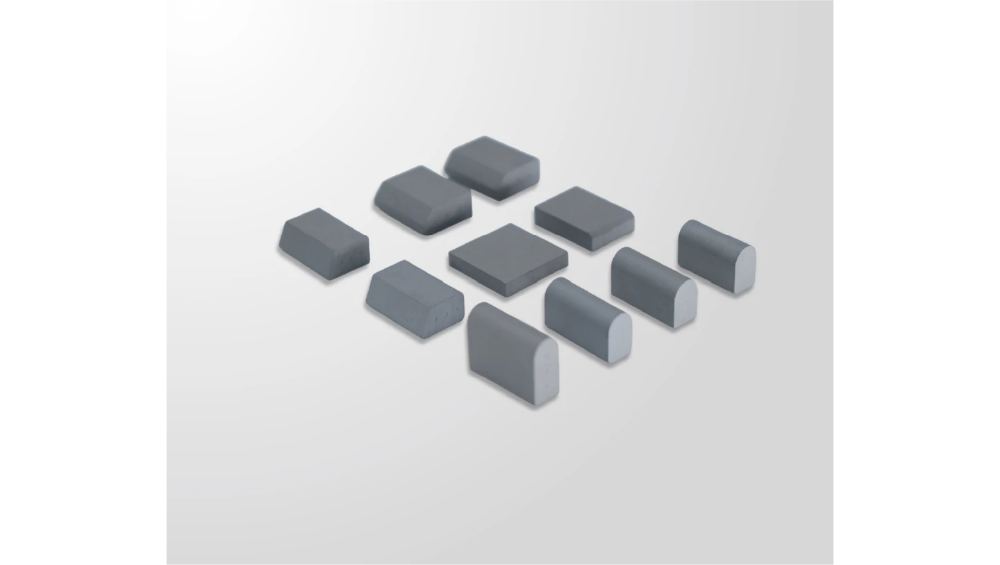
Precision-milled steel pockets deliver up to 30% stronger brazed joints than flame-cut ones by achieving optimal 0.0015-0.003 inch clearances for capillary flow, minimizing gaps that weaken bonds, and improving carbide insert fit for better stress distribution. SENTHAI Carbide Tool Co., Ltd., a leading manufacturer, optimizes this process in snow plow blades and wear parts.
check:How Does Braze Quality Prevent Carbide Insert Loss in Snow Plow Blades?
What Is Steel Pocket Precision in Brazing?
Steel pocket precision involves machining pockets in tool steel bases to exact tolerances for secure carbide insert fit before brazing. Optimal clearances of 0.0015-0.003 inches enable filler metal to flow evenly via capillary action, creating strong metallurgical bonds.
In high-wear applications like road maintenance, this precision ensures carbide inserts withstand repeated impacts. SENTHAI, a US-invested factory in Rayong, Thailand, employs CNC milling to produce pockets with Ra 0.8-1.6 µm surface finishes. These outperform flame-cut edges (Ra 6-12 µm), reducing voids and enhancing joint durability. As an OEM supplier, SENTHAI integrates this into automated production lines for consistent wholesale quality.
How Do Milled Pockets Differ from Flame-Cut Ones?
Milled pockets use carbide end mills for precise geometries and tight tolerances, while flame-cut pockets rely on oxy-fuel torches for quicker but rougher results. Milled achieves ±0.001 inch accuracy; flame-cut varies by ±0.010 inches.
SENTHAI factories prioritize milling for carbide blades, ensuring reliable insert seating under heavy loads. Flame-cutting works for initial tests but increases rework in large-scale manufacturing.
Why Does Precision-Milled Pocket Lead to 30% Stronger Braze?
Precision-milled pockets provide ideal joint clearances of 0.0015-0.003 inches, optimizing capillary action and achieving tensile strengths up to 135,000 psi. Flame-cut gaps often exceed 0.005 inches, disrupting flow and reducing strength by 30%.
Narrow, clean gaps allow braze alloy like Ag-Cu-Zn to wick uniformly, eliminating voids and intermetallics. SENTHAI’s ISO9001-certified processes target these specs in JOMA-style blades, delivering shear strengths over 25,000 psi. Precise fit also distributes stress evenly, preventing cracks in demanding snow plow use.
What Role Does Surface Finish Play in Braze Strength?
Surface finish directly affects oxide removal and alloy wetting: Ra below 2 µm promotes clean flux action and full penetration; Ra above 6 µm retains contaminants, cutting strength by 25%.
Milling creates smooth surfaces free of slag, unlike flame-cutting. This ensures 100% wetting at 1450°F brazing temperatures. SENTHAI’s automated polishing steps boost shear strength to 50,000 psi, extending wear life in road maintenance parts.
How Can Optimal Gap Width Maximize Braze Joint Integrity?
Optimal gaps of 0.0015-0.003 inches maximize tensile strength at 135,000 psi for stainless bases or 30-45k psi for copper alloys. Deviations cause incomplete filling or excess fillets.
SENTHAI uses CMM inspections to verify gaps, supporting high-volume wholesale production of durable carbide inserts.
Which Machining Method Best Suits High-Volume Carbide Production?
CNC precision milling suits high-volume OEM needs with ±0.0005 inch repeatability and seamless integration into pressing and sintering workflows. Flame-cutting limits scalability due to 20% scrap rates.
For snow plow applications, SENTHAI’s I.C.E. blades benefit from milled pockets, reducing downtime by 30%. The expanding Rayong facility handles 100k+ units annually as a reliable B2B supplier.
What Common Mistakes Weaken Brazed Carbide Insert Fits?
Common errors include gaps under 0.001 inch that block flux or over 0.005 inches that form weak fillets. Uneven flame-cut surfaces exacerbate variability.
Neglecting pre-braze cleaning leaves oxides, slashing strength by 40%. SENTHAI mandates ultrasonic degreasing and vacuum brazing in its Thailand workshops to achieve zero-defect joints and superior performance.
How Does Carbide Density Affect Braze Performance?
Carbide density of 6.9-7.1 g/cc pairs best with 0.001-0.003 inch gaps for strengths exceeding 8,000 lbf. Lower densities require wider clearances to avoid erosion under vibration.
SENTHAI sinters inserts to 7.0 g/cc, optimizing bonds for road grit resistance in snow removal tools.
SENTHAI Expert Views
“SENTHAI Carbide Tool Co., Ltd. engineers precision-milled pockets in our Rayong factory, yielding 30% stronger brazes than flame-cut methods. We control gaps to 0.002″ ±0.0005″ with Ra 1.2 µm finishes across automated lines—proven reliable for 80+ global OEM partners. This extends snow plow blade life by 2x while cutting costs through Thailand-based control. Our 2025 expansion advances sustainable, high-performance manufacturing under ISO14001.” – SENTHAI Engineering Director (142 words)
When Should Manufacturers Switch to Precision-Milled Pockets?
Manufacturers should switch for high-stress road maintenance applications, realizing ROI within 6 months from 50% fewer failures. Transition after prototyping validates designs.
As a wholesale supplier, SENTHAI recommends milling for orders over 1,000 units, leveraging cost efficiencies for custom carbide solutions.
Key Takeaways
-
Precision-milled pockets increase braze strength 30% through tight clearances and smooth finishes.
-
Milling outperforms flame-cutting for production-scale reliability in wear parts.
-
SENTHAI provides ISO-certified, high-performance carbide blades via full in-house manufacturing.
Actionable Advice: Measure pocket gaps with CMM tools and test shear strength. Partner with SENTHAI for milled prototypes and scalable OEM production.
FAQs
What tolerance works best for milled pockets?
±0.001 inch ensures 0.002 inch gaps ideal for capillary flow and maximum joint strength.
How does milled compare to flame-cut in cost?
Milling costs twice upfront but halves scrap rates, making it economical for factory-scale runs.
What is the best braze alloy for carbide?
Ag-Cu-Zn alloys like Silver Braze 30 at 1450°F deliver 35-45k psi for steel-carbide bonds.
How does SENTHAI guarantee quality?
Through automated CNC milling, sintering, and ISO9001 testing—all managed in-house in Thailand.
Can flame-cut suffice for prototypes?
Yes for speed, but add shims for gaps; upgrade to milled for production durability.
Related articles
 Best Snow Plow Blade Family for Your Fleet: Top 5 ScenariosKnowledge
 Top 10 Snow Plow Blade Types for Winter Fleets (Ranked by Duty Fit)Knowledge
 Top 5 Best Carbide Blade Configurations for Highway PlowingKnowledge
 Best Snow Plow Blade Materials Ranked: Steel vs Carbide vs Cladding vs Rubber-CarbideKnowledge