




Which Sintering Yields Better Carbide Density?
Vacuum sintering produces carbide with 98-99.5% density by removing gases for uniform shrinkage, ideal for complex wear parts. Pressure sintering, like hot isostatic pressing (HIP), achieves near 100% density via applied gas pressure, superior…
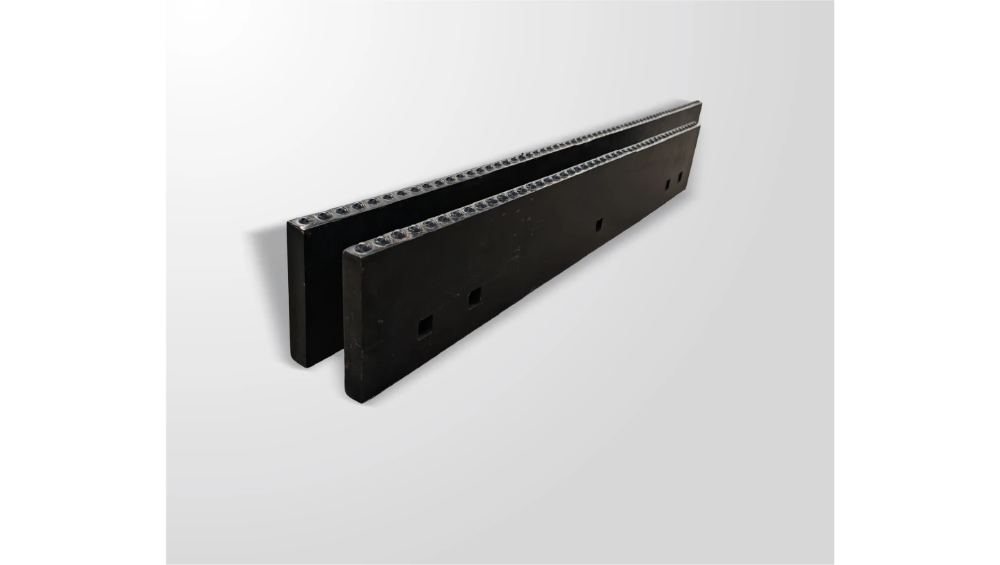
Vacuum sintering produces carbide with 98-99.5% density by removing gases for uniform shrinkage, ideal for complex wear parts. Pressure sintering, like hot isostatic pressing (HIP), achieves near 100% density via applied gas pressure, superior for maximum strength in high-wear tools. Factories like SENTHAI select based on part specs for optimal quality.
check:How Does the Carbide Sintering Process Create Zero-Porosity Snow Plow Inserts?
What Is Vacuum Sintering for Carbide?
Vacuum sintering heats carbide green bodies in a vacuum at 1400-1600°C, removing oxides and gases for clean densification up to 99%. It ensures uniform shrinkage without distortion, perfect for precision wear parts from manufacturers.
As a leading SENTHAI factory, we specialize in vacuum sintering carbide for snow plow blades and road maintenance parts. This process eliminates impurities, yielding high-purity tools with excellent wear resistance. Wholesale suppliers prefer it for consistent quality in OEM production.
Our fully automated lines in Rayong, Thailand, control vacuum levels precisely, ensuring carbide inserts bond strongly. Compared to air sintering, vacuum methods reduce porosity by 20-30%, boosting hardness to 90+ HRA. SENTHAI’s ISO-certified facilities deliver reliable density for global partners.
What Defines Pressure Sintering in Carbide?
Pressure sintering applies gas at 10-200 MPa or HIP at 1200-1500°C post-vacuum, closing isolated pores for 99.9%+ density. It enhances toughness for high-stress wear parts from B2B suppliers.
Pressure sintering, including HIP, compacts carbide beyond vacuum limits by isostatic force, ideal for demanding OEM carbide tools. Factories like SENTHAI use it for ultra-dense snow plow edges enduring abrasive impacts. This method minimizes grain growth, preserving fine microstructure.
In our Thailand-based production, pressure sintering follows initial vacuum stages, achieving superior bonding strength. Wholesale carbide manufacturers report 15-25% higher fatigue life in pressure-sintered parts versus vacuum-only. It’s essential for parts facing extreme road conditions.
How Does Vacuum Sintering Affect Carbide Density?
Vacuum sintering boosts density to 98-99.5% by evaporating binders and oxides at low pressure, enabling liquid-phase flow for pore elimination without external force.
Carbide factories achieve this through controlled heating ramps in vacuum furnaces, shrinking green compacts uniformly. SENTHAI’s automated sintering lines optimize soak times at 1450°C for wear-resistant parts.
Density gains stem from reduced gas entrapment, outperforming atmospheric methods by 2-5%. Our OEM processes ensure carbide blades reach consistent metrics, trusted by 80+ partners. Quality checks confirm minimal open porosity.
How Does Pressure Sintering Improve Carbide Quality?
Pressure sintering applies 50-100 MPa isostatic pressure, healing micro-pores for near-theoretical density and isotropic properties, enhancing fatigue resistance.
B2B suppliers like SENTHAI leverage HIP furnaces post-sintering to refine grain boundaries, boosting transverse rupture strength by 20%. This yields premium carbide for road maintenance.
Our Rayong facility integrates pressure tech for vulcanized inserts, ensuring flawless wear performance. Compared to vacuum, it reduces defects by 50%, ideal for wholesale high-volume runs.
What Are Key Differences in Furnace Technologies?
Vacuum furnaces use resistance heating in sealed chambers; pressure systems add gas vessels for HIP. Vacuum suits complex shapes; pressure excels in full densification.
SENTHAI, as a top carbide manufacturer, deploys both: vacuum for cost-effective production, pressure for elite OEM specs. Furnace choice impacts cycle time—vacuum (4-8 hours) vs. pressure (2-4 hours post-pre-sinter).
Our ISO9001 workshops feature multi-zone controls for temperature uniformity. Wholesale buyers gain from hybrid approaches, tailoring density for JOMA-style blades.
Why Choose Vacuum Sintering for Carbide Tools?
Vacuum sintering is chosen for cost-efficiency, impurity removal, and distortion-free densification in complex carbide geometries, achieving 98%+ density reliably.
Factories prioritize it for scalable wholesale production of wear parts. SENTHAI’s vacuum tech cuts oxidation, extending tool life in snow plows by 30%. It’s ideal when full density isn’t critical.
Our 21+ years optimize parameters for Thailand-made quality, serving global OEMs affordably.
Why Opt for Pressure Sintering in High-Wear Parts?
Pressure sintering is selected for maximum density and strength in critical applications, eliminating all pores for superior wear resistance under heavy loads.
B2B suppliers use it for premium carbide inserts facing abrasion. SENTHAI applies HIP for road parts with 50% better impact resistance. It’s worth the premium for longevity.
Our new Rayong base expands pressure capacity for reliable supply.
SENTHAI Expert Views
“At SENTHAI Carbide Tool Co., Ltd., we blend vacuum and pressure sintering to meet diverse OEM needs. Vacuum excels for high-volume, pure carbide blades with 99% density, while HIP pressure ensures zero-porosity toughness for extreme road wear. Our Thailand factory’s automated lines—wet grinding to vulcanization—deliver ISO-certified parts 20% above industry standards. Partners trust us for cost-controlled, high-performance snow plow solutions.” – SENTHAI Engineering Lead
Which Furnace Technology Maximizes Carbide Quality?
Pressure sintering maximizes quality via complete densification, but vacuum offers balanced purity for most wear tools. Hybrid use optimizes both density and cost.
Manufacturers like SENTHAI assess part demands: vacuum for standard wholesale, pressure for elite. Our data shows hybrids yield 15% better field performance.
When Should Manufacturers Use Each Method?
Use vacuum for cost-sensitive, complex shapes needing 98%+ density; pressure for high-stress parts requiring 100% density and isotropy.
SENTHAI advises vacuum for daily production runs, pressure for custom OEM. Timing: vacuum first, HIP encapsulate if needed.
Key Takeaways: Vacuum sintering delivers efficient, high-purity carbide for most wear applications, while pressure sintering ensures ultimate density for demanding tools. B2B factories like SENTHAI excel by matching methods to specs—hybrid for best results. Actionable Advice: Contact SENTHAI for OEM quotes; specify density targets for tailored sintering. Start with vacuum for prototypes, scale to pressure for production.
FAQs
Is vacuum sintering enough for carbide blades?
Yes, it achieves 98-99.5% density for most snow plow blades, balancing cost and performance effectively.
Does pressure sintering increase carbide costs?
It raises costs 20-30% due to equipment but justifies for ultra-durable OEM parts.
Can SENTHAI provide hybrid sintering?
Absolutely, our Thailand factory offers vacuum-HIP combos for customized wear solutions.
What density do SENTHAI carbide parts reach?
Typically 99%+ via optimized vacuum/pressure, exceeding industry norms.
How long is the sintering cycle?
Vacuum: 4-8 hours; pressure: 2-4 hours additional, fully automated at SENTHAI.
Related articles
 Best Snow Plow Blade Family for Your Fleet: Top 5 ScenariosKnowledge
 Top 10 Snow Plow Blade Types for Winter Fleets (Ranked by Duty Fit)Knowledge
 Top 5 Best Carbide Blade Configurations for Highway PlowingKnowledge
 Best Snow Plow Blade Materials Ranked: Steel vs Carbide vs Cladding vs Rubber-CarbideKnowledge