The Industrial Edge A Sourcing Guide to Heavy-Duty Carbide Scraper Blades for Enterprise Operations

Industrial carbide scraper blades deliver superior edge retention under high friction temperatures where standard steel blades experience thermal softening above 300°C. This guide is essential for industrial procurement officers, conveyor system maintenance engineers, and commercial floor renovation contractors who operate in harsh, continuous-friction environments. Note that carbide performance depends on attack angle, material compatibility, and proper installation—tungsten carbide may not be ideal for every impact environment or substrate condition.

Why Tungsten Carbide Outlasts Hardened Tool Steel in Commercial Demolition

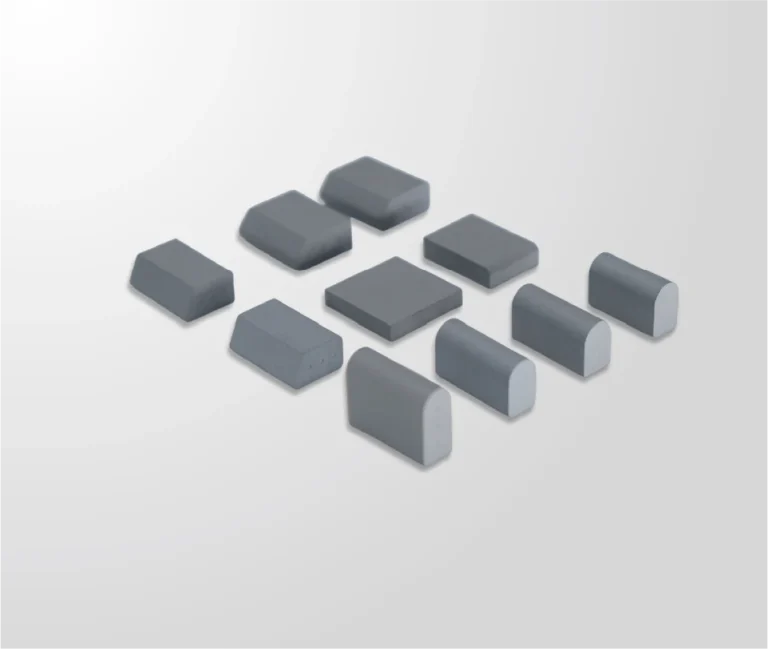
The true metric of an industrial scraper blade’s efficiency is not its initial sharpness but its micro-structural edge retention under high friction temperatures. Standard steel or hardened alloy scraper edges experience localized thermal softening within hours of heavy concrete or metal scraping, leading to immediate deformation. Tungsten carbide grains sit among the hardest materials available outside of diamond, positioned in a metallic cobalt matrix that provides flexibility and impact resistance.

Edge retention testing shows tungsten carbide delivers 5-10 times longer sharp life compared to tool steel and 2-3 times longer than standard carbide knives. This chemical structure provides an exceptional hot-hardness profile, maintaining a crisp, non-gouge, high-efficiency shearing edge even during dry-scraping operations that vaporize competitive steel tooling.

For commercial demolition and floor edging applications, the choice between steel and carbide becomes a lifecycle-cost decision. Contractors removing hardened epoxy resins from industrial concrete floors face repeated blade changes when using steel tooling. The thermal softening point of steel occurs well below the friction temperatures generated during aggressive epoxy removal, where power tools like grinders and scarifiers create sustained high-heat contact.

Tungsten carbide blades can be the most cost-effective means to provide superior cleaning power with vulcanized or mechanically-spliced belts in bulk material handling applications. The material’s hardness provides wear resistance while the cobalt binder delivers the toughness required for impact survival when striking hidden anchors or uneven pavement.

Four Core Industrial Sector Application Blueprints

Commercial Demolition and Floor Edging

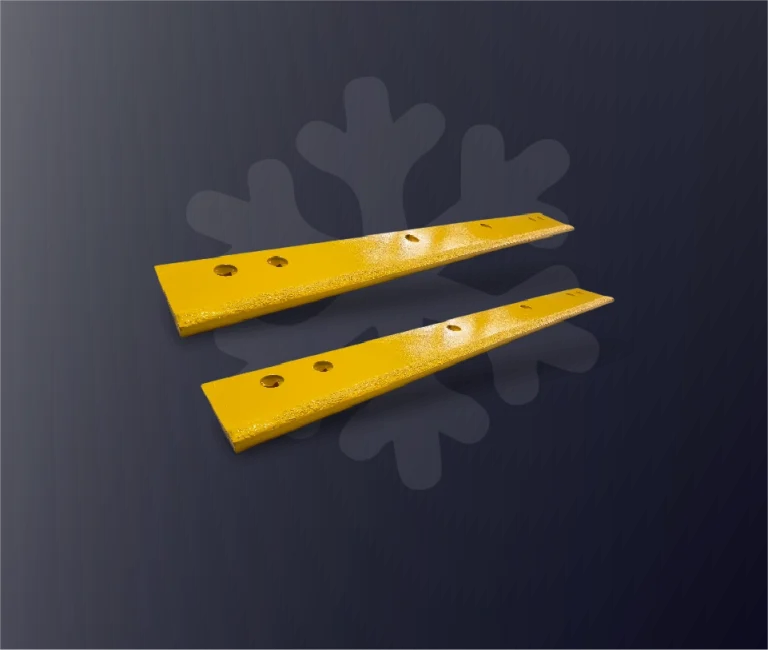
Floor scraper blades are hardened cutting edges designed to attach to manual, electric, or ride-on floor scrapers. Their purpose is to shear, lift, or peel floor coverings and residues from the substrate without damaging the underlying surface. For epoxy removal in industrial settings, mechanical removal using power tools like grinders, scarifiers, or scrapers is often necessary to efficiently strip thick, heavily adhered coatings.

The angle at which the blade contacts the floor plays a major role in performance. In most scraping operations, less blade angle is better. Too much blade angle makes removal inefficient and causes the blade edge to dull faster. Ride-on scrapers work better with carbide blades for ceramic tile removal, requiring the slide plate set low to the floor with just enough blade angle to lift the front caster wheel.

READ  Heavy-Duty Carbide Snow Plow Edge Solutions Offering the Best Performance for Manufacturers and Suppliers

Rotational grinders equipped with carbide chips are ideal for aggressive removal of thick, well-adhered epoxy or heavy duty bonding adhesive on industrial-sized concrete floors. Floor scrapers provide a powerful alternative for smaller surface areas where heat guns apply concentrated heat to soften cured epoxy in the 300°F to 500°F range.

Bulk Material Handling and Conveyor Cleaning Systems

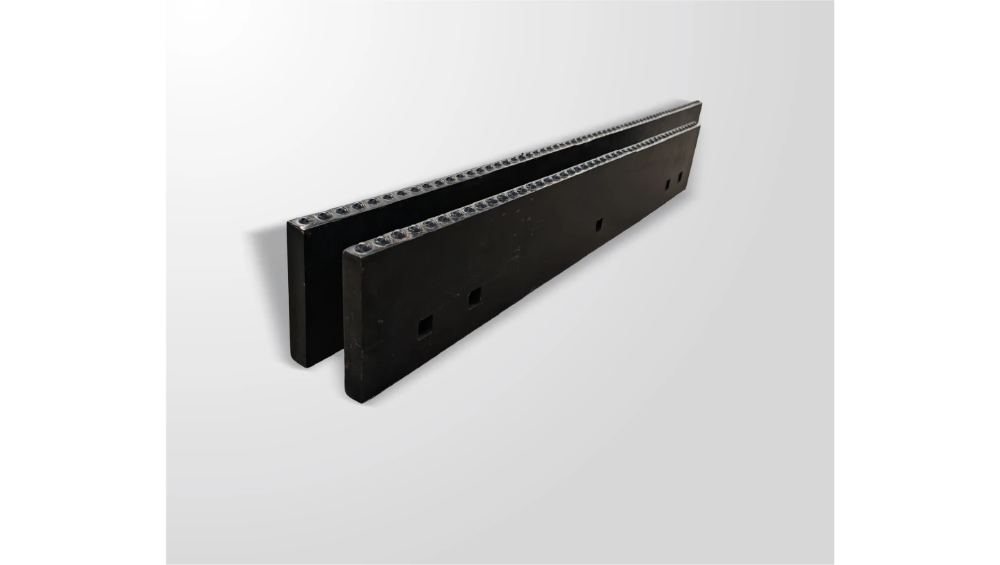
Tungsten carbide blades provide a long service life with a high level of resistance to impact damage and/or acid leaching in conveyor belt cleaning applications. The specially designed blades maintain cleaning effectiveness even in harsh environments including coal slurry, peat, and corrosive conditions.

Belt conveyors rarely perform their tasks to perfection without attention. Facilities still using only primary cleaners eliminate only 40 to 50% of carryback, making professional specification of primary and secondary cleaners essential. Secondary cleaners must be metal-tipped for optimal performance, with urethane primary cleaners acceptable but requiring carbide secondary cleaning surfaces.

The belt scraper lifespan can rise dramatically with proper carbide selection. One case study shows lifespan increasing from an average of 177 hours to approximately 1600 hours when switching to advanced belt cleaner systems. This represents nearly nine times longer service life, directly reducing maintenance downtime in bulk material handling operations.

High-Precision Machine Tool Scraping

Hand scraping carbon steel requires careful control of the angle with which the scraper blade digs into the work surface. Chip thickness is controlled by limiting this attack angle through additional surfaces on the carbide insert, lifting or lowering the scraper handle rather than using downward pressure.

scraper blade geometry determines performance in precision applications. The insert angle relative to the workpiece—approximately 15 degrees in classical hand scraping—gives positive geometry that controls chip formation. Grinding the cutting surface at 25 degrees provides approximately 10 degrees positive geometry for optimal material removal.

Infrastructure Maintenance and Coating Removal

Removing glued-down flooring requires carbide blades for ride-on scrapers, with the slide plate set low and blade angle adjusted just enough to lift the front caster wheel off the ground. In most scraping operations, less blade angle is better because too much angle makes removal inefficient and dulls the blade edge faster.

For ceramic tile removal, fracturing tiles with a sledge hammer before scraping makes the process faster and easier for the machine. Carbide scrapers won’t damage the concrete underneath and are ideal for glue removal on floors that will be polished.

Epoxy removal in industrial environments offers multiple effective methods from heat gun and scrape techniques for precision work to mechanical tools like grinders and shot blasters for large-scale removal. Power tools equipped with carbide chips handle thick, well-adhered epoxy coatings where chemical solvents alone prove insufficient.

The Critical Engineering Relationship Between Attack Angle and Shear Force

The shearing angle has a great effect on shearing force and important effects on twisting and edge quality in metal fabrication processes. A higher shearing angle decreases the amount of force required but increases the stroke length. As a rule, the shearing angle is less than 3 degrees for optimal performance.

READ  What Makes a Carbide Chainsaw Blade Superior for Industrial Use?

For scraper blade applications, controlling chip thickness requires limiting the angle with which the blade digs into the work surface. This is achieved through additional surfaces on the carbide insert that provide mechanical advantage for lifting or lowering the handle rather than applying downward pressure. The wrong attack angle creates excessive force that can cause carbide to shatter when striking hidden obstacles.

Blade clearance setting is critical for edge quality. For mild steel up to 10 mm thickness, blade clearance should be 0.06 mm per mm of plate thickness. For plates thicker than 10 mm, use 0.04 mm per mm. Maintaining blade wear under control through frequent sharpening keeps the job running smoother.

To reduce crooking defects, use a smaller shearing angle and make pre-cuts along the rolling direction. To improve edge quality, adjust the blade clearance and keep wear under control through regular maintenance.

Common Procurement Mistakes That Drive Up Operational Costs

Buying only by unit price instead of lifecycle cost creates hidden expenses. Low unit price can create hidden costs if blade life, quality control, delivery, or after-sales support is weak. Wear life depends on road surface, plow pressure, ice conditions, obstacles, speed, operator practice, and maintenance—claims should be checked against documentation [CERTAINTY:general].

Assuming carbide is best for every road surface or substrate ignores material limitations. Carbide can improve wear resistance in suitable applications but may not be ideal for every impact environment. The cobalt matrix provides toughness, but excessive impact from manholes, curbs, bridge joints, and uneven pavement can exceed fracture toughness limits.

Ordering without verifying dimensions, bolt patterns, mounting systems, and equipment compatibility causes installation delays. Technical details should be confirmed before procurement, especially for blade angles, clearance settings, and machine compatibility.

Treating wear-life claims as universal rather than route-dependent creates procurement risk. A belt scraper lifespan increase from 177 to 1600 hours represents specific operating conditions, not guaranteed performance across all applications.

Failing to ask about batch traceability, QC process, material sourcing, and after-sales support creates supply-chain vulnerability. Suppliers should provide documentation proving material origin and batch consistency [CERTAINTY:general].

Ignoring delivery reliability before peak operational demand creates downtime risks. Winter season demand or extended maintenance windows require confirmed delivery schedules before procurement commitment [CERTAINTY:general].

Choosing a blade design without considering packed ice versus loose snow versus abrasive pavement (analogous to epoxy thickness, concrete hardness, or tile type) ignores operating-condition factors that determine performance.

Assuming supplier certifications, patents, or export history without checking documents creates procurement risk. Verification of ISO certifications, patent documentation, and export records should occur before bulk orders [CERTAINTY:general].

Failing to trial sample blades before scaling to fleet-wide procurement creates performance uncertainty. Field testing with representative materials and operating conditions validates supplier claims before commitment [CERTAINTY:general].

READ  How Does Today's Weather Impact Snow Plow Blade Performance?

How Hot-Hardness Properties Benefit Dry Metal Scraping Applications

The hot-hardness property of tungsten carbide benefits dry metal scraping by maintaining edge integrity at temperatures where steel softens. Tungsten carbide grains provide hardness for wear resistance while the cobalt matrix delivers toughness for impact survival. This dual property enables continuous dry-scraping operations without the thermal degradation that defeats steel tooling.

Frequent sharpening helps jobs run smoother when using carbide blades. If you have a helper, keep them busy sharpening carbide blades so you have a constant supply of sharp blades. The self-sharpening geometry of properly angled carbide inserts can eliminate operational expenditure of manual tool-regrinding cycles in many applications.

Increasing the angle between the machine blade and floor signals it’s time to sharpen or replace a blade. Angling the blade may indicate wear that reduces cutting efficiency. Regular inspection and maintenance prevent the performance degradation that increases operational costs.

Frequently Asked Questions

Why do tungsten carbide scraper blades outlast hardened tool steel in commercial demolition?

Tungsten carbide outlasts hardened tool steel because it maintains edge retention at friction temperatures where steel experiences thermal softening above 300°C. The tungsten carbide grains provide hardness while the cobalt matrix delivers impact resistance, delivering 5-10 times longer sharp life compared to tool steel.

What is the optimal carbide grade specification for high-speed conveyor belt scrapers?

Optimal carbide grade specification requires verifying hardness, corrosion resistance, and impact damage resistance from the supplier. The specially designed tungsten carbide blades provide long service life with high resistance to impact damage and acid leaching in harsh environments.

How do industrial carbide scraper blades reduce maintenance downtime in bulk material handling?

Industrial carbide scraper blades reduce maintenance downtime by extending scraper lifespan dramatically—one case shows improvement from 177 hours to approximately 1600 hours of service life. This nine-fold increase directly reduces replacement frequency and maintenance labor in bulk material handling operations.

What parameters prevent carbide scrapers from shattering when striking hidden anchors on concrete floors?

Preventing carbide shattering requires proper attack angle control (less blade angle is better), maintaining blade clearance at 0.06 mm per mm of thickness for thin materials, and ensuring the cobalt matrix provides sufficient fracture toughness for impact events.

How does the hot-hardness property of tungsten carbide benefit dry metal scraping applications?

Hot-hardness benefits dry metal scraping by maintaining edge integrity at temperatures where steel softens, enabling continuous operation without thermal degradation. The tungsten carbide grain hardness provides wear resistance while the cobalt binder delivers the toughness required for impact survival during scraping operations.

References

  1. Why Tungsten Carbide Blades Are Used On Belt Cleaners

  2. Hardness vs. Toughness: Why Tungsten Carbide Knives Deliver Both

  3. Shearing angles helps improve blanks from coil cutting

  4. Top 5 Oversights | Number 2: Inadequate Belt Cleaning

  5. How to Remove Epoxy: Industrial Methods