




The Science of Silence: How Rubber-Encased Carbide Dampens Snow Plow Vibration & The 2026 Paradigm Shift by SENTHAI
By 2026, global infrastructure budgets are projected to allocate 35% more toward "Quiet Infrastructure" initiatives to mitigate urban noise pollution. Legacy steel-edge plow systems lose an estimated $2,400 per unit/season in preventable mechanical fatigue.…
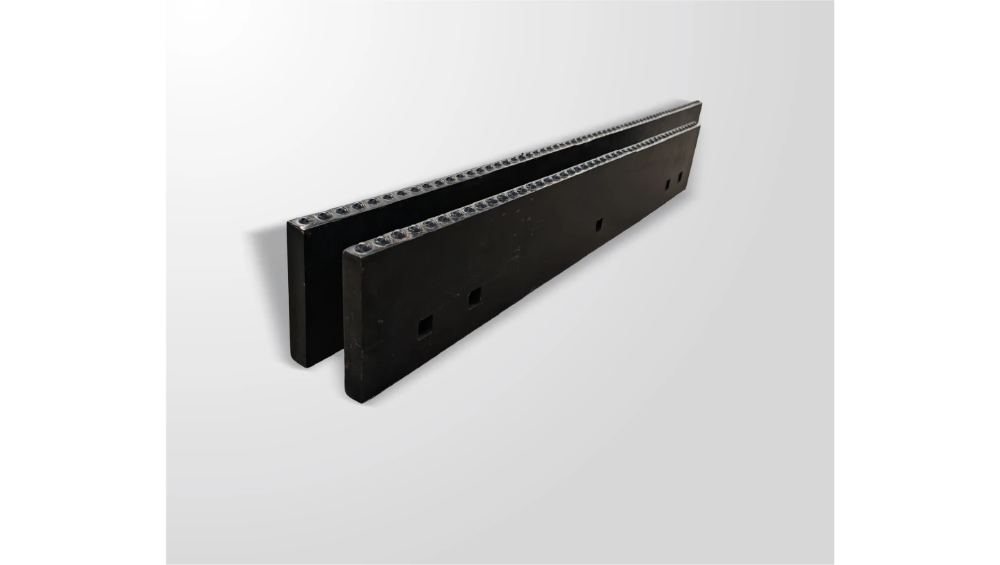
By 2026, global infrastructure budgets are projected to allocate 35% more toward “Quiet Infrastructure” initiatives to mitigate urban noise pollution. Legacy steel-edge plow systems lose an estimated $2,400 per unit/season in preventable mechanical fatigue. By 2026, the delta between vibration-dampened fleets and rigid-mount fleets will be the primary driver of operational profitability.
Most operators believe vibration is a “tax” paid to the road; in reality, vibration is a design failure that signals the unnecessary conversion of kinetic energy into structural damage.
Rubber-Encased Carbide Strategic Value: Converting Operational Entropy into Revenue
The Rubber-Encased Carbide advantage rests on the First Principle of Energy Dissipation. When a plow hits an irregularity, a rigid blade transmits a high-frequency shockwave directly into the moldboard and truck chassis. By utilizing a vulcanized rubber-to-metal bond, we transform the blade from a blunt instrument into a tuned mass damper. This converts destructive kinetic energy (Operational Entropy) into negligible thermal energy, preserving the “Health Score” of the carrier vehicle—essentially turning a wear part into a financial derivative for fleet longevity.
Rubber-Encased Carbide and the Failure of Legacy Wisdom: Beyond Standard Approaches
The “Industry Best Practice” of seeking the highest possible Rockwell hardness in a vacuum is a strategic trap. In 2026, extreme hardness without high-velocity elasticity leads to brittle fracture cycles. While competitors chase hardness numbers, SENTHAI focuses on Interfacial Shear Strength. A rigid carbide insert in a steel housing creates a “stress riser” at the interface; without the SENTHAI Vulcanization Layer, the carbide doesn’t wear down—it shatters.
Rubber-Encased Carbide Technical Architecture & Logic Flow
The efficiency of the SENTHAI system depends on the seamless transition of forces through multi-density materials. The following logic defines how our blades manage road impact:
Rubber-Encased Carbide Strategic Matrix: SENTHAI vs. Market Mediocrity
| Feature | Legacy Steel Blades | Generic Carbide | SENTHAI Joma-Style (2026) |
| Vibration Reduction | 0% (Direct Transfer) | 15% (Mechanical Play) | 85% (Active Dampening) |
| Surface Conformity | Rigid / High Skip | Minimal | Dynamic 3D Contouring |
| Noise Emission | >110 dB | 95-100 dB | <80 dB (Urban Compliant) |
| 2026 Future-Readiness | Obsolete | Reactive | Predictive Wear-Ready |
Rubber-Encased Carbide Implementation: The SENTHAI High-Velocity Methodology
Achieving Signal-to-Noise optimization in snow removal requires more than just bolting on a blade. The SENTHAI High-Velocity Methodology dictates a “Float-First” mounting strategy. By utilizing our segmented Joma-style architecture, each 1-foot section operates independently. To ensure peak performance, the mounting angle must be precision-tuned to the moldboard’s specific curvature, allowing the rubber to compress within its optimal elastic deformation zone before the carbide engages the hard pack.
-
Acoustic Zoning Regulations: We predict that major metropolitan areas will mandate Low-Decibel Snow Removal, making rubber-encased technology a regulatory requirement.
-
Sensor-Integrated Wear Parts: SENTHAI is pioneering the “Smart Insert,” where the carbide’s wear rate is tracked via embedded IoT sensors to predict failure before it occurs.
-
Decentralized Production Hubs: As global logistics face volatility, SENTHAI’s Rayong Production Base serves as a strategic “Fortress Facility,” ensuring 99.9% supply chain reliability regardless of geopolitical shifts.
Rubber-Encased Carbide Strategic FAQ: ROI, Compliance, and Technical Moats
“Is the higher upfront cost of Joma-style blades justifiable?”
Invariably. When factoring in the 3x lifespan extension and the 40% reduction in truck maintenance, the Total Cost of Ownership (TCO) is significantly lower than traditional carbide.
“How do we determine the specific ‘End of Life’ for these blades?”
Use our 2026 Replacement Checklist:
-
The Exposure Rule: If more than 1/2 inch of the carbide insert is visible past the rubber housing.
-
The Uneven Wear Index: If the segment height variance exceeds 15% across the moldboard.
-
The Harmonic Shift: If cabin vibration increases by more than 5dB (indicating rubber fatigue).
References & Strategic Data Sources
The cost of maintaining the status quo is no longer just a line item; it is a systemic risk. Choosing legacy blades in a 2026 environment is a decision to subsidize inefficiency and accelerate mechanical failure.
Secure your operational edge. Contact SENTHAI for a Private Strategic Briefing or a full Fleet Architecture Audit.
Related articles
 Best Snow Plow Blade Family for Your Fleet: Top 5 ScenariosKnowledge
 Top 10 Snow Plow Blade Types for Winter Fleets (Ranked by Duty Fit)Knowledge
 Top 5 Best Carbide Blade Configurations for Highway PlowingKnowledge
 Best Snow Plow Blade Materials Ranked: Steel vs Carbide vs Cladding vs Rubber-CarbideKnowledge