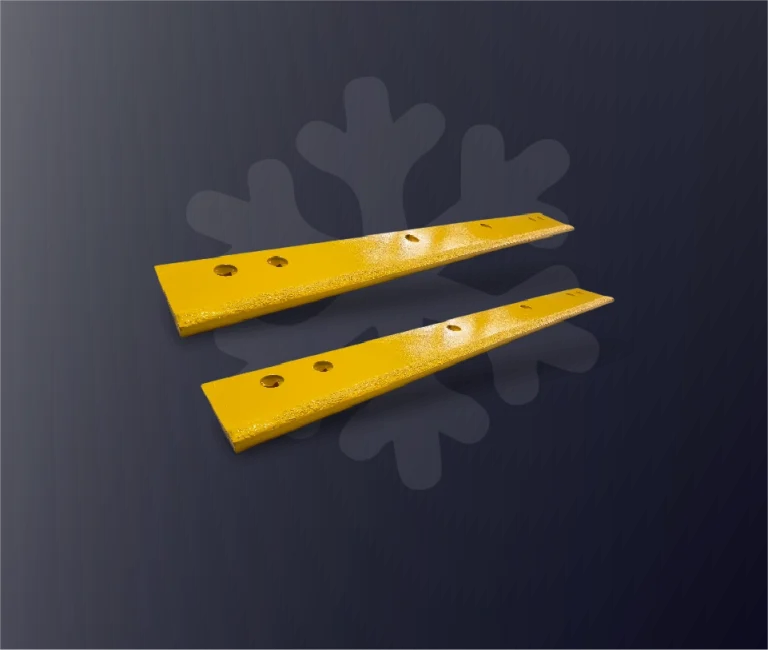
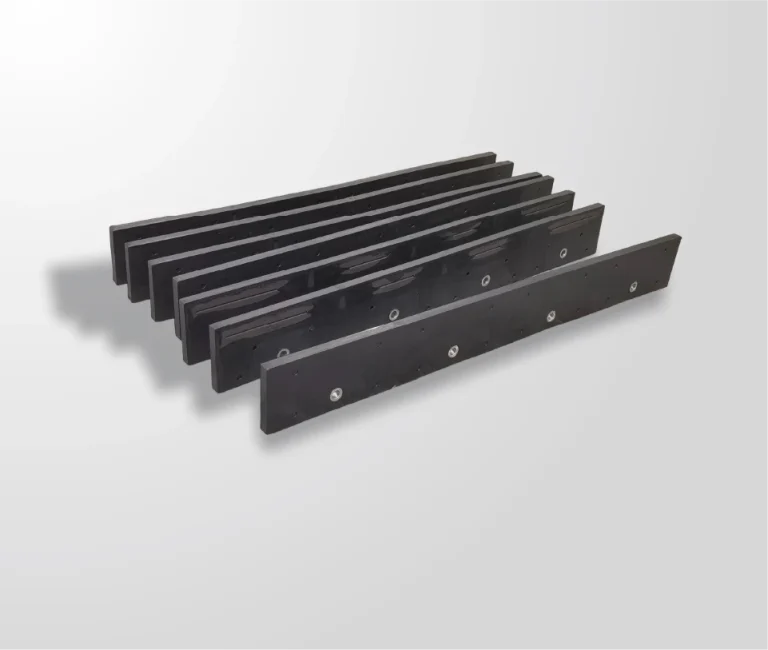
Snow Plow Blade Materials Compared: Steel Rubber Polyurethane and Carbide Performance

Choosing the right snow plow blade determines whether your fleet clears roads efficiently or spends winters replacing worn equipment. The material choice—steel, rubber, polyurethane, or tungsten carbide—directly impacts wear life, cutting power, road surface protection, and total cost of ownership across highway, urban, and residential snow removal operations.

Most municipal fleet managers and commercial snow removal contractors start with steel because it’s cost-effective and durable, but they end up replacing blades after just a few snow events to one season. Carbide blades last 3+ seasons on average, delivering 10–20× longer wear life than steel, though they chip on uneven terrain. Understanding these trade-offs before procurement prevents costly mistakes during your first winter.

What Is a Snow Plow Blade? Core Definition and Decision Frame

A snow plow blade is the large, sturdy surface attached to a snowplow vehicle that pushes snow and ice off roads, parking lots, and other surfaces during heavy snowfall. The cutting edge—the part making contact with the ground—is critical for effective snow and ice removal while protecting underlying pavement.

The primary procurement decision isn’t about blade size or mounting style. It’s about material choice based on your operational context:

  • Highway/large-scale operations: Aggressive cutting power and maximum wear life matter most

  • Urban environments with bridge joints and manhole covers: Contour following and impact resistance prevent blade fracture

  • Residential/decorative pavement: Surface protection and flexibility prevent damage to costly pavement

  • ATV/residential light duty: Lightweight design with impact resistance for unpredictable terrain

Your decision frame should answer: “What snow and ice conditions do I face daily, what surfaces am I protecting, and how many hours per winter will this blade operate?”

Snow Plow Blade Materials Compared: Steel, Rubber, Polyurethane, and Carbide

MaterialWear LifeCutting PowerRoad ProtectionBest Use CaseUpfront Cost
SteelFew events to 1 yearHighPoor—causes road damageHighway, large-scale, low-speed on poor conditionsLow
Rubber6 months to 1 year with daily useLowExcellent—protects decorative pavementLight fluffy snow, residential, decorative surfacesLow
Polyurethane5× more resilient than rubberMediumGood—less harmful to roadsParking garage roofs, fragile membranes, slush scrapingMedium
Carbide3+ seasons average ; 10–20× steelExtremeGood—corrosion resistantHighway, extreme ice, high-use operationsHigh

Steel blades are the go-to for municipalities because they’re durable and cost-effective, but they cause road damage and wear quickly. They’re best for low-speed plowing on poor conditions where aggressive cutting matters more than surface protection.

Rubber blades are flexible and protect decorative pavement, making them ideal for light fluffy snow. However, they wear more quickly than steel and carbide since rubber isn’t hard or wear-resistant.

Polyurethane blades deliver 5× more resilience than rubber, dampen vibrations, and are less harmful to roads. They’re the right choice for slush scraping on fragile surfaces like parking garage roofs or rubber membranes.

Carbide blades use tungsten carbide—the hardest snow plow edge material. They deliver 10–20× longer wear life than steel, cut through toughest ice, and resist corrosion. The trade-off: carbide is brittle and may chip or crack on uneven terrain.

READ  Hardened Steel vs Carbide Plow Blades for Fleet Managers

Why Carbide Snow Plow Blades Deliver 10–20× Longer Wear Life

Tungsten carbide’s hardness creates the wear life advantage that makes carbide blades worth the higher upfront price for high-use operations. Unlike steel blades that develop a “crowning” effect—where the center wears faster than edges—carbide wears evenly across its face.

The performance data is consistent across industry sources:

  • Carbide delivers 3–5× longer wear lifespan than heat-treated steel

  • Up to 20× longer than carbon steel

  • Average 3+ seasons vs. steel’s few events to 1 year

  • 20–30× durability reduces replacement frequency and downtime

SENTHAI’s carbide technology uses tungsten carbide particle cladding that extends service life to 10× longer than carbon steel. Their carbide inserts are metallurgically engineered to maintain sharpness throughout grueling seasons, with superior bonding and wear resistance.

The corrosion resistance advantage is critical in winter environments where salt and moisture accelerate steel degradation. Over 5 seasons, a carbide blade may require zero replacements while steel blades need 3–5 changes—with associated downtime costs.

Operational Friction Points: When Carbide Chips, Back-Dragging Ice Damages Blades, and Urban Environments Break Rigid Edges

Carbide’s hardness creates a critical limitation that procurement managers must anticipate: carbide is brittle. On uneven terrain where the edge catches on bridge joints, manhole covers, or road contours, carbide may chip or crack. This isn’t a quality issue—it’s a material physics constraint.

Back-dragging ice destroys standard blades without a carbide kit. When you pull the blade backward over packed ice, the impact stress exceeds what rubber or steel can absorb repeatedly. Carbide inserts resist this damage, but standard blades without carbide protection fail quickly.

Urban environments present unique challenges. Bridge joints and manhole covers cause steel blades to develop crowning and require frequent changes. Rigid carbide edges fracture when they catch on these obstacles at high speed.

JOMA style blades solve this problem through their articulating design:

  • Carbide segments encased in high-quality rubber create a suspension system

  • Rubber cushions impact, reducing stress on carbide inserts

  • Articulating design follows road contours, preventing edge catch

  • Reduces noise and vibration, extending equipment lifespan

Speed matters: Steel blades perform better for low-speed plowing on poor conditions where aggressive cutting is critical. Carbide excels at high-speed highway plowing where consistent contact and wear life dominate performance.

JOMA Style Blades vs. Standard Carbide: Which Design Fits Your Operation?

The choice between JOMA style and standard carbide depends on your operational environment—not just budget. Both use tungsten carbide, but their design philosophy creates different performance profiles.

FeatureJOMA StyleStandard Carbide
DesignCarbide segments in rubber shell, articulatingInserts brazed into steel carrier
Impact resistanceRubber suspension cushions shockRigid—may chip on uneven terrain
Noise/vibrationSignificantly reducedHigher
Road contour followingExcellent—follows uneven surfacesLimited—rigid carrier
Best environmentUrban, rough pavement, bridge jointsHighway, large-scale, consistent surfaces
Cutting actionAggressive but cushionedConsistent clean scrape

JOMA style blades excel in urban environments where bridge joints, manhole covers, and uneven pavement would fracture rigid carbide. The rubber suspension reduces carbide fracture risk while maintaining cutting power. They’re also ideal for operations where noise and vibration reduction matters—less operator fatigue, extended equipment life.

SENTHAI’s JOMA style blades come in two sizes for skid steers and loaders:

  • 3-foot: 36″×6″×7/8″

  • 4-foot: 48″×6″×7/8″

They’re direct replacements for standard cutting edges, so you don’t need to modify your plow mount.

Standard carbide blades deliver consistent, clean scraping on large-scale highway operations where surfaces are predictable. They’re the most cost-effective choice for high-volume highway plowing where wear life dominates over contour following.

READ  How Commercial Snow Plow Blades Reduce Contract penalties and Fleet Downtime

For municipal fleets transitioning to longer-service-life solutions, JOMA style designs reduce maintenance frequency while protecting moldboard and frame from impact damage.

See SENTHAI’s snow plow blade collection to compare JOMA Style, standard carbide, and I.C.E. Blade options for your operation.

Snow Plow Blade Specifications: Spacing, Gauge, and Standard Sizes

Procurement specifications matter when replacing blades or ordering custom fabrication. Industry standards exist for punch spacing and gauge, but blade width varies by equipment type.

Punch spacing (holes along the cutting edge):

  • 3-3-12 highway punch: Most common for highway applications

  • Other spacing: Varies by manufacturer and equipment age

Gauge (distance from top of blade to center of hole):

  • 1-1/2″ gauge: Most common

  • Variations: 1″ for smaller pickups, center-drilled for highway plows

Blade width by equipment type:

  • V plows: 12″ thick × 12″ wide

  • Front-mounted plows: 1-1/2″ thick × 10″ wide

  • Underbody/graders: 1-1/2″ thick × 8″ wide

  • Jeeps/pickups: 1-1/2″ thick × 6″ wide

Standard dimensions from Schuyler Industrial Products:

  • Height: 8 9/16″

  • Wear surface: 3″

  • Depth: 6″

Custom fabrication is available with typical turnaround times ranging from days to weeks depending on complexity. When ordering replacements, verify your equipment’s punch spacing and gauge first— mismatches require adapter plates or mounting modifications.

Total Cost of Ownership: Upfront Price vs. 3–10 Season Lifespan

The higher upfront price of carbide blades creates financial advantage over time through reduced replacement frequency and downtime costs. here’s the TCO calculation framework:

TCO Formula (5-season horizon):

Steel blade scenario (assuming $200 upfront, $150 replacement):

  • 5 seasons ÷ 1 year lifespan = 4 replacements needed

  • TCO = $200 + ($150 × 4) + Downtime (4 blade changes)

  • TCO = $200 + $600 + Downtime = $800+

Carbide blade scenario (assuming $600 upfront, 3+ seasons):

  • 5 seasons ÷ 3.5 years lifespan = 1 replacement (maybe zero)

  • TCO = $600 + ($600 × 1) + Downtime (1 blade change)

  • TCO = $600 + $600 + Downtime = $1,200+ (but only 1–2 changes vs. 4–5)

The real savings come from downtime reduction:

  • 20–30× durability means fewer blade changes during storm season

  • Extended lifespan reduces maintenance frequency

  • Less operator time spent on blade changes = more time clearing roads

For high-use operations running 100+ hours per winter, carbide’s TCO advantage is clear. For low-use residential operations (10–20 hours per winter), steel’s lower upfront price may be more practical despite shorter lifespan.

When to Use Each Blade Type: Highway, Urban, Residential, and ATV Scenarios

Match your blade type to your primary operating environment—not your budget alone.

Highway/large-scale operations: Standard carbide blade is most cost-effective

  • Consistent clean scrape on predictable surfaces

  • Maximum wear life for high-volume plowing

  • Best for 50+ mile highway stretches

Urban environments with rough pavement: JOMA style reduces carbide fracture

  • Rubber suspension protects moldboard and frame

  • Follows bridge joints and manhole covers

  • Reduces noise for city operations

Residential/decorative pavement: Rubber blade for light fluffy snow

  • Protects costly decorative pavement from damage

  • Flexibility prevents cracking on uneven residential streets

  • Ideal for 1–3 inch snow events

Parking garage roofs or fragile membranes: Polyurethane for slush scraping

  • 5× more resilient than rubber

  • Less harmful to expensive roof membranes

  • Dampens vibrations on sensitive surfaces

ATV/residential light duty: JOMA and I.C.E. offer impact resistance + flexibility

  • Outlast steel 10–20× with lightweight design

  • Handle unpredictable terrain better than rigid carbide

  • Perfect for driveways, small parking lots, rural roads

Packed ice/extreme conditions: I.C.E. Blade/Packed Ice Carbide Kit

  • Penetrates and fractures thick compacted ice

  • Designed for extreme winter maintenance demands

  • Best for regions with consistent sub-zero temperatures

READ  Why Do Some Carbide Inserts Fail Under Impact While Others Keep Working?

Snow Plow Blade Maintenance Best Practices: Inspection Protocols and Safety

Proper maintenance extends blade life regardless of material. Official operation and maintenance protocols from NCDOT establish industry standards.

Regular inspection protocols:

  1. Check for signs of wear, damage, or cracks

  2. Inspect broken welds and loose bolts

  3. Verify shear flange/pins for correct bolt grade, size, and tightness

  4. Check safety chains periodically

Safety requirements when changing blades:

  • Use safety chains or protective blocking—never trust the hydraulic system alone

  • Install jack stands before working under raised blades

  • Follow manufacturer’s blade change procedure

Storage for off-season:

  • Store in dry, covered area

  • Clean salt spreader components to prevent corrosion

  • Grease all moving parts

  • Cover exposed metal surfaces

Carbide-specific maintenance: Inspect carbide inserts for wear patterns. Spotting wear early allows you to replace inserts before they damage the carrier blade. Replacement carbide inserts transform standard blades into high-performance tools without full blade replacement.

Carbide Inserts: The Core Component That Powers Cutting Performance

Carbide inserts are the high-strength components that power SENTHAI’s entire snow plow product line. They’re not just cutting edges—they’re metallurgically engineered components designed for sharpness throughout grueling seasons.

Key insert advantages:

  • superior impact resistance

  • resist chipping and cracking

  • wear resistance through advanced sintering

  • superior bonding to steel carriers

SENTHAI’s carbide inserts use 1×0.95×0.32 inch tungsten inserts with superior bonding and wear resistance. Their automated pressing, sintering, and welding processes ensure consistent quality across production runs.

Replacement inserts let you extend blade life without buying new cutting edges. Spotting wear on carbide inserts early allows proactive replacement before carrier damage occurs.

Learn about carbide inserts for extended service life to understand how inserts transform standard blades into high-performance tools.

Frequently Asked Questions About Snow Plow Blades

How long does a snow plow blade last?

Rubber blades last 6 months to 1 year with daily use. Steel blades last from a few snow events to 1 year. Carbide blades average 3+ seasons with 20–30× durability compared to steel.

What is the best snow plow blade for icy conditions?

Carbide or I.C.E. Blade is best for penetrating and fracturing thick compacted ice. Tungsten carbide’s hardness cuts through ice that rubber or polyurethane cannot handle.

Are carbide snow plow blades worth the higher price?

Yes for high-use operations. Carbide delivers 10–20× longer life, reducing replacement frequency and downtime costs. For operations running 100+ hours per winter, the TCO advantage is clear.

What’s the difference between JOMA style and standard carbide blades?

JOMA style uses rubber-encased articulating segments for noise/vibration reduction and contour following. Standard carbide uses a steel carrier for aggressive scraping, best on highways. JOMA protects against carbide fracture in urban environments.

Can I replace just the carbide inserts on my blade?

Yes. Replacement carbide inserts transform standard blades into high-performance tools without full blade replacement. This extends service life while cutting downtime and costs.

What spacing and gauge should I look for?

3-3-12 highway punch spacing is most common. 1-1/2″ gauge (top to hole center) is most common, with 1″ variations for smaller pickups.

Sources