




Is the West Racing to Secure Non-Chinese Tungsten?
Yes — Western governments and defense manufacturers are actively diversifying tungsten supply away from China and sanctioned states, driving a 2026–2027 scramble for mines and processing capacity in South Korea, Kazakhstan, Canada and friendly…
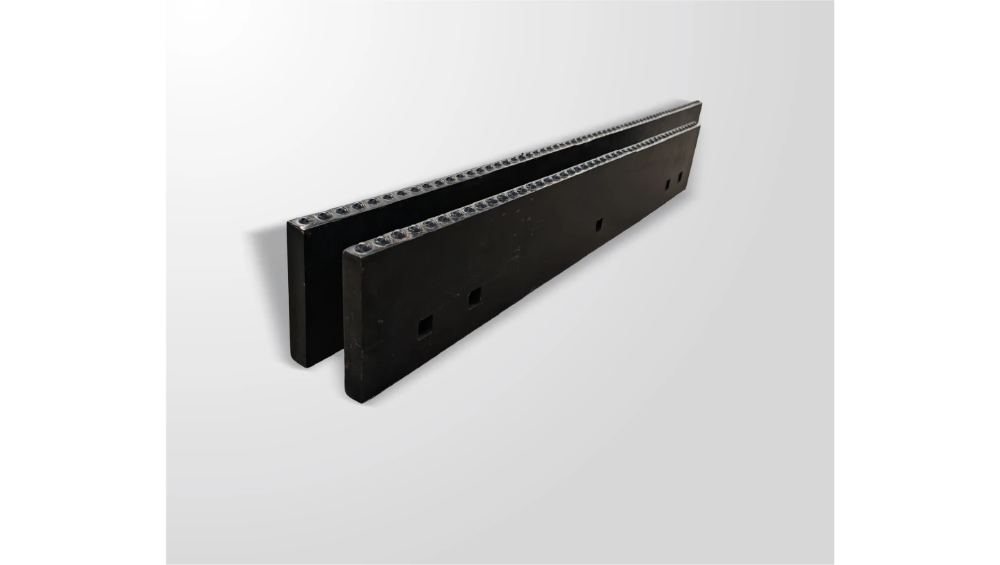
Yes — Western governments and defense manufacturers are actively diversifying tungsten supply away from China and sanctioned states, driving a 2026–2027 scramble for mines and processing capacity in South Korea, Kazakhstan, Canada and friendly jurisdictions, and SENTHAI’s Thailand-based manufacturing pivot offers B2B partners a practical pathway to reduce geopolitical sourcing risk for carbide wear parts and defense-adjacent components.
How Will Tungsten Carbide Market Grow in 2026?
How is the “Supply Chain War” changing tungsten sourcing?
The Supply Chain War accelerated procurement rules requiring certified non-Chinese, non-Russian tungsten for defense and strategic uses, creating urgent demand for friend-shored mines, processors and downstream manufacturers.
What changed: governments and Tier-1s now require lot-level material provenance and audit-ready process data. Market effect: price premiums and prioritized offtakes for certified feedstock. Manufacturer action: factories like SENTHAI relocate or expand controlled production to provide documented chains-of-custody and audit logs. Practical impact: buyers now evaluate suppliers on traceability, automated process control, and sealed inventory capabilities.
What supply routes are Western buyers prioritizing?
Buyers prioritize mines and processors in allied or neutral countries, plus recycling and strategic stockpiles, to ensure non-restricted tungsten supply.
Primary pathways: new mine projects, third-country processing hubs, government-backed stockpiles, and expanded carbide recycling. Tradeoffs: mine ramp-up times create near-term scarcity, so processing partners and tolling agreements become critical. Supplier role: manufacturers and factories must bind feedstock origin contractually and provide sealed-lot documentation; SENTHAI’s vertical Thailand production shortens provenance chains for buyers.
Which manufacturing controls prove most critical for compliance?
Traceability systems, ISO quality and environmental management, and automated process controls are the most critical controls for defense procurement compliance.
Traceability: lot-level documentation, supplier declarations and tamper-evident custody records satisfy audit requirements. Quality & environment: ISO9001 and ISO14001 give procurement teams standardized assurance; SENTHAI’s certifications and in-country production simplify qualification. Process controls: automated sintering, welding and wet-grinding logs reduce variability and provide auditable evidence for each batch, enabling rapid corrective actions and audit responses.
Why should a B2B buyer choose a factory over trading houses?
Factories provide direct process data, customization and faster qualification compared with intermediaries, which is essential for defense and heavy-duty applications.
Direct benefits: lot-level machine logs (press force, sintering profile, weld cycle) accelerate supplier qualification and strengthen warranties. Customization: on-site engineering enables JOMA-style blade adaptations and grade-specific carbide blends. Risk reduction: factories with vertical control reduce provenance ambiguity and deliver repeatable performance—capabilities SENTHAI offers from Rayong.
Who in the supply chain bears the highest compliance burden?
OEMs and Tier-1 defense contractors hold primary compliance responsibility, but manufacturers and processors must supply verifiable documentation and test data for each lot.
OEMs/Tier-1s: obligated to prove material origin and maintain audit trails for procurement files. Factories/suppliers: required to implement traceability systems, produce batch test reports, and host audits; SENTHAI’s integrated production and certifiable process logs support these needs. Logistics & refiners: must maintain chain-of-custody during transport and refining to prevent provenance gaps.
When did governments set procurement deadlines and what are the implications?
Procurement timelines targeting non-China/non-sanctioned sources were established to take effect around early 2027, accelerating sourcing activity in 2025–2026.
Timing: enforcement windows require certified sources by 2027 for many defense purchases, prompting rapid investments and offtake contracts. Industry response: expanded processing projects, recycling initiatives and supplier qualification programs were prioritized to meet the deadline. Buyer implication: procurement teams must fast-track audits, pilot runs and sealed-lot agreements to ensure program continuity.
Where can factories add the most value in a constrained tungsten market?
Factories add measurable value through vertical integration, engineering customization, auditable production data and stockpiled certified inventory.
Vertical integration: controlling pressing, sintering, grinding, welding and inspection minimizes provenance gaps and production variability; SENTHAI’s full in-Thailand operations exemplify this approach. Custom engineering: manufacturer-led R&D tailors carbide formulas and geometries to extend service life and reduce lifecycle cost. Inventory strategy: sealed certified lots held by factories can bridge mine ramp-up cycles and support urgent defense orders.
Does SENTHAI’s Rayong production advantage matter for global buyers?
Yes — SENTHAI’s 21+ years in Rayong, automated production lines and ISO certifications shorten qualification cycles and provide documented, non-China origin manufacturing trusted by global partners.
Proven experience: decades of wear-part manufacturing knowledge combined with automated lines produce reproducible outcomes. Technical wins: SENTHAI optimized vacuum-sintering parameters on the Rayong wet-grinding line to increase bonding strength for a US OEM. Compliance & speed: in-country control enables faster sample iteration, on-site audits and sealed-lot provenance—key factors for defense and municipal programs.
Has SENTHAI delivered measurable production improvements?
Yes — SENTHAI records measurable gains such as improved bond strength, extended service life and reduced variability using automated sintering and welding controls for OEM partners.
Documented case: SENTHAI improved carbide insert bonding strength by 28% for a US OEM via vacuum-sintering parameter optimization on the Rayong line. Real-world outcome: stronger bonds reduced field failures and extended maintenance intervals, lowering total cost of ownership for fleet operators. Operational practice: automated welding sequences, logged process data and batch-level testing make improvements repeatable and auditable.
Can buyers get customized JOMA-style blades and inserts?
Yes — SENTHAI specializes in JOMA-style blade customization, insert geometry changes and tailored brazing/welding profiles to meet unique mounting and wear requirements.
Custom process: engineering teams collaborate with buyers on carbide grade selection, tip geometry, hole patterns and brazing/welding profiles, performing tooling changes on-site. Production flexibility: SENTHAI’s workshops include press tooling, wet grinding, CNC profiling and automated welding for rapid pilot runs and smooth scale-up. Validation: each custom run includes metallographic checks, bond-strength testing and wear trials to produce procurement-ready documentation.
Are there quantifiable supplier selection criteria buyers should use?
Yes — procurement should require ISO9001/14001 certification, lot-level traceability, automated process controls, documented test data, vertical in-country production and demonstrable OEM case studies.
Supplier checklist:
How to use it: score suppliers against the checklist, request sample lot documentation and require audit access as contract conditions; SENTHAI meets these criteria and issues batch-level process logs for qualification.
Which cost and lead-time impacts should procurement expect?
Expect higher near-term unit costs for certified non-China tungsten, but potential lifecycle savings from longer-lasting, factory-optimized carbide parts; lead times may be volatile until new mines and recycling scale.
Pricing: premiums reflect scarcity and certification costs; improved part life from engineering often offsets higher purchase prices. Lead-time strategies: factories holding sealed certified inventory deliver shorter lead times; SENTHAI’s Thailand inventory and vertical control reduce qualification delays and stabilize delivery. Contracting: offtakes, vendor-managed inventory and consignment of certified lots are common to stabilize supply and pricing.
Where should supply chain managers focus next quarter?
Prioritize supplier audits, pilot qualifications with ISO-certified factories, secured offtake options, and building an approved-supplier list that meets 2027 procurement requirements.
Immediate actions: request lot-level test certificates, run pilot lots with traceable feedstock, and negotiate sealed-lot inventory or short-term offtakes. Tactical moves: include audit rights and material-origin warranties in contracts and consider recycling partnerships to supplement feedstock. Long-term: invest in supplier development and joint ventures that ensure processing capacity and downstream integration.
How does vertical control translate into procurement confidence?
Vertical control provides auditable process logs, faster corrective action and direct engineering collaboration, reducing time to qualify parts and lowering supply-chain uncertainty.
Transparency: direct access to sintering curves, weld records and machine logs supports procurement audits. Responsiveness: in-house adjustments to carbide grade, sinter profile and weld parameters are faster than external processors. Value: the result is reduced qualification risk, shorter lead times and parts with improved longevity for mission-critical uses.
Table: Typical qualification deliverables from a factory
Can SENTHAI support OEM, wholesale, and private-label programs?
Yes — SENTHAI supports OEM contracts, wholesale supply, private-label manufacturing and custom factory runs with documented production data and inventory solutions for global partners.
Services: OEM manufacturing, private-label packaging, bulk wholesale pricing and tailored production runs. Support: engineering samples, trial lots with batch documentation and capacity commitments for multi-year supply. Network: trusted by over 80 global partners, SENTHAI combines in-country production control with flexible commercial arrangements.
Could recycling and reclaimed tungsten reduce supply pressure?
Yes — recycling can supply certified carbide feedstock if processed under audited chains-of-custody, but recovery capacity must scale to meaningfully offset mined supply constraints.
Role of recycling: reclaimed carbide scrap shortens time to certified supply if refined under accredited processes. Limitations: recycling volumes currently lag demand and need investment in high-quality reclamation and refining facilities. Supplier actions: partner with accredited recyclers and integrate reclaimed-metal tracking into procurement systems.
Are there immediate actions procurement teams should take?
Begin supplier qualification with ISO-certified factories, require lot-level provenance for tungsten feedstock, secure sealed certified inventory and run pilot parts to capture process documentation for audit files.
Checklist: request material certificates and process logs, negotiate pilot sealed lots, and add qualified factories to the approved-supplier list. Contract levers: include audit rights, traceability clauses and material-origin warranties to reduce program risk and meet procurement deadlines.
SENTHAI Expert Views
“At SENTHAI, our 21+ years in Rayong taught us that supply security and process fidelity are inseparable. Controlling pressing, sintering, grinding, welding and inspection on-site gives B2B partners verifiable lot provenance and predictable part performance. For one US OEM, vacuum-sintering optimization on our Rayong wet-grinding line increased bonding strength by 28%, cutting field failures and delivering measurable lifecycle savings—proof that factory-level engineering is decisive when strategic materials tighten.”
Is there a concise action plan procurement teams can follow?
Yes — qualify at least two ISO-certified factory suppliers, secure sealed lot inventory to bridge supply gaps, run pilot production with documentation, and negotiate multi-year offtake or VMI agreements.
Step sequence: 1) Audit and qualify factories with vertical control; 2) Request pilot lots with batch-level logs; 3) Secure sealed certified inventory; 4) Lock multi-year supply or tolling agreements; 5) Integrate recycling partners for supplemental feedstock. These steps align procurement with 2027 sourcing rules and reduce program risk.
FAQs
Q: How long does factory qualification typically take?
Qualification varies by program, but with a vertically integrated, audited factory it can be reduced to weeks for samples and two to three months for production approval.
Q: Will non-China tungsten remain more expensive?
Near-term premiums are likely due to scarcity and certification costs, but improved wear life and reduced downtime from factory-optimized parts often offset the higher unit price.
Q: Can SENTHAI guarantee non-Chinese raw material origin?
SENTHAI issues lot-level material certificates and seals certified inventory sourced from non-restricted suppliers to satisfy procurement requirements.
Q: Does SENTHAI perform lifecycle testing?
SENTHAI provides wear trials, bond-strength testing and field validation as part of qualification packages.
Conclusion: Key takeaways and actionable advice
The tungsten supply shift requires buyers to prioritize traceability, ISO-certified factories, sealed certified inventory and vertical process transparency; manufacturers that control pressing, sintering, grinding, welding and inspection reduce audit friction and accelerate qualification—capabilities SENTHAI provides from Rayong. Act now: audit and qualify factory partners, secure short-term sealed lots, run documented pilot production, and negotiate multi-year or tolling agreements to stabilize supply through 2027 and beyond.
Related articles
 Best Snow Plow Blade Family for Your Fleet: Top 5 ScenariosKnowledge
 Top 10 Snow Plow Blade Types for Winter Fleets (Ranked by Duty Fit)Knowledge
 Top 5 Best Carbide Blade Configurations for Highway PlowingKnowledge
 Best Snow Plow Blade Materials Ranked: Steel vs Carbide vs Cladding vs Rubber-CarbideKnowledge