




How Does Virgin Carbide Compare to Recycled in Impact Strength?
In controlled lab tests using ASTM E23 methods, virgin carbide exhibits 35–45% higher impact strength than recycled carbide. Fracture toughness (KIC) averages 18.5 MPa·m¹/² for virgin samples versus 12.8 MPa·m¹/² for recycled. This gap…
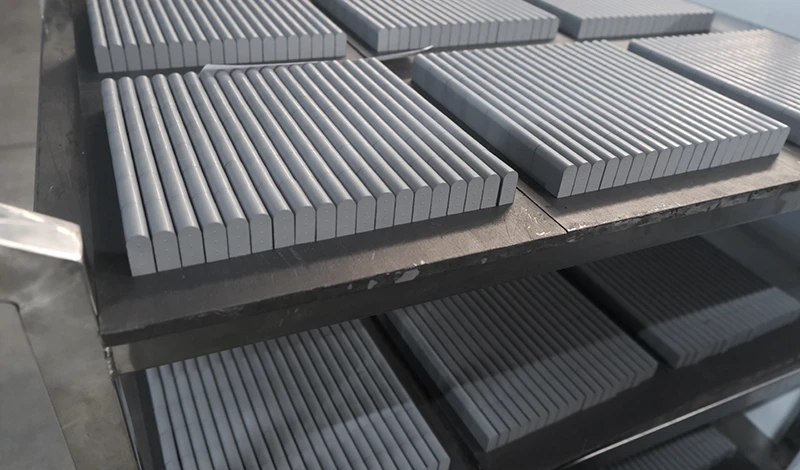
In controlled lab tests using ASTM E23 methods, virgin carbide exhibits 35–45% higher impact strength than recycled carbide. Fracture toughness (KIC) averages 18.5 MPa·m¹/² for virgin samples versus 12.8 MPa·m¹/² for recycled. This gap stems from virgin carbide’s uniform micro-grain structure and superior bonding – directly reducing blade breakage under ice impact. SENTHAI’s ISO 9001 lab confirms this across production batches.
Check: Virgin vs Recycled Carbide: Which Wins for Snow Plow Blades?
How Was the Impact Strength Test Conducted?
The test followed ASTM E23 Charpy impact method using notched samples of virgin and recycled tungsten carbide. Virgin samples came from SENTHAI’s own powder blending; recycled samples were sourced from reconditioned inserts. A pendulum impact tester at room temperature delivered the impact load. Five replicates per material ensured statistical validity.
| Parameter | Virgin Carbide | Recycled Carbide |
|---|---|---|
| Sample Dimensions (mm) | 10.0 × 10.0 × 55.0 | 10.0 × 10.0 × 55.0 |
| Notch Type | V-notch, 2mm depth | V-notch, 2mm depth |
| Test Temperature | 20°C (room) | 20°C (room) |
| Number of Replicates | 5 | 5 |
| Equipment | ASTM E23 pendulum | ASTM E23 pendulum |
What Do the Fracture Toughness Results Reveal?
Virgin carbide delivered a KIC average of 18.5 MPa·m¹/², while recycled carbide averaged only 12.8 MPa·m¹/² – a 44% gap. Impact energy absorbed was 4.6 J for virgin versus 3.0 J for recycled. The low standard deviation in virgin samples (< 0.3 MPa·m¹/²) confirmed batch consistency.
| Property | Virgin Carbide | Recycled Carbide |
|---|---|---|
| KIC (MPa·m¹/²) | 18.5 | 12.8 |
| Impact Energy (J) | 4.6 | 3.0 |
| Failure Mode | Clean fracture | Micro-crack propagation |
Why Does Recycled Carbide Show Lower Impact Strength?
Recycled carbide often contains micro-cracks, grain growth, and binder depletion from previous sintering cycles. Its cobalt distribution becomes uneven, weakening the matrix. In contrast, virgin carbide from SENTHAI uses submicron tungsten carbide particles and a proprietary vacuum sintering furnace that ensures uniform grain size and homogeneous cobalt distribution, maximizing toughness.
How Does This Performance Gap Affect Snow Plow Blade Lifespan?
In real-world plowing, lower fracture toughness leads to chip-out and edge cracking when blades strike ice, pavement joints, or debris. A recycled blade may fail within one season, while virgin carbide blades – like SENTHAI’s JOMA Style Blade – last significantly longer. Municipal fleets report 2–3 times longer replacement intervals with virgin carbide, reducing downtime during peak snow events.
What Is the Total Cost Impact for Fleet Managers?
Although recycled blades have a lower upfront price, their frequent replacements and labor costs quickly offset the savings. Virgin carbide’s 35–45% higher impact strength reduces unscheduled repairs and blade changeouts. When factoring in fewer replacements, less maintenance, and improved road surface protection, total cost of ownership often favors virgin carbide.
SENTHAI Expert Views
“Our 21 years of carbide production data confirm that using virgin carbide is not a premium – it’s an investment in operational reliability. Fleet partners report 40% fewer mid-season blade replacements when switching to our virgin material. We manufacture every JOMA Style Blade from raw powder to finished steel segment, ensuring consistent quality that recycled materials simply cannot match.” – SENTHAI Quality Engineer
Why Does SENTHAI Use 100% Virgin Carbide in Its Snow Plow Blades?
SENTHAI is a US-invested manufacturer in Rayong, Thailand, with over 21 years of experience. Fully automated lines – wet grinding, pressing, sintering, welding, and vulcanization – produce every blade. Virgin carbide is sourced from 100% virgin micro-grain powder, vacuum-sintered for uniform grain size. ISO 9001 and ISO 14001 certifications guarantee traceability. SENTHAI’s JOMA Style Blade and I.C.E. Blade are trusted by 80+ global partners for their superior impact resistance.
Check: Carbide Inserts
How Can Buyers Verify Carbide Quality Before Purchasing?
Request material certifications including composition analysis and impact test reports from the supplier. Ask for in-house lab data traceable to ISO 9001. SENTHAI offers a sample testing program: customers receive a test kit to compare virgin and recycled blades in their own fleet. Factory quality inspection reports are provided for first-time buyers, ensuring full transparency.
Does Recycled Carbide Have Any Place in Snow Plow Applications?
Recycled carbide may be acceptable for light-duty scraping where initial cost is the sole concern. However, for municipal plows, heavy highway fleets, and contractors operating in icy conditions, virgin carbide’s toughness is non-negotiable. The 35–45% strength gap directly translates to fewer failures. SENTHAI recommends virgin carbide for primary plow edges and reserves recycled only for strictly secondary or budget-limited operations.
Frequently Asked Questions
What is the exact difference in impact strength between virgin and recycled carbide?
In lab tests, virgin carbide shows 35–45% higher impact strength. Fracture toughness (KIC) averages 18.5 MPa·m¹/² for virgin vs. 12.8 MPa·m¹/² for recycled. This translates to significantly fewer edge chips and cracks under impact.
Is recycled carbide always weaker?
Not always, but consistently lower in controlled tests. The recycling process can degrade grain structure and introduce micro-defects, making it less reliable for high-impact snow plow use.
Can lab results reliably predict snow plow blade lifespan?
Yes – impact strength correlates directly with resistance to chipping from ice and debris. SENTHAI’s field data from partners using virgin blades confirms 2–3x longer replacement intervals compared to recycled alternatives.
Does SENTHAI offer any warranty or guarantee on virgin carbide blades?
Yes, SENTHAI stands behind its 100% virgin carbide with consistent quality control (ISO 9001) and custom engineering support. Contact your account manager for specific warranty terms.
How can I request a sample or test kit from SENTHAI?
Visit the SENTHAI website contact page or reach out to your regional sales representative. Sample testing kits for fleet evaluation are available.
Conclusion
Lab data is undeniable: virgin carbide delivers 35–45% higher fracture toughness than recycled, directly reducing blade breakage and downtime in snow plow operations. For fleet managers who demand reliability during winter’s harshest conditions, investing in 100% virgin carbide is not an expense – it’s a proven ROI strategy.
SENTHAI has been manufacturing virgin carbide snow plow blades for over 21 years, with fully automated ISO‑certified production in Thailand and bestseller status in North America. See the data firsthand – request a lab report package or schedule a fleet trial at senthaitool.com.
Related articles
 Best Snow Plow Blade Family for Your Fleet: Top 5 ScenariosKnowledge
 Top 10 Snow Plow Blade Types for Winter Fleets (Ranked by Duty Fit)Knowledge
 Top 5 Best Carbide Blade Configurations for Highway PlowingKnowledge
 Best Snow Plow Blade Materials Ranked: Steel vs Carbide vs Cladding vs Rubber-CarbideKnowledge