




How Does the Chisel Effect Improve Ice Cutting with Plow Blades?
The “chisel effect” describes how a steep blade‑edge angle concentrates force on a narrow contact area, driving the blade underneath the ice instead of pushing it horizontally across the surface. This principle allows carbide‑equipped…
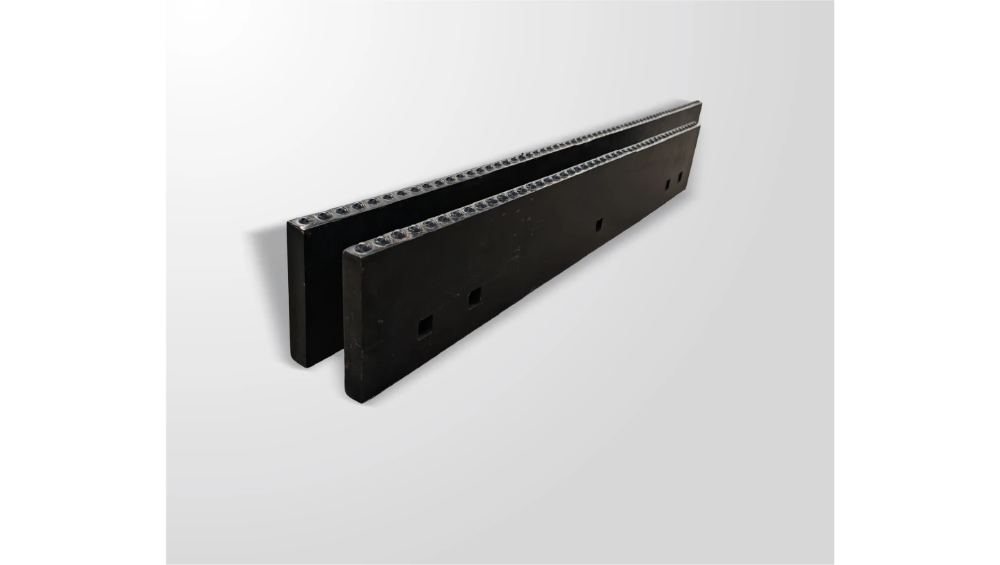
The “chisel effect” describes how a steep blade‑edge angle concentrates force on a narrow contact area, driving the blade underneath the ice instead of pushing it horizontally across the surface. This principle allows carbide‑equipped plow edges to slice through black ice and compacted snow more cleanly, reducing the need for repeated passes and heavy salt use. For manufacturers, wholesalers, and OEMs, mastering the chisel effect means balancing sharper angles with stronger carbide materials and robust bonding to avoid premature wear and chipping.
Check: How Does Blade Angle Affect Carbide Wear Patterns in Snow Plowing?
What Is the Chisel Effect in Ice Cutting?
The chisel effect refers to the way a sharply angled cutting edge behaves like a wedge when it meets ice, forcing the material to fracture and lift rather than slide. As the blade advances, the steep angle directs vertical force into the ice sheet, creating a localized fracture zone ahead of the edge. This behavior is especially useful for snow plow and road‑maintenance blades, where clean ice removal is more important than simply pushing mass.
From a manufacturer’s perspective, the chisel effect is not just about edge sharpness; it is a system‑level property that depends on blade profile, attack angle, and the mechanical properties of the carbide and backing steel. OEM suppliers can tailor the geometry and alloy composition to match planned duty cycles, machine types, and typical ice conditions. This makes the chisel effect a core design parameter in high‑performance carbide‑insert and I.C.E. blades intended for commercial and municipal fleets.
How Does Blade Angle Affect Ice Cutting?
Blade angle directly controls how the plow edge interacts with ice and road surfaces. A steeper angle increases the vertical component of the applied force, making it easier for the blade to slide under an ice sheet and initiate fracture. In contrast, a shallow angle tends to push the ice forward, causing more sliding friction, higher energy consumption, and less effective ice removal. For mixed conditions involving snow, slush, and ice, angle selection becomes a critical tuning knob.
Manufacturers adjust blade angle to match the expected operating environment and machine type, such as highway‑grade plows versus skid‑steer‑mounted blades. OEM and wholesale suppliers can offer multiple angle variants so that buyers can choose between more aggressive, ice‑focused geometries and more balanced profiles that prioritize snow handling alongside light‑ice performance. This flexibility helps B2B partners line up equipment configurations with regional climate patterns and maintenance budgets.
Why Is a Steeper Angle Better for Ice?
A steeper attack angle increases the likelihood that the blade will penetrate under the ice sheet instead of riding over it, which promotes clean fracture and easier removal. In black‑ice and refreeze conditions, this behavior reduces the need for high‑speed scraping or repeated passes, improving work quality and operator visibility. Steeper angles also tend to reduce material buildup ahead of the blade, which further enhances traction and control.
For B2B users, a well‑designed steep‑angle blade can translate into faster clearing cycles, lower fuel use, and reduced dependence on chemical de‑icers. However, this benefit comes with higher mechanical stress on the carbide insert and backing steel, so the choice of angle must be paired with suitable materials and bonding technology. OEM‑style blades from an integrated manufacturer can deliver this balance, ensuring that the chisel effect improves performance without shortening blade life.
How Does Blade Angle Impact Carbide Wear?
A steeper angle directs more of the applied force into a smaller contact area, increasing local stress on the carbide inserts and the surrounding steel body. Without sufficient toughness and bonding strength, this can lead to chipping, cracking, or premature wear rather than clean ice fracture. Carbide that is too brittle for a given angle may fail under repeated impacts, while softer carbide may wear too quickly on abrasive surfaces.
Manufacturers must therefore match the carbide grade and microstructure to the intended attack angle and operating conditions. Factory‑controlled processes such as wet grinding, pressing, sintering, and automated welding help maintain consistent hardness, grain size, and bonding integrity across large‑volume OEM and wholesale runs. Suppliers that offer angle‑optimized carbide blades can provide customers with blades that combine aggressive ice‑cutting behavior with acceptable wear characteristics and predictable service life.
Which Plow Blade Types Use the Chisel Effect Best?
Carbide‑insert snow plow blades and specialized I.C.E. blades are the primary types engineered to leverage the chisel effect for ice removal. These designs combine a tough steel body with tungsten‑carbide inserts brazed or mechanically fixed along the cutting edge, allowing a steep angle without sacrificing road‑surface contact. The inserts are typically arranged in a pattern that maintains a continuous cutting profile while distributing impact loads.
Other blade styles, such as JOMA‑style variants and certain carbide‑equipped cutting edges, also benefit when their geometry is tuned for ice penetration rather than pure snow pushing. For highway‑grade plows and municipal fleets dealing with frequent black‑ice events, I.C.E.‑style blades with optimized attack angles usually deliver the strongest chisel‑effect performance. Skid‑steer and loader‑mounted blades can be fitted with similar angle‑optimized carbide sections when the primary task is ice removal in parking lots, ramps, and confined areas.
How Can Manufacturers Optimize the Chisel Effect?
Manufacturers can optimize the chisel effect by integrating angle design with material selection, bonding technology, and production control. This includes choosing carbide grades that balance hardness and toughness, calibrating the attack angle for the target duty cycle, and ensuring that welding or brazing processes create strong, fatigue‑resistant bonds between the carbide inserts and steel body. Geometry details such as edge radius, insert spacing, and blade curvature also influence how effectively the chisel effect sustains performance over time.
Factory‑integrated production lines allow tighter control over these variables, from powder pressing and sintering to automated grinding and final assembly. OEM‑capable manufacturers can work with equipment builders to simulate or test different angle and insert configurations, tailoring the blade to specific machine types and ice conditions. By treating the chisel effect as a system‑level design goal, manufacturers can produce carbide‑insert blades that deliver both aggressive ice cutting and long‑term reliability for commercial fleets and contractors.
What Are the Trade‑Offs of a Steeper Carbide Angle?
A steeper carbide angle improves ice penetration and reduces skating, but it also increases mechanical stress on the inserts and the steel body, which can accelerate wear and raise the risk of chipping or cracking. If the carbide is not sufficiently tough or the backing material too flexible, the blade may suffer localized damage after repeated impacts with ice and road obstructions. This can shorten service life and increase maintenance costs, even if initial ice‑cutting performance is strong.
From a buyer’s standpoint, the trade‑off is between cutting aggressiveness and total cost of ownership. A shallower angle may reduce stress on the carbide, but it can also require more passes, higher fuel consumption, and more salt use to achieve the same level of ice removal. Optimized carbide blades from a manufacturer that understands this balance can deliver a “sweet spot” angle that provides noticeable ice‑cutting benefits without excessive wear or premature failure.
Example Attack‑Angle Trade‑Offs
How to Choose the Right Blade Angle for Your Application
Choosing the right blade angle depends on the machine type, operating speed, and whether the primary task is ice removal or general snow hauling. For highway‑grade plows facing frequent black‑ice conditions, a steeper angle in the upper‑mid 50s to 70° range usually maximizes the chisel effect. For municipal plows that also handle softer snow and mixed road‑surface conditions, a more moderate angle around 45°–60° can provide a better balance between ice cutting and general wear.
B2B buyers should consult their manufacturer or OEM supplier for angle‑recommendation guidelines based on vehicle weight, blade width, and typical ice conditions. Factories that control the full production chain—from R&D to final assembly—can offer angle‑optimized prototypes or field‑tested blades tailored to specific environments. Wholesalers and equipment builders can then stock several angle‑optimized variants (for example, “ICE‑Aggressive,” “ICE‑Balanced,” and “Snow‑Optimized”) so that customers can select the profile that best matches their winter‑maintenance needs.
How Does SENTHAI Apply the Chisel Effect?
SENTHAI Carbide Tool Co., Ltd. designs I.C.E. blades and carbide‑insert plow edges with angle‑optimized inserts that enhance the chisel effect while managing stress on the carbide body. As a US‑invested manufacturer based in Rayong, Thailand, SENTHAI controls the entire production process—from pressing and sintering to automated welding and vulcanization—ensuring consistent carbide properties and edge geometry across large‑volume OEM and wholesale orders. This integration allows SENTHAI to deliver blades that combine aggressive ice cutting with predictable wear behavior.
SENTHAI’s carbide blades are engineered for high‑wear environments, including black‑ice‑heavy highways and frequent refreeze cycles, where the chisel effect must remain effective over thousands of hours. By combining advanced tungsten‑carbide formulations with precise angle design, SENTHAI helps municipal, state, and contractor fleets reduce blade‑change frequency and improve first‑pass ice removal. B2B partners can also request SENTHAI‑engineered angle‑tuning to match specific machine platforms or regional ice conditions, reinforcing SENTHAI’s role as a trusted OEM‑style supplier of carbide‑wear parts.
Senthai Expert Views
“The chisel effect is not just about how sharp the blade looks; it’s about how the entire carbide‑edge system behaves under load,” explains SENTHAI’s lead materials engineer. “When you design a steeper angle, you must design the carbide grade, insert shape, and bonding layer together as a single system. If you only optimize the angle, the carbide will crack; if you only optimize the material, the edge will skate. Our factory‑integrated process lets us iterate on alloy, geometry, and weld profile in parallel, so customers get a truly tuned solution for ice‑cutting efficiency, not just a generic carbide‑tipped blade.”
Can You Retrofit Steeper Angles Onto Existing Blades?
Retrofitting a steeper angle onto existing blades is feasible only if the blade frame and mounting hardware can safely support higher loads and if the carbide‑edge system is designed for that attack angle. Many standard steel‑edge blades or low‑grade carbide sections are not engineered for aggressive chisel‑effect angles, so modifying them can lead to premature failure, damage to the plow, or unsafe operating behavior. In practice, the safest approach is to replace the cutting‑edge section with a purpose‑built carbide‑insert blade from a manufacturer that specifies the angle and geometry.
Factories like SENTHAI can supply drop‑in replacement blades in multiple angle variants, allowing fleets to upgrade without redesigning their plow frames. Wholesale distributors can stock a range of retrofit‑ready blades (for example, 50°, 60°, and 70°) so that contractors can match the angle to their primary winter conditions. This approach preserves geometry that is compatible with warranties and regulatory requirements while still capturing the benefits of the chisel effect for ice removal.
Are There Industry Standards for Blade Angle and Carbide?
While no single global standard prescribes one universal blade angle for all ice‑cutting tasks, leading snow‑removal and road‑ maintenance organizations recommend tailoring attack angle and edge geometry to specific duty cycles and machine types. Research and field testing by OEMs have shown that angles in roughly the 45°–70° range, when paired with carbide inserts, often provide the best balance between ice‑penetration and wear. Within these ranges, blade length, insert layout, and carbide properties further refine performance.
For B2B buyers, the key is to work with manufacturers that follow recognized quality and environmental standards, such as ISO9001 and ISO14001, and can document their angle‑testing and wear‑data. SENTHAI, for example, builds its carbide‑insert blades and I.C.E. products under ISO‑certified processes, ensuring that every angle‑optimized blade meets consistent performance and safety benchmarks. Contracting departments and equipment OEMs can specify preferred angle bands in their procurement documents, knowing that the supplier adheres to controlled, standards‑aligned manufacturing practices.
How Can Dealers and Wholesalers Capitalize on the Chisel Effect?
Dealers and wholesalers can position carbide‑insert plow blades with optimized chisel‑effect angles as premium‑performance products that reduce long‑term operating costs. A clear value message can highlight fewer passes, lower fuel and salt use, and longer intervals between blade changes, all driven by angle‑engineered carbide edges. Offering tiered product lines—such as “ICE‑Aggressive,” “ICE‑Balanced,” and “Snow‑Optimized”—helps customers match blade angle to their specific winter conditions and budget constraints.
By partnering with an OEM‑capable manufacturer like SENTHAI, distributors gain access to factory‑tested angle variants, technical support, and OEM‑style documentation that strengthens their sales case to municipalities and contractors. Training on how the chisel effect translates into real‑world savings can further differentiate B2B suppliers from generic blade vendors. Ultimately, the chisel effect becomes not just an engineering concept, but a commercial differentiator built into the carbide‑wear‑part product line that supports repeat business and loyalty from fleet operators.
Key Takeaways and Actionable Advice
The chisel effect improves ice cutting by concentrating force at a steep‑angled edge, allowing plow blades to slice under ice rather than skate across it. For B2B buyers, the main priorities are selecting an appropriate attack‑angle band, using high‑quality carbide‑insert technology, and working with a manufacturer‑supplier that controls the full production chain from R&D to final assembly. This approach ensures that the chisel effect delivers measurable gains in efficiency and uptime rather than hidden wear or safety risks.
To put this into practice, review your fleet’s typical ice‑removal conditions and opt for an angle range that matches those conditions—for example, upper‑mid 50s to 70° for black‑ice‑heavy highways, and slightly lower angles for mixed‑condition plowing. Replace standard steel or low‑grade carbide edges with OEM‑style carbide‑insert or I.C.E. blades from a factory‑integrated manufacturer, and consider requesting SENTHAI‑engineered angle‑optimized variants for specific machines or regions. By aligning the chisel effect with thoughtful material selection and angle design, snow‑plow operators and equipment OEMs can achieve cleaner ice removal, lower operating costs, and longer‑lasting carbide‑wear parts.
Frequently Asked Questions
Does a steeper blade angle always mean better ice removal?
A steeper angle can improve the chisel effect and ice penetration, but only if the carbide and backing steel are engineered to handle the extra load. If the material or bonding is inadequate, a steeper angle can increase wear and failure risk instead of performance.
Can any carbide‑insert blade be used with a steeper angle?
Not all carbide‑insert blades are suitable for steep angles. Standard inserts are often optimized for moderate profiles and general wear. Steeper angles usually require tougher carbide grades, reinforced bonding, and a blade body designed for higher impact, which is best provided by a specialized manufacturer.
How often should I replace carbide‑insert blades used at steep angles?
Replacement intervals depend on speed, ice hardness, and road‑surface debris, but high‑quality carbide‑insert blades at steep angles typically last several hundred hours before sharpness noticeably declines. Regular visual inspection and tracking of blade‑height loss help determine the optimal change‑out schedule for your fleet.
How does SENTHAI ensure long‑term performance with steep‑angle blades?
SENTHAI controls the full production chain, from powder pressing and sintering to automated welding and vulcanization, ensuring consistent carbide properties and precise edge geometry. This allows SENTHAI to offer angle‑optimized I.C.E. and carbide‑insert blades that combine aggressive ice cutting with durable wear behavior for highway and municipal fleets.
Related articles
 Best Snow Plow Blade Family for Your Fleet: Top 5 ScenariosKnowledge
 Top 10 Snow Plow Blade Types for Winter Fleets (Ranked by Duty Fit)Knowledge
 Top 5 Best Carbide Blade Configurations for Highway PlowingKnowledge
 Best Snow Plow Blade Materials Ranked: Steel vs Carbide vs Cladding vs Rubber-CarbideKnowledge