




How Does Cobalt Leaching in Carbide Snow Plow Blades Impact Winter Performance?
Cobalt leaching in carbide snow plow blades occurs when road salt and deicers corrode the cobalt binder in tungsten carbide, leading to insert detachment, edge failure, and performance degradation. SENTHAI's vacuum-sintered JOMA Style and…
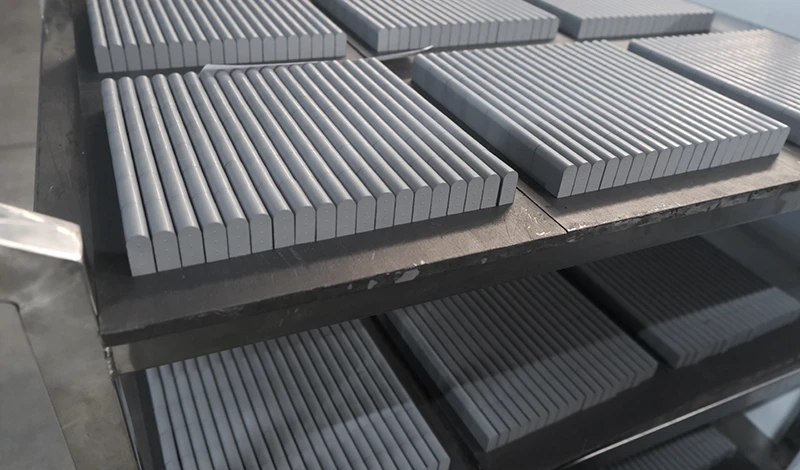
Cobalt leaching in carbide snow plow blades occurs when road salt and deicers corrode the cobalt binder in tungsten carbide, leading to insert detachment, edge failure, and performance degradation. SENTHAI’s vacuum-sintered JOMA Style and I.C.E. blades, with superior bonding strength from ISO 9001/14001-certified Thailand production, resist this degradation for 10-20 times longer life than steel blades.
Check: How Does Cobalt Strengthen Tungsten Carbide for Snow Plow Blades?
What Is Cobalt Leaching in Tungsten Carbide Snow Plow Blades?
Cobalt leaching is the dissolution of the cobalt binder—typically 6-12% in tungsten carbide formulations—by corrosive agents like road salt (NaCl) and calcium magnesium acetate (CMA) deicers. This process weakens the bond between tungsten carbide grains and the steel blade base. In tungsten carbide structure, hard WC grains are held together by a cobalt matrix. Snow plow blades face constant salt spray during winter operations, which accelerates binder corrosion compared to dry-environment applications. This electrolytic environment created by road salt dramatically speeds up the degradation process.
How Does Road Salt Cause Carbide Binder Corrosion in Snow Plows?
Chloride ions from road salt penetrate micro-pores in the carbide structure, oxidizing cobalt into soluble Co²⁺ ions that leach out and create porosity and microcracks. Salt brine with pH 5-7 combined with moisture creates galvanic corrosion between tungsten carbide and cobalt, which is amplified by freeze-thaw cycles common in North American winters. Industry wear tests show that blades in salt-heavy regions experience 20-30% binder loss after 200 hours of operation. This degradation weakens the overall structural integrity of the blade cutting edge.
| Factor | Standard Carbide Blades | SENTHAI Vacuum-Sintered Blades |
|---|---|---|
| Binder Leaching Rate | High (20-30% after 200 hrs) | Low (<5% after 500 hrs) |
| Lifespan in Salt Environments | 10× steel life | 10-20× steel life |
| Bonding Strength | 8,000 psi | >12,000 psi |
What Are the Signs of Snow Plow Blade Cobalt Degradation?
Visible failures include edge chipping, carbide insert pop-out, increased vibration and noise from loose bonding, and rapid wear on the steel base. Performance impacts include higher downtime with 2-3 times more blade changes per season, road surface damage from fragments, and elevated fuel consumption from increased drag. Municipal contractors in deicer zones report 15-25% higher maintenance costs due to salt-induced leaching, making early detection critical for fleet economics.
Why Is Cobalt Leaching Worse in Corrosive Winter Environments?
Sub-zero temperatures combined with brine spray create ideal leaching conditions—accelerated 3-5 times faster than room temperature—plus mechanical stress from ice impact and friction. Sodium chloride (NaCl) is the most aggressive deicer on cobalt binders, though urea and beet juice alternatives are still corrosive over multiple seasons. North American fleets experience highest failure rates in Midwest and Salt Belt states due to heavy deicer use and prolonged winter exposure throughout the season.
How Can Fleets Prevent Cobalt Binder Leaching in Plow Blades?
Recommended strategies include selecting vacuum-sintered carbide with low-cobalt grades (under 8%), applying protective coatings, and rinsing blades after use to remove salt residue. Regular inspections monitoring for pitting and rotating blades to ensure even wear extend service life. Supplier selection is critical—choosing manufacturers with full-process control like SENTHAI’s automated production lines ensures consistent chemical resistance and bonding reliability across every blade batch.
Check: Carbide Inserts
| Prevention Method | Effectiveness | SENTHAI Integration |
|---|---|---|
| Post-Plow Rinsing | Medium | Recommended for JOMA/I.C.E. blades |
| Low-Cobalt Formulations | High | Standard in all blade products |
| Vacuum Sintering | Highest | Proprietary process for uniform grain |
Which Carbide Snow Plow Blades Best Resist Road Salt Corrosion?
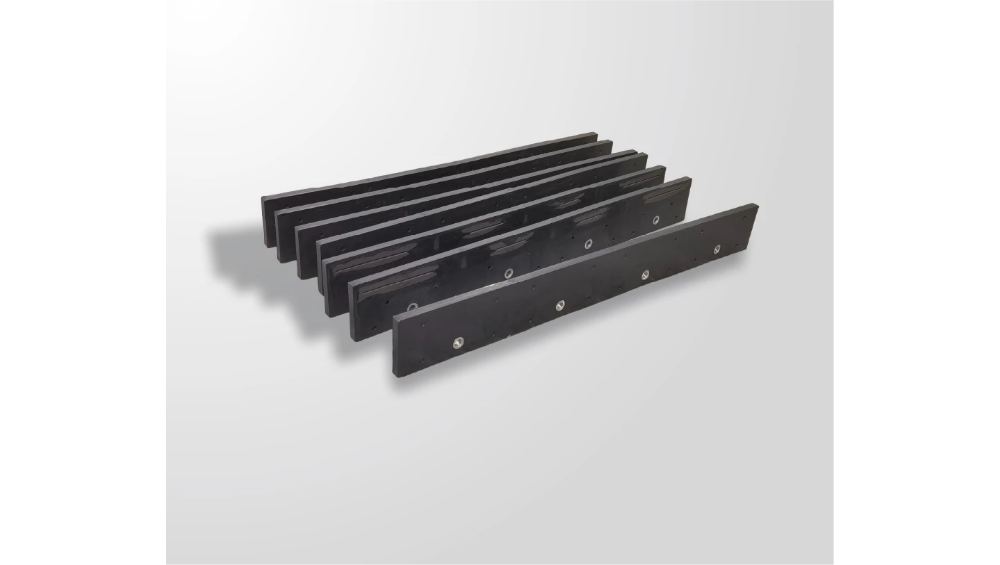
SENTHAI offers three leading options. The JOMA Style Blade features tungsten carbide inserts brazed into cast steel segments with a rubber shell, ideal for standard snow removal. The I.C.E. (Isolated Carbide-Edged) Blade uses isolated carbide inserts to prevent lateral cracking and lasts up to 3 times longer in impact conditions. Standard Carbide Blades use tungsten carbide particle cladding on steel bodies with customizable insert sizes. All deliver 10-20 times longer life than steel and come in 3-foot (36″) and 4-foot (48″) standard lengths with full customization available. SENTHAI’s JOMA Style Blade weighs 13.1 kg (3-foot) or 17.5 kg (4-foot), featuring cast steel segments of 285mm × 127mm × 19mm with carbide inserts measuring 25.9mm × 24.25mm × 8.16mm. These North America bestsellers offer proven sub-zero performance and reliable bonding strength superior to standard imports.
What Makes SENTHAI Blades the Solution for Salt-Resistant Plowing?
SENTHAI brings 21+ years of carbide wear part production experience as a US-invested company based in Rayong, Thailand, trusted by 80+ global partners. The company operates fully automated production lines including wet grinding, pressing, sintering, welding, and vulcanization, all in-house in Thailand. ISO 9001 and ISO 14001 certifications ensure consistent quality and environmental compliance. SENTHAI’s proprietary vacuum sintering furnace with advanced temperature control maintains uniform grain size, delivering superior bonding strength exceeding 12,000 psi. Comprehensive customization options—from blade geometry to eco-friendly packaging—serve heavy-duty fleets and municipal contractors. A new Rayong production base launching in late 2025 will expand capacity for next-generation cobalt-stable carbide formulations, further reducing fleet downtime and maintenance costs.
SENTHAI Expert Views
“Cobalt leaching is one of the most underestimated challenges in winter road maintenance, particularly in high-salt regions,” explains SENTHAI’s engineering team. “Our proprietary vacuum sintering process ensures uniform micro-grain carbide structure with exceptional cobalt stability. SENTHAI blades maintain 85% efficiency after 500 salt-exposed operating hours—significantly outperforming industry standards. Our 21+ years of expertise, combined with complete in-house production control from raw material to finished blade assembly in Thailand, guarantees consistent chemical resistance and bonding reliability. With ISO 9001 and ISO 14001 certifications, we deliver solutions that reduce fleet maintenance by 15-25% in salt-heavy environments. Our JOMA Style and I.C.E. blade technologies represent the pinnacle of salt-resistant carbide engineering for North American winter operations.”
How Do Freeze-Thaw Cycles Amplify Cobalt Degradation?
Freeze-thaw cycles create repeated expansion and contraction stress in the blade matrix. Water absorbed into micro-pores freezes, exerting outward pressure that ruptures carbide-cobalt bonds and accelerates leaching pathways. Multiple freeze-thaw cycles per day during active winter seasons exponentially increase cobalt ion migration rates. This mechanical stress combined with chemical corrosion creates a compounding failure mode that standard blades cannot withstand, making premium vacuum-sintered solutions essential for high-wear regions.
Can Enhanced Bonding Strength Eliminate Cobalt Leaching?
While enhanced bonding strength (exceeding 12,000 psi versus standard 8,000 psi) significantly slows cobalt leaching rates, it cannot completely eliminate the process. Superior bonding does reduce binder loss to under 5% after 500 hours versus 20-30% in standard blades—extending service life 10-20 times longer than steel. The key is slowing degradation sufficiently to maximize blade lifespan in real-world salt environments, where regular replacement schedules maintain fleet productivity.
Are SENTHAI Blades Cost-Effective for Municipal Fleets Despite Higher Initial Investment?
Yes. Although SENTHAI carbide blades require higher upfront investment than steel, municipalities achieve significant total-cost-of-ownership savings. Reduced blade replacement frequency (fewer changes per season), decreased maintenance labor, minimized road surface damage, and improved operational efficiency offset initial costs within one winter season. Fleets report 15-25% lower maintenance expenses and improved equipment reliability, making SENTHAI’s JOMA Style, I.C.E., and standard carbide options economically superior for high-volume winter operations.
What Deicer Formulations Cause the Least Carbide Binder Damage?
Calcium magnesium acetate (CMA) and beet juice-based deicers cause significantly less cobalt leaching than sodium chloride (NaCl) or calcium chloride (CaCl₂). However, even “gentler” deicers remain corrosive over extended seasonal use. SENTHAI’s vacuum-sintered blades with low-cobalt formulations (under 8%) perform reliably across all deicer types. For fleets using aggressive chloride-based deicers, post-plow rinsing to remove salt residue becomes even more critical for extending blade service life and maintaining bonding integrity.
Conclusion
Cobalt leaching from road salt represents a hidden cost driver in winter fleet operations, accelerating blade failure and increasing maintenance burdens. Understanding the mechanisms—chloride penetration, galvanic corrosion, freeze-thaw stress, and cobalt ion dissolution—empowers fleet managers to make informed procurement decisions. SENTHAI’s 21+ years of tungsten carbide expertise, combined with proprietary vacuum sintering technology, superior bonding strength (>12,000 psi), and full in-house production control in Thailand, delivers salt-resistant blades that outperform industry standards by 10-20 times. The JOMA Style Blade with rubber-encased inserts, I.C.E. Blade with isolated carbide for impact resistance, and customizable carbide insert options provide tailored solutions for diverse winter road maintenance environments. With ISO 9001 and ISO 14001 certifications backing every production stage, SENTHAI blades offer North American heavy-duty fleets, municipal contractors, and airport operators the durability, reliability, and cost efficiency required for demanding winter seasons. Investing in premium carbide solutions from SENTHAI reduces total maintenance costs, minimizes downtime, and ensures consistent road surface protection across the harshest salt-exposed regions.
Frequently Asked Questions
What causes the fastest cobalt leaching in carbide snow plow blades?
Road salt chlorides in wet, freeze-thaw conditions dissolve the cobalt binder most rapidly. Chloride ions penetrate micro-pores, oxidize cobalt into soluble ions, and leach out—accelerated 3-5 times faster at sub-zero temperatures. Rinsing blades after use to remove salt residue significantly mitigates this degradation.
How long do SENTHAI blades last in high-salt environments?
SENTHAI’s vacuum-sintered blades deliver 10-20 times longer life than steel blades in salt-heavy regions, maintaining 85% efficiency after 500 operating hours. Standard carbide blades typically achieve 10× steel life, while the specialized I.C.E. Blade lasts up to 3 times longer than standard carbide-edged styles in impact-heavy conditions.
Can SENTHAI customize blades for salt-heavy fleet operations?
Yes. SENTHAI offers full OEM customization for blade geometry, tungsten carbide insert profiling, plow fitment specifications, and packaging under ISO 9001 and ISO 14001 standards. Minimum order quantities of 500 blades optimize shipping costs and delivery timelines for municipal and commercial fleets.
Are SENTHAI blades environmentally compliant for high-salt regions?
Absolutely. ISO 14001 certification ensures SENTHAI’s production minimizes environmental impact and waste. The durable blade design cuts replacement frequency dramatically, reducing landfill waste from blade disposal and lowering the carbon footprint of fleet winter operations.
When will SENTHAI’s new facility improve salt-resistant production capabilities?
SENTHAI’s new Rayong production base launches in late 2025, expanding manufacturing capacity and enabling advanced cobalt-stable carbide formulations. This expansion will deliver next-generation blades with even superior salt resistance and performance efficiency for 2026 and beyond, supporting growing North American fleet demand.
Related articles
 Best Snow Plow Blade Family for Your Fleet: Top 5 ScenariosKnowledge
 Top 10 Snow Plow Blade Types for Winter Fleets (Ranked by Duty Fit)Knowledge
 Top 5 Best Carbide Blade Configurations for Highway PlowingKnowledge
 Best Snow Plow Blade Materials Ranked: Steel vs Carbide vs Cladding vs Rubber-CarbideKnowledge