




How Do Mountain Roads Use Gravity and Flexibility for Maintenance?
Maintaining mountain roads requires a deep understanding of how gravity, slope, and material flexibility interact. The key is using specialized equipment and techniques, like high-banked turn maintenance and off-camber plowing with durable, adaptable blades,…
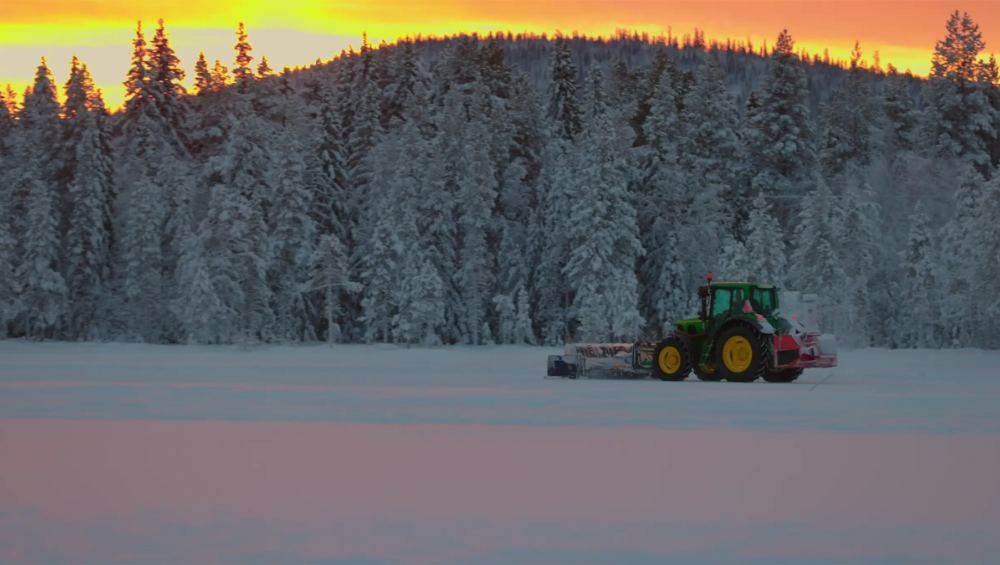
Maintaining mountain roads requires a deep understanding of how gravity, slope, and material flexibility interact. The key is using specialized equipment and techniques, like high-banked turn maintenance and off-camber plowing with durable, adaptable blades, to counteract natural forces and ensure safe, clear passage through challenging terrain.
How does gravity affect snow removal on sloped curves?
Gravity constantly pulls snow and ice downslope on mountain curves, creating uneven accumulation and dangerous cross-slope conditions. This force challenges plows by increasing side-loading and causing material to slide toward the road’s edge or into the path of traffic, demanding specific techniques to counteract the natural flow and ensure a clean, safe surface.
Understanding gravity’s role is fundamental for effective mountain road maintenance. On a sloped curve, gravity acts perpendicular to the road surface, pulling plowed snow and meltwater toward the downhill edge. This creates a phenomenon where the plow blade must not only push forward but also manage a significant lateral force. The technical specification for a blade in this scenario includes a high-strength steel core with a flexible mounting system, often using specialized rubber or polyurethane moldings, to allow the cutting edge to follow the road contour. A real-world example is plowing a switchback on a mountain pass; if you simply drive straight, gravity will cause the plow to either dig into the uphill side or lose contact with the downhill side, leaving a dangerous ridge of compacted snow. How can an operator compensate for this constant pull? The answer lies in angling the blade and using the truck’s momentum strategically. Furthermore, what happens if the blade is too rigid? It will chatter and skip, failing to maintain consistent contact. Consequently, operators must develop a feel for the slope, using a combination of blade tilt and careful steering to let gravity work with the plow, channeling material off the road rather than fighting against it. This nuanced approach transforms a natural adversary into a temporary ally during the clearing process.
What is the engineering principle behind a high-banked turn for maintenance?
A high-banked turn, or superelevation, is engineered to use centripetal force to help vehicles navigate curves safely at speed. For maintenance, the principle involves creating a cross-slope that directs water and loose debris toward the inside shoulder and drainage systems, reducing hydroplaning risk and material accumulation on the critical outside lane where centrifugal force is strongest.
The engineering behind a high-banked turn is a deliberate application of physics to enhance safety and durability. The primary principle is to tilt the road surface so that the resultant force of gravity and centripetal acceleration is perpendicular to the pavement, providing optimal tire contact. For maintenance crews, this design intentionally directs runoff and plowed snow inward, toward the lower shoulder and designated drains. From a technical perspective, the rate of superelevation, measured as a percentage cross-slope, is carefully calculated based on the design speed and curve radius. A pro tip for maintaining these turns is to prioritize clearing the inside drainage channels before a storm; if they are blocked, the banking will simply funnel water and slush into a dangerous pool at the curve’s apex. Consider a NASCAR track, where the steep banking allows cars to maintain tremendous speed through turns by harnessing the forces; a mountain road uses the same concept, though more subtly, to manage environmental elements. However, what challenges does this present for a snowplow operator? The plow must now work on a tilted surface, requiring constant blade adjustment to prevent it from either gouging the high side or lifting off the low side. Therefore, maintenance of the banked geometry itself is crucial; erosion or pavement deformation can negate the intended benefits, creating unpredictable vehicle dynamics and making plowing operations far more hazardous. Regular grading and inspection are non-negotiable for preserving this engineered solution.
Which techniques are essential for effective off-camber plowing?
Off-camber plowing, where the road slopes away from the direction of travel, demands precise blade control and strategic sequencing. Essential techniques include downhill plowing to use gravity, feathering the hydraulic controls to maintain blade contact without catching the edge, and often making multiple passes with adjusted angles to progressively clear material without losing control of the vehicle or the load.
Mastering off-camber plowing is where operator skill meets equipment capability. The essential technique revolves around managing the blade’s interaction with a surface that wants to pull it away. This begins with equipment setup: using a blade with a flexible moldboard or a trip-edge mechanism can prevent catastrophic catching on irregularities. Technically, operators must master “feathering” the hydraulic lift to allow the blade to float slightly, maintaining downward pressure through its own weight and the snow load rather than rigid force. A real-world analogy is like using a spatula to ice a tilted cake; you adjust the angle and pressure to keep the edge in contact without tearing the surface. Why is sequencing so critical in this scenario? Plowing from the top down allows gravity to assist in moving material, whereas plowing uphill forces the truck and blade to fight both the slope and the snow’s weight. Furthermore, how does one prevent the truck from being pushed toward the downhill edge? The answer often involves angling the blade to cast snow slightly downhill, which creates a counteracting force. As a result, operators may use a staggered approach, taking smaller bites on each pass. This methodical technique, while slower, ensures control and ultimately a cleaner, safer road surface, demonstrating that finesse often trumps raw power in complex plowing situations.
How do flexible moldboards adapt to sloped road surfaces?
Flexible moldboards adapt to sloped and uneven roads through a pivoting or bending action at their mounting points. This flexibility allows the blade’s cutting edge to maintain consistent ground contact across its entire width, conforming to the road’s crown or cross-slope. This ensures efficient scraping, reduces wear on the blade and road surface, and minimizes the risk of the blade catching on obstacles.
The adaptability of a flexible moldboard is a critical engineering solution for irregular terrain. Its function is not about being flimsy, but about providing controlled articulation. This is achieved through a combination of a robust center hinge and high-durometer rubber or polyurethane blocks that act as torsion elements, allowing the wing sections of the blade to pivot independently. The technical specification for such a system includes defined pivot angles and torque values for the restraining chains or cylinders that limit the flex, preventing over-rotation. For instance, a SENTHAI blade with a well-engineered flexible design acts much like a skilled skier’s knees absorbing bumps; the main structure remains solid, but the edges independently adjust to maintain full surface contact. What happens if a blade is too rigid on a sharply crowned road? It will ride on its center, leaving snow at the edges and creating a “washboard” effect from inconsistent pressure. Conversely, how does flexibility impact wear? It actually promotes even wear across the entire cutting edge, extending service life. Therefore, the flexibility is a calculated feature that translates to more efficient material removal, less operator fatigue from constant hydraulic adjustments, and ultimately, a more thorough clean with each pass. This intelligent design directly addresses the core challenge of variable road geometry.
What are the key differences in blade design for flat vs. mountainous terrain?
Blades for mountainous terrain prioritize adaptability, durability, and precise control, featuring flexible moldboards, reversible or multi-position cutting edges, and robust construction to handle extreme abrasion and impact. Blades for flat terrain focus on high-volume displacement, straight-line efficiency, and often simpler, heavier designs for long-distance pushing on predictable surfaces.
| Design Feature | Mountainous Terrain Blade | Flat Terrain Blade |
|---|---|---|
| Moldboard Flexibility | High flexibility with pivoting wings and torsion systems to conform to slopes and uneven surfaces. | Low to moderate flexibility; often a rigid or semi-rigid design for efficient straight-line pushing. |
| Cutting Edge & Material | Often features reversible or multi-position carbide-edged segments for extreme wear resistance against abrasive mountain gravel and ice. | May use long, single-piece edges of high-strength steel or standard carbide for consistent wear on paved surfaces. |
| Structural Reinforcement | Extra reinforcement at pivot points and wing joints to withstand high torsional and impact loads from rocks and hardpack. | Reinforcement focused on the center and bottom for承受ing the constant pressure of large snow volumes. |
| Mounting & Angle Adjustment | Complex hydraulic systems allowing for rapid, fine adjustments of pitch, tilt, and angle from the cab to react to changing slopes. | Simpler adjustment mechanisms, often optimized for preset angles for casting snow to the side of long, straight roads. |
Can specialized carbide inserts improve performance on abrasive mountain roads?
Absolutely. Specialized carbide inserts dramatically improve performance on abrasive mountain roads by providing exceptional wear resistance against sand, gravel, and de-icing chemicals. They maintain a sharp cutting edge far longer than standard steel, reducing downtime for changes, improving fuel efficiency through consistent cutting action, and decreasing the frequency of road surface damage from a dull blade.
The integration of specialized carbide inserts is a game-changer for abrasive environments. These inserts are not just hardened steel; they are composed of tungsten carbide particles bonded with a cobalt matrix, creating a material that is exceptionally resistant to abrasion. The technical performance hinges on the carbide grade, the size and shape of the insert, and the quality of the bonding process to the steel backing plate. A pro tip is to specify a grade with a balanced hardness and toughness; a grade too hard may be brittle on rocky roads, while one too soft will wear quickly. Imagine the difference between using a standard shovel and one with a diamond-coated edge to break through ice; the carbide insert provides a similar leap in effectiveness and longevity. But how does this translate to operational cost savings? It reduces the number of blade changes per season, lowers fuel consumption by maintaining an efficient cutting profile, and minimizes road surface gouging. What should one look for in a quality insert? Consistent particle distribution and a full-penetration weld are critical for preventing premature failure. Consequently, investing in premium carbide technology from a specialist like SENTHAI, with its controlled manufacturing process, directly correlates to lower cost per mile of road cleared and more reliable winter operations in the toughest conditions.
| Performance Metric | Standard Steel Edge | Basic Carbide Edge | Premium Engineered Carbide (e.g., SENTHAI) |
|---|---|---|---|
| Wear Life on Abrasive Roads | Shortest; requires frequent replacement or reversal, often multiple times per season. | Improved; can last3-5 times longer than steel, but performance varies widely with quality. | Longest; engineered for maximum abrasion resistance, often lasting8-10+ times longer than steel. |
| Cutting Efficiency Over Time | Rapidly degrades; dull edge increases drag, fuel use, and leaves packed snow. | Maintains a better edge than steel, but may still dull unevenly if inserts are poorly bonded. | Maintains a consistent, sharp cutting profile for its entire lifespan, ensuring efficient plowing. |
| Impact Resistance | Can bend or deform on impact, potentially damaging the moldboard. | Hard but brittle; may chip or crack if hit directly on a rock or curb. | Optimized carbide grade and bonding process provide better resistance to chipping and spalling. |
| Total Cost of Ownership | Low upfront cost, but very high due to labor, downtime, and fuel inefficiency. | Moderate upfront cost, with savings realized through fewer changes. | Higher upfront investment offset by dramatic reductions in downtime, labor, and fuel over several seasons. |
Expert Views
“The real art of mountain road maintenance isn’t just about moving snow; it’s about managing energy. Gravity, centrifugal force, and the kinetic energy of your equipment are all in play. A flexible blade system is crucial because it converts a potential problem—the uneven road—into a tool for better contact. The worst mistake is fighting the terrain with overly rigid equipment. You need a blade that can articulate and absorb shocks while your cutting edge, preferably carbide for these harsh environments, maintains its geometry. It’s a symphony of physics, metallurgy, and operator experience. Success lies in preparing the road’s drainage before the storm and using the slope to your advantage during plowing, not viewing it as an obstacle.”
Why Choose SENTHAI
Choosing SENTHAI for mountain road maintenance equipment is about selecting a partner with a deep, material-science understanding of the challenges. With over two decades specializing in carbide wear parts, SENTHAI’s expertise is not in generic manufacturing but in engineering solutions for extreme abrasion and impact. Their fully integrated production in Thailand, from raw material to finished blade, ensures strict control over the carbide formulation, the precision of the insert geometry, and the integrity of the welding process. This vertical integration translates to reliable performance where it matters most: on a sloped, gravel-strewn curve at midnight. The focus is on delivering a product that provides predictable wear life and consistent performance, reducing unplanned downtime and lowering the total cost of ownership for agencies and contractors who cannot afford failures in critical conditions. SENTHAI’s approach is rooted in providing durable, effective tools that empower operators to work safely and efficiently on complex terrain.
How to Start
Begin by conducting a thorough audit of your current challenges: document the specific road grades, common abrasives like sand or gravel, and typical failure modes of your existing blades. Next, consult with a technical specialist to match your operational profile with the appropriate blade flexibility and carbide grade; this is not a one-size-fits-all decision. Then, consider initiating a pilot program on a known trouble section, such as a series of high-banked turns, to test performance under real conditions. Monitor key metrics like wear patterns, fuel consumption on that route, and operator feedback on handling. Finally, use that data to develop a phased replacement and maintenance plan, ensuring your fleet is equipped with the right tools to turn mountainous terrain from a persistent problem into a manageable task.
FAQs
Rotation frequency depends entirely on abrasiveness and mileage, but with quality carbide, you may only need to rotate segments once or twice a season. Replacement is typically needed when the carbide wear exceeds50-60% of its height. Monitor for increased fuel use or loss of cutting efficiency, which are clear indicators the edge is no longer optimal.
Not always. While flexibility is key for conformity, excessive flex can reduce pushing power and stability on long, straight sections of a mountain road. The ideal is a selectively flexible or “cushion” blade that provides articulation where needed but maintains structural integrity for efficient snow displacement.
The biggest mistake is neglecting the drainage systems on the inside (low side) of the curve. If catch basins and ditches are blocked, the banking will funnel all meltwater and slush into a river across the road at the curve’s apex, creating an immediate ice hazard and undermining the roadbed.
In many cases, yes. Manufacturers like SENTHAI often offer retrofit kits or replacement moldboards with updated torsion systems. It’s essential to consult with an engineer or the manufacturer to ensure the retrofit is compatible with your frame’s strength and your hydraulic system’s capabilities.
Successfully maintaining sloped curves and high-banked turns is an exercise in applied physics and strategic equipment choice. The core takeaways are to respect and utilize gravitational forces rather than combat them, to prioritize equipment flexibility and durability for consistent surface contact, and to understand that proper road design and drainage maintenance are foundational to effective snow removal. Actionable advice includes training operators on the nuances of off-camber plowing techniques, investing in high-performance carbide wear parts to combat abrasion, and implementing a proactive inspection routine for road geometry and drainage infrastructure. By integrating these principles, mountain road maintenance transforms from a reactive struggle into a predictable, safe, and efficient operation, ensuring vital corridors remain open regardless of weather’s challenges.
Related articles
 Best Snow Plow Blade Family for Your Fleet: Top 5 ScenariosKnowledge
 Top 10 Snow Plow Blade Types for Winter Fleets (Ranked by Duty Fit)Knowledge
 Top 5 Best Carbide Blade Configurations for Highway PlowingKnowledge
 Best Snow Plow Blade Materials Ranked: Steel vs Carbide vs Cladding vs Rubber-CarbideKnowledge