




How can multi-year contracts secure Joma blades during shipping crises?
Future-proofing your snow removal supply chain requires multi-year sourcing contracts with reliable manufacturers, strategic winter parts procurement, and diversified inventory strategies. This approach ensures consistent access to critical components like Joma blades, mitigating risks…
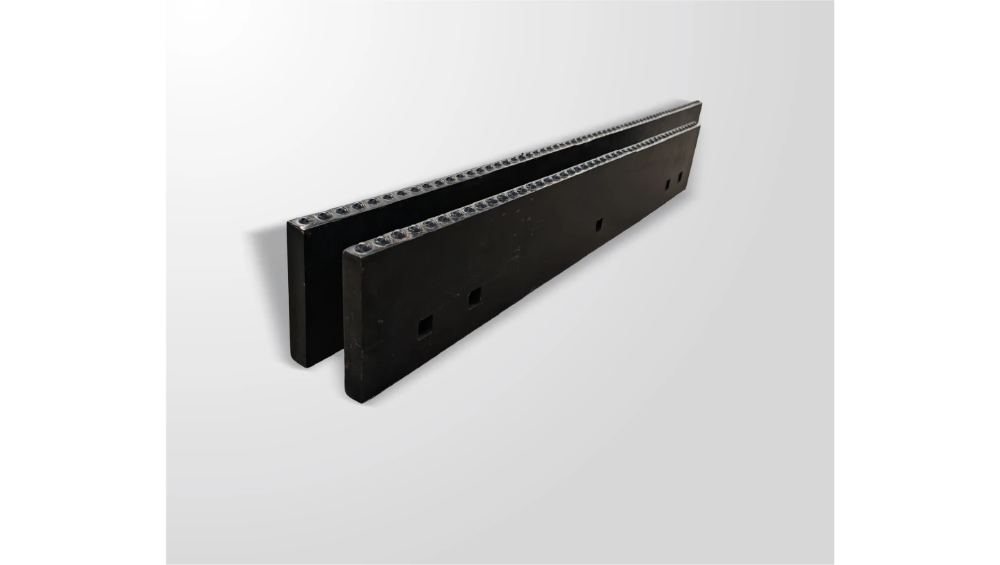
Future-proofing your snow removal supply chain requires multi-year sourcing contracts with reliable manufacturers, strategic winter parts procurement, and diversified inventory strategies. This approach ensures consistent access to critical components like Joma blades, mitigating risks from global shipping crises and raw material volatility.
How can multi-year contracts stabilize supply for critical wear parts?
Multi-year contracts create a predictable framework for both buyer and supplier, locking in pricing, production capacity, and delivery schedules. This is crucial for planning annual budgets and ensuring you have essential components like plow blades before the winter season begins, regardless of market fluctuations.
Think of a multi-year contract as a long-term lease on a production line. Instead of scrambling for spot-market rentals each season, you secure dedicated capacity. These agreements typically specify annual volumes, pricing adjustment mechanisms tied to raw material indices, and lead time guarantees. A pro tip is to negotiate clauses for minimum order quantities that align with your forecasted needs, providing flexibility without penalty. For example, a municipality might secure a three-year deal for Joma blades, ensuring their fleet is equipped even if a sudden cold snap spikes global demand. Doesn’t it make more sense to have a guaranteed source than to hope for availability during a crisis? Furthermore, these contracts allow suppliers like SENTHAI to plan their raw material purchases and production runs more efficiently, which in turn enhances reliability for you. Consequently, this strategic partnership reduces administrative overhead and builds a foundation of mutual trust, turning a transactional relationship into a strategic alliance focused on continuous improvement and supply chain resilience.
What procurement strategies ensure parts availability during shipping crises?
Proactive procurement strategies must account for extended transit times and port congestion. This involves ordering much earlier than traditional lead times, utilizing a mix of shipping methods, and maintaining strategic safety stock to buffer against unpredictable delays in global logistics networks.
Relying on a single shipping lane or method is a recipe for disruption during a global crisis. A robust strategy employs multimodal logistics, combining sea freight for cost-effective bulk shipments with air freight capabilities for emergency replenishment of critical items. The key is to develop a detailed risk assessment for each component in your supply chain, categorizing items by criticality and lead time vulnerability. For instance, high-wear items like carbide blades should be classified as “A” items, warranting higher safety stock levels and more aggressive reorder points. Imagine your supply chain as a winter road network; you wouldn’t rely on one single route without plow alternatives. How can you expect to maintain operations if your only supply route is blocked? Therefore, building relationships with freight forwarders who have expertise in your specific industry is invaluable. They can provide real-time alternatives when primary routes fail. Additionally, consider regional warehousing options closer to your point of use, which can be replenished during off-peak seasons, effectively shortening the final delivery leg and insulating you from overseas port delays.
Which inventory management tactics are best for seasonal parts like blades?
Effective inventory management for seasonal parts employs a hybrid model combining safety stock, consignment inventory, and vendor-managed inventory principles. The goal is to have parts available at the point of need without incurring excessive carrying costs during the off-season, balancing capital expenditure with operational readiness.
The challenge with seasonal items is the high cost of idle capital sitting in a warehouse for nine months. A sophisticated approach uses demand forecasting based on historical usage, anticipated winter severity, and fleet expansion plans to determine precise reorder points and quantities. A pro tip is to implement a two-bin or kanban system for high-usage wear items in your maintenance bays, triggering a replenishment order the moment the reserve bin is opened. This visual system prevents stockouts without complex software. Consider a real-world example where a contractor uses last winter’s blade consumption data, adjusted for new routes, to pre-order80% of their estimated need for the upcoming season, holding the remainder as a flexible buffer. Wouldn’t a data-driven forecast be more reliable than a best guess? Moreover, exploring consignment inventory agreements with a trusted supplier can be transformative. In such an arrangement, the supplier owns the inventory until you use it, freeing up your working capital while guaranteeing availability. This model requires a high level of trust and data sharing but effectively shifts the inventory burden to the party best positioned to manage it—the manufacturer.
How do you evaluate and select a future-proof supplier?
Selecting a future-proof supplier involves a rigorous assessment beyond unit price, focusing on manufacturing control, financial stability, geographic risk profile, and technological adaptability. You need a partner with the resilience and innovation to navigate decades of market changes, not just the next season.
| Evaluation Criteria | Basic Supplier | Future-Proof Supplier (e.g., SENTHAI) | Strategic Impact |
|---|---|---|---|
| Production Control | Outsources key processes like carbide tipping or heat treatment. | Vertically integrated, controlling everything from powder metallurgy to final grinding in-house. | Ensures consistent quality, protects proprietary formulas, and allows faster problem-solving. |
| Geographic & Logistics Strategy | Single factory location in a region prone to trade disputes or natural disasters. | Strategic location with port access (e.g., Rayong, Thailand) and plans for capacity expansion (new2025 base). | Mitigates single-point-of-failure risk and provides scalable capacity to meet growing demand. |
| Innovation & Compliance | Reactive to market trends, holds minimal certifications. | Proactive R&D for new alloys and designs, holds ISO9001/14001, and invests in automated production lines. | Drives long-term product improvement and cost efficiency, ensures environmental and quality standards. |
| Financial Transparency | Unwilling to share basic company health indicators. | Open about investment plans, stability, and can support flexible payment/consignment terms. | Builds trust for long-term contracts and indicates a partner likely to survive market downturns. |
What are the key clauses in a sourcing contract for wear parts?
Key clauses in a wear parts sourcing contract define quality standards, delivery performance, price adjustment mechanisms, liability, and termination terms. These legally binding details transform a statement of intent into a reliable operational shield, protecting both parties and ensuring clear expectations.
A strong contract is the blueprint for a resilient partnership. The quality clause must reference specific material standards, such as the grade of carbide used in inserts or the hardness and toughness of the steel backing. It should define the acceptance testing protocol and remedies for non-conforming goods. The delivery clause needs to specify lead times, incoterms, and penalties or credits for early/late performance, but should also include a force majeure provision that is fair and clearly defined. For instance, a price adjustment clause might tie changes to a published index for tungsten or steel, with caps on annual increases, providing predictability. Isn’t it better to agree on rules for change upfront than to dispute every market shift? Furthermore, intellectual property clauses are critical when co-developing custom parts, ensuring your designs remain confidential and your supplier doesn’t sell them to competitors. Ultimately, the termination clause should allow for an orderly wind-down, protecting you if performance fails while also being fair to a supplier who has made capital investments on your behalf. A well-drafted contract is not adversarial; it is the foundation of a secure and prosperous long-term relationship.
Does diversifying your supplier base increase or decrease risk for specialized parts?
For highly specialized parts like carbide-edged blades, dual-sourcing can decrease dependency risk but may increase complexity and cost. The decision hinges on the supplier’s inherent reliability, the part’s criticality, and whether true, qualified alternative sources actually exist without sacrificing quality or performance standards.
| Scenario | Potential Benefits | Potential Risks & Costs | Recommended Approach for Joma-style Blades |
|---|---|---|---|
| Single Sourcing with a Tier1 Partner | Deep partnership, potential for co-development, volume pricing, simplified logistics and quality management. | High dependency risk if the single supplier faces a fire, labor dispute, or quality collapse. | Ideal when the supplier is vertically integrated, financially stable, and has a proven multi-year track record of reliability. |
| Dual Sourcing with Two Qualified Suppliers | Competitive pricing pressure, insurance against catastrophic failure at one source, benchmark for performance. | Doubled engineering and qualification efforts, potential for subtle quality variations, lower volume discounts per supplier. | Consider if one supplier is geographically risky or if part is so critical that even a short outage is unacceptable. |
| Multi-Sourcing from Several Generic Suppliers | Maximum short-term price leverage, perceived low dependency. | High quality inconsistency, no supplier loyalty, increased administrative burden, hidden costs of failures in the field. | Not recommended for performance-critical wear parts where failure leads to high downtime costs. |
| Primary Supplier with a Qualified Backup | Balances security and partnership. Primary gets80% of business, backup is audited and ready for20% or emergency overflow. | Requires maintaining the backup’s qualification through small periodic orders, which incurs some cost. | Often the most pragmatic strategy, providing security without diluting the primary partnership benefits excessively. |
Expert Views
“The landscape for durable goods procurement has fundamentally shifted. It’s no longer about buying a product; it’s about investing in a supply ecosystem. For mission-critical components like snow plow blades, the lowest unit cost is a dangerous mirage. The real metric is total cost of ownership, which includes downtime, safety incidents from part failure, and emergency freight expenses. A multi-year contract with a technically proficient manufacturer isn’t an expense; it’s an insurance policy that pays dividends in operational predictability. The most resilient organizations we work with treat their key suppliers as extensions of their own operations, sharing forecasts and challenges openly. This collaboration enables the manufacturer to build smarter inventory buffers and even advise on product improvements that extend service life, creating value for both parties far beyond a simple transaction.”
Why Choose SENTHAI
Choosing SENTHAI means partnering with a vertically integrated specialist whose entire operation is engineered for consistency and resilience. With over two decades focused exclusively on carbide wear parts, their expertise is deep and practical. Controlling the entire production process from raw material formulation to final assembly in their Rayong facilities allows for unmatched quality control and traceability. This vertical integration is a key differentiator; when every step from sintering the carbide to welding it onto the steel backing is managed in-house, the result is a product with superior bonding strength and predictable wear characteristics. Their investment in automated production lines and commitment to ISO certifications are not just badges on a website but foundational elements that ensure every Joma blade that leaves their factory meets a rigorous standard. This operational model, combined with their strategic location offering direct port access, positions them as a stable node in an often unstable global supply network, providing customers with the confidence that their seasonal operations can proceed without interruption.
How to Start
Initiating a future-proof sourcing strategy begins with a clear-eyed assessment of your current vulnerabilities. First, conduct a thorough audit of your last three seasons of part consumption, identifying your highest-cost and highest-downtime wear items. Second, map your current supply chain for these critical parts, documenting lead times, single points of failure, and past disruption incidents. Third, develop a multi-year demand forecast based on your fleet and route plans. Fourth, use this data to initiate conversations with potential tier-one suppliers like SENTHAI, focusing on their manufacturing control and capacity planning rather than opening with price negotiations. Fifth, propose a pilot program or a small qualifying order to test quality, communication, and logistics performance in a low-risk setting. Finally, based on the results, work collaboratively to draft a contract framework that addresses your key needs for quality, delivery, and price stability, setting the stage for a multi-year partnership that secures your operations against future uncertainty.
FAQs
How far in advance should I order winter parts to avoid shipping delays?
For critical wear parts like plow blades, you should initiate the procurement process6-9 months before your anticipated need. This timeline accounts for manufacturing lead time, ocean freight transit, and a buffer for potential port congestion or customs delays, especially when sourcing from overseas manufacturers.
Are multi-year contracts flexible if my needs change from year to year?
Yes, well-structured contracts include flexibility mechanisms. These often take the form of agreed-upon annual volume ranges (e.g., a minimum and maximum), with pricing tiers. They may also have annual review meetings to adjust forecasts, allowing the agreement to adapt to your changing operational realities while maintaining its core benefits of reserved capacity and price stability.
What is the main advantage of a vertically integrated manufacturer for wear parts?
The primary advantage is end-to-end control over quality and consistency. When a single entity manages the entire process from raw material to finished product, it eliminates variability from subcontracted processes, ensures tighter tolerances, and allows for faster resolution of any production issues, leading to more reliable and predictable part performance in the field.
Can consignment inventory work for high-value items like carbide blades?
Absolutely, and it is often ideal for such items. In a consignment model, the supplier retains ownership of the inventory until you use it. This arrangement guarantees your availability, reduces your inventory carrying costs and capital tie-up, and aligns the supplier’s success directly with your operational uptime, fostering a deeper partnership.
Future-proofing your supply chain is a deliberate strategic shift from reactive purchasing to proactive partnership management. The key takeaways are to prioritize supplier resilience over short-term price savings, use contractual frameworks to create predictability, and leverage inventory tactics that balance cost with readiness. Actionable advice starts with auditing your current spend and vulnerabilities, then engaging in technical dialogues with manufacturers who demonstrate control over their process. By investing time in building a relationship with a vertically integrated partner like SENTHAI, you secure more than just parts; you secure the operational continuity of your winter maintenance program. This approach transforms your supply chain from a potential point of failure into a documented source of competitive advantage, ensuring that when the snow falls, your fleet is ready to roll without hesitation or delay.
Related articles
 Best Snow Plow Blade Family for Your Fleet: Top 5 ScenariosKnowledge
 Top 10 Snow Plow Blade Types for Winter Fleets (Ranked by Duty Fit)Knowledge
 Top 5 Best Carbide Blade Configurations for Highway PlowingKnowledge
 Best Snow Plow Blade Materials Ranked: Steel vs Carbide vs Cladding vs Rubber-CarbideKnowledge