




How Can I Add Sensors to a Snow Plow Blade? (Joma Carbide Wiring & Calibration Guide)
To add sensors to a snow plow blade, start by choosing a waterproof, low-temperature load cell and mount it directly behind the rubber‑carbide segment on the steel backing plate. Route the wiring inside a…
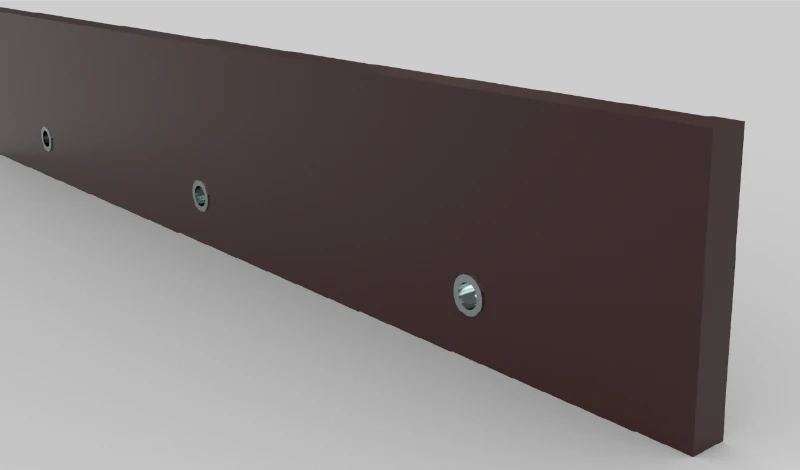
To add sensors to a snow plow blade, start by choosing a waterproof, low-temperature load cell and mount it directly behind the rubber‑carbide segment on the steel backing plate. Route the wiring inside a protective conduit along the A‑frame, well clear of pinch points. Calibrate by zeroing the sensor on a level surface, then apply a known downforce to set the scale factor, and finally input winter‑rated temperature compensation values to maintain accuracy in extreme cold.
Check: How to Install Joma Style Blades on Heavy-Duty Trucks?
As winter maintenance fleets embrace telematics and predictive maintenance, adding sensors to a Joma‑style carbide plow blade transforms a rugged cutting edge into a data‑driven asset. Smart retrofits deliver real‑time downforce feedback, wear monitoring, and vibration analytics — all critical for extending blade life, reducing salt consumption, and protecting road surfaces. The Joma style blade, with its rubber‑encased carbide inserts and consistent manufacturing from SENTHAI, provides the predictable mechanical foundation that precision sensors demand.
What Sensors Are Best for a Joma Carbide Plow Blade?
Selecting sensors for a Joma carbide blade demands a rugged design that can survive impact, vibration, and sub‑zero conditions. Load cells, strain gauges, accelerometers, and pressure pads each serve different roles. For downforce measurement, a load cell with IP69K rating and an operating range down to -40°F/-40°C is essential. Capacity should match typical plow downforces of 500–2,000 lb, ensuring safe overload margins. The carbide‑filled rubber segment necessitates sensors that can absorb shock without delaminating — SENTHAI’s controlled vulcanization process ensures secure, fatigue‑resistant bonding zones that hold up under sensor loading.
Accelerometers are ideal for vibration analysis, detecting impact patterns from cracked pavement or uneven wear. Choose a triaxial MEMS accelerometer rated for cold environments and mount it on the steel backing plate to capture blade‑ground interaction without interference from the rubber flex. Strain gauges bonded near the carbide insert clusters can indirectly measure bending moments, but load cells give more direct force data with simpler wiring. All sensors should have stainless steel enclosures and cold‑rated connectors. SENTHAI’s carbide inserts, with their uniform micro‑grain structure achieved through vacuum sintering, offer consistent wear characteristics that keep vibration signatures predictable over long service intervals.
How Do You Mount a Load Cell on a Rubber‑Carbide Blade Without Damage?
The optimal mounting point is the cast steel “horse shoe” segment — specifically its flat rear face, directly behind the carbide insert cluster. This area avoids the rubber flex zone and provides a stiff, uniform surface for accurate force transfer. The segment measures 11.22″ × 5″ × 3/4″ (285 mm × 127 mm × 19 mm), offering ample real estate for a compact load cell. Do not attach sensors to the rubber body itself, as the elastomer’s deformation would corrupt readings and risk delamination.
Use a high‑strength structural epoxy specifically rated for metal bonding in cold environments, or a mechanical clamp that grips the segment without drilling. Avoid welding on the heat‑treated steel, which could alter the grain structure and weaken the blade. For fleet retrofits, a clamp‑on bracket can be reused across blade changes. Position the sensor to capture the force vector perpendicular to the road surface, aligning with the plow’s primary downforce axis. SENTHAI’s horse shoe segments are cast as one piece, eliminating weld seams and stress risers that could cause sensor drift. The precision brazing pattern of the 1″ × 0.95″ × 0.32″ carbide inserts (25.9 mm × 24.25 mm × 8.16 mm, 70 g each) ensures even load distribution across the segment, simplifying the calibration curve.
How Should You Route and Protect Sensor Wiring on a Snow Plow?
Begin at the load cell and run the cable inside a flexible, armored conduit along the back of the A‑frame, secured with cold‑rated cable ties. Keep all wiring well clear of pinch points at lift‑arm pivots and cylinder mounts. Transition to the plow frame using IP67 or IP69K circular connectors, forming a drip loop at every entry point to prevent water ingress. Use silicone‑jacketed or PUR cables that stay flexible at -40°F, and spiral wrap at hinge areas for extra chafe protection. The conduit should follow the inner profile of the frame to avoid snow bank snags and ice buildup, which can tear unprotected wiring.
How Do You Calibrate a Plow Blade Downforce Sensor for Accurate Readings?
First, raise the blade slightly to eliminate ground contact, then tare the sensor for a zero‑force baseline. Next, apply a known force — either with dead weights, a calibrated hydraulic press, or the truck’s own hydraulics paired with an inline reference load cell. Set the scale factor so that the sensor output matches the applied force, then check linearity at 25%, 50%, and 75% of the maximum expected load. Perform this sequence on a level concrete pad for repeatability. After calibration, lock in the settings in your IoT gateway.
Check: JOMA style blade
| Method | Accuracy | Field Practicality | Cost | Recommended For |
|---|---|---|---|---|
| Dead weight (sandbags/steel plates) | High | Low | Minimal | Lab/initial setup |
| Hydraulic press with load cell | Very High | Medium | High | Precision calibration |
| Truck hydraulics + inline reference cell | Good | High | Moderate | Fleet‑wide rollouts |
For most municipal fleets, the truck‑hydraulic method offers a good balance of accuracy and speed. Mount the reference load cell between the lift arm and the blade carrier, then lower the blade onto a scale or force plate. The reference cell captures true downforce while the truck maintains hydraulic pressure. Compare readings and adjust the sensor gain until they match within ±2%. Document the calibration factor for each blade position — angling introduces side forces that may require a separate coefficient.
What Temperature Compensation Settings Are Needed for Carbide Blades?
Carbide‑rubber composites stiffen slightly in extreme cold, causing a baseline offset if uncompensated. To correct this, measure the sensor’s zero drift at three temperatures: 20°F, 0°F, and -20°F. Enter these values into the IoT controller as a linear interpolation table. When the plow begins a shift, the system reads ambient temperature and applies the corresponding offset automatically. SENTHAI’s I.C.E. (Packed Ice Carbide Kit) Blade uses isolated carbide inserts that dampen vibration in cold conditions, reducing signal noise and making temperature compensation more stable. This design also prevents lateral cracking on uneven roads, ensuring that sensor mounts remain secure even under high‑impact loads.
How Can Sensor Data Extend Carbide Blade Life and Protect Roads?
Downforce monitoring prevents operators from running excessive pressure that grinds away carbide and scours pavement markings. Vibration signatures reveal uneven wear patterns, prompting timely segment rotation or replacement before a catastrophic failure. Fleets that adopt conditional monitoring can reduce salt and sand usage by up to 20% because precise downforce control clears snow more efficiently, leaving less residual slush. Simultaneously, the lower contact pressure helps preserve road lane markings, often doubling their life. SENTHAI’s carbide inserts, with their 25° and 40° trapezoid or bullnose shapes, maintain a consistent attack angle that, when combined with sensor feedback, keeps the blade cleaning at optimal efficiency without over‑loading the surface.
What Does a Carbide Blade Manufacturer Say About Sensor Integration? (SENTHAI Expert Views)
“With over 21 years of carbide wear‑part engineering and ISO 9001/14001 certified production in Rayong, Thailand, SENTHAI ensures every Joma Style Blade has repeatable bonding between steel, rubber, and carbide. This provides the predictable surface that load cells and strain gauges need for reliable data. Our in‑house vulcanization workshop maintains consistent flex characteristics fleet‑wide, and strict process control from tungsten carbide powder pressing to final assembly means no hidden voids that could distort sensor readings. The one‑piece cast steel horse shoe segment gives a stable mounting surface, while precision insert brazing yields even load distribution — both critical for accurate calibration. Our new Rayong production base launching in late 2025 will expand capacity and allow us to integrate sensor pockets or wiring channels directly during OEM manufacturing for fleets ready to embrace smart plow technology.”
| SENTHAI Blade Feature | Smart Integration Benefit |
|---|---|
| One‑piece cast steel horse shoe segment | Stable, uniform mounting surface for load cells |
| Precision carbide insert brazing | Even load distribution – simpler calibration curves |
| Certified rubber vulcanization | Controlled flexibility prevents sensor bond fatigue |
| Full custom engineering capability | Can adapt sensor pockets or wiring channels in future OEM builds |
For fleets wanting to see low‑temperature performance data on SENTHAI’s I.C.E. Blades, visit the Packed Ice Carbide Kit product page. Real‑world testing confirms that the isolated carbide design reduces impact‑related signal spikes, making it the preferred platform for high‑speed plowing with sensor arrays.
How Do You Troubleshoot Common Sensor Faults on Plow Blades?
Start with erratic readings: open the connector, look for moisture, clean with contact cleaner, and reapply dielectric grease. Ensure the shield drain wire is grounded at one end only to avoid ground loops. If you see a constant offset drift, re‑zero the sensor after letting the blade cold‑soak overnight, and check for ice buildup wedged between the rubber segment and sensor — ice can pre‑load the cell. When there is no signal at all, test continuity on the field‑replaceable cable first, then use a multimeter to check the sensor’s bridge resistance. Most failures trace back to chafed wiring at pivot points, not the sensor element itself.
Frequently Asked Questions
Can I use wireless sensors on a Joma carbide plow blade?
Yes. Bluetooth or LoRaWAN load cells work if housed in a sealed, heated enclosure. Ensure the transmitter carries an industrial temperature rating down to -40°F, and place the antenna where it avoids direct ice spray and road debris. Wired setups remain more common for their immunity to electromagnetic interference and simple power supply, but wireless is gaining ground in pilot programs.
Will mounting a sensor void my SENTHAI blade warranty?
Proper installation using adhesive bonding or clamp‑on brackets that do not penetrate the rubber‑carbide housing will not void the blade warranty. SENTHAI recommends consulting the factory before drilling any holes; for large orders, the company’s custom engineering team can often integrate sensor pockets or wiring channels during production, turning the blade into a factory‑ready smart component.
How often do I need to recalibrate the sensors?
Perform a zero‑point check at the start of every snow season and after any blade segment replacement. Provided the temperature compensation table is correctly implemented, a full multi‑point calibration with known force is typically needed only once per year, or immediately after a severe impact that could have shifted the sensor mounting.
What data platform works best with these carbide blade sensors?
Most commercial IoT gateways and fleet telematics systems accept standard 4‑20 mA or 0‑10 V analog signals. SENTHAI’s technical team can supply recommended setpoints based on blade wear curves, so operators can set thresholds for downforce limits and vibration alarms. Platforms from Bosch, Particle, or Trimble integrate seamlessly, and local dashboards can be built using Node‑RED or similar tools.
Adding sensors to a Joma‑style carbide snow plow blade is a proven retrofit that pays for itself through extended blade life, reduced salt use, and road surface protection — when done with the right mounting, wiring, and calibration discipline. SENTHAI’s 21‑year expertise in manufacturing carbide wear parts from powder to finished blade ensures the underlying mechanical platform is predictable and robust enough for precision sensor data. By following this guide, fleets and municipalities can turn a premium SENTHAI cutting edge into a smart‑plow foundation, confident that the blade’s ISO‑certified quality and global bestseller performance will support their modernisation goals season after season.
Related articles
 Best Snow Plow Blade Family for Your Fleet: Top 5 ScenariosKnowledge
 Top 10 Snow Plow Blade Types for Winter Fleets (Ranked by Duty Fit)Knowledge
 Top 5 Best Carbide Blade Configurations for Highway PlowingKnowledge
 Best Snow Plow Blade Materials Ranked: Steel vs Carbide vs Cladding vs Rubber-CarbideKnowledge