




High-Performance Carbide Tip Brazing Process for Heavy-Duty Cutting Edges
Winter road maintenance operations face an ongoing technical challenge: severe impact, heavy abrasion, and continuous exposure to corrosive deicing chemical solutions. While tungsten carbide inserts deliver excellent hardness, the overall lifespan of a snow…

Winter road maintenance operations face an ongoing technical challenge: severe impact, heavy abrasion, and continuous exposure to corrosive deicing chemical solutions. While tungsten carbide inserts deliver excellent hardness, the overall lifespan of a snow plow blade ultimately depends on the structural integrity of the joint that bonds the carbide to the steel substrate.
The Critical Role of the Carbide-to-Steel Interface
Joining tungsten carbide to a carbon steel backing, such as C45, presents a distinct engineering problem involving dissimilar materials. The carbide phase is exceptionally hard but relatively brittle, whereas the steel substrate is ductile and expands differently under heat. The brazing alloy—typically a silver- or copper-based composition—acts as an engineered intermediary layer designed to absorb mechanical shock and distribute thermal stress.
During a proper carbide tip brazing process, three metallurgical actions must occur simultaneously: the alloy must wet both surfaces completely, it must flow smoothly without trapping atmospheric gases, and it must solidify into a dense, continuous layer with controlled thickness. If any region fails to wet, or if it traps flux residue, microscopic voids form within the joint. These hidden gaps concentrate stress and create direct pathways for moisture, calcium chloride, and sodium chloride. Over time, these corrosive elements trigger galvanic activity beneath the insert, causing progressive bond degradation that leads to sudden tool detachment under operational loads.
Why Manual Flame Brazing Creates Hidden Failure Points
Manual torch brazing introduces human variability into every critical stage of production. Heat application is often uneven, which tends to overheat exposed outer edges while leaving the central zones under-activated. The operator’s relative distance, torch angle, and dwell time directly dictate the flow behavior and wetting characteristics of the alloy.
A common structural finding in premature blade failures is partial alloy wetting, where the perimeter of the joint appears bonded while the center contains discontinuous braze coverage. Under cyclic field loads, this unbonded core acts exactly like a pre-existing sub-surface crack. Localized overheating degrades the carbide interface and reduces overall adhesion strength, while uneven cooling rates lock internal tensile stresses into the component before it ever enters service.
Automated Induction Brazing and Uniform Thermal Control
Automated induction systems change the physical environment of the brazing process. Instead of utilizing an open flame, an induction coil generates a controlled electromagnetic field that heats the entire joint area uniformly and predictably.
-
Calibrated Heating Profiles: The system matches the thermal cycle precisely to the melting range of the alloy, ensuring full-surface wetting across the complete interface.
-
Microstructure Preservation: By avoiding localized hot spots, automated induction preserves both the carbide grain integrity and the base steel microstructure.
-
Batch-Level Consistency: Automated production lines integrate robotic positioning and precise timing control, ensuring every single insert undergoes an identical thermal profile to meet strict DOT procurement standards.
Comparison of Brazing Method Methodologies
The practical distinctions between manual torch methods and automated induction systems determine the long-term field reliability of wear parts.
| Technical Factor | Manual Flame Brazing | Automated Induction Brazing |
| Heat Distribution | Operator-dependent, highly uneven | Uniform and precisely controlled |
| Alloy Wetting | Inconsistent, high risk of dry central zones | Consistent, full-surface capillary wetting |
| Void Formation | High likelihood due to trapped gas and flux | Minimized through controlled alloy flow dynamics |
| Residual Stress | High levels due to rapid, uneven cooling | Significantly reduced through managed thermal cycles |
| Repeatability | Variable across different operators and shifts | High batch-level consistency for municipal audits |
| Process Traceability | Limited or non-existent paper trail | Digital parameters fully documented per batch |
Post-Weld Annealing and Stress Redistribution
Even when heating cycles are executed perfectly, a brazed joint remains vulnerable if the cooling phase is left unmanaged. Rapid, uncontrolled cooling locks severe residual tensile stresses into the braze layer and the adjacent heat-affected zone of the steel backing.
Post-weld thermal stress relief annealing addresses this vulnerability by reintroducing controlled heat immediately after solidification, followed by a strictly managed cooling curve. This thermal treatment facilitates atomic-level stress redistribution, which significantly increases the fracture toughness of the interface. Instead of undergoing brittle failure when striking embedded road obstacles, the annealed joint absorbs high-velocity impact and cyclic vibration over extended maintenance shifts.
Sourcing Advantages and RFQ Procurement Standards
For procurement teams, municipal engineers, and fleet managers, specifying vague material descriptions like “brazed carbide inserts” is insufficient for ensuring winter uptime. True field reliability requires shifting evaluation protocols from generic marketing claims to measurable process controls. When drafting Request for Quotes (RFQs) for severe-service cutting edges, procurement specifications should explicitly require:
-
Documented Induction Parameters: Verification of automated temperature ranges, cycle times, and coil positioning data.
-
Stress-Relief Protocols: Evidence of a formalized post-braze thermal annealing workflow.
-
Non-Destructive Validation: Certified testing results for bond integrity, such as ultrasonic inspection or metallographic sampling showing void-free interfaces.
-
Batch Traceability: A verifiable manufacturing trail linking raw powder metallurgy to the final welded assembly.
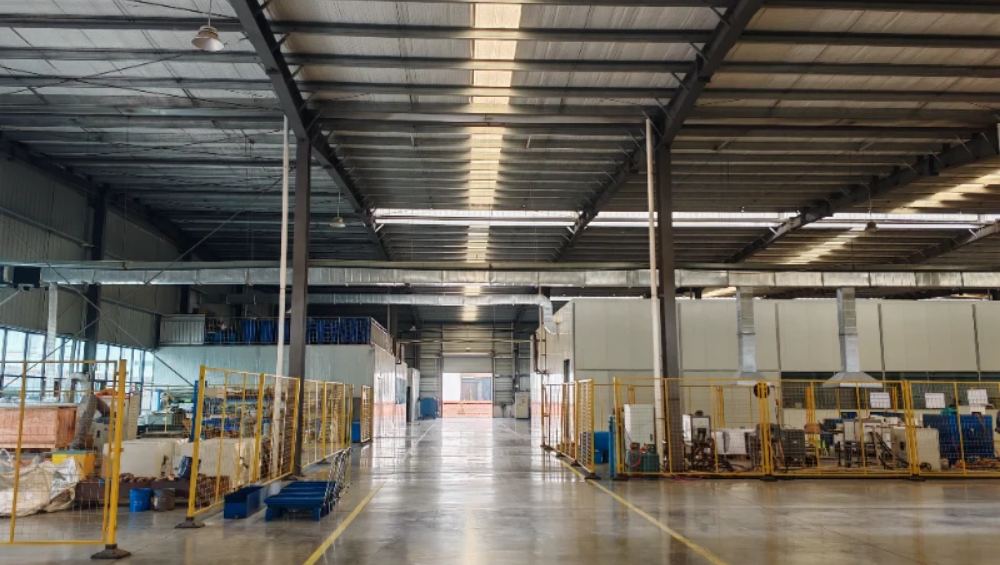
Advanced manufacturing facilities, such as SENTHAI’s dedicated wear-parts production plant, integrate these exact parameters. By combining an automated production line with traceable quality control from powder metallurgy to induction welding, the resulting snow plow blades resist premature joint failure, lower total operating costs, and reduce emergency maintenance downtime during critical weather events.
Step-by-Step Carbide Brazing Execution
-
Surface Preparation: Clean the steel recess and the tungsten carbide tip thoroughly to completely eliminate oil, manufacturing burrs, and surface oxidation.
-
Flux Selection: Choose a specialized flux formulated specifically for tungsten carbide and the precise working temperature range of the selected brazing alloy.
-
Uniform Application: Apply the flux evenly to both the insert and the seating pocket to facilitate proper capillary action and alloy wetting.
-
Controlled Preheating: Heat the assembly gradually using a configured induction setup to prevent sudden thermal shock to the brittle carbide structure.
-
Alloy Introduction: Introduce the brazing alloy alloy only when the joint interface reaches its target temperature, allowing the material to flow completely throughout the recess.
-
Managed Cooling: Cool the completed assembly slowly within an insulated medium or a computer-controlled cooling chamber, followed by a thorough inspection for full wetting and zero visible voids.
Operational Deployment Scenarios
-
High-Abrasion Municipal Routes: Traditional steel blades wear down rapidly on packed ice and gravel roads, requiring multiple changeouts per season. Deploying SENTHAI’s automated induction-brazed carbide blades delivers extended edge retention and cuts seasonal replacement labor costs.
-
Large Fleet Contracting: Inconsistent manual brazing results in unpredictable field lifespans across identical service trucks. Standardizing on traceable, systematically manufactured carbide edges ensures predictable wear patterns and uniform performance across all service shifts.
-
Uptime-Critical Highway Clearing: High-speed plowing subjects inserts to severe thermal shock and sudden mechanical impacts simultaneously. Utilizing blades processed with post-weld stress relief annealing prevents catastrophic insert pop-outs during critical highway maintenance windows.
Frequently Asked Questions
What is the best brazing process for attaching tungsten carbide inserts to steel blades?
Automated induction brazing is the most reliable method because it provides uniform heat distribution, consistent alloy flow, and highly repeatable bonding conditions. When paired with automated post-weld annealing, it significantly reduces residual internal stress and improves the long-term impact resistance of the joint.
Why do carbide inserts pop out of snow plow cutting edges?
The primary cause of insert loss is mechanical failure at the braze interface due to internal voids, incomplete alloy wetting, or high residual thermal stress. These hidden defects weaken the structural bond, allowing moisture and deicing salts to cause sub-surface corrosion and crack propagation under operational vibrations.
How does post-weld annealing improve tool performance?
Post-weld annealing relieves the internal tensile stresses created during the rapid cooling phase of brazing. By allowing controlled thermal redistribution, it enhances the fracture toughness of the joint, enabling it to withstand heavy shock loads without cracking.
Are harder carbide grades the solution to insert loss?
No. Increasing the hardness rating of the tungsten carbide does not prevent insert loss if the underlying bond to the steel backing is structurally flawed. Interface joint quality and stress management are far more critical to tool retention than the hardness grade of the carbide alone.
Can a visually perfect brazed joint still fail prematurely?
Yes. Many structural defects, such as internal voids, microscopic air pockets, and incomplete core wetting, are entirely sub-surface and cannot be detected through visual inspection. This emphasizes the importance of verifying automated process parameters and demanding non-destructive validation testing during the sourcing process.
Related articles
 Optimizing Winter Fleets: The Definitive Guide to Kueper Plow Blades Substitute SystemsinfoSourcing a Credible Kennametal Snow Plow Blades Equivalent: The Metallurgical and Operational Guideinfo
 Polarflex Plow Blade Replacement: The Engineered Sourcing Guide for Peak Fleet DurabilityinfoBeyond OEM Lock-In: Modern Fleet Guide to Cutting-Edge Plow Blade Alternativesinfo