




Why low pressure sintered carbide changes how heavy wear parts survive real impact
When a carbide insert fails in the field, it rarely announces itself with gradual wear. It fractures—often suddenly—under load, impact, or thermal stress. That failure is frequently rooted in something invisible: micro-voids formed during…
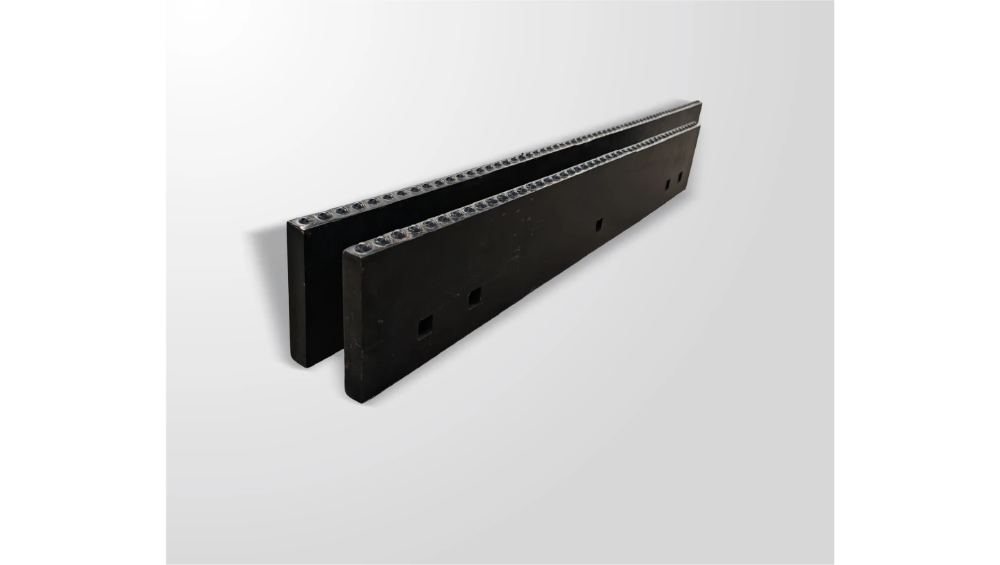
When a carbide insert fails in the field, it rarely announces itself with gradual wear. It fractures—often suddenly—under load, impact, or thermal stress. That failure is frequently rooted in something invisible: micro-voids formed during sintering. Understanding low pressure sintered carbide is less about abstract metallurgy and more about whether a cutting edge, plow blade, or grading insert holds together when it strikes frozen asphalt at speed. The shift from conventional vacuum sintering to low-pressure gas consolidation directly addresses this risk by tightening internal structure, reducing hidden defects, and improving how the material absorbs shock instead of cracking.
The real problem inside conventionally sintered carbide
Traditional vacuum sintering removes binders and consolidates tungsten carbide powders, but it does not always eliminate microscopic voids trapped between grains. These voids are not cosmetic—they act as stress concentrators. Under high-impact conditions, such as winter road clearing or heavy grading, cracks initiate at these weak points and propagate quickly.
In controlled lab conditions, this may appear acceptable. In real-world use, however, carbide components experience repeated shock loading, uneven mounting pressure, and temperature cycling. A void that seems insignificant in density calculations can become the origin of catastrophic cleavage when the tool meets resistance at speed.
A procurement team once approved a batch of carbide inserts based purely on hardness and composition data. Within weeks of deployment, multiple inserts fractured mid-operation—not from wear, but from internal structural failure. Post-analysis revealed sub-surface porosity that had not been addressed during sintering.
This is the gap many specifications miss: density alone is not enough. The uniformity of that density is what determines survival.
What low pressure sintering actually does differently
Low-pressure sintering—often implemented as Sinter-HIP (Hot Isostatic Pressing integrated with sintering)—introduces inert gas, typically argon, at elevated pressures during or after densification. Instead of relying solely on vacuum conditions, the process actively compresses the material at a microscopic level.
This added pressure forces residual pores to collapse and promotes tighter grain bonding. At the same time, controlled thermal cycles reduce internal stress gradients that would otherwise remain locked into the structure.
The result is not just “denser” carbide, but more structurally coherent carbide. Grain boundaries become more uniform, cobalt binder distribution stabilizes, and the internal matrix behaves more like a continuous solid than a clustered assembly.
Vacuum sintering vs low pressure sintering in practice
The difference becomes clearer when comparing how each method affects structural integrity:
This distinction is especially relevant for components exposed to repeated shock, such as carbide inserts used in snow removal or road maintenance equipment.
Why micro-void elimination directly improves impact toughness
Impact toughness in carbide is often discussed in terms of transverse rupture strength (TRS), but that number is heavily influenced by internal defects. A perfectly bonded carbide structure distributes stress evenly. A porous one localizes it.
Low pressure sintered carbide improves toughness not by making the material softer, but by making it structurally consistent. When force is applied, energy disperses across the matrix instead of concentrating at weak points.
This becomes critical in applications where:
-
Tools encounter unpredictable resistance (ice, embedded debris, uneven surfaces)
-
Load direction changes rapidly
-
Installation torque varies across mounting points
In these conditions, even small improvements in internal cohesion translate into significantly longer service life.
One overlooked factor in carbide performance is how the material cools after sintering. Rapid or uneven cooling can introduce residual stresses inside the carbide, even if densification was successful.
Low-pressure sintering processes typically include controlled cooling stages. This gradual stabilization allows the material to relax internally, preventing stress buildup between grains and binder phases.
Without this step, a component may leave the furnace appearing structurally sound but remain internally “tense.” Under field conditions, that tension contributes to crack initiation.
What engineers and buyers should actually evaluate
For technical buyers and auditors, the challenge is that microstructure is not visible in standard datasheets. Instead of relying only on hardness or composition, evaluation should focus on process capability and consistency.
Ask how the manufacturer handles:
-
Gas pressure levels during sintering and whether Sinter-HIP is integrated
-
Cooling rate control and thermal cycle repeatability
-
Batch traceability for powder mixing, pressing, and sintering stages
-
Inspection methods for internal defects, not just surface quality
Facilities equipped with vacuum and low-pressure furnaces and automated handling systems are better positioned to maintain this level of control, especially for high-volume or custom-shaped wear parts.
Where low pressure sintered carbide makes the biggest difference
Not every application requires advanced sintering, but for high-impact environments, the difference becomes hard to ignore. Components such as underbody scrapers, plow blades, and grading inserts experience combined stresses—impact, abrasion, and vibration.
In these cases, failure is rarely due to gradual wear alone. Structural integrity determines whether the part lasts its full lifecycle or fails prematurely.
Low pressure sintering becomes less of a premium feature and more of a baseline requirement when:
-
Equipment operates at speed under load
-
Downtime carries high operational cost
-
Replacement involves complex installation or logistics
A realistic limitation to keep in mind
Even the most advanced sintering process cannot compensate for improper use. Installation torque, mounting alignment, and operating conditions all influence performance.
A perfectly sintered carbide insert can still fail if:
-
Bolting pressure is uneven, creating localized stress
-
The tool is used outside its intended load range
-
Impact conditions exceed design expectations
Material quality sets the ceiling for performance, but real-world handling determines whether that ceiling is reached.
Connecting process capability to manufacturing reliability
Low pressure sintered carbide is ultimately a process story, not just a material label. It reflects how tightly a manufacturer controls each stage—from powder preparation to final consolidation.
Manufacturers with integrated automation, pressure-controlled furnaces, and traceable production systems are able to produce carbide that behaves predictably across batches. This consistency is what procurement teams and OEM auditors increasingly prioritize.
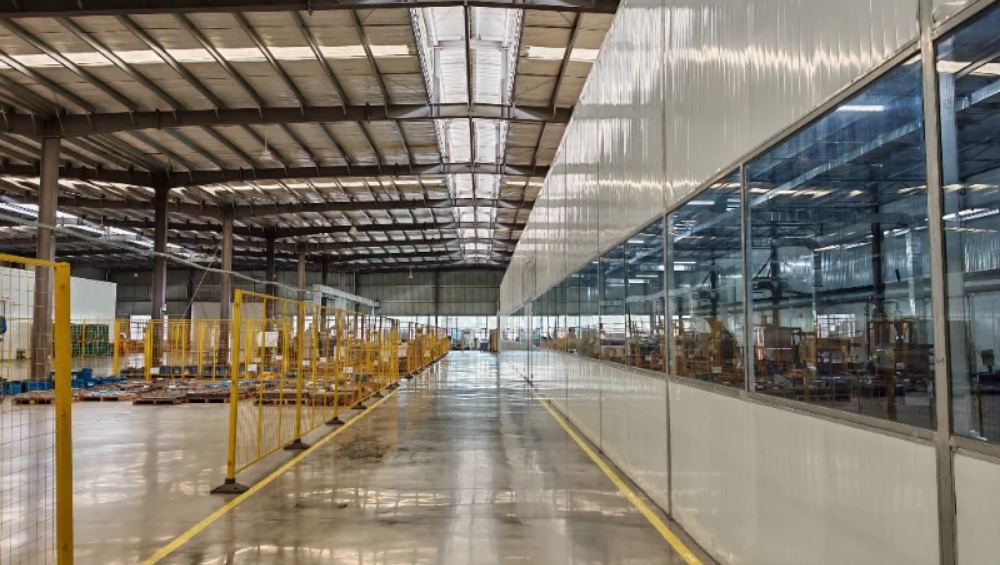
For those evaluating supply partners, it is worth taking a closer look at how production is structured and controlled. You can learn more about our advanced automated production line capabilities to understand how process integration supports consistent carbide performance.
Frequently Asked Questions
What is low-pressure sintering in tungsten carbide manufacturing?
Low-pressure sintering is a process where inert gas pressure is applied during or after sintering to eliminate internal pores and improve material density and uniformity.
How does Sinter-HIP improve impact resistance?
Sinter-HIP compresses the material at a microscopic level, removing voids and strengthening grain bonding, which reduces crack initiation under impact.
Why do micro-voids form in standard vacuum-sintered carbide?
Micro-voids can remain due to incomplete densification or trapped gases during sintering, especially without additional pressure to collapse them.
Is low pressure sintered carbide always necessary?
No, but it becomes critical in high-impact or high-load applications where structural failure would lead to downtime or safety risks.
Can better sintering replace proper installation practices?
No. Even high-quality carbide requires correct mounting, torque, and usage conditions to perform as intended.
Related articles
 Best Snow Plow Blade Family for Your Fleet: Top 5 ScenariosKnowledge
 Top 10 Snow Plow Blade Types for Winter Fleets (Ranked by Duty Fit)Knowledge
 Top 5 Best Carbide Blade Configurations for Highway PlowingKnowledge
 Best Snow Plow Blade Materials Ranked: Steel vs Carbide vs Cladding vs Rubber-CarbideKnowledge