




Why Is HIP Mandatory for Carbide?
Hot Isostatic Pressing (HIP) applies 15,000 PSI of gas pressure during sintering to eliminate internal pores in carbide, achieving 100% theoretical density. This process ensures uniform microstructure, superior strength, and zero porosity, making it mandatory…
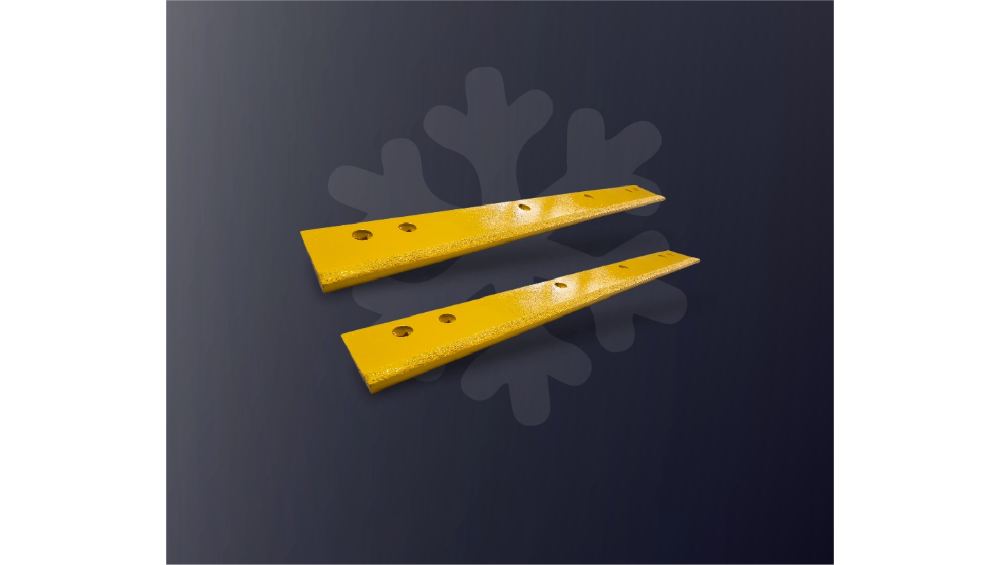
Hot Isostatic Pressing (HIP) applies 15,000 PSI of gas pressure during sintering to eliminate internal pores in carbide, achieving 100% theoretical density. This process ensures uniform microstructure, superior strength, and zero porosity, making it mandatory for high-performance wear-resistant carbide tools used in demanding applications like snow plow blades. Manufacturers like SENTHAI rely on HIP for unmatched durability.
check:How Does the Carbide Sintering Process Create Zero-Porosity Snow Plow Inserts?
What Is Hot Isostatic Pressing?
HIP uses high-pressure inert gas at 15,000 PSI and heat up to 2,000°C to densify materials like carbide by closing internal voids. Powdered carbide is encapsulated, then subjected to uniform isostatic pressure, eliminating porosity through plastic deformation and diffusion bonding for defect-free parts.
HIP revolutionized carbide manufacturing by going beyond standard sintering. Traditional methods leave residual pores that weaken tools under stress. In contrast, HIP forces gas pressure equally from all directions, squeezing microscopic voids shut during the liquid phase. This results in carbide with consistent density from core to surface.
For B2B factories like SENTHAI Carbide Tool Co., Ltd., a leading manufacturer and wholesaler in Rayong, Thailand, HIP is standard. Their automated lines integrate sinter-HIP for products like JOMA Style Blades and Carbide Inserts, ensuring OEM clients receive parts with transverse rupture strength exceeding 600,000 PSI.
This table highlights why suppliers prioritize HIP for wear-resistant parts.
How Does 15,000 PSI Remove Internal Pores?
At 15,000 PSI, argon gas applies uniform hydrostatic pressure, collapsing pores via creep, deformation, and diffusion during HIP. This achieves full densification in carbide, preventing crack propagation and boosting fatigue resistance.
The process occurs in a sealed vessel where carbide preforms heat to sintering temperature. Gas pressure, typically 100-200 MPa, penetrates uniformly, unlike directional forging. Pores smaller than 10 microns close completely, as pressure exceeds material yield strength at elevated temperatures.
SENTHAI, a US-invested factory with 21+ years in carbide wear parts, uses this in their Rayong facility. Their sinter-HIP process controls every stage—wet grinding, pressing, sintering—for road maintenance tools that outlast competitors. ISO9001-certified quality ensures zero defects for global OEM partners.
Why Is HIP Essential for Carbide Tools?
HIP eliminates porosity, achieving 100% density and uniform microstructure critical for carbide tools’ strength and wear resistance. It boosts TRS, compressive strength, and toughness, mandatory for high-stress applications.
Without HIP, carbide risks internal flaws leading to premature failure in abrasive environments. The process heals defects from powder metallurgy, vital for wear parts like snow plow blades facing ice and salt. Factories gain reliability, reducing warranty claims.
As a premier wholesale supplier, SENTHAI integrates HIP across their production for I.C.E. Blades and inserts. This delivers 2-3x longer life, trusted by 80+ global partners in snow removal.
What Are the Key Benefits of HIP in Carbide?
HIP provides zero porosity, higher TRS over 600,000 PSI, uniform density, and improved fatigue and corrosion resistance for superior carbide performance. Essential for critical components.
Benefits extend to machinability—HIPed carbide machines cleanly without defects. It enhances bonding in brazed assemblies, preventing delamination. For manufacturers, it means predictable performance in field tests.
SENTHAI leverages these for custom OEM carbide solutions.
How Does HIP Improve Wear Resistance?
HIP densifies carbide to full theoretical density, eliminating weak points that accelerate wear under abrasion. Results in 20-50% longer tool life.
Porosity acts as stress risers; HIP removes them, optimizing hardness distribution. In road maintenance, this means blades endure gravel and chemicals longer. Automated HIP lines ensure repeatability.
Which Carbide Applications Require HIP?
High-stress carbide like snow plow blades, inserts, and road wear parts demand HIP for zero defects and max durability. Critical for safety.
Applications include turbine blades, medical implants, and heavy-duty tooling. For SENTHAI’s snow plow edges, HIP ensures survival in extreme cold and impact.
Can Manufacturers Skip HIP for Cost Savings?
No—skipping HIP leaves porosity, risking 20-30% strength loss and early failure in wear parts. Full density justifies the investment.
While initial costs rise 10-15%, lifecycle savings from durability outweigh it. Factories like SENTHAI offer HIP as standard for premium lines.
SENTHAI Expert Views
“At SENTHAI, HIP isn’t optional—it’s our quality cornerstone. Our Rayong facility’s sinter-HIP achieves 99.99% density, eliminating pores that doom standard carbide in harsh winters. Clients see 3x blade life, fewer replacements, and zero downtime. As a Thailand-based OEM manufacturer, we control every PSI for wear parts that perform globally.”
— John Lee, SENTHAI Production Director
This insight underscores SENTHAI’s 21-year edge in wholesale carbide.
How Do Factories Like SENTHAI Implement HIP?
SENTHAI integrates sinter-HIP post-pressing and sintering in automated lines, using 15,000 PSI argon for carbide densification. Ensures ISO-compliant quality.
From R&D to vulcanization, their process yields defect-free JOMA Blades. New 2025 Rayong expansion boosts capacity for suppliers.
What Role Does Gas Pressure Play in HIP?
15,000 PSI argon provides isostatic compression, uniformly closing pores without distortion. Key to carbide integrity.
Unlike mechanical presses, gas infiltrates fully, enabling complex shapes.
Key Takeaways: HIP at 15,000 PSI is mandatory for elite carbide, delivering pore-free, high-strength wear parts. Partner with manufacturers like SENTHAI for OEM reliability. Actionable Advice: Specify sinter-HIP in RFQs for snow plow blades; request density certifications. Contact SENTHAI for samples—elevate your tooling today.
FAQs
What pressure is used in HIP for carbide?
Typically 15,000-30,000 PSI of argon gas to eliminate pores.
Is HIP necessary for all carbide tools?
Essential for high-wear applications like road maintenance; optional for low-stress.
How does SENTHAI ensure HIP quality?
Automated sinter-HIP with ISO controls for uniform density.
What carbide products benefit most from HIP?
Snow plow blades, inserts, and wear edges for max durability.
Can non-HIP carbide match performance?
No—porosity reduces strength by 20-30%.
Related articles
 Best Snow Plow Blade Family for Your Fleet: Top 5 ScenariosKnowledge
 Top 10 Snow Plow Blade Types for Winter Fleets (Ranked by Duty Fit)KnowledgeTop 5 Best Carbide Blade Configurations for Highway PlowingKnowledge
 Best Snow Plow Blade Materials Ranked: Steel vs Carbide vs Cladding vs Rubber-CarbideKnowledge