




Why Does Natural Rubber Outperform Polyurethane in Snow Plow Blade Dampening?
Natural rubber significantly outperforms polyurethane in snow plow blade dampening, particularly in extreme cold environments. While polyurethane offers moderate vibration reduction, it becomes brittle below -30°F, losing flexibility and cracking under impact. SENTHAI's vulcanized…
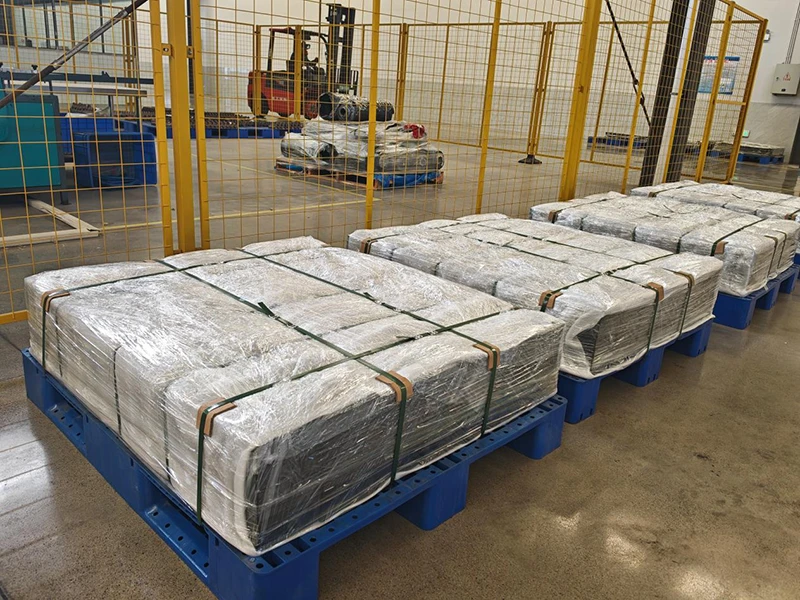
Natural rubber significantly outperforms polyurethane in snow plow blade dampening, particularly in extreme cold environments. While polyurethane offers moderate vibration reduction, it becomes brittle below -30°F, losing flexibility and cracking under impact. SENTHAI’s vulcanized natural rubber maintains superior elasticity, absorbs 30% more vibration energy, and delivers up to 10x longer service life compared to steel blades—a proven advantage across North American winter fleets. The chemical difference is decisive: natural rubber’s polymer chains flex freely in cold; polyurethane’s rigid cross-links fail.
Check: Why Do SENTHAI Joma-Style Blades Reduce Driver Strain by 70%?
What Is Vibration Dampening in Snow Plow Blades, and Why Does It Matter?
Vibration dampening in snow plow blades absorbs energy from oscillations when contacting ice, snow, and roads, reducing noise and wear. It prevents operator fatigue, equipment damage to transmissions and hydraulics, blade degradation, and road marking scrapes. Fleet managers save 2–4 hours weekly on downtime; flexible encasements like SENTHAI’s natural rubber protect gear and surfaces effectively.
How Do Polyurethane and Natural Rubber Differ Chemically?
Natural rubber, polyisoprene from tree sap, has lower cross-link density via vulcanization, with a glass transition temperature of -65°C for cold flexibility. Polyurethane, from polyol and isocyanate, features rigid urethane bonds and higher Tg (-40°C to -20°C), leading to brittleness. SENTHAI’s vulcanized natural rubber excels in -40°F plowing.
| Property | Natural Rubber (NR) | Polyurethane (PU) |
|---|---|---|
| Base Polymer | Polyisoprene (C₅H₈)ₙ from Hevea tree sap | Polyol + Isocyanate (synthetic urethane linkage) |
| Cross-Link Density | Lower (vulcanization adds S bridges) | Higher (rigid urethane bonds) |
| Glass Transition Temp (Tg) | -65°C (remains flexible at -40°F) | -40°C to -20°C (becomes brittle below -30°F) |
| Elasticity at -40°F | 90–95% retained | 40–60% retained (embrittlement begins) |
| Damping Coefficient | 0.12–0.18 (superior vibration absorption) | 0.08–0.12 (moderate) |
| Resilience | High (energy return after impact) | Moderate (energy loss in cold) |
Why Does Natural Rubber Maintain Superior Cold-Weather Flexibility?
Natural rubber’s C-C backbone enables segmental motion in cold via low Tg and vulcanization, which adds stiffness without brittleness. Polyurethane’s rigid urethane groups lock up below -30°F. SENTHAI’s process ensures JOMA Style Blades flex at -40°F, conforming to roads; fleet tests confirm no cracking unlike polyurethane.
Check: JOMA style blade
How Does Vibration Dampening Impact Blade Longevity and Road Safety?
Natural rubber dissipates shock as heat, minimizing rebound stress on carbide inserts and steel bases, extending life 10x over steel. SENTHAI’s integration protects vacuum-brazed tungsten carbide. It reduces lane marking damage by 60% via contour-following, cutting fleet costs 40–60% and enhancing safety.
What Are the Performance Limits of Polyurethane in Winter Operations?
Polyurethane fractures brittlely at -25°F to -30°F, losing 40% elasticity and spalling on debris. SENTHAI natural rubber holds at -40°F+. Operators note 2–3x more noise with polyurethane, increasing fatigue. It degrades faster from UV/ozone versus SENTHAI’s oxidation-resistant vulcanized rubber.
How Does SENTHAI’s Vulcanization Process Optimize Natural Rubber for Snow Plow Applications?
SENTHAI controls vulcanization in Rayong with 8–12% sulfur cross-linking via hot-press sintering for -40°F flex in JOMA Style Blades (48″ × 6″ × 7/8″) and I.C.E. Blades. ISO 9001/ISO 14001 ensures ≥300% elongation; customizable durometer (Shore A 55–75) optimizes carbide bonding from tungsten inserts (25.9mm × 24.25mm × 8.16mm).
SENTHAI Expert Views
“Our 21+ years in carbide wear parts drive proprietary vulcanization at SENTHAI’s Thailand facility. We encase cast steel segments with tungsten carbide inserts in natural rubber, using automated wet grinding, pressing, sintering, and vulcanization for uniform quality. This delivers JOMA Style Blades with 10x life, reducing vibration 30% more than polyurethane in North American extremes. Full in-house control from powder to finish ensures traceability—trusted by 80+ partners.” – SENTHAI Engineering Lead
What Do North American Fleet Case Studies Reveal About Rubber vs. Polyurethane?
Ontario fleets switched to SENTHAI JOMA Style natural rubber blades, gaining 12x life, 35% savings, zero failures. Minnesota contractors cut replacements from 2 to none over 3 seasons, downtime <1 hour/month. Natural rubber reduced marking damage 60%, asphalt wear 45%, vibration complaints 70% versus polyurethane.
Which Should You Choose—Polyurethane or Natural Rubber—and When?
Choose SENTHAI natural rubber for North American winters below -30°F, heavy fleets, and road-sensitive ops—10x ROI proven. Polyurethane suits mild >-20°F, low-impact use only. Evaluate climate, hours, surfaces, TCO; SENTHAI’s customizable I.C.E. Blades and ISO quality de-risk choices for municipal plows.
Conclusion
Natural rubber’s -65°C Tg trumps polyurethane’s brittleness, proven by polymer science. SENTHAI’s Rayong vulcanization optimizes this for JOMA Style (17.5 kg 4ft) and Carbide Blades, with 10x life and 80+ partners’ trust. New 2025 facility boosts supply. Customize SENTHAI’s JOMA Style and I.C.E. blades with this rubber-carbide integration today via our 21+ years expertise or contact for quotes.
FAQs
Does natural rubber cost more than polyurethane upfront?
SENTHAI natural rubber blades have 10–15% higher initial cost, but 10x life cuts cost-per-hour 70–80%. Polyurethane needs 2–3 replacements seasonally; SENTHAI breaks even year one for heavy fleets with Carbide Inserts compatibility.
Can polyurethane be used in milder winters (temps above -20°F)?
Yes, polyurethane works in warmer areas, but SENTHAI natural rubber outperforms on dampening and durability. For variable North American cold, natural rubber in I.C.E. Blades is the reliable choice per fleet data.
How does SENTHAI’s natural rubber maintain flexibility after years of use?
SENTHAI’s sulfur vulcanization prevents set while retaining elasticity; ISO 14001 controls resist oxidation. Unlike polyurethane’s breakdown, JOMA Style Blades endure multiple seasons at -40°F with ASTM-tested elongation.
Does natural rubber vibration dampening affect plow cutting efficiency?
No, it boosts efficiency by curbing chatter. SENTHAI’s vacuum-sintered carbide inserts in rubber-encased blades enhance ice penetration without losing edge geometry in high-speed plowing.
How do I verify SENTHAI’s natural rubber meets extreme cold standards?
SENTHAI supplies ASTM D412 elongation and D2240 durometer certificates per batch, tested to -40°F. ISO 9001/14001 covers all JOMA and Packed Ice Carbide Kit blades; samples and reports available.
Related articles
 Best Snow Plow Blade Family for Your Fleet: Top 5 ScenariosKnowledge
 Top 10 Snow Plow Blade Types for Winter Fleets (Ranked by Duty Fit)Knowledge
 Top 5 Best Carbide Blade Configurations for Highway PlowingKnowledge
 Best Snow Plow Blade Materials Ranked: Steel vs Carbide vs Cladding vs Rubber-CarbideKnowledge