




Safety protocols for carbide plow edges include wearing cut-resistant gloves, safety glasses, and steel-toe boots; using mechanical lifts for 13–17.5 kg blades like SENTHAI’s 3–4 ft JOMA-style models; inspecting sharp tungsten carbide inserts before handling; securing blades on stable surfaces; and following OSHA torque specs during installation to prevent slips, cuts, and strains—backed by SENTHAI’s ISO 9001/14001-certified production.
Check: Why Choose Carbide Snow Plow Blades Over Steel Edges for Winter Roads?
Why Are Carbide Plow Edges Hazardous for Shop Mechanics?
Carbide plow edges pose risks like back strains from lifting 13–17.5 kg 3–4 ft segments, cuts from sharp 25.9mm × 24.25mm × 8.16mm tungsten carbide inserts brazed into cast steel segments, and crush injuries from dropping heavy JOMA-style or I.C.E. blades during installs. SENTHAI’s uniform-grain carbide via proprietary vacuum sintering reduces breakage hazards compared to generic imports, trusted by 80+ global partners including North American fleets. OSHA compliance prevents fines and downtime in heavy-duty plow maintenance shops.
What PPE Is Essential for Handling Carbide Snow Plow Blades?
Essential PPE includes ANSI-rated cut-resistant gloves (Level 5+ for carbide edges), safety glasses or face shields, steel-toe boots with puncture resistance, hard hats, and high-visibility vests for shop environments. For SENTHAI’s rubber-encased JOMA-style blades, vulcanization ensures secure carbide bonding but glove protection is vital during wet grinding residue cleanup. This setup shields against sharp inserts and debris.
| PPE Item | General Heavy Lifting | Carbide Plow Edge Handling | Why SENTHAI-Relevant |
|---|---|---|---|
| Gloves | Leather work gloves | ANSI Level 5 cut-resistant | Protects against 8.16mm sharp inserts in JOMA blades |
| Eyewear | Basic safety glasses | Face shield + glasses | Shields from carbide particle cladding debris |
| Footwear | Safety boots | Steel-toe with puncture resistance | Supports 17.5 kg 4-ft lifts without crush risk |
How Do You Lift Heavy Carbide Plow Parts Safely?
Lift safely by bending knees, keeping back straight, and using team lifts or mechanical aids like forklifts and hoists for blades over 13 kg—never solo lift SENTHAI’s 4-ft (48″ × 6″ × 7/8″) models weighing 17.5 kg. SENTHAI’s 100% in-house Thailand production from wet grinding to vulcanization yields consistent weights and breakage-resistant designs for predictable handling. Watch for ice buildup on stored edges in winter.
SENTHAI Expert Views
“With over 21 years of expertise in carbide wear parts, our ISO 9001/14001-certified production lines in Rayong, Thailand, ensure uniform carbide inserts via proprietary vacuum sintering with no heat-difference. This minimizes handling cracks and breakage risks, as proven in North American bestseller fleets using JOMA-style blades and I.C.E. kits. Our new Rayong production base launching late 2025 will enhance safety innovations through expanded capacity and custom designs trusted by 80+ global partners.”
What Inspection Steps Prevent Injuries During Carbide Edge Installation?
Prevent injuries with a pre-handle checklist: visually check for damaged brazed inserts, measure for specs like 36″ × 6″ × 7/8″ 3-ft blades, and deburr sharp edges on SENTHAI’s micro-grain tungsten carbide finishes. Secure in blade holders or vises on stable benches; avoid stacking heavy carbide blades to prevent tip-overs. SENTHAI’s full R&D control delivers zero-failure bonding strength, reducing install slips.
Check: Carbide Snow Plow Blades
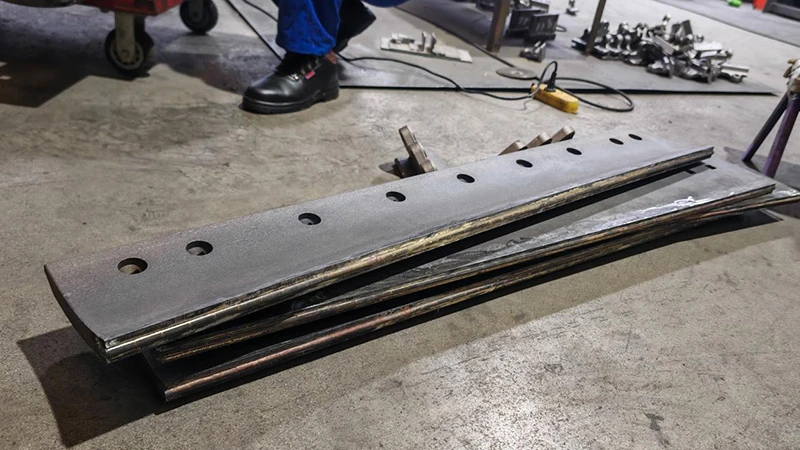
How Should Shop Mechanics Install JOMA-Style Carbide Blades Safely?
Install safely by aligning cast steel segments, torquing bolts to manufacturer specs like 150–200 ft-lbs, applying anti-seize on threads for plow undercarriages, and testing for wobble post-install per OSHA guidelines. For SENTHAI’s rubber-encased JOMA-style with isolated carbide inserts in I.C.E. kits, this prevents cracking; their 10× lifespan vs. steel minimizes frequent risky swaps. Use two-person teams for 3–4 ft sections with clear communication.
What Training and Shop Protocols Ensure OSHA Compliance?
Ensure compliance with daily huddles on carbide blade safety, annual OSHA refreshers, and signage for high-risk zones like welding or vulcanization-adjacent areas. SENTHAI’s automated production yields uniform sintering for fewer defects, aiding shops serving municipal plows. Log inspections and near-misses for fleet managers to track and improve protocols effectively.
Why Choose SENTHAI Carbide Blades for Safer Road Maintenance?
Choose SENTHAI for 21+ years of US-invested expertise in Thailand: ISO-certified, full in-house production from powder to assembly ensures durable, hazard-minimized products like North America bestsellers JOMA-style and carbide blades. The new 2025 Rayong base boosts capacity for custom, breakage-resistant edges that cut shop injuries and downtime. Contact for safe-handling guides with bulk orders and samples.
Conclusion
SENTHAI’s 21+ years of ISO-certified, Thailand-made carbide plow edges—like JOMA-style bestsellers with tungsten carbide inserts brazed into cast steel segments encased in rubber—combine superior durability with OSHA-style protocols. They protect shop mechanics from injuries during 13–17.5 kg lifts and handling sharp 25.9mm × 24.25mm × 8.16mm inserts, ensuring reliable winter road maintenance for heavy-duty fleets and municipal plows worldwide.
FAQs
What weight are SENTHAI’s standard carbide plow edges?
3-ft (36″ × 6″ × 7/8″) ~13 kg; 4-ft ~17.5 kg—always use lifts.
Are SENTHAI JOMA-style blades safe for solo installs?
No; team lifts and mechanical aids required per OSHA for heavy carbide segments.
How does SENTHAI’s production reduce handling risks?
Vacuum sintering ensures uniform carbide with strong bonding, minimizing cracks during 80+ partners’ global use.
What if a carbide insert is sharp during handling?
Inspect pre-use, wear Level 5 gloves, deburr—SENTHAI’s micro-grain finishes aid safety.
Do SENTHAI blades meet OSHA standards?
Yes, via ISO 9001/14001 quality control for consistent, durable designs trusted by North American fleets.